
Secret Cinema's Jay Schwartz at
artist reception and talk at SPACE Art Gallery
for I Belonged to the Blank Generation photo show
Saturday, May 3
Reception: 12 pm - 4 pm
Artist talk: 1:30 pm - 2:30 pm
Admission: FREE
The SPACE Art Gallery
749 S. 8th Street, Philadelphia
215-279-7145
Previously unseen photography by Secret Cinema founder Jay Schwartz is featured in a gallery exhibition, called I Belonged to the Blank Generation. The images document Philadelphia's early punk/new wave music scene between 1977 and 1980, at the legendary Hot Club and elsewhere.
And this Saturday, May 3, Jay will be at the SPACE Art Gallery for a reception and artist talk. He'll discuss how he got interested in photography, how he discovered punk/new wave music, and how he came to make the photographs featured in the show, along with stories about the groups he saw and shot.
You can read all about the photo show here.
Photos are available for sale, both framed and unframed. They are printed in a limited edition of five copies of each photo. The show will be on display through May 31.
The Philadelphia Inquirer ran a terrific article about I Belonged..., which can be seen here.


Famous Directors' Shorts at the Rotunda
Thursday, May 8, 2025
8:00 pm
Admission: FREE
The Rotunda
4014 Walnut Street
Philadelphia
On Thursday, May 8, the Secret Cinema will return to the Rotunda with a special program called Famous Directors' Shorts. It's made up of short subjects created b/y film directors from around the world, all better known for their feature films. Some were early efforts done before they were handed the reins of longer films, while others were passion projects that could be made quickly and economically in between features, after they'd achieved success.
Included are films made by Jean-Luc Godard, Roman Polanski, François Truffaut, Alan Arkin, Claude Lelouch and more.
There will be one complete show at 8:00 pm. Admission is free (as are all programs in the Rotunda's monthly "Bright Bulb Screening Series").
A few highlights from Famous Directors' Shorts include:
Tous les garçons s'appellent Patrick (1957, Dir: Jean-Luc Godard) - This amusing film (English title: All Boys are Named Patrick) was written by Eric Rohmer, and tells the tale of a lothario who attempts to pick up two different girls…not realizing they are roommates. Starring Jean-Claude Brialy (Claire's Knee, The Phantom of Liberty). This, Godard's fourth short film, was made just prior to his groundbreaking debut feature, Breathless.
People Soup (1969, Dir: Alan Arkin) - Alan Arkin had already achieved fame as an actor (in films like Wait Until Dark and The Heart is a Lonely Hunter) when he directed this improvised short. It stars his two young sons Adam and Matthew (both of whom would later enjoy extensive acting careers), in a whimsical story about a magic potion that the brothers mix in their kitchen. The film was based on a short story Arkin had published in a 1958 issue of the science fiction magazine Galaxy. Two years later he would direct a very different kind of movie -- the brilliant black comedy Little Murders.
Iran (1972, Dir: Claude Lelouch) - This remarkable, wordless documentary contrasts the ancient Persian culture of Iran with scenes of daily living in a modern metropolis. Images of factories, oil refineries, and young women in advanced science classes alternate with shots of prayer in mosques and camels galloping across the desert -- all set to Francis Lai's buoyant score. Much was to change in this country a few short years later, when the Iranian Revolution overthrew the Shah's monarchy and Ayatollah Khomeini's repressive, fundamentalist policies were put in place.
Birthday (1969, Dir: Franc Roddam) - A woman narrates an interesting (yet somewhat confusing?) narrative about falling in love with a fellow leftist protester, then recalls her childhood and the death of her grandfather, and then becomes a mother. This student project was made at the London School of Film Technique by Franc (then "Frank") Roddam. Roddam would have a successful career directing, starting with the Who-produced feature Quadrophenia (1979). He did especially well in television, and is perhaps best known for creating the worldwide TV franchise, MasterChef, which is shown in 200 countries worldwide.
Plus Les Mistons (1957, Dir: François Truffaut) and When Angels Fall (1959, Dir: Roman Polanski).

Maritime Movies at
Independence Seaport Museum
Independence Seaport Museum
211 S. Columbus Boulevard, Philadelphia
215-413-8655
Thursday, April 17, 2025
6:30 pm
Admission: $10.00, free for ISM members
On Thursday, April 17, the Secret Cinema will present its first public program at Philadelphia's Independence Seaport Museum (we did one members-only event there last year). Maritime Movies will include an assortment of short films (vintage school films, comedies, documentaries, and cartoons) dealing with nautical themes: boats, ships, marine life, sailors and the navy. Most of these films will be making their debut Secret Cinema appearance.
There will be one complete show at 6:30 pm. Admission is $10.00, or free to Independence Seaport Museum members.
A few highlights of Maritime Movies are:
Steamboat Willie (1928, Dir: Ub Iwerks) - This Walt Disney cartoon introduced Mickey Mouse to the world, and showed a wilder, more mischievous Mickey than was seen in later depictions. It is famous for being an early "talkie" cartoon (though it was hardly the first, as often claimed). Steamboat Willie later became infamous for the multiple extensions of its copyright. That was finally allowed to expire in 2024.
Two Faces of the Sea (1972, Dir: Lowell Wentworth) - This cinema verité look at the work of commercial fishermen in Port Clyde, Maine presents a visceral look at their challenges. The "two faces" seen are the sea's friendly side, when work goes smoothly -- and what happens when a bad storm blows in.
Life Along the Waterways (1950, Dir: John A. Haeseler) - School film made for young children to teach them about the different kinds of animals found living along brooks, streams and rivers, and the different species' interdependence, all captured in lovely Kodachrome.
Roving the Mediterranean (1934?) - A look at sailors maintaining a Navy cruiser ship, and on shore leave in Gibraltar, Tunisia and Venice. Shot silent (possibly in the 1920s), with a wiseguy narration added. "Life in the Navy is great!" Produced by the Navy Recruiting Service.
Towed in a Hole (1932, Dir: George Marshall) - Stan Laurel and Oliver Hardy star as successful fish sellers who set out to "eliminate the middle-man" -- by buying an old wreck of a boat so they can catch the fish themselves. While attempting to repair their craft, things go predictably awry.
…and more!

From Philadelphia with Love 2025
at Bryn Mawr Film Institute
Bryn Mawr Film Institute
824 W. Lancaster Avenue, Bryn Mawr, PA
610-527-9898
Thursday, April 10, 2025
7:30 pm
Admission: $14.50, $9.00 BMFI members, $12.00 seniors/students, $10.00 children
On Thursday, April 10, the Secret Cinema will return to the Bryn Mawr Film Institute to present another unique program of short films, called From Philadelphia With Love 2025: More Lost Local Films. While most area residents are familiar with Philadelphia films such as Rocky and Trading Places, there is a whole world of locally-made films that's been forgotten -- the ephemeral short films that were primarily made by small independent companies for the non-theatrical market. While most school districts, television stations and traveling salesmen have long ago discarded their 16mm film projectors, we at Secret Cinema have not (hardly!), and are proud to present another look at these celluloid time capsules that would otherwise not be seen again.
The Secret Cinema has been collecting, archiving and screening this fascinating area of local film history for over 25 years now. This newest edition of our Philly film program features all-new selections acquired in the last couple of years, and we are excited to debut them in Bryn Mawr.
There will be one complete show at 7:30 pm. Admission is $14.50, $12.00 seniors/students, $9.00 BMFI members.
Just a few highlights of From Philadelphia with Love 2025… will be:

The Detached Americans (1964, Dir: Dan Matticks) - A fascinating documentary hosted by CBS's Harry Reasoner, and produced right here by WCAU-TV. The film explores what seemed a disturbing new trend of witnesses to crimes not wanting to "get involved." It was clearly inspired by the real-life rape/murder of Kitty Genovese in Queens, New York that year (in which it was widely reported that 38 people watched it happen from their windows but did nothing, though this was later disproved). A similar event is dramatized here, with actors portraying the detached witnesses, while folk songs, Barbie dolls and a dreamlike sequence with mannequins attempt to explain how society got to this point. Art Director John Ferlaine created the popular syndicated kids' show Diver Dan, while cameraman Phil Galligan trained the North Philadelphia gang members who made the National Film Registry short The Jungle. The Detached Americans was televised nationally, and later circulated by an educational film distributor.
The Wildwoods By-The-Sea (early 1960s) - Promotional film made in vivid Kodachrome, highlighting the many activities and attractions to be enjoyed in this storied South Jersey beach town, in the peak years of its carnival-like boardwalk and "Doo Wop" motels. Many long-gone sites are preserved here (the Hunts Pier Flyer and Up'n Atom roller coasters! Casino Arcade! Marine Pier! The Sportland Pier Aqua Circus pool!). Plus the still extant tram car, fishing boats, and the Wildwood Baby Parade.
Betsy and the Commodore (1970s) - A detailed and very interesting look at the planning and construction of two new bridges spanning the Delaware River (the Betsy Ross Bridge and the Commodore Barry Bridge, naturally!). Produced by the Delaware River Port Authority, and narrated by former KYW anchorman Mort Crim.
The Carolyn Fall Fashion Show (1956) - Here's a rare item: a gorgeous color film showcasing the 1956 clothing line of the Carolyn Fashions dress company…all staged at Windswept, the Bryn Mawr mansion of Mr. And Mrs. David H. Clarke. The Main Line couple often hosted charitable galas at their estate, which was later occupied by the president of the Union League, J. Permar Richards. Refined-looking models (one in cat-eye glasses) parade countless colorful outfits, and a few tasteful men's suits from local manufacturer Botany 500 are also seen. Narration was provided by Vyvyan Donner, whose voice had been heard in fashion segments of the Fox Movitone newsreel since the 1930s. This film was seen at special screenings held in department stores and women's clubs around the country.
Plus more!

Comedy Shorts
for Chestnut Hill Film Group/Woodmere Museum
Tuesday, March 18, 2025
7:00 pm
Admission: FREE (donation suggested)
Woodmere Art Museum
9201 Germantown Avenue, Philadelphia
(215) 247-0476
The Secret Cinema will return to the Woodmere Museum on Tuesday, March 18, to present a unique program of Comedy Shorts, and is part of the museum's regular Tuesday Nights at the Movies series, as presented by the Chestnut Hill Film Group.
The selection of classic comedy shorts celebrates the timeless appeal of vintage comedy -- including films of Laurel and Hardy, the Three Stooges, George Burns and Gracie Allen, plus animated cartoons from Tex Avery, Chuck Jones, and Max Fleischer. Not to mention films starring Walter Catlett, Tom Kennedy, Pete Smith and Shemp Howard (without the other Stooges)!
There will be one complete screening, at 7:00 pm. Admission is free, but donations are encouraged.

Fantastic TV: 1956-1976 at the Rotunda
Thursday, March 13, 2024
8:00 pm
Admission: FREE
The Rotunda
4014 Walnut Street
Philadelphia
The Secret Cinema will return to the Rotunda in University City on Thursday, March 13, to present a unique program called Fantastic TV: 1956-1976. The screening will include complete episodes of little-seen shows from the past, featuring science fiction, speculative fiction and even speculative non-fiction. All will be shown bigger and bolder than they were ever meant to be seen, using rare 16mm film prints.
There will be one complete show at 8:00 pm. Admission is free.
This screening is part of the Rotunda's ongoing "Bright Bulb Screening Series," which offers free movies on the second Thursday of every month, throughout the year.
Fantastic TV: 1956-1976 will include:
Science Fiction Theatre: "Gravity Zero" (1956, Dir: Paul Guilfoyle) - Beloved mild-mannered character actor Percy Helton stars as an absent-minded science professor who struggles with administrators to keep his research going, while obsessively working on an anti-gravity machine. ZIV Television Programs, perhaps best remembered for Highway Patrol (with Broderick Crawford) syndicated this forgotten anthology drama series. Science Fiction Theatre was introduced each week by host Truman Bradley, a former news commentator turned prolific narrator of films and television shows.
One Step Beyond: "The Room Upstairs" (1961, Dir: John Newland) - This series, which lasted on the ABC network for three full seasons, attracted a cult audience for its weekly stories of psychic and supernatural phenomena -- all of which were purported to be based on true cases. This episode stars Lois Maxwell (best known for her role as "Miss Moneypenny" in James Bond films) as a wife who appears to be going mad, as she repeatedly hears the voice of a child in her rented home. Series host John Newland directed this final season episode.
The Twilight Zone: "Where is Everybody?" (1959, Dir: Robert Stevens) - Rod Serling's hugely-popular creation The Twilight Zone was a sensation when first aired, and continues to attract fans 66 years later. Thus, it is easier to watch than most of our offerings. Nonetheless, the film we shall project is one of the rarest titles in the whole Secret Cinema archive: An uncut, network print of the pilot episode that launched this renowned series, complete with the original sponsors' commercials, network tags, Serling sign-off, and Bernard Herrmann's original theme music (the latter was replaced at the end of the first season with Marius Constant's more familiar theme).
In Search of a Call From Space (1976, Dir: uncredited) - Alan Landsburg's In Search of... documentary series explored such often unexplainable 1970s obsessions as E.S.P., the Bermuda Triangle and the Loch Ness monster. This segment, hosted by Leonard Nimoy, takes a deep look into NASA and other researchers' quest to detect radio signals beamed by intelligent life outside of Earth.
USA Writers: "Science Fiction" (1966, Dir: Jack Sameth) - This is a kinescope record of a panel talk show produced by KCET, the Los Angeles outlet for National Educational Television (predecessor to today's PBS). It presents an interesting discussion (in an incredible spaceship-like stage set!) about the state of science fiction writing in the 1960s. Biochemistry scientist Paul Saltman moderates conversation between sci-fi authors Theodore Sturgeon, A.E. Vogt and Anthony Boucher, as well as Stanford English professor Dr. H. Bruce Franklin.

Thursday, March 6, 2025
9:00 pm until Midnight (and possibly longer)
Admission: FREE
The Trestle Inn
339 N. 11th Street, Philadelphia
(267) 239-0290
The Secret Cinema’s Jay Schwartz will be doing his first guest D.J. set in almost two years -- this time at the Trestle Inn. The record boxes are still being filled, but expect a mix of styles that will include '60s mod/soul/psych, punk, power pop, and glam. And bubblegum! Plus...there will be a go go dancer!
Admission is free.

Bizarre Lon Chaney silent with live music
at historic Glen Foerd mansion
Glen Foerd on the Delaware
Grant Avenue & Milnor Street, Philadelphia
215-632-5330
Friday, March 7, 2025
7:30 pm (doors open 7:00 pm)
Admission: $25, $20 students and seniors
On Friday, March 7, the Secret Cinema will again be hosted by one of the most impressive venues in our long history -- Glen Foerd on the Delaware, a historic 1850 mansion and estate located in the Torresdale neighborhood of Northeast Philadelphia. Glen Foerd is Philadelphia's last remaining Delaware River estate open to the public.
This silent film presentation will not be silent, as expert keyboardist Don Kinnier (veteran collaborator for several past Secret Cinema programs) will bring the movie alive with his accompaniment on the mansion's recently restored 1902 Haskell pipe organ.

We'll be showing one of our favorite Lon Chaney features, the first film released by the MGM studio, and an unlikely commercial hit in 1924: He Who Gets Slapped. With its twisted themes of madness, masochism, and dangerous clowns, this is as odd a film as Secret Cinema has ever screened.
The screening will also include surprise silent short subjects.
There will be one complete show at 7:30 pm. Doors will open at 7:00 pm to allow touring of the mansion and grounds.
The film will be shown in the gilded-age mansion's beautiful second floor art gallery (stair access only).
Admission is $25, $20 students and seniors. Seating is limited.
Buy tickets here.
Glen Foerd on the Delaware is a 5-minute walk from the Torresdale station of SEPTA's Trenton Regional Rail Line or the 19 & 84 bus routes. There is ample free parking within the estate.

He Who Gets Slapped (1924, Dir: Victor Seastom)
Lon Chaney (Sr.), increasingly the silent era star with perhaps the most appeal to modern audiences, played a variety of unusual roles throughout the 1920s -- but none were more bizarre than in Chaney stars as a scientist driven mad when both his thesis and wife are stolen by his mentor. Leaving the academic world behind, the beaten man transforms himself into the ultimate masochist, and reemerges as HE, a famous circus clown whose celebrated routine consists of being humiliated by other clowns that line up to repeatedly slap his face, tear out his heart and tread it into the dirt! The crowds laugh at HE without knowing the torture in his psyche, but when HE crosses paths with his unwitting enemy, the lonely clown plots a devious and sweet revenge…in hopes of triumphing as "the one who laughs last."
He Who Gets Slapped was the most famous play by the Russian writer Leonid Andreyev. As a young law student Andreyev suffered extreme depression and made several suicide attempts. Upon graduation he turned to writing, under the tutelage of Maxim Gorky. In addition to many successes with novels and plays, Andreyev was also an accomplished photographer.
The first production of the newly formed Metro-Goldwyn-Mayer, was the second American film by Swedish director Victor Seastom (born Sjöström). The dark, symbolism-filled work was considered a risky venture, but proved quite popular and prompted Chaplin to label Seastom "the greatest director in the world." Seastom was raised in America but returned to Sweden after his mother's death, finding work as an actor in the theater. His first film role was in 1912, under Sweden's other great silent era director, Mauritz Stiller. Seastom began directing the following year, and after much acclaim was brought back to the U.S. in 1923. He directed his last film in 1938 but continued acting, until his final role as Professor Berg in Bergman's (1957).
About Glen Foerd on the Delaware: The Glen Foerd mansion was built in 1850 by businessman Charles Macalester, Jr. The estate was later purchased by leather manufacturer Robert Foerderer, who enlarged and added extensive enhancements to the property, including a formal dining room, an impressive art gallery, a pipe organ, parquet floors, a grand staircase and elaborate leaded glass skylights. The Foerderers' daughter Florence lived in the estate until her death in 1971. In 1985 the property was taken over by the Glen Foerd Conservation Corporation and the Fairmount Park Commission, and is today operated as a historic house museum and public park.
About Don Kinnier: The silent film era, from its tentative first steps to its final artistic masterpieces, lasted for about 35 years. Musician Don Kinnier has been accompanying silent film screenings for over 55 years! Pennsylvania's foremost exponent of this very specialized art form, he has studied the techniques and repertoires of the original theater musicians of the silent era. A Philadelphia native (now based in Lititz), Don has toured internationally, and has maintained a long and fruitful relationship with Longwood Gardens, playing recently at the Fanfare Weekend rededication of the large Aeolian organ there. He also plays at The Strand Capitol Performing Arts Center and the Allen Theatre, and provided the soundtrack for many past Secret Cinema events.

Silent classic Greed with live music
at historic Glen Foerd mansion
Glen Foerd on the Delaware
Grant Avenue & Milnor Street, Philadelphia
215-632-5330
Friday, January 24, 2025
7:30 pm
Admission: $25, $20 students and seniors
On Friday, January 24, the Secret Cinema will again be hosted by one of the most impressive venues in our long history -- Glen Foerd on the Delaware, a historic 1850 mansion and estate located in the Torresdale neighborhood of Northeast Philadelphia. Glen Foerd is Philadelphia’s last remaining Delaware River estate open to the public.

The screening will center on one of the most legendary films of the silent era, Erich von Stroheim’s 1924 masterpiece Greed. The brilliant but famously excessive director originally shot 85 hours of footage, and hoped his 9-hour final edit would be shown in theaters over two nights. MGM instead cut it down to a little over two hours. The missing reels were not kept, and now comprise the most sought after lost film footage in Hollywood history. However, the MGM edit remains, miraculously, a powerful dramatic epic. That is what we will show.
This silent film presentation will not be silent, as expert keyboardist Don Kinnier (veteran collaborator for several past Secret Cinema programs) will bring the movie alive with his accompaniment on the mansion’s recently restored 1902 Haskell pipe organ.
There will be one complete show at 7:30 pm. Doors will open at 7:00 pm to allow touring of the mansion and grounds.
Admission is $25, $20 students and seniors. Seating is limited.
Buy tickets here.
Glen Foerd on the Delaware is a 5-minute walk from the Torresdale station of SEPTA’s Trenton Regional Rail Line or the 19 & 84 bus routes. There is ample free parking within the estate.

The film will be shown in the gilded-age mansion’s beautiful second floor art gallery (stair access only).

Greed (1924, Dir: Erich Von Stroheim)
Erich Von Stroheim’s silent epic, Greed has sadly become more famous for footage that MGM discarded than for the masterpiece that survives. Based on Frank Norris’ naturalistic novel McTeague: A Story of San Francisco, it graphically depicts the slow descent into madness of a simple-minded miner-turned-dentist and his bride (depicted with brilliance by Gibson Gowland and Zasu Pitts), as each becomes obsessed with gold. Von Stroheim, in his past work having already battled studios over expenses and running times, decided to not only film every page (and more) of the source book, but to shoot virtually every scene in the locations Norris described. Thus, nothing was shot in a studio. Only buildings that survived the San Francisco 1906 earthquake were used, to match the period of the novel. The insistence on filming authentic locations would include bringing cast and crew to dangerously hot Death Valley -- the United States’ hottest and most inhospitable place -- in August. Fourteen crew members became sick, and one cook died of heatstroke. The director told the press, “I decided to make an absolutely literal film transposition of a novel that has been accepted as a classic of American literature.” He made Greed, “without a single important change, except the title. I made it so that it could be said, ‘As Norris wrote it, so von Stroheim produced it.’”
Reportedly some 85 hours of film were shot over seven months. The editing process took a year, with the Goldwyn studio ordering Von Stroheim to make it shorter and shorter. An initial 42 reel version was seen by only a handful of insiders, who proclaimed it the greatest film ever made. Von Stroheim decided to cut it down to 24 reels, which would still require Greed to be shown over two nights with intermissions (most silent features consisted of six or seven approximately 15-minute reels). The studio insisted on further cuts, which Von Stroheim refused to participate in. During this process, Goldwyn merged to become MGM, whose Irving Thalberg wanted Greed to be much shorter. Finally the film was cut to ten reels -- edited by, according to Von Stroheim, “a hack with nothing in his mind but a hat.” This is the version that survives today, and only still photos remain of the missing footage. Sub-plots and some characters were removed entirely, but the basic plot remains. Greed is still an original, bold masterpiece, and a high point of the silent era.

About Glen Foerd on the Delaware: The Glen Foerd mansion was built in 1850 by businessman Charles Macalester, Jr. The estate was later purchased by leather manufacturer Robert Foerderer, who enlarged and added extensive enhancements to the property, including a formal dining room, an impressive art gallery, a pipe organ, parquet floors, a grand staircase and elaborate leaded glass skylights. The Foerderers’ daughter Florence lived in the estate until her death in 1971. In 1985 the property was taken over by the Glen Foerd Conservation Corporation and the Fairmount Park Commission, and is today operated as a historic house museum and public park.
About Don Kinnier: The silent film era, from its tentative first steps to its final artistic masterpieces, lasted for about 35 years. Musician Don Kinnier has been accompanying silent film screenings for over 55 years! Pennsylvania’s foremost exponent of this very specialized art form, he has studied the techniques and repertoires of the original theater musicians of the silent era. A Philadelphia native (now based in Lititz), Don has toured internationally, and has maintained a long and fruitful relationship with Longwood Gardens, playing recently at the Fanfare Weekend rededication of the large Aeolian organ there. He also plays at The Strand Capitol Performing Arts Center and the Allen Theatre, and has provided the memorable soundtrack for many past Secret Cinema events.

Creepy Christmas Films
at Bryn Mawr Film Institute
Bryn Mawr Film Institute
824 W. Lancaster Avenue, Bryn Mawr, PA
610-527-9898
Thursday, December 5, 2024
7:30 pm
Admission: $14.50, $9.00 BMFI members, $12.00 seniors/students, $10.00 children
On Thursday, December 5, the Secret Cinema will return to the Bryn Mawr Film Institute with an audience favorite from our nearly 33-year history. Creepy Christmas Films is a special program of vintage Yuletide shorts featuring frightening puppets, demonic animals, and maudlin sentiments. As an added bonus, we'll include glimpses of strangers' Christmas home movies, showcasing a nostalgic array of old toys and synthetic trees.
This popular program was shown last at the Fleisher Art Memorial in 2017 (and before that, at the Sedgwick Cultural Center, the Prince Music Theater and the long-gone Griffin Cafe). It will be our final presentation of 2024.
There will be one complete show at 7:30 pm. Admission is $14.50, $12.00 seniors/students, $9.00 BMFI members, and $10.00 children.
A few highlights of the program include:
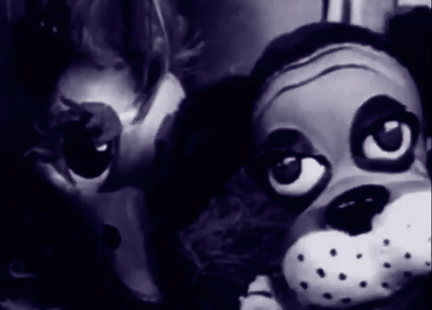
Santa In Animal Land (1948) - In this bizarre one-reeler, animal puppets (with some of the most painfully cloying voices ever recorded) bemoan the fact that there is no official Christmas celebration in the animal kingdom, and set out to protest to Santa Claus about their situation.

Davey & Goliath: Christmas Lost & Found (1965) - A special edition of the early-'60s, long-rerun clay animation series from Gumby creator Art Clokey (and funded by the Lutheran Council of Churches). Sourpuss Davey searches his town in desperation for the true Christmas spirit, finding little consolation even in the antics of his lovable dog Goliath.
A Visitor For Christmas (1967) - "But we can't have Aunt Hattie here -- she'll ruin our Christmas!" Mawkish live-action drama produced by religious studio Family Films, in which every member of a typical American family complains about the impending visit of their hated Aunt Hattie. With Lassie star Tommy Rettig.
Howdy Doody's Christmas (1951) - Buffalo Bob, Clarabelle, "Ugly Sam," and the grandfather of creepy marionettes, Howdy Doody, all join forces in this excruciating short film that was made especially for home and school projectors, to capitalize on the popularity of television's The Howdy Doody Show.
Plus more!

W.C. Fields Short Films at the Rotunda
Thursday, November 14, 2024
8:00 pm
Admission: FREE
The Rotunda
4014 Walnut Street
Philadelphia
Philadelphia native son W.C. Fields is often acclaimed as one of the greatest comedians of the movies, and Fields feature films such as It's a Gift and The Bank Dick are rightfully hailed as masterpieces.
Lesser known are the short films that launched Fields' career in talkies -- which began after he appeared in ten silent features, those following a long run as a top-billed star of international stages, in vaudeville, and acting in Broadway shows. By the time sound motion pictures were developed, Fields had already finely tuned his unique characterization and delivery of comic dialogue (most of it self-penned).
On Thursday, November 14, the Secret Cinema will return to the Rotunda in University City for a gathering of some of Fields' funniest films. W.C. Fields Short Films will include nearly all of the short films starring this unique funnyman.
These will include the following:
Mack Sennett Comedies (1932-33) - The four sound two-reelers made for Sennett comprise some of Fields' best work, and show some experimentation with gags and story ideas that would wind up in his better known features. The Dentist includes scenes and double entendres that are outrageously "pre-code" in their sexuality (most famously, the orgasmic moans and writhing of one unusually responsive female patient, which were edited out of some prints). The Barber Shop places Fields in another profession with plenty of opportunities for gags and dark humor, and helps set the pattern for his character being troubled by a shrewish wife, pesky children, and unfriendly customers. The Pharmacist, with Fields as a small-town shopkeeper, contains trial runs for many of the bits featured in the feature that many consider his greatest, It's a Gift (some gags in both films were already used in the 1926 feature It's the Old Army Game). The Fatal Glass of Beer, was perhaps the most ahead of its time. Completely deadpan satire -- likely the first such instance of that on the screen -- mercilessly lampoons corny stage melodramas, sentimentality and cost-cutting stock footage use, not to mention the Temperance movement (when the film was released, prohibition was still in force in some states). The Fatal Glass of Beer was universally disliked by audiences and exhibitors on its initial release, but can now be seen as a black comedy classic.
Pool Sharks (1915) - The British Gaumont studio contracted W.C. Fields, already a star of vaudeville and the Ziegfeld Follies, to appear in his first film (shot in New York). Miraculously (and unlike several other silents that Fields starred in), the film survives, rediscovered via a single nitrate print in the mid-1960s. Pool Sharks begins with some awkward slapstick, but soon turns into a showcase for one of Fields' signature stage routines, showing his skill making trick shots on a pool table (it was as a juggler that he first came to prominence). Film historian William K. Everson wrote: "Pool Sharks must surely rank as one of the most auspicious debuts made by any of the major screen comedians…a minor masterpiece when viewed in the context of its period, and certainly a major milestone in the early evolution of screen comedy."
Plus a surprise, bonus film!
There will be one complete show at 8:00 pm. Admission is free.
This screening is part of the Rotunda's ongoing "Bright Bulb Screening Series," which offers free movies on the second Thursday of every month, throughout the year.

Screening and breakfast at outsider art gallery?
It's Breakfast in Hollywood
Friday, November 8, 2024
7:30 pm (doors open 6:45 pm)
Admission: $10.00
The Keen Collection at Bethany Mission
1527 Brandywine Street, Philadelphia
215-264-2135
On Friday, November 8, the Secret Cinema will again bring its 16mm projectors to the Keen Collection at Bethany Mission. This unique, collector-curated gallery provides a home for outsider art, including drawings & paintings by James Castle, Sam Doyle, Howard Finster, William Hawkins, Martin Ramirez, Bill Traylor and George Widener, to name a few.
The renovated 1869 Quaker meeting house was opened by Victor Keen to display his self-taught artist acquisitions as well as other art and object collections including folk art, Catalin radios, antique metal toys & banks, milk glass, ceramic pot lids, posters, banners & photographs and antique toasters.
Join us for "breakfast" (coffee and pastries included with admission!) as we watch the 1946 film Breakfast in Hollywood. With a nod to the beautiful 1920s, '30s and '40s radios on display, we'll once more present an old-time radio themed film program. The feature is a fun comedy/musical, built around a popular real-life radio show of the same name. The program featured famous musical performers, but devoted just as much time to conversations with its mainly female audience.
The screening will also include rare radio-themed short films.
There will be one complete show at 7:30 pm. Doors open at 6:45, allowing time to take in the collection (and breakfast!).
Admission is $10.00, but space is limited. Purchase tickets here.
A description of the feature follows…

Breakfast in Hollywood (1946, Dir: Harold Schuster)
For eight years Tom Breneman was the star of a real-life radio show, broadcast live from his own Hollywood restaurant. The morning talk show was especially popular with housewives, who filled the studio audience and would engage in banter with the genial host, in between regular visits from celebrity performers. So successful was this show, with ten million listeners at its peak, that this unusual musical/comedy/drama feature was constructed around it. Breakfast in Hollywood serves as a time capsule from a more innocent, pre-television era, when national radio networks dominated home entertainment (and sponsor's advertising budgets) -- and seeing a radio program being created was a rare novelty.

The plot cannily interweaves the stories of various audience members: a young woman (Bonita Granville) trying to find her sailor fiancé; an elderly fan (Beulah Bondi) who attends fresh from being struck by a car; a dowdy, middle-aged woman (Billie Burke) with a philandering husband (Raymond Walburn); and a dotty spinster (the inimitable ZaSu Pitts) hoping the host will notice her funny hat and interview her. Appearing as themselves are musical guests the Nat King Cole Trio, Spike Jones and his City Slickers, and crooner Andy Russell…and, of course, Tom Breneman.

Science After Hours event “Fright @ Night”
at the Franklin Institute

Friday, October 25, 2024
7:30 pm until 11:30 pm
Admission: $$40, $35 Franklin Institute members (online sales only, NO tickets available at door)
The Franklin Institute
222 N. 20th Street
Philadelphia, PA
215-448-1200
On Friday, October 25, the Secret Cinema will again participate in the Franklin Institute’s multi-dimensional event Science After Hours. This popular series features programming for grown-ups that combines live performances, a light show, music, food, drink, and once more, a film screening, all throughout the museum’s historic galleries. The theme this month is (naturally) “Fright @ Night.”
Doors open at 7:30 pm, and the event ends at 11:30 pm.
Admission is $40, and $35 for Franklin Institute members (online sales only, no tickets will be available at the door).

The Secret Cinema portion will consist of an approximately 90-minute program of spooky shorts, to be shown twice. We’ll select short films from our archive featuring Halloween-themed cartoons, horror movie trailers, documentaries on the supernatural, and even some gory surgery footage...and more. All projected from rare 16mm film prints, on the spectacular big screen of the museum’s Franklin Theater.

From Philadelphia with Love 2024:
More Industrial, Educational and other Lost Local Films
at the Bryn Mawr Film Institute
Bryn Mawr Film Institute
824 W. Lancaster Avenue, Bryn Mawr, PA
610-527-9898
Thursday, April 13, 2023
7:30 pm
Admission: $13.50, $8.00 BMFI members, $11.00 seniors/students, $9.00 children.
On Thursday, May 16, the Secret Cinema will return to the Bryn Mawr Film Institute to present a unique program of short films called From Philadelphia With Love 2024: Industrial, Educational and other Lost Local Films. While most area residents are familiar with Philadelphia films such as Rocky, Trading Places, and the works of M. Night Shayamalan, there is a whole world of locally-made films that has been forgotten -- the ephemeral short films that were primarily made by small independent companies for the non-theatrical market. While most school districts, television stations and traveling salesmen have long ago discarded their 16mm film projectors, we at Secret Cinema have not, and are proud to present a look back at these celluloid time capsules that would otherwise not be seen again.
The Secret Cinema has been collecting, archiving and screening this fascinating area of local film history for over two decades now. This newest edition of our Philly film program was shown last month at Philadelphia's Bok Building to great success. Featuring all-new selections acquired in the last couple of years, we are excited to project them for the first time in Bryn Mawr.
There will be one complete show at 7:30 pm. Admission is $13.50, $11.00 seniors/students, $8.00 BMFI members.
Just a few highlights of From Philadelphia with Love 2024… will be:
We the People (1977, Dir: Hugh King) - A vivid chronicle of life and problems in Hartville Street, in working class Kensington during the early 1970s. A neighborhood group discusses absentee landlords, block clean-ups and race relations (all with strong Philly accents), and drunks sing in corner taprooms. This amazing film -- possibly the most Philadelphia film ever made -- was included in the very first program of International House's Neighborhood Film and Video Project screening series.
Life is a Lark at Willow Grove Park (1955, Dir: Albert Renick) - A mid-century, Kodachrome look at the beloved historic amusement park which opened in 1896 (and today is the site of the Willow Grove Park Mall). This film was produced shortly after the park was sold off by its longtime owner, the Philadelphia Transportation Company (PTC, the predecessor to SEPTA). There is a visual survey of restaurants, picnic areas and rides, including the Thunderbolt, the park's main wooden roller coaster -- plus a classic fun house, featuring moving obstacles that a modern-day liability lawyer would not be likely to approve. Much of the then-surviving architecture displays its origins from the time of John Phillip Sousa's famed annual residencies there at the start of the previous century.
Make Way for the Past (1976, Dir: Brian Kellman) - There was a time, not so long ago, when an exciting new housing boom in Philadelphia meant restoration of historic homes, not demolition and replacement with shoddy construction! This wonderful film highlights passionate homeowners improving their storied properties in Elfreth's Alley, Society Hill, Queen Village and Germantown. The careful techniques and research needed for preserving the past are explained. "Produced as a public service by Reliance Insurance Companies," and directed by past Secret Cinema guest Brian Kellman.
Plus much, much more!

Fashion Undressed: Films of Style
and Beauty in AMBLER
Thursday, May 2, 2024
7:30 pm
Admission: $13.00, $7.50 members, $11.00 seniors/under 25
The Ambler Theater
108 E. Butler Avenue, Ambler, PA
215-345-7855
On Thursday, May 2, the Secret Cinema will bring our projectors, for the first time, to the Ambler Theater. We'll present short films on the themes of fashion and beauty, including educational and advertising films, entertainment shorts and newsreels from the 1930s through the 1970s. It's called Fashion Undressed: Films of Style and Beauty (we just brought this program to the Princeton Garden Theatre, and we've previously shown it at Towson University in Maryland and the Rotunda in Philadelphia).
There will be one complete screening at 7:30 pm. Admission is $13.00 general, $7.50 members, $11.00 seniors/under 25
Just a few highlights of Fashion Undressed... are:
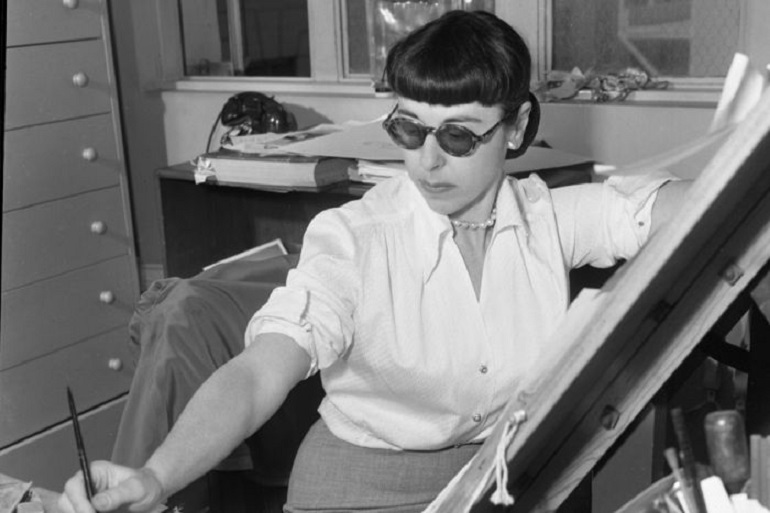
The Costume Designer (1950) - In 1950 the Academy of Motion Picture Arts & Sciences oversaw the production of a series of one-reel shorts covering different aspects of the film industry, each film being produced by a different studio. R.K.O. made this reel on the importance of the wardrobe department, with a special focus on sunglass-wearing designer Edith Head (who, oddly, is not named).

Figure Forum (1954) - Warner Brothers -- not the famous film studio, but the Warner Brothers Foundations and Bras Company of Bridgeport, Connecticut -- made this film about choosing the proper bra and girdle. Trivia note: This reel was among the first 3 or 4 16mm films the Secret Cinema ever owned -- it was thrown in with the first projector we purchased, back in 1975!
Girls in Short Short Dresses (1966) - Paramount made this topical film in the final days of the theatrical short subject era, to capitalize on the worldwide interest in then very-Swinging London. It stars actual mod band The Thoughts, best known to record collectors for their recording of Ray Davies' (of the Kinks) otherwise unreleased song "All Night Stand." In this rare Technicolor pictorial, they perform two songs in the famous Blaise's nightclub, and in a reverse on the usual rock band scenario, they chase girls around tube stations and Carnaby Street boutiques. The film also makes a visit to the studio of fashion designer Mary Quant, inventor of the miniskirt.
The Look of Shangri-La (1973) - A "production reel," or promotional short showing behind-the-scenes looks at a then-forthcoming major motion picture. This one was made to plug the disastrous 1970s musical remake of Frank Capra's classic 1937 fantasy Lost Horizon, with an emphasis on the new version's now very dated costume design.
How to Undress in Front of Your Husband (1937) - Curious comedy short made by indie exploitation producer and distributor Dwain Esper (Maniac, Reefer Madness). While not quite as salacious as its title implies, it nonetheless achieved notoriety by virtue (?) of its leading lady, Elaine Barrie, who was then in the middle of a rocky marriage to legendary actor John Barrymore.
Plus Heavenly Body (1975), Winning Styles (1968), How Do They Tie-dye Cloth? (1970) and more!

Fashion Undressed: Films of Style
and Beauty in Princeton
Wednesday, April 24, 2024
7:30 pm
Admission: $13.50, $7.75 members, $11.00 seniors/staff/faculty, $10.00 students
The Princeton Garden Theatre
160 Nassau Street, Princeton, NJ
609-279-1999
On Wednesday, April 24, the Secret Cinema will bring our projectors for the first time to the Princeton Garden Theatre. We'll present short films on the themes of fashion and beauty, including educational and advertising films, entertainment shorts and newsreels from the 1930s through the 1970s. It's called Fashion Undressed: Films of Style and Beauty (we've previously shown this program at Towson University in Maryland and at the Rotunda in Philadelphia…and will present it again next month at the Ambler Theatre).
There will be one complete screening at 7:30 pm. Admission is $13.50 general, $7.75 members, $11.00 seniors/staff/faculty, $10.00 students
Just a few highlights of Fashion Undressed... are:
The Costume Designer (1950) - In 1950 the Academy of Motion Picture Arts & Sciences oversaw the production of a series of one-reel shorts covering different aspects of the film industry, each film being produced by a different studio. R.K.O. made this reel on the importance of the wardrobe department, with a special focus on sunglass-wearing designer Edith Head (who, oddly, is not named).
Figure Forum (1954) - Warner Brothers -- not the famous film studio, but the Warner Brothers Foundations and Bras Company of Bridgeport, Connecticut -- made this film about choosing the proper bra and girdle. Trivia note: This reel was among the first 3 or 4 16mm films the Secret Cinema ever owned -- it was thrown in with the first projector we purchased, back in 1975!
Girls in Short Short Dresses (1966) - Paramount made this topical film in the final days of the theatrical short subject era, to capitalize on the worldwide interest in then very-Swinging London. It stars actual mod band The Thoughts, best known to record collectors for their recording of Ray Davies' (of the Kinks) otherwise unreleased song "All Night Stand." In this rare Technicolor pictorial, they perform two songs in the famous Blaise's nightclub, and in a reverse on the usual rock band scenario, they chase girls around tube stations and Carnaby Street boutiques. The film also makes a visit to the studio of fashion designer Mary Quant, inventor of the miniskirt.
The Look of Shangri-La (1973) - A "production reel," or promotional short showing behind-the-scenes looks at a then-forthcoming major motion picture. This one was made to plug the disastrous 1970s musical remake of Frank Capra's classic 1937 fantasy Lost Horizon, with an emphasis on the new version's now very dated costume design.
How to Undress in Front of Your Husband (1937) - Curious comedy short made by indie exploitation producer and distributor Dwain Esper (Maniac, Reefer Madness). While not quite as salacious as its title implies, it nonetheless achieved notoriety by virtue (?) of its leading lady, Elaine Barrie, who was then in the middle of a rocky marriage to legendary actor John Barrymore.
Plus Heavenly Body (1975), Winning Styles (1968), How Do They Tie-dye Cloth? (1970)<'B> and more!
From Philadelphia with Love 2024
in South Philly's historic Bok Building
Saturday, April 6, 2024
8:00 pm
Admission: $10.00 (cash or Venmo)
Bok Building
800 Mifflin Street entrance
Philadelphia

On Saturday, April 6, the Secret Cinema will return to the Bok Building auditorium to present a unique program of short films called From Philadelphia With Love 2024: Industrial, Educational and other Lost Local Films. While most area residents are familiar with Philadelphia films such as Rocky, Trading Places, and the works of M. Night Shayamalan, there is a whole world of locally-made films that has been forgotten -- the ephemeral short films that were primarily made by small independent companies for the non-theatrical market. While most school districts, television stations and traveling salesmen have long ago discarded their 16mm film projectors, we at Secret Cinema have not, and are proud to present a look back at these celluloid time capsules that would otherwise not be seen again.
The Secret Cinema has been collecting, archiving and screening this fascinating area of local film history for over two decades now. This newest edition of our Philly film program will feature all-new selections that we have acquired in the last couple of years.
There will be one complete show at 8:00 pm. Admission is $10.00
Just a few highlights of From Philadelphia with Love 2024… will be:
We the People (1977, Dir: Hugh King) - A vivid chronicle of life and problems in Hartville Street, in working class Kensington during the early 1970s. A neighborhood group discusses absentee landlords, block clean-ups and race relations (all with strong Philly accents), and drunks sing in corner taprooms. This amazing film -- possibly the most Philadelphia film ever made -- was included in the very first program of International House's Neighborhood Film and Video Project screening series.
Life is a Lark at Willow Grove Park (1955, Dir: Albert Renick) - A mid-century, Kodachrome look at the beloved historic amusement park which opened in 1896 (and today is the site of the Willow Grove Park Mall). This film was produced shortly after the park was sold off by its longtime owner, the Philadelphia Transportation Company (PTC, the predecessor to SEPTA). There is a visual survey of restaurants, picnic areas and rides, including the Thunderbolt, the park's main wooden roller coaster -- plus a classic fun house, featuring moving obstacles that a modern-day liability lawyer would not be likely to approve. Much of the then-surviving architecture displays its origins from the time of John Phillip Sousa's famed annual residencies there at the start of the previous century.
Make Way for the Past (1976, Dir: Brian Kellman) - There was a time, not so long ago, when an exciting new housing boom in Philadelphia meant restoration of historic homes, not demolition and replacement with shoddy construction! This wonderful film highlights passionate homeowners improving their storied properties in Elfreth's Alley, Society Hill, Queen Village and Germantown. The careful techniques and research needed for preserving the past are explained. "Produced as a public service by Reliance Insurance Companies," and directed by past Secret Cinema guest Brian Kellman.
Plus much, much more!
Limited on-street parking is available. If driving, allow extra time.
Staff from the Bok Bar will be selling refreshments in back of the auditorium. 21+ only, please bring I.D.
The Bok Building was built in 1936 as Edward Bok Vocational School, a New Deal project with funding from the WPA. The beautiful art deco structure was closed in 2013, and subsequently sold and redeveloped as a home to over 200 businesses, artists, makers, entrepreneurs, and non-profits. The large auditorium retains its original design elements. P>
Secret Cinema participates in "Bubblegum Workshop"
for Rose Valley Museum
Sunday, March 24, 2024
4:00 pm
Workshop fee: $25 adults, $15 children 12 and under
Grace Rotzel Center at
The School in Rose Valley
20 School Lane, Rose Valley, Pa.
484-444-2961
The Secret Cinema has long championed (and frequently displayed) the charms of the one film in our archive about bubblegum. And, we've always loved bubblegum music, even devoting some of the occasional d.j. events we've produced to that misunderstood genre.
But on Sunday, March 24, the Secret Cinema will participate for the first time in an actual class in which bubblegum is made, when the Rose Valley Museum offers their first Bubblegum Workshop (to be held at the adjacent Rose Valley School…in Rose Valley, Pa, naturally).
This family-friendly event will include a brief presentation by Ryan Berley of Shane Confectionery on the history of bubblegum, followed by a hands-on workshop where participants will get to make their own bubblegum from scratch using base ingredients. Somewhere along the way, we'll project one of our prize possessions, The Story of Bubblegum , a colorful 17-minute tour of Philadelphia's Fleer bubblegum factory.
Cost for the workshop is $25 adults, $15 for children 12 and under. Space is limited and reservations are advised.
Details of the short film we will project:
The Story of Bubblegum (1952) - This beautiful Kodachrome film sets out to answer the question, "Can bubblegum be good food?" Made at the old Fleer bubblegum plant in Olney, showing its giant vats of pink rubber, plant cafeteria and garden, and their amazing R&D department. Quite possibly the greatest film ever made, short or long.

The Rose Valley Museum at Thunderbird Lodge tells the story, through displays of objects and art, of the Arts and Crafts community founded by William Lightfoot Price in 1901. The historic homes of Rose Valley (just outside of Media, Pennsylvania) remain largely intact. The Rose Valley Museum is currently open select weekends, and at other times by appointment.

Secret Cinema again at Franklin Institute's
Science After Dark program "Spectacular Spectacular"

Friday, March 22, 2024
7:30 pm until 11:30 pm
Admission: $$40, $35 Franklin Institute members (online sales only, NO tickets available at door)
The Franklin Institute
222 N. 20th Street
Philadelphia, PA
215-448-1200

On Friday, March 22, the Secret Cinema will again participate in the Franklin Institute's multi-dimensional event Science After Hours. This popular series features programming for grown-ups that combines live performances, music, food, drink, and once more, a film screening, all throughout the museum's historic galleries. The theme this month is (again) "Spectacular Spectacular."
Doors open at 7:30 pm, and the event ends at 11:30 pm.
Admission is $40, and $35 for Franklin Institute members (online sales only, NO tickets will be available at the door).
The Secret Cinema portion -- with all-new selections this year -- will consist of an approximately 90-minute program of shorts, to be shown twice. We'll draw from our archive films featuring spectacular musical and dance clips, spectacular destinations, a spectacular cartoon, and much more. All projected from rare 16mm film prints, on the spectacular big screen of the museum's Franklin Theater.


Lost Television 2024 Edition
at Rotunda
Thursday, March 14, 2024
8:00 pm
Admission: FREE
The Rotunda
4014 Walnut Street
Philadelphia
The Secret Cinema will return to the Rotunda with an all-new edition of an occasional series called Lost Television. The program, to be presented on Thursday, March 14, consists of rare and forgotten shows from the early era of television, which mainly survive thanks to now-aging 16mm film prints.
The 16mm film format was crucial to early television broadcasters in the days before videotape was perfected. Filmed recordings of live television, called kinescopes, were made using special equipment. Other programs were originally shot on film -- this was standard procedure for the popular 1950s TV genre of anthology dramas, short stories made with changing casts. And for many years 16mm prints were shipped to local stations as a convenient distribution medium for both programs and commercials. The Secret Cinema archive includes many original prints with examples of all of these uses, and these will be showcased in Lost Television 2024 Edition.
There will be one complete show at 8:00 pm. Admission is free.
This screening is part of the Rotunda's ongoing "Bright Bulb Screening Series," which offers free movies on the second Thursday of every month, throughout the year.
Included in Lost Television 2024 Edition will be:
Sherlock Holmes: "The Case of the Perfect Husband" (1954) - Arthur Conan Doyle's beloved character has had a long screen history. Sherlock Holmes was the very first detective to be depicted on film (in 1903), and countless actors have portrayed the clever crime-solver ever since. This interesting British import appears to be Holmes' first televised portrayal, as played by Ronald Howard (son of movie great Leslie Howard).

The Life of Riley (1949) - Chester A. Riley was a bumbling aircraft factory worker who got himself into amusing situations each week. William Bendix introduced the character on radio in 1941, and successfully resumed the role on NBC television for five years, starting in 1958. But in between those two versions was this earlier TV iteration, on the Dumont network -- and because Bendix was unavailable at the time, the lead role went to a pre-Honeymooners Jackie Gleason, in his first series. Despite frequent use of the tag line, "What a revoltin' development this is!", the show did not catch on, and this edition of Riley lasted but one season (a Bendix-starring Life of Riley movie was released the same year, and two live television test episodes, with different actors playing Riley, aired in 1948).
Telephone Time: "The Stepmother" (1956) - This anthology drama series (sponsored by Bell Telephone) was based on short stories from host John Nesbitt, who had earlier served a similar role in MGM's long-running series of theatrical shorts, John Nesbitt's Passing Parade. This episode, about a young Abraham Lincoln's begrudging acceptance of a new family member, was directed by Hollywood veteran Erle C. Kenton (Island of Lost Souls, House of Frankenstein).

New Horizons (1959) - "We're here to make your scripts get produced better, despite budget limitations." This ultra-rare slice of lost television could also have fit in last month's Rotunda program Top Secret: Films You Weren't Supposed To See. It's "a television recording -- a kinescope, if you like," made by CBS to showcase the newest electronic gadgetry that they offered to outside producers, and probably shown at broadcasting trade shows. Hosts Rex Marshall and Ann Amouri introduce such then state-of-the-art technology as the Photo Matte, Electromatte, "limbo sets," various trick lenses and the kaleidoscopic oscilloscope.
Plus more!


Top Secret 2024:
Films You Weren't Supposed to See
Thursday, February 8, 2024
8:00 pm
Admission: FREE
The Rotunda
4014 Walnut Street
Philadelphia
On Thursday, February 8, the Secret Cinema will present another program of short films never intended for viewing by the general public. It will screen at University City's Rotunda, as part of their monthly free "Bright Bulb" film series.
Top Secret 2024: Films You Weren't Supposed to See showcases films produced to convey private information from the government, the military and big business, instructional or motivational in nature, to carefully targeted audiences of battle forces in the field, small business owners, large corporations and wholesale buyers of products. Spanning from the cold war era through the 1970s, these forgotten reels reveal long hidden and often surprising views of mid-century America. At least one of these films was originally marked as containing "Restricted" information (and for all we know it is still officially restricted!).
An irregular series, Top Secret programs have been presented by Secret Cinema a couple of times before, but this episode contains all-new material, never before shown by us (or probably anyone else since their original private screenings).
There will be one complete program, starting at 8:00 pm. Admission is free.
Just a few highlights of Top Secret 2024: Films You Weren't Supposed to See are:

Police Pursuit Driving (1964, Jam Handy Productions for Chevrolet) - For rookie cops learning how to lay rubber around city streets like Starsky and Hutch, this instructional film provided valuable tips on how to do so safely (or at least a tad less dangerously) -- while also showcasing the excellent handling of Chevy's latest Bel Air model, equipped with optional "police package."
Sales cartoon (1952) - "Here's Ted Sanders, salesman of industrial lubricants..." But Ted's clever tactics could help any salesman facing tough obstacles to closing the deal. The minimal, very 1950s animation style helped sell the message to its audience.
Sustained Operations (1947, U.S.A.F.) - A motivational film for members of the newly formed U.S. Air Force, stressing the need for diligence across all of the supporting teams ensuring the constant readiness needed for our air dominance across the Pacific.
Industrial Design Progress Report 1960 (IBM) - Eliot Noyes worked for IBM for 21 years, creating their first corporate-wide design program. In this rare film he discusses those design concerns, showing how they created a practical, unified look for their new computer consoles, paper tape readers and high speed printers. Noyes would soon design the IBM Selectric typewriter and the look of Mobil gas stations, and is considered one of the key industrial designers and architects of the 20th century.

Plus For Those Who Serve (Exide Battery), "Colgate convention reel," and much more!


The Secret Cinema Connoisseur Series:
Richard Talmadge double feature at Rotunda
Thursday, November 9, 2023
8:00 pm
Admission: FREE
The Rotunda
4014 Walnut Street
Philadelphia
On Thursday, November 9 at the Rotunda, The Secret Cinema will launch a new, occasional sub-series called The Secret Cinema Connoisseur Series. While we've frequently (always?) explored the lesser-seen realms of film history in our screenings, the Connoisseur Series is meant to provide an outlet for films in our archive, especially features, that are so obscure that we've never figured out how to showcase them before. On first glance they may not have obvious appeal, but we feel these curios will reward the true film buffs in our audience.
Our initial Connoisseur Series offering is a double feature (each of them less than an hour long) showcasing the multi-talents of Hollywood veteran Richard Talmadge. Who?
Richard Talmadge was born as Ricardo Metzetti in either Germany or Switzerland (accounts vary) in 1892 or 1896 (ditto), and emigrated to the U.S.A. as a boy with his brothers, who worked together as an acrobat troupe in the Barnum & Bailey Circus. In 1910 he arrived in Hollywood and soon was working as a stunt man in silent films, even doubling for Douglas Fairbanks. He then became an actor, starring in countless independent silent and early sound features and serials, which usually featured exciting stunt work. He later transitioned to a second unit director, handling action sequences well into the 1960s on such films as Casino Royale and What's New Pussycat. Talmadge may have had one of the longest and most prolific careers in all of Hollywood, with credits as actor, producer, director, and writer in scores of films, in addition to his usually uncredited stunt work in many more.
There will be one complete show at 8:00 pm. Admission is free.
The program will include:

Detour to Danger (1946, Dir: Richard Talmadge and Harvey Parry)
Stumbling upon a good print of this unusual film was the real inspiration for this program. In the 1940s, Talmadge and fellow stunt man Harvey Parry formed a production company called Planet Pictures, with a novel strategy for filmmaking success: They would produce b-movies, shorts and cartoons using lower cost 16mm equipment. Then, they would market their product directly to non-theatrical film users that owned 16mm projectors (schools, churches, clubs, military, and even private homes), a market that was expanding rapidly after World War II. All of Planet Pictures' films would be made in Kodachrome color. Ads were placed in hobbyist magazine Home Movies, while Hollywood trade publications fretted in editorials about this new threat to traditional film distribution. Some theaters installed 16mm projectors to accommodate showings, but there is no evidence that Detour to Danger was ever blown up to 35mm, which would have been needed for wider distribution (decades later that would become a common cost-saving scheme for low budget filmmaking). Thus, Detour to Danger had a limited audience on its initial release, largely in special one-time showings at school auditoriums, playgrounds, and clubs, though it did turn up on black and white television screens in the late 1950s.

Detour to Danger is very much a homemade looking feature. The plot is minimal, about the two male heroes getting mixed up with payroll thieves in a resort hotel in Big Bear Lake, California, and the story is described in some reference books as a "comedy-drama." Unsurprisingly (considering who made it), there are stunt-filled fight scenes galore, but perhaps the most enjoyment comes from the gorgeous Kodachrome photography of mid-century Americana, from the resort cabins to an old roadside gas station where the story begins.
Planet Pictures made two other 16mm features in 1946, Jeep Herders ("drama") and The People's Choice ("comedy"), as well as four non-fiction shorts, two newsreels and one cartoon ("Professor Purrington in Honesty is the Best Policy") -- all of them in color. It is not known whether any of these films are extant today. Planet Pictures soon abandoned their plan to shift the traditional film industry to small gauge film, and Talmadge resumed his steady employment as a second unit director of action scenes. In 1974 Talmadge, Parry, and Yakima Canutt were honored at an awards dinner given by the Stuntmen's Association, which was taped for a television special. He died in 1981.
The Live Wire (1935, Dir: Harry S. Webb)
This bare-bones adventure b-movie is typical of Richard Talmadge's acting work in the sound era, especially the several films he made for Bernard B. Ray and Harry S. Webb's Reliable Pictures Corporation (their other regular stars were cowboy star Tom Tyler, and "Rin Tin Tin, Jr."). The slightest of plots (scripted by Richard's brother, under the name "Leon Metz") sees two professors hire sailor Talmadge to lead them to some valuable pottery on a remote island. Inevitably there are bad guys in their ship's crew, allowing for fisticuffs and action. Reviewing The Speed Reporter (another Reliable Pictures quickie) in his book Second Feature, the late film historian John Cocchi wrote, "To say that any of Richard Talmadge's talkies were among his best is a mistake, since they were crudely made and designed solely to show off his acrobatic skills…his vague accent, and shy-grinning style of acting were endearing, if nothing else." The Live Wire is a good example of a lost world of b-movie filmmaking, when canny producers could make saleable entertainment out of almost nothing, keeping things moving onscreen for under one hour.

Archive Discoveries: Unseen Curiosities from the Secret Cinema Collection
(35mm edition!) at Lightbox Film Center
Saturday, November 4, 2023
7:00 pm
Admission: $10, $8 students, $5 Lightbox members
Lightbox Film Center
401 S. Broad Street, Philadelphia
215-717-6477
On Saturday, November 4, The Secret Cinema will return to the Lightbox Film Center with another chapter of our occasional series, Archive Discoveries: Unseen Curiosities from the Secret Cinema Collection. Once again we'll feature a mélange of fascinating short films from the past. As we go through our collection, reel by reel, we continually find films that don't necessarily lend themselves to fitting into a themed group, yet are too interesting, or fun, or funny to not share. None have been shown in previous Secret Cinema programs (to the best of our memory!). Indeed, few of these films are likely to have been seen anywhere in recent years. And this time, all films will be shown in the lavishly high resolution of original 35mm prints.
There will be one complete show at 7:00 pm. Admission is $10 general, $8 students & seniors, and $5 for Ligfhtbox members.
A few highlights from this new edition of Archive Discoveries… include:
Sentinels in the Air (1956) - Hollywood actor Robert Preston (The Music Man) narrates this chilling short, ostensibly designed to instill confidence that cold war-era America was well-defended against enemy attack, thanks to the Air Reserve. Regular citizens are shown mobilizing to stop every threat -- including a practice air raid on the Main Street of a typical small town.

Bill Cosby in Las Vegas (1972) - An odd promotional short for one of the disgraced star's least-remembered works, the Western feature Man and Boy. Bill banters in a hotel room with his ex-I Spy co-star Robert Culp about the film (which was advertised as "a stunning switch from his TV and comedy portrayals in a starkly dramatic role!").
Dutch Wonderland (1973) - Advertising film made for the tenth anniversary of the Lancaster, Pa. Amusement park, showing assorted rides and attractions, plus a bit of the surrounding Amish countryside.
Hurricane Hunters (1952, Dir: Justin Herman) - An early (and exciting!) look at the phenomenon of those who chase rather than flee from severe weather, shot in South Florida during hurricane season. Filmed by Philadelphia-born, Bucks County-based filmmaker Justin Herman, who helmed many short subjects for Paramount Pictures on a freelance basis.

Plus Rowan and Martin at the Movies, Pat in Paris, old newsreels, trailers, and much more!
Stag Movie Night: Vintage Porno
from the 1920s, 30s & 40s
with guest author Dan Erdman
Wednesday, October 18, 2023
7:30 pm
Admission: $10.00
The Maas Building
1325 N. Randolph Street, Philadelphia
267-239-2851
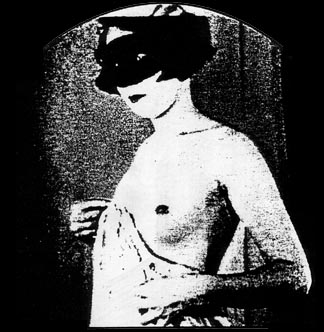
On Wednesday, October 18, The Secret Cinema will return to the Maas Building for a revival of one of our most popular thematic programs of archival film -- Stag Movie Night: Vintage Porno from the 1920s, 30s & 40s.

This screening will have a bonus not included in past Stag Movie Nights: a talk by Dan Erdman about the murky history of early erotica films. Erdman is the author of the acclaimed book Let's Go Stag! A History of Pornographic Film from the Invention of Cinema to 1970, published by Bloomsbury in 2021 (and newly released in paperback this year). Dan Erdman is the video preservation specialist at Media Burn Archive, and lives in Chicago.
The collection of rare 16mm films that we'll project will surprise and shock those who believe the "sexual revolution" of the sixties and seventies gave birth to the celluloid depiction of sex. True, the seedy adult theaters of the seventies and the home video industry that followed it did not exist when these films were made behind closed doors. The original stag movies were distributed through a covert network of all-male screenings at lodges, bachelor parties, and fraternities. Seeing these forbidden films was nonetheless a fairly common rite of passage for American men back then, as the surviving reels of film testify.
The earliest extant pornographic film dates from 1915, and they were probably made well before then. The introduction of 16mm film in 1923 really opened the floodgates of stag production, and a standard format was established. Virtually all stag films are black and white, one 10 to 15 minute reel in length, and silent -- assuring compatibility with the relatively low-cost home movie projectors that were typically rented along with a night's worth of programming.
What shocks today's audiences about these films is that most (though not all) of them are completely explicit in their depiction of sexual acts. The variety of acts and couplings filmed long ago is another eye-opener, and it is somehow comforting to note that the camera angles for such action, worked out a century ago, survive in today's adult videos.
The silent films will be accompanied by recordings of period music, including early jazz, crooners, and dirty blues songs.
This edition of Stag Movie Night will include some favorite reels from past screenings. The final selection is still being planned, but titles likely to be chosen include Hollywood Honeys, A Jazz Jag, Through the Keyhole, Mortimer the Salesman, and more, plus Buried Treasure, a hilarious pornographic cartoon from the 1920s attributed to the Max Fleischer studios and others.
There will be one complete show at 7:30 pm. Admission is $10.00.
Secret Cinema's first Stag Movie Night was presented at the old Silk City Lounge way back in 1996, and there were several sequel volumes, including a sold-out screening in the 2007 Philadelphia Film Festival.
The Maas Building was previously a brewery and a trolley repair shop. This beautifully restored 1859 brick and timber workshop today serves as a multipurpose art event and catering space.
NOTE: The date of the following screening at the Rotunda was moved (it will NOT happen on Thursday, September 14). We apologize for any inconvenience this change may have caused.

Four More Films at Rotunda
Friday, September 22, 2023
8:00 pm
Admission: FREE
The Rotunda
4014 Walnut Street
Philadelphia
The Secret Cinema will present a brand new program at the Rotunda on Friday, September 22, called Four More Films. As with a similarly titled past program, it consists of four short films, which together make up a feature-length program.
However, the four films of Four More Films have nothing to do with each other. All they share is that we have never shown them before, they are unlikely to have been seen by most people, and they are all very interesting. Each one is quite good.
There will be one complete show at 8:00 pm. Admission is free.
This screening is part of the Rotunda’s ongoing “Bright Bulb Screening Series,” which offers free movies on the second Thursday of every month, throughout the year.
The four films of Four More Films are:

The High Wall (1952, Dir: Michael Road) - A dramatic depiction of a boy who is taught prejudice as he grows to adulthood. This film, which won several awards, was sponsored by the Anti-Defamation League of B'nai B'rith, the Illinois Department of Mental Health and other groups. The cast includes Hollywood actor and director Irving Pichel, whose many credits included The Most Dangerous Game, Dracula's Daughter and Jezebel, prior to his being blacklisted for not cooperating with the House Un-American Activities Committee.

Building for the Nations (1950) - A colorful and technically detailed look at the construction of the United Nations building in New York. One of many sponsored films made by the United States Steel Corporation (of Delaware, in this case).

Travelin' Man (mid-late 1960s) - This rare reel evidently contains an unsold TV pilot for a travel series sponsored by Dodge cars and trucks (or "the Dodge Boys," in keeping with their then-current advertising theme). Host Lou Crosby (father of Cathy Lee Crosby, who also appears), shows the sights of Palm Springs, California and its surrounding area, including golf clubs, sand dunes, hotels, and other sports and leisure centers. Former Hollywood star (and former mayor of Palm Springs) Charles Farrell is seen at the Racquet Club he opened in 1934 with fellow actor Ralph Bellamy. Also seen is the "star of Ride the Wild Surf, Peter Brown!" A nearly lost window into a lost world, preserved, like so much, on 16mm film.
Trans-Pacific (1939, Dir: Palmer Miller & Curtis F. Nagel) - Pan American Airways' luxurious "Clipper" service is remembered fondly as symbolizing a golden age in aviation. The roomy "flying ships," with spacious seating, on-board lounge areas and gourmet dining are far removed from current airline experiences, while the amphibious Clipper planes could take passengers quickly to any destination with a sheltered harbor. This Pan Am-produced travelogue, made in glorious Kodachrome, details an opulent trip across the Pacific Ocean, with stops at several way stations -- a journey made possible by Pan Am erecting pre-fabricated hotels and support buildings on the islands of Guam, Wake and Midway. In just a few years, these places would become better known as the sites of brutal World War II battles than for luxury travel.
Hey you! Got nothing to do tomorrow (Sunday, July 2), in the middle of this holiday weekend when you’re probably already somewhere nicer? We didn’t think so, but just in case…we (Secret Cinema’s Jay Schwartz and D.J. Silvia) will be spinning some records at the International bar, between 4:00 pm and 7:00 pm. There will be food and drink available for a price, and hopefully good music (for free). No special theme this time, just random picks from our admittedly large record collections.
Sorry for the last minute notice -- but we just got this last minute booking, undoubtedly because the smarter, already-scheduled d.j. cancelled and took off for the shore.
At least it’s indoors, and the air conditioner should be filtering out all of the smoke particles.
Come by and say hi…please?
The International Bar, 1624 N. Front St, Philadelphia
Sunday, July 2
4:00 pm until 7:00 pm
Admission: FREE

The Secret Cinema presents French Pop Scopitones
at The Magnetic Fields concert
Friday, July 14, 2023
8:00 pm
World Cafe Live
3025 Walnut Street, Philadelphia
215-222-1400
On Friday, July 14 -- Bastille Day! -- the Secret Cinema will present a special selection of 1960s French pop music films that were originally created for the coin-operated film jukebox called Scopitone.
This presentation will serve as the support act for a concert by The Magnetic Fields. The program will serve as a reunion of sorts, as the Secret Cinema showed musical films before a 2015 solo concert by Magnetic Fields leader Stephin Merritt, at Union Transfer.
As always with Secret Cinema events, the films will be shown using real film (not video, not digital) projected on a giant screen.
Scopitone films were originally made for a French film jukebox that entertained patrons in bars, cafes and bus stations in Europe and America. The film prints, featuring performers both famous and obscure -- and which are considered to be among the more important of the many predecessors to the modern rock video -- are today quite scarce, and rare to see projected in their original form. Recently, we presented a longer program of Scopitones, along with an illustrated talk on the history of the film jukebox, at the Maas Building (and Secret Cinema's Jay Schwartz has been giving different versions of this talk for 25 years).
In honor of the July 14th holiday, this necessarily shorter selection of films will focus on exclusively French performers, including many legends from the golden age of 1960s "Ye Ye" pop music: Françoise Hardy, Johnny Hallyday, Sylvie Vartan, Dalida, and many more.
Doors will open at 7:00 pm and the show begins at 8:00 pm.
This will be the last Secret Cinema presentation until the fall.

Revival of Sitcom Rock: Rock 'N' Roll
Episodes of Classic TV Comedies at Maas Building
Friday, June 2, 2023
8:00 pm
Admission: $10.00
The Maas Building (Garden Entrance)
1320 N. Fifth Street, Philadelphia
267-239-2851
On Friday, June 2, the Secret Cinema will reach way back into the vault to pull out one of the favorite programming concepts from our past, Sitcom Rock: Rock 'N' Roll Episodes of Classic TV Comedies.
Sitcom Rock… showcases special episodes of classic situation comedies from the past, all featuring rock band guest stars and/or rock 'n' roll story lines. As always with Secret Cinema presentations, the shows will be projected in 16mm on a giant screen, from rare, original film prints (not video).
The situation comedy, television's equivalent to the "two-reeler" comedy shorts that played movie bills for decades, reached a certain summit by the mid-'60s, the same time that rock music achieved its long-lasting position as the predominant music of its time. It was only natural that these bizarre worlds would collide.
Sitcom Rock… has not been seen in 19 years, but was presented several times in the now 31-year-plus history of Secret Cinema -- first at the Khyber Pass in 1994, and later at the Trocadero, at Silk City Lounge, and in San Francisco and New York.
The program is being shown this time at the Maas Building, which on this evening will open their lovely back garden for wood-fired pizza, pop-up bar and a d.j., starting at 6:00 pm and running throughout the screening (as a result, entrance for both garden party and Secret Cinema screening will be through the 1320 N. Fifth Street door. The audience is welcome to bring food and drink up to the screening room).
The screening starts at 8:00 pm. Admission is $10.00
Highlights of "Sitcom Rock" will include:

The Munsters - The Munsters agree to rent out their house to touring rock group The Standells. When they return, they find a way-out beatnik party in progress, but Herman soon gets in the spirit and tries out some impromptu beat poetry (The Standells, in a pre-"Dirty Water" phase, perform "I Wanna Hold Your Hand" and "Do The Ringo").
The Mothers-In-Law - In a special episode of this somewhat-forgotten series about the trials of two pairs of middle-agers coping with their married offspring, the older set have a go at managing wild primitive rockers Sky Saxon and The Seeds! This amazing show was directed by Desi Arnaz, and also features Joe Besser of The Three Stooges (what a meeting of the minds!).

The Flintstones - In "Shinrock-a-Go-Go," then-popular rock showcase Shindig and its host Jimmy O'Neill are caricatured, as are San Francisco's genius folk-rock/beat group The Beau Brummels. Fred inadvertently invents a new dance craze, "The Flintstone Flop," as "The Beau Brummelstones" play their hit "Laugh Laugh."
Plus Sergeant Bilko (when "Elvin Pelvin" is inducted into his barracks, Bilko attempts to record a bootleg album!), The Brady Bunch perform "It's a Sunshine Day," and more!

1960s Student Films at Rotunda
Thursday, May 11, 2023
8:00 pm
Admission: FREE
The Rotunda
4014 Walnut Street
Philadelphia
The 1960s were a period when things really changed, not least in pop culture and the arts. Besides revolutions in pop music, painting and theater, underground filmmaking found a large audience, and it's also the time when film production on college campuses really took off. Major universities added or expanded their filmmaking departments, and the star students of N.Y.U., U.C.L.A. and U.S.C. -- like Scorsese, Lucas and Coppola -- would take their places as the leading film directors of the following decades.
By the end of the 1960s there were countless student film contests and festivals. Larger schools, notably U.S.C. (The University of Southern California) -- with one of the best-equipped departments and names like King Vidor and Jerry Lewis on their faculty -- actively distributed their students' work to other campuses and screens.

On Thursday, May 11, the Secret Cinema will explore this era at the Rotunda with the program 1960s Student Films, featuring several intriguing short films, including many made by students who went on to have long careers in Hollywood.
There will be one complete program at 8:00 pm. Admission is free (as are all programs in the Rotunda's monthly "Bright Bulb Screening Series").
A few highlights of 1960s Student Films are:
Marcello, I'm Bored (1967, Dir: John Milius & John Strawbridge) - Ostensibly a parody of Italian cinema of the day, this combines pop art animation with live action negative footage and comically mannered dialogue of mod pleasure seekers. Sound editing by George Lucas. A prize-winner in the National Student Film Festival.
Cocoon (1968, Dir: Khosrow Haritash) - This unusual short was made while the director was at U.S.C., prior to returning to his native Iran, where he made a few feature films before his untimely death at the age of 48. Cocoon follows a frustrated young black dishwasher who visits adult bookstores and lives a lonely, meager existence. Filmed against a particularly sleazy (and hippie-filled) late-1960s Hollywood. Kevin Thomas of the Los Angeles Times called Cocoon "one of the finest serious short films ever made, right up there with Roman Polanski's Two Men and a Wardrobe."
Nightshift (1967, Dir: Matthew Robins) - Menace and paranoia in the world of a an all-night gas station attendant. Great cinematography by Philadelphia native Caleb Deschanel (The Right Stuff, The Natural). Sound by Walter Murch (American Graffiti, The Conversation).
Darrin (1968, Dir: Basil Poledouris) - The director scored a $450 grant from the Academy of Motion Picture Arts & Sciences to make "a film about a child and his interaction with the environment." The result won a $1000 Edward Dymytrk prize, and then a Samuel Goldwyn scholarship from the American Film Institute to work with producer Lawrence Turman (The Graduate). He ultimately enjoyed a long Hollywood career -- as a composer of film music, often for U.S.C. classmates like John Milius and Randal Kleiser. His scores include those for Big Wednesday, TV's Lonesome Dove, Conan the Barbarian, The Hunt for Red October and many more.

Garden (1968, Dir: Wayne Wadhams, Gene Mackles) - An animated rumination on Hieronymus Bosch's famous painting The Garden of Earthly Delights, employing (like many student films) liberal use of presumably unlicensed rock music recordings. Wayne Wadhams, a musical prodigy himself, joined Dartmouth College's student film society after his own successful recording career with the band the Fifth Estate. He later composed jingles and sang the theme for TV's Candid Camera, worked in recording studios, was a longtime faculty member of the Berklee School of Music, and wrote several popular books about music production and composition.
Plus La Divina (1967), Viking Women Don't Care (1968), and more!

From Philadelphia with Love III:
More Industrial, Educational and other Lost Local Films
at the Bryn Mawr Film Institute
Bryn Mawr Film Institute
824 W. Lancaster Avenue, Bryn Mawr, PA
610-527-9898
Thursday, April 13, 2023
7:30 pm
Admission: $13.50, $8.00 BMFI members, $11.00 seniors/students, $9.00 children.
On Thursday, April 13, the Secret Cinema will return to the Bryn Mawr Film Institute to present a unique program of short films called From Philadelphia With Love III: More Industrial, Educational and other Lost Local Films. While most area residents are familiar with Philadelphia films such as Rocky, Trading Places, and the works of M. Night Shayamalan, there is a whole world of locally-made films that has been forgotten -- the "ephemeral" short films that were primarily made by small independent companies for the then-booming non-theatrical market. While most school districts, television stations and traveling salesman have long ago discarded their 16mm film projectors, we at Secret Cinema have not, and are proud to present a look back at these celluloid time capsules that would otherwise not be seen again.
The Secret Cinema has been collecting, archiving and screening this fascinating area of local film history for over two decades now. Our third BMFI presentation of Philly film will be another "best of" selection from past volumes (but with no repeats from previous Bryn Mawr editions, and including some titles that have not been screened anywhere in over a decade).
There will be one complete show at 7:30 pm. Admission is $13.50, $8.00 BMFI members, $11 seniors & students, and $9.00 children (with adult).
Highlights of From Philadelphia with Love III… will include:
The Truck and the Driver (1930s) - This short film promoting safe driving of trucks, produced by Aetna Insurance before many films of this type were made, would be interesting enough by virtue of its age and the vintage vehicles and streetscapes on display. That it appears to have been made entirely in the Philadelphia region should make it doubly so for local audiences. We have not been able to identify all of the locations (please come and help!), but are pretty confident that it includes scenes of Center City, Delaware Avenue, East Passyunk, and possibly Olney and the Philadelphia countryside...plus some still-valid lessons on road safety.
Friends in Philadelphia (1970) - A quick cinematic portrait of the Friends Select school on the Benjamin Franklin Parkway.
"Mister Rivets" footage (1954) - In the early days of television, Let Skinner Do It on WPTZ-TV (today's KYW) was one of the success stories of local daytime programming. When veteran radio personality Alan Scott took over for host George Skinner, the renamed Let Scott Do It was touted in the trades as the "top rated kitchen show" in the nation, offering light conversation, music...and a beloved mechanical man named "Mister Rivets." In reality this was actor Joe Earley, in a comical robot suit, playing gentle pranks on the genial host. The show was usually broadcast live and thus not recorded for posterity, but occasionally outdoor segments were shot on 16mm film, for use when one of the personalities was on vacation. This ultra-rare surviving reel (we know of only one other) shows some of Mister Rivets' typical antics: hanging laundry behind a house, feeding zoo animals, and hunting groundhogs (!), as well as scenes of the gigantic crowds that turned out to meet the friendly robot at a personal appearance.

The Troc (1966) - A confusing yet amusing University of Pennsylvania student film, with dancers creating interpretive art along colorful views of the Schuylkill River banks, and a climactic visit to the titular burlesque house, all set to 60's pop music. Directed by a young Randy Swartz, today prominent in Philly's dance community.
Is a Career in the Performing Arts for You? (1973) - An entry from the Library of Career Counseling Films, a multi-film project made for the U.S. Department of Labor by Philadelphia's Ralph Lopatin Productions, often taking advantage of local sites and resources. This time future high school graduates are invited to consider the career paths of musicians, actors and assorted support staff. Along the way they see the Shubert and Forrest theaters, Latin Casino and Just Jazz nightclubs, and local educational facilities for performing arts.
The Philadelphia-Lancaster Counterfeiters (1931) - The William J. Burns Detective Mysteries series of one-reel shorts, filmed in the early 1930s by Educational Pictures, is beginning to acquire a cult reputation among savvy vintage film buffs. This is due more to the stiff yet non-stop narration style of nationally-famous detective Burns, and the campy, stagy recreations of prominent true crimes, rather than for any inherent quality. This locally-themed entry in the series is typical, as Burns breathlessly recounts the fantastic (and perhaps difficult to follow) tale of a counterfeiting ring that operated within Philadelphia's Moyamensing Prison. The trade publication Motion Picture Herald rated this short as "gripping."
Plus much, much more!

Batter Up: Rare Baseball Films
at Old Pine Community Center
Friday, April 7, 2023
8:00 pm
Admission: $10.00
Old Pine Community Center
401 Lombard Street, Philadelphia
215-627-2493
On Friday, April 7 -- in between the first two home games of the Phillies' 2023 season -- the Secret Cinema will present Batter Up: Rare Baseball Films. This, our first ever sports-themed program, will include an assortment of little-seen reels about America's pastime, dating from the 1920s through the 1950s. We'll show newsreels, documentaries and cartoons. Local focus includes looks at the Phillies "Whiz Kids" 1950s World Series games, and grand old man of baseball Connie Mack…plus films about Babe Ruth and an umpire training school.
There will be one complete show at 8:00 pm. Admission is $10.00
The screening will be our second visit to the Old Pine Community Center, at the Northwest corner of 4th & Lombard Streets in Center City, steps away from South Street restaurants and shopping.
A few highlights of the program include:
World Series of 1950 (1950, Dir: Lew Fonseca) - Historic footage featuring game-by-game highlights of the Major League Baseball championship that pitted the Philadelphia Phillies against the New York Yankees, in Shibe Park (later renamed Connie Mack Stadium) and Yankee Stadium. The 1950 Phillies earned the nickname "the Whiz Kids," with such star players as Richie Ashburn, Robin Roberts, Jim Konstanty, Del Ennis and Andy Seminick (the Yankees roster included Hall of Famers Yogi Berra, Joe DiMaggio, Whitey Ford, Phil Rizzuto and manager Casey Stengel). The film was sponsored by sports equipment manufacturer A.G. Spalding.
RKO Sportscope No. 4: Connie Mack (1950) - A theatrical short subject made to mark the retirement of the man born as Cornelius McGillicuddy, but known to all as Connie Mack, the grand old man of baseball. Mack is shown in his Shibe Park office, surrounded by souvenirs of his 66 year career as manager of the Philadelphia Athletics. Newsreel clips highlight his life and his many honors. Narrated by Red Barber.
The Umpire in Baseball (1940s, Dir: Lew Fonseca) - More than you ever knew about umpires! Big league umpires Bill McGowan. Babe Pinelli, Art Passarella, and George Barr show a school for umpires, and some of their work in the Major Leagues. Director Lew Fonseca was a former baseball player (including on the 1925 Phillies), manager and radio announcer. He produced a popular series of films for the American and National Leagues between 1943 and 1969, which were offered free of charge to groups for non-theatrical screenings. He also narrates this one.
Plus Fence Buster: The Story of Babe Ruth (1948), The Magnetic Bat (1928) and more!
About Old Pine Community Center: Since 1977, Old Pine Community Center's mission has been to enrich the lives of its neighbors through dynamic programs and services focused on children and families, food insecurity, and community engagement. Their goal is to create welcoming and safe spaces for children, adults, seniors, and neighbors for their benefit and the benefit of future generations.

Secret Cinema to screen films for Franklin Institute's
Science After Dark program "Spectacular Spectacular"
Friday, March 31, 2023
7:30 pm until 11:30 pm
Admission: $40 advance/$45 day of show/$35 Franklin Institute members
The Franklin Institute
222 N. 20th Street
Philadelphia, PA
215-448-1200
On Friday, March 31, the Secret Cinema will participate in the latest chapter of the Franklin Institute's multi-dimensional event Science After Hours. This popular, quarterly series features programming for grown-ups that combines live performances, music, food, drink, and in this case, a film screening, all throughout the museum's historic galleries. The theme this month is "Spectacular Spectacular."
Doors open at 7:30 pm, and the event ends at 11:30 pm.
Admission is $40 in advance, $45 day of show, and $35 for Franklin Institute members.
The Secret Cinema portion will consist of an approximately 90-minute program of shorts, which will be shown twice. We'll draw from our archive films featuring spectacular musical and dance clips, coming attraction trailers for spectacular movies, spectacular displays of nature, and even a spectacular cartoon! All projected from rare 16mm film prints, on the spectacular big screen of the museum's Franklin Theater.
Read more about the full event here.


Atmospheric, noirish thriller Dark Waters
in rare 35mm print in Phoenixville
Sunday, March 19, 2023
4:00 pm
Admission: $12.00, $10.00 students/seniors/military, $8.00 Colonial members
Colonial Theatre
227 Bridge Street, Phoenixville, PA
610-917-1228
The Secret Cinema presents atmospheric, noirish thriller
Dark Waters in rare 35mm print in Phoenixville
On Sunday, March 19, the Secret Cinema will return to the Colonial Theatre in Phoenixville for a screening of Dark Waters. This largely forgotten 1944 psychological thriller stars Merle Oberon as a woman who escaped a sinking ship on which her parents drowned, only to remain haunted by the memory -- and by the weird behavior of the family members who welcome the orphaned woman into their Southern plantation. Dark Waters has acquired a cult repitation for director André de Toth's skillful use of film noir stylings to create a tense and eccentric atmosphere.
Dark Waters will be preceded by surprise short films from the Secret Cinema's archive of 35mm prints.
There will be one complete program starting at 4:00 pm.
Admission is $12.00, $10.00 for students/seniors/military, $8.00 for Colonial members
A complete description of the program follows...

Dark Waters (1944, Dir: André de Toth) 35mm
"Why did they pull me out of the water? That's where I belong, under the water with my mother and father!" Exotic beauty Merle Oberon stars as a woman who saw her parents drown in a ship sunk by Nazi torpedoes, and dazed, goes to live with relatives she's never met in a murky New Orleans plantation. Haunted by survivor's guilt and recurring visions of the tragedy, she finds her off-kilter relatives sympathetic at first, yet mysteriously they seem to encourage her nightmares and growing madness. Striking cinematography and a gallery of weird types (especially character actor greats John Qualen, Elisha Cook, Jr., and Thomas Mitchell) make this an especially atmospheric psychological thriller. Genre aficionados have debated whether or not Dark Waters is true film noir, but in the most literal sense, this must be one of the darkest films ever released: the grains of silver needed to create the ratio of black-to-white in its 35mm print could probably supply the photographic needs of five regular Hollywood releases.
After making films in his native Hungary, André de Toth worked for Alexander Korda as a second-unit director on Thief of Bagdad. In Hollywood he became a specialist in violent crime and Western movies. Despite having only one eye, he helmed the 3-D epic House of Wax. Independently produced by Benedict Bogeaus (Diary of a Chambermaid, Slightly Scarlet), Dark Waters includes some subtly progressive story points about race (via Rex Ingram's character) that would be unlikely in more typical studio fare of the era.
"Mood dictates narrative in André de Toth's Dark Waters, a hallucinatory jigsaw puzzle set in the deep swamps of 1940s Louisiana that becomes a perfect breeding ground for noirish shadows and deceptive wordplay." - Glenn Heath Jr., Slant.
"Dark Waters succeeds in large measure because of de Toth's attention to texture and atmosphere -- a studio rendition of Southern Gothic so expert that it managed to fool real bayou dwellers." - Kyle Westphal
Plus unusual short films.

Megaton Movies: Films about the Atomic Bomb
at Rotunda
Thursday, March 9, 2023
8:00 pm
Admission: FREE
The Rotunda
4014 Walnut Street
Philadelphia
On Thursday, March 9, the Secret Cinema will present Megaton Movies: Films about the Atomic Bomb, a special program featuring fascinating -- and still frightening -- looks at our nuclear past…and present. With the current warming up of the Cold War with Russia, these vivid documents from the 1940s, 50s and 60s are sadly as relevant as ever. The screening will include rare newsreels, government films and an Oscar-winning pseudo-documentary.
There will be one complete program at 8:00 pm. Admission is free (as are all programs in the Rotunda's monthly "Bright Bulb Screening Series").
Just a few highlights of Megaton Movies… are:
Survival Under Atomic Attack (1951) - "Let us face, without panic, the reality of our time -- the fact that atom bombs may someday be dropped on our cities." Castle Films, which normally supplied cartoons and travel subjects to school and church 16mm projectors, distributed this sobering instructional film (and several similar titles) in cooperation with the Federal Civil Defense Administration. It served as a sort of primer on how to beat the bomb, through careful avoidance of flying glass, collapsing buildings and radioactive fallout. Narrated by no less than esteemed journalist Edward R. Murrow, it used data collected by studying the victims of Hiroshima and Nagasaki.
Operation Crossroads (1946) - Operation Crossroads was a series of nuclear weapons tests conducted by the United States at Bikini Atoll in the Marshall Islands in 1946. The purpose of the operation was to investigate the effect of nuclear weapons on naval warships. They were the first tests to be publicly announced beforehand and observed by an invited audience, which included a large press corps. The Navy convinced 167 island dwellers to relocate, "for the good of mankind." This color film shows the careful photographic documentation that was recorded of two different blasts, but not of radiation effects which may have impacted the thousands of Navy personnel participating in the test and cleanup.
The War Game (1965, Dir: Peter Watkins) - This mockumentary featurette -- an early example of that genre -- depicts, using hand-held camera and a non-professional cast, what could happen if nuclear war was directed against England. The resulting chaos and carnage reveal that adequate preparation against such calamity is impossible. The War Game was commissioned by the BBC for television broadcast, but when completed, the network decided that Watkins' film was "judged to be…too horrifying for the medium of broadcasting." It later was distributed theatrically and shown in film festivals, to great acclaim, and was awarded the Oscar for Best Documentary Feature of 1966 (despite being neither documentary nor feature). Truly one of the scariest films ever shown by Secret Cinema; perhaps we should have saved it for Halloween.
Plus much more!

Scopitone Party screening and talk
at Maas Building
Friday, February 24, 2023
8:00 pm
Admission: $10.00
The Maas Building
1325 N. Randolph Street, Philadelphia, PA
267-239-2851
On Friday, February 24, The Secret Cinema will return to the Maas Building and revive our popular Scopitone Party presentation, a unique collection of music films from the early and mid 1960s. They were originally made for a French film jukebox called Scopitone, which entertained patrons in bars, cafes and bus stations in Europe and America. The film clips, featuring performers both famous and obscure -- and which are considered to be among the more important of the many predecessors to the modern rock video -- are today quite scarce, and difficult to see in their original form.
Shown will be a large assortment of the precious prints (most of which were discovered by a film collector, in pristine, never-used condition, in the long-warehoused inventory of a retired Virginia jukebox dealer). Adding interest to the Scopitone Party program will be a special talk about the history of film jukeboxes (which date back to the 1940s), illustrated with rare photos and original advertising materials.

This program will be the last "Secret Cinema classic" offering of our 30th anniversary celebration (which began March 2022). Scopitone Party was last presented 11 years ago -- and was first shown 25 years ago, at Moore College of Art & Design. The talk will be given by Secret Cinema director Jay Schwartz, who has now presented the Scopitone Party program at the Yerba Buena Center for the Arts in San Francisco, Columbia University in New York, the Festival Internacional de Cine de Gijón (Spain), the Benicassim music festival (also Spain), and a rock film festival in Athens, Greece. And for the first time, the illustrated talk will be updated to include new information about (and images of) Scopitone, which has emerged since we first pieced together the history of this pioneering music technology.
There will be one complete show at 8:00 pm. Admission is $10.00.
Scopitone Party will include performances by such well-known oldies icons as Dion, Nancy Sinatra, Paul Anka and Procul Harum. Also on view will be many French pop performers, including currently in retro-vogue names like Francoise Hardy, Sylvie Vartan, Michel Polnareff, Juliette Gréco, rockabilly-belting Johnny Hallyday, and doomed chanteuse Dalida. And then there are mystifying, bizarre clips by the British Elvis imitator Vince Taylor, a quartet of singing Jerry Lewis-types named I Brutos, and even a few songs by performers whose names were lost to history.

Early Brigitte Bardot feature in 35mm
at Lightbox Film Center
Saturday, January 28, 2023
7:00 pm
Admission: $10, $8 students, free for Lightbox members/Uarts students & staff
Lightbox Film Center
401 S. Broad Street, Philadelphia
215-717-6477
On Saturday, January 28, the Secret Cinema will present a rare 35mm print of a very early feature starring Brigitte Bardot, The Girl in the Bikini. The screening -- our first collaboration with the Lightbox Film Center -- will also be the first offering in an irregular series called Art House Oddities.
There will be one complete program, starting at 7:00 pm. Admission is $10, $8 students, and free for Lightbox members or Uarts students and staff.
The program will also include surprise short subjects (also in 35mm!).
The Girl in the Bikini (1952, France. Dir: Willy Rozier)
This, the second film appearance of Brigitte Bardot, did not arrive on our shores until six years after its production. By then, "B.B." was the world's biggest sex symbol, making international headlines after the success of Roger Vadim's And God Created Woman. In 1952, Bardot was just 18 years old, and taking all of her career direction from discoverer Vadim, then her fiancé. In this early role, she projects what the New York Times called, "a fetching winsomeness and innocence." The simple plot concerns a young law student (Jean-François Calvé) who partners with a cigarette smuggler to search for ancient treasure spotted off the coast of Corsica on a previous visit -- but the boy's real motive might be to again find the pretty lighthouse keeper's daughter (Bardot) who swims daily off of the rocks. A not-unexpected double-cross leads to a dramatic conclusion, but the real rewards of this film, truly the product of a different time, are the visual delights of the Mediterranean scenery, and of the young, athletic cast (especially Bardot). Films like this (originally titled Manina, la Fille Sans Voiles) would convince many Americans to take European vacations on then newly affordable overseas jet travel.

Art House Oddities will be an ongoing, irregular Secret Cinema series examining the early fare of "art house" cinemas. These specialty theaters catered to post-war audiences' increased curiosity about foreign and independent films -- the box office scores of which often benefited from their adult themes and lax censorship. This era of distribution, in which with many works were re-edited for America, and most foreign language films dubbed into English, has been largely forgotten with many of its films lost. Yet, adventurous viewers saw a lot of films this way in the 1950s and '60s, before "repertory cinemas" replaced art house distribution…and many theaters with "Art" in their title turned to hardcore pornography in their final acts.

"B" Picture Double Feature at
Chestnut Hill Film Group anniversary screening
Tuesday, November 29, 2022
7:30 pm
Admission: FREE ($5.00 museum donation suggested)
Woodmere Art Museum
9201 Germantown Avenue, Philadelphia
(215) 247-0476
The Secret Cinema will return to the Woodmere Museum on Tuesday, November 29, to present a unique program called "B" Picture Double Feature, consisting of two brisk-paced genre features from the 1940s, plus surprise short subjects.
This presentation is part of the Chestnut Hill Film Group's 50th Anniversary "Best Of" season -- this same program was presented in 2012.
The phrase "B-Movies" has come to have many connotations over the years, mostly negative, but originally the designation simply meant a film was the "second feature" on a standard double bill. As this usually meant it was a lower-budgeted, shorter-length affair, the format lent itself to fast-paced genre films that didn't require big-name stars, such as Westerns, mysteries, and horror films (though there were also many comedies, romantic dramas and even musicals made as "b" pictures).
Our double feature includes two films with close to one-hour running times, and combines comic strip crime with creepy horror.
There will be one complete screening, at 7:30 pm. Admission is free (a $5.00 museum donation is suggested).
Complete descriptions of the two features appears below:

Dick Tracy Meets Gruesome (1947, Dir: John Rawlins)
Chester Gould's comic strip police detective debuted in 1932, and has remained one of the most popular media characters ever since. Besides the still-syndicated newspaper strip, he has appeared in radio dramatizations, television cartoons, comic books, children's record albums, and of course, motion pictures. Dick Tracy's big screen debut was in a Republic serial starring Ralph Byrd, considered by many the actor who portrayed Gould's square-jawed creation most accurately. After four different complete serials, a series of Dick Tracy b-features was produced by RKO. First they put Morgan Conway in the lead role, but before long they recruited Byrd to return and complete the series.
Dick Tracy Meets Gruesome is fast and lively, and probably the best of the Tracy b-features, thanks largely to the strong cast. Besides Ralph Byrd, the film is enlivened considerably by the appearance of no less than Boris Karloff as the titular villain. Gruesome is an evil ex-con who enlists Dr. A. Tomic's invention for temporarily freezing human motion as an aid to bank robbing. Also on hand are Anne Gwynne (as Tess Trueheart), Lex Barker, and the unforgettable Skelton Knaggs as X-Ray.

The Brute Man (1946, Dir: Jean Yarbrough)
Rondo Hatton may have had the saddest of all movie careers. In his youth he was a handsome college athlete and popular with women, but while fighting in France in World War I, Hatton was injured by poison gas, and as a side effect contracted acromegaly. This rare, progressive disease makes the pituitary gland overly active, causing severe disfigurement of the hand, hands and feet. While working as a journalist on a Florida movie set, Rondo's unusual looks were noticed by director Henry King, who cast him as rugged saloon owner in the 1930 film Hell Harbor. Hatton eventually moved to Hollywood and was signed to Universal, usually playing heavies in small, non-speaking parts.
Despite possessing no real acting ability, Hatton's unique looks resulted in a lot of work. Beginning with the Sherlock Holmes series entry The Pearl of Death, Hatton was featured in a succession of films as "The Creeper," a super-strong giant, usually used by others to dispose of their enemies. Other "Creeper" films include The Spider Woman Strikes Back, House of Horrors, and Hatton's final film, The Brute Man. Eerily paralleling Rondo's own life, it is the story of a bright college student who is physically and mentally disfigured in a lab accident, and then enacts violent revenge on those he judges responsible. In real life, Rondo Hatton died shortly after the film was completed, for in those days acromegaly was both incurable and fatally damaging to the heart. Feeling that the film's release might now appear in bad taste, Universal sold off The Brute Man to Poverty Row studio PRC. Appearing as the pre-disfigured student was doomed tough guy/actor Tom Neal, who would star in PRC's film noir classic Detour (and later go to jail for killing his wife).

The Standard Tap
901 N. 2nd Street, Philadelphia
215-238-0630
FREE!

Newest National Film Registry Short Films at Rotunda
Thursday, November 10, 2022
8:00 pm
Admission: FREE
The Rotunda
4014 Walnut Street
Philadelphia
On Thursday, November 10, the Secret Cinema will present at the Rotunda, for the second time, a special program of short films paying tribute to the National Film Registry (the last was in 2018).
In our current, divided political climate, the legislative branch of government often seems frozen, but in 1988 it managed to pass, of all things, laws mandating the establishment of "a National Film Registry to register films that are culturally, historically, or aesthetically significant." This unusual legislation was a side effect of public controversy over the colorizing of classic black and white Hollywood films, and the fear that future generations would not be able to see such works as they were originally created. In 1989 the first group of 25 titles was named to the Registry (including The Wizard of Oz, Nanook of the North and Star Wars). The National Film Registry today lists 825 films, including many obscure and "orphan works" -- not just features, but short films that encompass early cinema, documentaries, cartoons, newsreels, educational films and even home movies.
A quick look through the Secret Cinema archive shows that we hold prints of over 50 films from this list -- including one title (the locally made The Jungle) whose inclusion was the result of our lobbying. Quite a few are feature-length, but since any of those would constitute a whole show, we'll instead focus on shorts for our National Film Registry Short Films program, to show the variety of our film heritage that is honored in this important pantheon.
There will be one complete program, starting at 8:00 pm. Admission is free.
Highlights of the National Film Registry Short Films program are:
Peege (1972, Dir: Randall Kleiser) - Main Line-raised Randall Kleiser is best known for directing crowd-pleasing features like Grease, The Blue Lagoon and Honey, I Shrunk the Kid. But the one-time housemate of fellow U.S.C. student George Lucas never made a film more artful, or touching, than Peege, a one-off project funded by the Directors Guild Foundation. It starred Bruce Davison (Willard), who had earlier run with Kleiser on the Radnor High School track team. Peege recreates an incident in the director's life, when he visited an ailing grandmother in a Pennsylvania nursing home. The film ultimately received wide distribution in the non-theatrical realm, and has been used for instruction in medical schools, hospitals and nursing homes. The cast also included such recognizable faces as William Schallert (The Patty Duke Show) and Barry Livingston (My Three Sons). The title role of the grandmother was played by Jeanette Nolan, whose screen debut was as Lady Macbeth in Orson Welles' Macbeth (1948).

The River (1938, Dir: Pare Lorentz) - The River is an art film disguised as social advocacy disguised as a documentary. As with The Plow That Broke the Plains and Valley Town (entries seen earlier in our "Famous Films" series), The River documents not only its subject, but a fascinating, long-gone time when the federal government funded politically progressive and artistically avant-garde art. Lorentz made this project after the success of The Plow... to tell what he described to his bosses as "the biggest story in the world -- the Mississippi River." The subject encompassed several issues of importance to the FDR administration: flood control, soil and timber conservation, and rural electrification, and turned them into a powerful narrative via rhythmic and lyrical narration (read by baritone Thomas Chalmers), discordant music (by modernist composer Virgil Thomson), and striking photography (by, among others, Floyd Crosby). The River was, like The Plow..., a popular and box office success, but it had ruffled many feathers. Lorentz was slated to head a new agency established by presidential order, the U.S. Film Service, but before this project could get underway its budget was written out of existence by a hostile congress. Named to the National Film Registry in its second year.
Kid Auto Races at Venice, California (1914, Dir: Henry Lehrman) - A remarkable, historic film that qualifies as both documentary and constructed slapstick comedy. The film was completely improvised around a simple recurring gag: A newsreel crew covering a real-life contest of children's gravity-powered "soap box" cars is continually frustrated by a camera-hogging interloper. The troublemaker was Charlie Chaplin, in his second-released film appearance -- but the first to feature his "little tramp" characterization, in brush moustache, derby hat and baggy trousers. The costume was created for a film he'd shot earlier (Mabel's Strange Predicament) that was ultimately released two days later. Thus the world was introduced to the screen persona that Chaplin was to inhabit (and enhance) for the next 26 years.

Plus Duck and Cover and The House I Live In.

Weird Cartoons at the Bryn Mawr Film Institute
Bryn Mawr Film Institute
824 W. Lancaster Avenue, Bryn Mawr, PA
(610) 527-9898
Wednesday, November 2, 2022
7:30 pm
Admission: $13.50, $8.00 BMFI members, $11.00 seniors/students, $9.00 children.
The Secret Cinema will return to the Bryn Mawr Film Institute on Wednesday, November 2. It will be a revisiting of one of our favorite themes, called Weird Cartoons, and highlighting unusual and bizarre animation.
We've shown several unique "volumes" of this weird program, beginning nineteen years ago. This show will gather highlights from these, and also add a few that we've never shown before (however, there will be no repetition from the Weird Cartoons screening that we presented in 2021). Most, but not all of what we'll include in Weird Cartoons was made for general audiences by major studios; some were made by independent animators, some were sponsored films with subtle advertising messages, and a couple of cartoons date back to the era of silent films. A few might be perceived as offensive by today's standards. What these films, which were made from the 1920s through the 1950s, all share is a fearless aesthetic that is unafraid of the absurd; an often shocking sense of humor that is the polar opposite of today's sanitized, cross-marketed Pixar sensations.
As always, all films will be presented using real 16mm film projected on a giant screen.
There will be one complete program, starting at 7:30 pm. Admission is $13.50, $8.00 BMFI members, $11.00 seniors/students, and $9.00 children.
A few highlights will include:
Buddy's Lost World (1935) - The Buddy character first appeared in 1933, as a replacement for the popular Bosko, the first character to "star" in Warner Brothers' Looney Tunes series. Animation historians generally consider the Buddy films to be a disappointment, but this entry certainly had a wild premise. It's essentially a short cartoon version of The Lost World, the 1925 silent feature adaptation of Arthur Conan Doyle's fantastic novel, about the discovery of a hidden jungle where dinosaurs still walk the earth. If that weren't enough to fill a seven-minute cartoon, Buddy also encounters a swishy caveman and a cameo by the Three Stooges!
Korochan the Little Bear (1959) - The unique drawing style marks this as an early sample of Japanese animation. It tells the story of a family of bears who toil in the forest, except for little Korachan, who only wants to play, and manages to be both cute and campy. It was distributed to American schools by educational film giant Encyclopedia Brittanica Films.
To Your Health (1956, Dir: Phillip Stapp) - Made for the U.N.'s World Health Organization at the British Halas/Batchelor studio, this film attempts to answer the question, "What is alcohol, anyway?" Striking, beautiful Technicolor animation is used to depict the effects and problems of drunkenness. Director Stapp had a long career making cartoons for progressive political and social causes, including contributions to the work of Julien Bryan and to the 1953 animated feature version of George Orwell's Animal Farm.
Willoughby's Magic Hat (1943, Dir: Bob Wickersham) - The unusual story of a meek man who gains super powers when he dons a cap made from the hair of Samson. The stylized design is credited to Zack Schwartz, one of several Disney animators who left that studio after a 1941 labor strike. Schwartz would later join fellow strikers like John Hubley in their newly formed UPA studios, where they would further explore a more modern, minimal way of drawing cartoons. The real star of Willoughby's Magic Hat, however, may be the uncredited narrator, whose fussy, nervous voiceover underlines this peculiar film with extra weirdness.
The Wacky World of Numbers (1968, Dir: Steven Clark) - "Adapted by the book by Sheldon Wasserman." Bizarrely minimal short that is essentially a series of animated, silly puns and jokes based on the shapes of numerals, intercut with psychedelic, kaleidoscopic transitions and horn-based go-go music. The look was clearly inspired by Rowan & Martin's Laugh-In (though maybe without the laughs). We will openly label this one as "interestingly bad" -- but cannot comment on whether the book was better.
Plus To Bali and Under the Sea, Flying Fists (with Flip the Frog), sing-along cartoons, and much more!
Lenny Kaye and Nazz singer Stewkey appearing
at Nuggets: Celluloid Artyfacts of Sixties Rock

Friday, October 21, 2022
8:00 pm
Admission: $10.00
Buy advance tickets HERE
Tickets also sold at door.
2223.fish Theater at Summerfield Church
2223 E Dauphin Street (Konrad Square), Philadelphia
215-634-4695
We at Secret Cinema possess no false modesty -- we're proud of the 30 years of screenings we've presented, all using real film and generally consisting of rather original programming (if we do say so ourselves!). But we've never been more pleased with anything we've done than one sold-out show presented 15 years ago. So let's do it again…and, as before, with two very special guests in attendance.

On Friday, October 21, the Secret Cinema will again present Nuggets: Celluloid Artyfacts of Sixties Rock, a unique hodgepodge of ultra-rare reels consisting of various short films and television shows showcasing mod, garage and pop music from the mid-to-late 1960s. This time, it will be at the spacious 2223.fish theater, located within the Summerfield Church, in the heart of Philadelphia's Fishtown neighborhood.
When we first named that program, it was in naked homage to the inestimably influential 1972 garage rock compilation album of the same name. This year, we are thrilled to announce that in addition to the rare films, we will again have with us the creator of the original "Nuggets," Lenny Kaye, and Nuggets album star Stewkey, of legendary local rock band The Nazz.

Prior to his 48 years as Rock Hall of Fame inductee Patti Smith's chief musical collaborator, Lenny Kaye was a prolific rock critic and historian. He contributed to leading rock periodicals, wrote legendary liner notes (even earning mention within a Steven King novel), and was one of a handful of rock critics at the time to take serious interest in the supposedly frivolous corners of rock history, from doo wop to the previously-unlabeled genre of garage rock. This work reached a pinnacle when he compiled for Elektra Records a double-LP of what were then considered regional obscurities and "one hit wonders" of mid-late sixties rock, titled Nuggets: Original Artyfacts from the First Psychedelic Era, 1965-1968 (released exactly 50 years ago this October!). The collection brought together great proto-punk singles by The Electric Prunes, The Standells and The Seeds, sides that had been recorded just a few years earlier but had already been forgotten in the wake of progressive rock and singer-songwriters.

Nuggets ensured that this music would never be forgotten again. It first spawned a host of similarly-named compilations of garage rock (Pebbles, Boulders, et al), and then Rhino Records turned the name Nuggets into something of a sixties reissue franchise, culminating in no less than three deluxe CD box sets of psych and garage rarities. Lenny Kaye, meanwhile, moved on, as leader of the Patti Smith Group, record producer, teacher of a university class in rock history, d.j. on Little Steven's "Underground Garage" Sirius XM channel, and author. His latest book is Lightning Striking: Ten Transformative Moments in Rock and Roll (one chapter is devoted to Philadelphia in 1959!).
At Nuggets, the film screening, Lenny Kaye will discuss sixties rock and add his insightful commentary between films.
To make this an even more special event, we'll again have Stewkey (lead singer and keyboardist of Philadelphia's great sixties band The Nazz) in person, to present a rare 16mm print of the promo film for "Open My Eyes."
There will be one complete show at 8:00 pm. Admission is $10.00.
A few highlights of Nuggets include:

Girls In Short Short Dresses (1966) - Paramount made this topical film in the final days of the theatrical short subject era, to capitalize on the worldwide interest in then very-Swinging London. It stars actual mod band The Thoughts, who are best known to collectors for their recording of Ray Davies' otherwise unreleased song "All Night Stand," on Shel Talmy's Planet Records label. In this largely unknown Technicolor film, they perform two songs in the famous Blaise's nightclub, and in a reverse on the usual rock band scenario, they chase girls around tube stations and Carnaby Street boutiques. The film also makes a visit to the studio of fashion designer Mary Quant, inventor of the mini-skirt.

The Ecstasy Is Sometimes Fantastic (1966) - Made by the Canadian Broadcasting Corporation, this is a rare cinema verite look at a working, not-quite-made-it rock group. Toronto garage band Jon and Lee and the Checkmates reveal all sides of their world, from belting out James Brown numbers in packed clubs, to band meetings to discuss itineraries and accounting, to the crucial business of getting the right haircut.
The Nazz: Open My Eyes (1968) - Rock videos weren't invented in the eighties; they've been around since sound film was perfected. In the sixties they were called "promo films," and this was one of the better ones. Stewkey, the lead singer and keyboardist of Philly's greatest mod band, will introduce this rare public screening of his personal 16mm print (which is actually a rare alternate edit of the clip MTV has shown!)…and be interviewed by Lenny Kaye, who included this great song on the original Nuggets LP!
Plus clips from feature films and television with music performed by The Standells, The Chocolate Watchband, The Seeds, The Birds (UK), The Marmalade, The Orphan Egg, The Zombies and more!
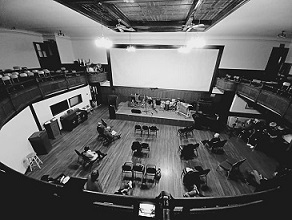
The 2223.fish theater at Summerfield Church is located in a beautiful, 110-year old stone building on Konrad Square Park, in the heart of the ever-growing Fishtown neighborhood of Philadelphia. In addition to providing worship services, they serve as a lively community center, with the auditorium hosting theater, concerts, flea markets and neighborhood meetings. The building is located near Septa's York-Dauphin el stop, and route 5 bus line.

Hear NPR interview with Lenny Kaye about Nuggets!
Read the Guardian's interview with Lenny Kaye about Nuggets!


Jay Schwartz spins The Other 80s at the Standard Tap
Saturday, October 15, 2022
1 pm until 4 pm
Admission: FREE
The Standard Tap
901 N. 2nd Street, Philadelphia
215-238-0630
On Saturday, October 15, The Standard Tap bar will host Jay Schwartz (of the Secret Cinema) to spin three hours' worth of records going back several decades to the underground sounds of the 1980s.
It all starts at 1:00 pm and runs until 4:00 pm.
Admission is free.
While most prior revivals of music from that decade focused on the frothier offspring of an earlier new wave (and wacky hairstyles and fashions), The Other 80s aims to remind people about the many rich branches of underground rock that grew in the aftermath of punk rock. A whole new network grew through "left of the dial" college radio stations, D.I.Y. fanzines and independent concert venues, and this was its sound.
The all-vinyl spun music at The Other 80s will necessarily only scratch the surface of ten years of great records, but will include artists that broke through to respectable levels of acclaim like R.E.M., Husker Du and the Replacements. Yet, equal time will be devoted to deeper tracks, covering everyone from Agitpop to Zeitgeist, with detours through sub-genres like jangle pop, the Paisley Underground and post-punk. Expect lots of American records (but not only), and plenty of guitars (but not just that).
Jay Schwartz has, in the past, spun mainly highly-themed sets of music, such as 1970s punk/new wave, power pop, sunshine pop, bubblegum, Scratchy Old Jazz Records, and with musical partner D.J. Silvia, Salut les Copains (1960s French pop), Made in Spain (1960s rock from Spain) and Worldwide Sixties Discotheque (1960s rock/pop from all over).
Newest Archive Discoveries: Unseen Curiosities from the Secret Cinema Collection at Rotunda

Thursday, October 13, 2022
8:00 pm
Admission: FREE
The Rotunda
4014 Walnut Street
Philadelphia
On Thursday, October 13, The Secret Cinema will return to the Rotunda with another chapter of our occasional series, Archive Discoveries: Unseen Curiosities from the Secret Cinema Collection. Once again we'll feature a mélange of fascinating short films from the past. As we go through our collection, reel by reel, we continually find films that don't necessarily lend themselves to fitting into a themed group, yet are too interesting, or fun, or funny to not share. None have been shown in previous Secret Cinema programs. Indeed, few of these films are likely to have been seen anywhere in recent years.
There will be one complete show at 8:00 pm. Admission is free (as are all programs in the Rotunda's monthly "Bright Bulb Screening Series").
A few highlights from this new edition of Archive Discoveries… include:

Monsieur Jean-Claude Vaucherin (1968, Dir: Pascal Aubier) - In this peculiar, absurd film, a man sits alone in his office, desperate to occupy himself, yet appears to have no work to do (he has many pens, however!). Writer/director Aubier directed several short films, a few features, and acted in many more, including Godard's Pierrot le Fou and the unique drug addiction epic Chappaqua (its cast also included William S. Burroughs, Allen Ginsberg, Ravi Shankar, Ornette Coleman and Hervé Villechaize!). With Dominique Spinetta and Bernadette Lafont, who would become "the face of French New Wave" soon after her debut in Truffaut's short film, Les Mistons.

Eddie (1969, Dir: Laurence Salzmann and Peter Barton) - "There are over 40,000 people living in single-room 'welfare' hotels in New York City alone. This is a film about one of them." So begins a remarkable (and grim) documentary, co-made by Philadelphia photographer Salzmann, with a grant from the brand-new American Film Institute. To study his subject, Salzmann lived for a period in the same single-room occupancy hotel (it also led to a companion film, Alfred, and a photo portfolio, Neighbors on the Block).
The Swinging Scene of Ray Anthony (1968, Dir: Milton Lehr) - Bandleader Ray Anthony began his musical career in 1940, playing trumpet with Glenn Miller. In the 1950s he led his own big band, scored hits with "The Bunny Hop" and "Hokey Pokey," starred in some TV series, and acted in movies, including a couple with his then-wife, Mamie Van Doren. Today at 100, Anthony is the last surviving member of Glenn Miller's big band. Which brings us to this 1968 syndicated television special (which we'll present a fragment from). Already well past his peak years, Anthony tries hard to appear relevant with the "swinging scene" of the Vietnam era: He packs the show with bikini-clad girls, rockin' numbers like "What'd I Say" and "Do the Swim," corny jokes (with laugh track), and even performs a medley of hits by the Tijuana Brass. My initial viewing notes say, "Amazing! Awful! Great!"…but judge for yourself.
Plus Lyman H. Howe's Hodge-Podge (1933), G.I. Movie Weekly (1945), Thundering Rails (1948) and much more!

P>

The International bar
1624 N. Front St (at Cecil B. Moore Avenue)
Philadelphia
Son of Trailer Trash
at Phoenixville's Colonial Theater

Saturday, September 17, 2022
7:00 pm
Admission: $11.00 general, $9.00 seniors, $8.00 students, $6.00 Colonial members
Colonial Theatre
227 Bridge Street, Phoenixville, PA
610-917-1228
As part of the Secret Cinema's 30th anniversary year, we will revisit one of our biggest presentations ever on Saturday, September 17, when we present Son of Trailer Trash on the big screen at the Colonial Theatre in Phoenixville. Like our original Trailer Trash program, this all-different program is a non-stop orgy of rare, original preview "trailers" advertising some of the Secret Cinema's favorite films of the 1960s and '70s -- exploitation, sexploitation, science-fiction, bikers, horror, rock musicals, beach movies, and unclassifiable movies. All will be shown from archival 35mm prints (with several in true, IB Technicolor) on the Colonial's gigantic screen (in its historic "1903 Theatre"), along with vintage drive-in messages, theater commercials and date strips, from the 1950s and beyond.
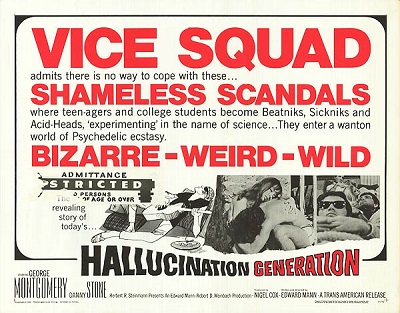
A sampling of the many trailers to be shown includes Invasion Of The Bee Girls, Riot On Sunset Strip, The Third Sex, Bedazzled, The Big TNT Show, Psycho, Hallucination Generation, The Devil's Wedding Night, and many, many more. There will be some guaranteed surprises, not to mention several movies that nobody has ever heard of! The combined giant cast this time includes Nancy Sinatra, Frank Sinatra, Rock Hudson, Maurice Chevalier, The Byrds, Simone Signoret, George Jones, Frankie & Annette, Bob Denver, George Raft, Peter Cushing, Linda Blair, and Francoise Hardy. Son of Trailer Trash was directed by a huge team of greats and less-than-greats which includes John Frankenheimer, Russ Meyer, Alfred Hitchcock, Stanley Donen, and Chuck Barris (we feel all of those cited here qualify as greats).
There will be one complete show at 7:00 pm. Admission is $11.00 general, $9.00 seniors, $8.00 students, and $6.00 Colonial members

Son of Trailer Trash was first presented at the Prince Music Theater in 2002.

The International bar is located at Front Street and Cecil B. Moore Avenue (nee Columbia Avenue), on the lively edge of Fishtown (or whatever that corner is technically considered). They serve food and drink and admission is free.
All-new From Philadelphia with Love
at new Fishtown venue
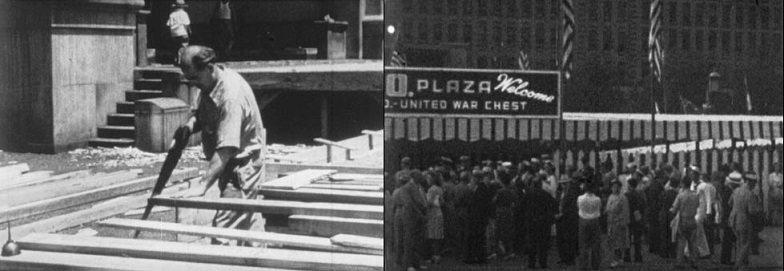
Friday, April 29, 2022
8:00 pm
Admission: $10.00
2223.fish Theater at Summerfield Church
2223 E Dauphin Street (Konrad Square), Philadelphia
215-634-4695
On Friday, April 29, the Secret Cinema will present the latest chapter in its ongoing series From Philadelphia with Love: Industrial, Educational and other Lost Local Films (2022 Edition). Once again, it will contain 100% new programming, and will also be our first screening at a brand new (to us) venue...the spacious 2223.fish Theater at Summerfield Church, in the heart of the Fishtown neighborhood.
From Philadelphia with Love... showcases rare 16mm prints from the Secret Cinema archive about different aspects of life in the Philadelphia region. Some were made as sponsored films promoting goods or institutions, and others are educational, documentary or dramatic in nature. Most are virtually impossible to see elsewhere.
The Secret Cinema began showcasing these ephemeral scenes of lost local history back in 1999. We've now projected over 65 of these films -- but none of those will be repeated in this month's program. In fact, few have been seen by anyone since they were originally made.
There will be one complete show at 8:00 pm. Admission is $10.00.
COVID policy: Proof of full vaccination and photo ID required for entrance. Masks must be worn inside the building.
Just a few highlights of this 2022 edition of From Philadelphia with Love... are:
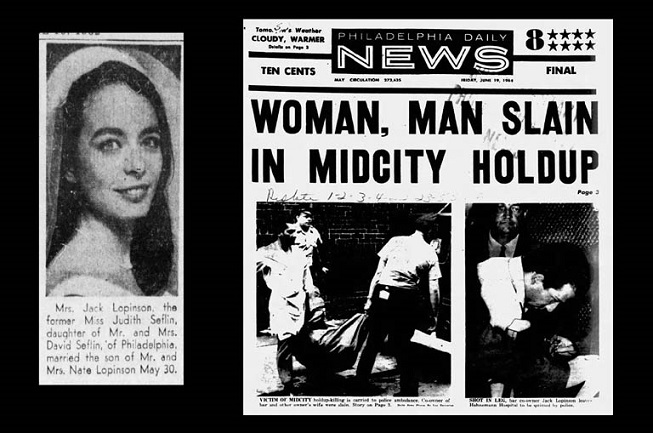
Commonwealth vs. Lopinson (1970s) - For several weeks in 1965, local newspapers gave front-page coverage to one of the most sensational trials in Philadelphia history. In the end, Jack Lopinson was found guilty of hiring a hitman to murder his wife and his business partner -- both were shot to death in the basement of his recently acquired Center City restaurant/tavern Dante's. Lopinson himself was shot in the leg, as part of a plan to make it look like a robbery gone wrong. This amazing film was part of a series of educational films made for law students, which recreated the courtroom testimony of notable trials. What is remarkable is that the roles of the two key attorneys were played, just a few years after the events, by the actual participants from the case: prosecutor Richard Sprague, and defense attorney Charles Peruto, two of the most celebrated Philadelphia lawyers ever. Adding to the realism, the jury (and thus we, the film audience) are shown the real-life, gory crime scene photographs from 1964.
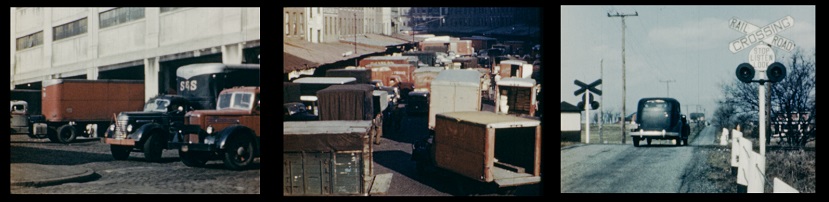
Pennsylvania's Highway Story (1949) - When this colorful Kodachrome short was made, cars and trucks looked very different, but the steady increase in road use was already a problem for planners. The film details current and future improvements on the drawing board for roads throughout the state -- including, of course, those in Pennsylvania's largest city.
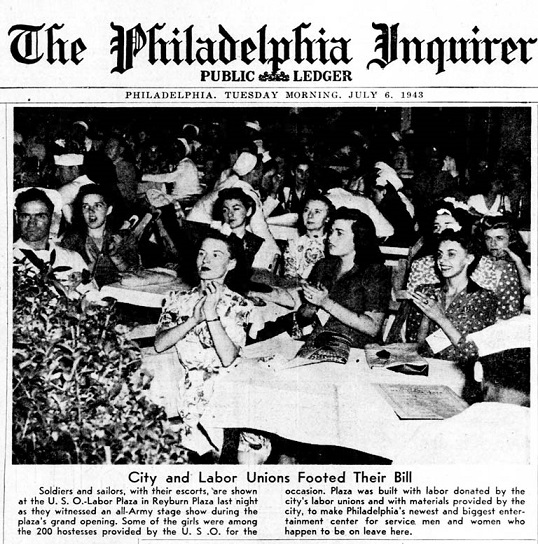
The Story of the U.S.O. Labor Plaza (1943) - This slice of lost World War II history was made on behalf of local labor unions, to showcase their role in creating an open-air nightclub providing recreation for soldiers passing through town. It was built quickly in Reyburn Plaza, north of City Hall (today the location of the Municipal Services Building and its adjoining plaza). The film includes coverage of its groundbreaking, and just two weeks later, the gala grand opening. On offer were snacks (five cents each), and dancing to a live swing band with volunteer hostesses.
Plus Ben and Me (1953), The Everyday Gamble (1973), and much more.
Summerfield Church is located in a beautiful, 110-year old stone building on Konrad Square Park, in the heart of the ever-growing Fishtown neighborhood of Philadelphia. In addition to providing worship services, they serve as a lively community center, with the auditorium hosting theater, concerts, flea markets and neighborhood meetings. The building is located near Septa's York-Dauphin el stop, and route 5 bus line.
"Best of" From Philadelphia With Love
at Swarthmore
Lang Performing Arts Center Cinema
500 College Avenue (use North entrance)
Swarthmore, PA
610-328-8000
Sunday, April 3, 2022,
7:00 pm
Admission: FREE
On Sunday, April 3, 2022, the Secret Cinema will present a "best of" condensation of 30 years of Philly-centric film programs, when it brings From Philadelphia with Love: Lost Local Films to Swarthmore College. (OK, actually we've only presented this particular theme since 1999 -- but this year marks the 30th anniversary of the Secret Cinema.)
From Philadelphia with Love... showcases rare 16mm prints from the Secret Cinema archive about different aspects of life in the Philadelphia region. Some were made as sponsored films, and others are educational, documentary or dramatic in nature.
There will also be an illustrated talk on the history of the Secret Cinema, presented by its founder, Jay Schwartz
There will be one complete show at 7:00 pm. The screening is free, and open to the public.
Swarthmore College COVID policy: All visitors must be up to date on their vaccinations or have a negative rapid antigen test result within 24 hours of coming to campus. The College considers individuals up to date on their COVID-19 vaccine if they have received both an initial, primary series of vaccinations AND a COVID-19 booster shot as soon as they are eligible. The College continues to require individuals to remain masked while inside campus facilities. Full details at: https://www.swarthmore.edu/covid-19-information/visitors-and-vendors
Just a few highlights of this edition of From Philadelphia with Love... are:
Assembly Line (1961, Dir: Morton Heilig) - This dramatic short film focuses on a lonely worker who toils at the Hunting Park plant of the Budd auto body factory. Ignoring the warnings of his alcoholic roommate, he heads out for what he imagines will be a big night on the town, but instead finds only betrayal and disappointment. The incredibly grim, noir mood could have come from a David Goodis pulp novel. It was a co-production of two departments at Penn: the Annenberg School of Communications, and the somewhat-mysterious Institute for Cooperative Research. Director Heilig, a winner of a fellowship in the first year of the School, would go on to make many documentaries, and also invented some early virtual reality devices. Besides its compelling narrative, Assembly Line captures amazing footage of mid-century Philadelphia, including Horn & Hardart's, movie theater marquees, long-gone bars, and streetscapes both neon-lit and gloomy.
Brooklyn Goes To Philadelphia (1954) - This obscure theatrical release from Universal was part of a series of humorous travelogues narrated by wisecracking, thickly-accented Brooklynite Phil Foster. "Philadelphia is the third largest city in America ... big deal!" Aside from dwindling population, the jokes about demolition of historic property and confusing parking regulations show that some things don't change.
Westside Store (1982) - This amusing school film presents an unusual view of supposed gang activity. Though it shows some incredibly squalid North Philly streetscapes, the multi-racial, mixed-gender members of the fictitious "Seveners gang" (of 7th & Indiana Streets) seem to have been cast right out of a Benetton fashion ad. They pool their efforts and meager assets to start a thrift store (and learn about responsibility). Adding to the fun are early appearances of two now-famous Philadelphians: Ahmir Thompson (aka Questlove from the Roots) and actor/comedian Paul F. Tompkins.
Our Changing City (1955) - Made by the city during the administration of Mayor Joseph Clark, this vivid color film makes the case for urban renewal (i.e., demolition and new construction) while showing a wide range of cityscapes, from new homes in the Northeast to the poverty of people living in houses without plumbing or electricity.
For further information, send email to: filmandmedia@swarthmore.edu

All-new And the Envelope, Please:
Oscar-Winning Short Films (at a new venue!)
Old Pine Community Center
401 Lombard Street, Philadelphia
215-627-2493
Friday, March 25, 2022
8:00 pm
Admission: $10.00
On Friday, March 25 -- two nights before the Academy Awards telecast -- the Secret Cinema will present an all-new edition of And the Envelope, Please: Oscar-Winning Short Films. This program showcases films that rose to the highest of honors, yet unlike the longer prize-winning films of their time, are now largely forgotten. We feel they all deserve to be seen again! They include live-action short dramas, comedies, documentaries and cartoons.
There will be one complete show at 8:00 pm. Admission is $10.00
The screening will be shown in a brand new Secret Cinema venue -- the Old Pine Community Center, at the Northwest corner of 4th & Lombard Streets in Center City, steps away from South Street restaurants and shopping.
Because of the (yes, still) ongoing pandemic, capacity will be limited to 100 (half of normal legal capacity). Wearing of masks is mandatory, as are proof of full vaccine and photo ID.
The films in this program span from 1937 through 1984. Most took the Academy Award for best film in their category; a few were nominated but did not win.
A few highlights of the program include:
A Time Out of War (1954, Dir: Denis Sanders) - A provocative Civil War drama, in which two opposing soldiers agree to hold a tense one-hour truce. Director Sanders made this project his UCLA student thesis film, and its success led to a career in movies and television, starting as the second unit director of Charles Laughton's Night of the Hunter. Sanders' final narrative feature was the cult classic Invasion of the Bee Girls.
Should Wives Work? (1937, Dir: Leslie Goodwins) - This two-reel comedy from prolific comedy actor Leon Errol was his only Oscar-nominated work. It was not until Errol was in his fifties that he perfected the trademark characterization seen in nearly a hundred two-reelers, and numerous features -- and at his peak, the actor was in his sixties. Errol usually played a balding, somewhat-irascible man with a fondness for drinking and a knack for mix-ups with pretty girls -- leading to inevitable conflicts with his always-suspicious wife.

The Box (1967, Dir: Fred Wolf) - A minimally-drawn, wordless cartoon (the only soundtrack is drummer Shelly Manne's jazzy instrumental music), about a man who walks into a bar with a mysterious object.
Up (1984, Dir: Mike Hoover, Tim Huntley) - There's a cryptic, impressionistically told story of a man who sets a hawk free, but the centerpiece of this unusual short is a gorgeous, amazingly photographed and unforgettable ride on a hang glider.
Plus The Story of Time (1951), A Boy and His Dog (1947) and much more.
About Old Pine Community Center: Since 1977, Old Pine Community Center's mission has been to enrich the lives of its neighbors through dynamic programs and services focused on children and families, food insecurity, and community engagement. Their goal is to create welcoming and safe spaces for children, adults, seniors, and neighbors for their benefit and the benefit of future generations.

The Secret Cinema celebrates 30th anniversary
at Bryn Mawr Film Institute
Bryn Mawr Film Institute
824 W. Lancaster Avenue, Bryn Mawr, PA
(610) 527-9898
Tuesday, March 15, 2022
7:30 pm
Admission: $12.50, $10 seniors/students, $8.00 children/members
March 2022 will mark the 30th anniversary of the Secret Cinema, Philadelphia's floating repertory showcase for rare and forgotten corners of cinema. And on Tuesday, March 15, the Secret Cinema will return to the Bryn Mawr Film Institute, with a special program to celebrate that anniversary.
Celebrating Thirty Years of the Secret Cinema with Jay Schwartz* will be a feature-length program of assorted short films from the early days of our now-extensive 16mm film archive. Each film to be shown -- including nostalgic school films, cartoons, television commercials and industrial shorts -- was included in our first season of programming, back in 1992. That means the film prints to be projected, old then, are now mostly between 50 to 85 years old…yet they all still work, and have a lot of entertainment value and history within them. We have not screened most of them for a long time.
There will be one complete show at 7:30 pm. Admission is $12.50, $8.00 (children/BMFI members), $10 (seniors and students).
This is one of several 30th Anniversary events that Secret Cinema is planning for 2022.
Since 1992, Secret Cinema has been the Philadelphia area's premiere floating repertory cinema series, bringing countless unique screenings to over 120 nightclubs, bars, coffee houses, museums, open fields, colleges, art galleries, bookstores, and sometimes even theaters and film festivals. Drawing on its own large private film archive, containing thousands of reels of rare 16mm and 35mm film, the Secret Cinema attempts to explore the uncharted territory and genres that fall between the cracks, with programs devoted to educational and industrial films, cult and exploitation features, cartoons, forgotten television, local history, home movies, erotic films, politically incorrect material, and the odd Hollywood classic. As long as they exist on real celluloid, that is -- Secret Cinema screenings never use video/digital projection. While based in Philadelphia, the Secret Cinema has also brought its unique programming to other cities and countries.
Just a few highlights of Celebrating Thirty Years… are:
The Morning After (1927, Dir: Paul Terry) - Silent, early effort from the famed Terrytoons animation studio, this reel is unusually topical in that it addresses still-current prohibition of alcohol -- and resulting police corruption -- all portrayed by animal characters.
Play, Girls! (1937, Dir: Walter Graham) - A 1930s musical comedy in two reels, using its miniscule plot as an excuse to showcase a variety of singers, dancers and pretty girls. From the Educational Pictures studio, which advertised its product as "The spice of the program."
Pro Kleen commercial (1950s) - A mind-numbingly crass eight minute TV commercial in which an unappealing pitchman with a thick Baltimore accent extols the wonders of a new spot cleaner.
The Stranger At Our Door (1940) - This dramatic two-reeler, made by a religious group to promote ethnic tolerance, shouldn't be funny -- but the outrageous overacting by Bowery Boys rejects and their non-specific European-born target make it surreally so.
…plus much more.
*NOTE: While occasional press coverage could make one think otherwise, we feel we must mention that we are normally too shy to promote "Jay Schwartz" as a brand. In fact, our original title for this special program was Secret Cinema's Sentimental Favorites: Ephemeral Shorts from our First Year. However, the Bryn Mawr Film Institute liked their title better -- and we reluctantly agreed to make that the title.

Jay Schwartz spins The Magic Record at the International bar
Friday, February 18, 2021
4:00 pm until 7:00 pm
Admission: FREE
The International bar
1624 N. Front St (at Cecil B. Moore Avenue)
Philadelphia
On Friday, February 18, The International bar will host Jay Schwartz (of the Secret Cinema) to spin yet another new D.J. set theme (of sorts): The Magic Record.
It all starts at 4:00 pm and runs until 7:00 pm, coinciding with Happy Hour specials.
Admission is free.
Jay Schwartz has, in the past, spun mainly highly-themed sets of music, such as 1970s punk/new wave, sunshine pop, bubblegum, power pop, Scratchy Old Jazz Records, and with musical partner D.J. Silvia, Salut les Copains (1960s French pop), Made in Spain (1960s rock from Spain) and Worldwide Sixties Discotheque (1960s rock/pop from all over).
The Magic Record will be a themeless theme: a free-form set of great music from the 1950s through the 1990s, encompassing most of the above and much more. Mostly rock, generally with roll, plus soul, pop, and more. It will be an all-vinyl set, mostly 45s. (Does that really matter? No.)
Come be surprised, by forgotten favorites, and possibly by new obsessions.
The International -- under the El on the border between Fishtown and "Olde Kensington" -- is the latest offering from the team that brought the Standard Tap and Johnny Brenda's to Philly nightlife. They offer a global variety of spirits and light bites, as well as a variety of music from local d.j.'s.

Mid-Century Leisure in Close-Up at the Rotunda
Thursday, February 10, 2022
8:00 pm
Admission: FREE
The Rotunda
4014 Walnut Street
Philadelphia
The Secret Cinema will return to the Rotunda on Thursday, February 10 with another brand new program. Mid-Century Leisure in Close-Up features three amazing films highlighting the power and ingenuity of two American industries at the height of postwar prosperity: The mighty Wurlitzer jukebox factory and Philadelphia's Curtis Publishing Company (home to the Saturday Evening Post, Ladies' Home Journal and other iconic magazines).
The films, in black & white and gorgeous Kodachrome color, provide detailed looks at the complex inner workings of huge, industry-dominating companies that seemed essential and eternal in their time, yet neither would survive the 20th century.
There will be one complete show at 8:00 pm. Admission is free.
Masking and contact tracing enforced. Seating is limited.
This screening is part of the Rotunda's ongoing "Bright Bulb Screening Series," which once again offers free movies on the second Thursday of every month, throughout the year.
Included in Mid-Century Leisure in Close-Up will be:

A Visit to Wurlitzer (1940s?) - This detailed trip through the sprawling headquarters of the Rudolph Wurlitzer Company in North Tonawanda, New York examines every painstaking step in the making of the legendary Wurlitzer jukeboxes. Seemingly no part of their manufacture used outside suppliers, as the many steps in constructing the cabinetry and machining precision parts were all done in house by expert hands. Meanwhile, the executives meet to discuss changes and check on progress. The well-maintained exterior of the plant, complete with flower gardens, is reminiscent of favorite (and perhaps overshown) Secret Cinema film The Story of Bubblegum (which provides a similar tour of Philadelphia's Fleer Bubblegum plant).
Wurlitzer Jukebox Advertising (1947) - This rare film appears to have been made for internal use, to teach Wurlitzer's field representatives how best to convince bar and restaurant owners to take full advantage of the many wonderful promotional materials the company provided to establishments hosting their jukeboxes (they must have employed an army of salesmen to justify the making of this color film). And what materials -- Wurlitzer decals, Wurlitzer three-dimensional posters, even Wurlitzer cocktail stirrers! Where are these collectable treasures today? Includes priceless views of a typical late-'40s taproom…and a lesson in hard-sell technique.

Modern Magazine Magic (1956) - This colorful promotional film looks at the many skilled workers who are needed to produce the magazines we read, from the paper plant to the writers, editors, photographers, layout designers, illustrators, cartoonists, advertising salesmen, pressmen, and even typists of Braille editions. Made in vivid Kodachrome, the short film resembles a stock-footage company's "Fifties Lifestyles" demo reel, as we also glimpse families reading at home and shopping for groceries, not to mention artist Norman Rockwell at work in his studio. The film was sponsored by, and made in the various facilities of, Philadelphia's Curtis Publishing Company, perhaps the most important producer of periodicals in the 20th century. The company's eventual collapse is legendary and the subject of multiple books, though founder Cyrus Curtis' legacy endures today through his former real estate: the company's mammoth Independence Square headquarters building, and Curtis Arboretum in Wyncote, once the site of his palatial estate. His daughter founded the Curtis Institute of music.
All of the rare 16mm film prints in this program will be making their Secret Cinema debuts. One title, Modern Magazine Magic, was shown 14 years ago using a damaged print. We have since acquired another copy in perfect condition.

Lost Television at Rotunda
Thursday, December 9, 2021
8:00 pm
Admission: FREE
The Rotunda
4014 Walnut Street
Philadelphia
The Secret Cinema will return to the Rotunda for the first time since the pandemic, with a brand new program called Lost Television. The program, to be presented on Thursday, December 9, consists of rare and forgotten shows from the early era of television, which only survive thanks to now-aging 16mm film prints.
The 16mm film format was crucial to early television broadcasters, in the days before videotape was perfected. Filmed recordings of live television, called kinescopes, were made using special equipment. Other programs were originally shot on film -- this was standard procedure for the popular 1950s TV genre of anthology dramas, short stories made with changing casts. And for many years 16mm prints were shipped to local stations as a convenient distribution medium for both programs and commercials. The Secret Cinema archive includes many original prints with examples of all of these uses, and these will be showcased in Lost Television.
There will be one complete show at 8:00 pm. Admission is free.
Masking and contract tracing enforced. Seating is limited.
This screening is part of the Rotunda's ongoing "Bright Bulb Screening Series," which once again offers free movies on the second Thursday of every month, throughout the year.
Included in Lost Television will be:
Rocky King, Detective (circa 1954) - This show, a cross between film noir and soap operas, originally aired on the nine stations of the DuMont network. It starred prolific Hollywood character actor Roscoe Karns as the title police detective on the homicide squad. In an odd (and budget-saving) touch, Karns would banter with his wife, who always stayed off-screen. This episode, complete with commercials, is not known to exist elsewhere.

Screen Director's Playhouse: The Silent Partner (1955) - This series differed from many other anthology drama showcases in that it was created by the Directors Guild, and used top feature film directors to helm its stories, including John Ford, Rouben Mamoulian, Alfred Hitchcock, Leo McCarey and many more. This example was one of its most memorable and touching episodes -- it stars the great Buster Keaton as a washed-up silent film comedian watching the Academy Awards telecast in a bar. The cast also includes Zasu Pitts, Joe E. Brown, Bob Hope and more. Directed by George Marshall.
Excursion: Atomic Energy (1953) - Burgess Meredith introduces the star of this educational program, Princeton University professor Hubert Alyea. The funny and fast-talking academic, nicknamed " Dr. Boom," gives a rapid-fire lecture complete with demonstrations and explosions. Alyea was reportedly the real-life inspiration for the Walt Disney movie The Absent-Minded Professor. This show was a production of the TV-Radio Workshop of the Ford Foundation.

Zelda (1962) - Zelda was a pilot show for a series that went unsold and unproduced. It was meant to be a spin-off from the popular The Many Loves of Dobie Gillis. It starred Sheila James, reprising her role as Zelda Gilroy, a brainy, upbeat, and headstrong tomboy who opens the show by sharing her thoughts and worries to the camera (like Dobie Gillis): " My ambition is to find a fella…I'm really not much of a girl." It set an odd mood for an ostensible comedy series, and it's not hard to see why the show never sold, but James has a fascinating screen presence. After appearing in several TV series, she left acting. Under her birth name of Sheila Kuehl she went to law school to fight for women's workplace rights, and in 1994 became the first openly gay person elected to the California legislature. Today Kuehl serves on the Los Angeles County Board of Supervisors.
RESCHEDULED EVENT

Scratchy Old Jazz Records at the International bar…
Sunday, November 28, 2021
3:00 pm until 6:00 pm
Admission: FREE
The International bar
1624 N. Front St (at Cecil B. Moore Avenue)
Philadelphia
On Sunday, November 29, The International bar will host Jay Schwartz (Secret Cinema) to spin a new D.J. set theme: Scratchy Old Jazz Records.
It all starts at 3:00 pm and runs until 6:00 pm.
Admission is free. The event will take place in the International's outdoor seating area (weather permitting). If weather forces the event indoors, note that vaccine I.D. is required for entrance.
Scratchy Old Jazz Records is probably self-explanatory enough of a description for what will be played -- but let me (Jay) switch to the first-person voice to explain what inspired this idea and name. While I can I talk for hours about early punk/new wave, sunshine pop, bubblegum music and other primarily rock-based genres, I don't pretend to be any expert on jazz. However, many of the records I will be playing are special to me. That's because these discs -- the copies I am bringing, some of which are pictured online, are literally the first records I knew. As a young child, one of my favorite toys was my parents' record player, an RCA 45 changer with a fat spindle that could not play anything but big-holed singles. I wish I still had it. The records they had to play on it all fit into one grey carrying case, and most of them were jazz music from the 1950s and early 1960s.
Now, my parents were hardly hipster jazzbos. The assortment of discs in that box were randomly gathered from the selection of used jukebox singles that my father offered for sale outside the door of his short-lived gift store in Southwest Philadelphia. He got them from the storied Philly record distributor Chips, whose owner Harry Chipetz was later a partner in Sigma Sound Studios (Harry's son Bob was later one of the original booking agents for the Hot Club, and when that venue opened I called him to get on the press list for shows by the Dead Boys and Richard Hell…later I worked at the club, but I digress). Anyway, I don't know what these records cost my dad, but he sold them for five cents each, so they must have been really cheap.
This was during the golden age of independent record labels in America, and many great ones were represented in the small collection. I would stack them up on the record changer for hours while staring at the varied designs of the labels, which I found as intriguing as the music that came out of the vacuum tube-powered speaker. The names of the artists, both legendary and obscure, were all new to me: Stan Getz, John Coltrane, Dizzy Gillespie and Ella Fitzgerald shared space with Brother Jack McDuff, Lynn Hope and Doc Bagby (the latter two both having local connections, I now know). I sometimes dream of going back in time to look through what records in the store were not brought home -- the box also contained some genuine rock 'n' roll rarities ("Shig-A-Shag" by Jimmy Crain, "She Can Rock" by Little Ike), as well as more typical pop sides by Bobby Rydell and Harry Belafonte, and a couple of children's records that did not excite me.
That little record player was one of my favorite toys (a little later, I enjoyed running my parents' 8mm home movie projector). So are my warm, nostalgic memories a reason to attend this? Of course not! But even a jazz dilettante like me can't go wrong with this great little box of music. Most of these discs are from a really interesting period in jazz (mostly early-mid 1950s through mid-1960s), when it was transitioning through the Cool Jazz style from the West Coast, into what has been termed "Hard Bop." Anyway, I think these old jazz sides will still sound great in a bar setting (they're not all so scratchy), and I will supplement them with others (even albums!) that I acquired as a grown-up. Hope you can come out and listen with me. - Jay Schwartz

The International -- under the El on the border between Fishtown and "Olde Kensington" -- is the latest offering from the team that brought the Standard Tap and Johnny Brenda's to Philly nightlife. They offer a global variety of spirits and light bites, as well as a variety of music from local d.j.'s.

RAIN OR SHINE: D.J.'s Silvia & Jay spin Made in Spain
vinyl rarities at The International bar (outdoors!)
Saturday, October 16
6:00 pm until 9:00 pm
Admission: FREE
The International bar
1624 N. Front St (at Cecil B. Moore Avenue)
Philadelphia
On Saturday, October 16, The International will host the seventh edition of a special music party called Made in Spain, featuring a variety of beat, mod and soul music from the sixties -- all of it recorded in Spain.
It all starts at 6:00 pm and runs until 9:00 pm. Admission is free. This will be the first edition of Made in Spain to take place in The International's large outdoor seating area (weather permitting).
*****HOWEVER, if the weather looks bad (rain now seems likely!), the event will be moved indoors.*****
Some of the artists to be played at Made in Spain will be Los Brincos (the period's most inventive group; arguably the Beatles of Spain), Los Bravos (Spain's most successful export act, of "Black is Black" fame), Los Iberos (produced by U.K. "Nothing But a Heartache" songwriting team Bickerton and Waddington), Los Salvajes, Los Sirex, Formula V, and many more, plus Spanish "Ye Ye" girls like Karina and Conchita Velasco. Records played will include original songs, as well as Spanish language versions of familiar American and British pop hits.
In addition to sixties sounds, some time will also be devoted to Spanish music of today in the garage, indie and power pop styles.
The event will again be led by "La Chica Ye Ye," D.J. Silvia. A favorite spinner at many past sixties-music events in Philly, New York and her native country of Spain, Silvia is sure to have some new surprises and rare sides in the multiplying boxes of discs she stuffs in her trans-oceanic luggage. Silvia moved to Philadelphia in 2004, from her birthplace in the Spanish city of Gijón, in the green province of Asturias.
Assisting will be Jay Schwartz. Jay is the long-time programmer/creator of the Secret Cinema film series, and is the musical (and marital!) partner of D.J. Silvia.
The International -- under the El on the border between Fishtown and "Olde Kensington" -- is the latest offering from the team that brought the Standard Tap and Johnny Brenda's to Philly nightlife. They offer a global variety of spirits and light bites, as well as a variety of music from local d.j.'s.
Made in Spain is co-sponsored by The Secret Cinema and Los de Patanegra en Philadelphia, a group formed to unify the growing community of Spaniards in Philadelphia and promote friendship, culture and networking.

D.J. Silvia and Jay Schwartz bring
Worldwide Sixties Discotheque
to the International bar
Saturday, March 7, 2020
10:00 pm until 2:00 am
Admission: FREE
The International
1624 N. Front St (at Cecil B. Moore Avenue)
Philadelphia
On Saturday, March 7, the pair that created the popular Made in Spain and Salut les Copains record parties will get even more global. That's the day D.J. Silvia and Jay Schwartz will bring Worldwide International Discotheque: Beat, Mod, Soul and Garage from All Over back to the International bar.
Worldwide International Discotheque... will feature a variety of retro sounds from nations not usually heard from, including Italy, the Netherlands, Sweden, Japan, Australia, Czechoslovakia, Hungary, Poland, Germany, Greece, Mexico, Brazil, Uruguay, Peru, and more.
Just a few of the groups to be heard from are Los Shakers, The Motions, The Golden Earrings, The Spiders, The Easybeats, Os Mutantes, Die Rattles...plus some more obscure artists! If the names are not known, their sounds should (literally) strike familiar chords to any fan of sixties music. It was the decade when the youth movement truly exploded, and teenagers all around the world picked up electric guitars, inspired especially by the unprecedented success of the Beatles. But while many English language hit songs were covered in native tongues, the best groups wrote their own music and brought something of their own heritage to the ever-expanding phenomenon of rock 'n' roll.
The session starts at 10:00 pm and lasts until 2:00 am. Admission is of course free.
Jay Schwartz is the long-time programmer/creator of the Secret Cinema film series, and is the musical (and marital!) partner of D.J. Silvia.
The International, under the El on the border between Fishtown and "Olde Kensington," is the latest offering from the people who brought the Standard Tap and Johnny Brenda's to Philly nightlife (and daylife!). They offer a global variety of spirits and light bites, as well as a variety of music from local d.j.'s.

D.J. Silvia AGAIN spins '60s French pop
for Salut les Copains at The International bar
Sunday, January 5, 2020
2:00 pm until 6:00 pm
Admission: FREE
The International
1624 N. Front St (at Cecil B. Moore Avenue)
Philadelphia
On Sunday, January 5, the International bar will ring in the new year with a Gallic, retro afternoon session, when it again hosts Salut les Copains, featuring D.J. Silvia spinning an upbeat mix of sixties French pop records.
D.J. Silvia will be assisted by Jay Schwartz. This is the same team that brought the popular Made In Spain party to The International.
The session starts at 2:00 pm and lasts until 6:00 pm. Admission is free.
In early-'60s France, a new style of pop music developed alongside the New Wave cinema movement, in response to the rock 'n' roll revolution that was still reverberating worldwide. "Yé Yé" music (or "Yeh Yeh," or "Ya Ya") was perky and youthful, and often emphasized singers' style and sassy attitude rather than smooth technique. The new music was championed on a radio show and then a fan magazine that became huge influences on the nation's teenagers. Both were called Salut les Copains.
Major Yé Yé stars included Francoise Hardy, Sylvie Vartan, France Gall, Serge Gainsbourg, Michel Polnareff, and Jacques Dutronc. Expect to hear all of these, plus many more assorted Ultra Chicks and Swingin' Mademoiselles at the Salut les Copains session.
D.J. Silvia has been a favorite spinner at many past sixties-music events in Philly, New York and her native country of Spain. She has been a devotee and collector of French pop records for over 20 years.
Jay Schwartz is the long-time programmer/creator of the Secret Cinema film series, and is the musical (and marital) partner of D.J. Silvia. He bought his first Francoise Hardy albums after reading a profile of her in the late, lamented Bomp! fanzine.
The International, under the El on the border between Fishtown and "Olde Kensington," is the latest offering from the people who brought the Standard Tap and Johnny Brenda's to Philly nightlife. They offer a global variety of spirits and light bites, as well as a variety of music from local d.j.'s.

New season at Rotunda starts with Four Films
Thursday, January 9, 2020
8:00 pm
Admission: FREE
The Rotunda
4014 Walnut Street
Philadelphia
The Secret Cinema will begin a new year and a new season at the Rotunda, with a brand new program called Four Films. The program, to be presented on Thursday, January 9, consists of four short films, which together make up a feature length program.
However, the four films of Four Films have nothing to do with each other. What they have in common is that we have never shown them before, are unlikely to have been seen by most people, and they are all very interesting. Each one is quite good.
There will be one complete show at 8:00 pm. Admission is free.
This screening is part of the Rotunda's ongoing "Bright Bulb Screening Series," which offers free movies on the second Thursday of every month, throughout the year.
The four films of Four Films are:
The Enchanted Hill: The Story of San Simeon (1963) - An excellent documentary about William Randolph Hearst's lavish mansion, which was the inspiration for Citizen Kane's Xanadu. It was originally produced for San Francisco's KPIX-TV, by Lee Mendelson -- who would later achieve fame for his animated Peanuts specials (and who died on Christmas Day, 2019). The Enchanted Hill makes good use of Hearst home movies showing the construction of the estate, which today operates as a popular museum.

A Ballad of Love (1965, Dir: Mikhail Bogin) - A touching, sweet depiction of the tentative romance between a young musician and a deaf woman who works in a pantomime theater troupe. Filmed at Riga Studios in Latvia.
Directors at Work: The Director and the Image (1982, Dir: Carl Workman) - Produced by David Shepard for the Directors Guild of America, this project took great advantage of access to the great film directors of the day and of the past. Discussing their careers are Rouben Mamoulian, Alfred Hitchcock, Alan Jay Pakula, Vincente Minnelli, King Vidor and more, and generous clips from their work are shown.
Geisha Girl (1934?) - This film is a bit of a mystery, and we can find almost no information about it, online or elsewhere. Was it a sound re-release of a film shot silent? A condensed version of a longer film (its producer, Elmer Clifton, was reported in a 1932 trade publication to have contracted with a Japanese filmmaker to shoot scenes for a feature called The Life of a Geisha Girl)? We may never learn, but this reel nonetheless presents a fascinating depiction of the geisha tradition.

The Worst of Secret Cinema at Maas Building
Friday, November 29, 2019
8:00 pm
Admission: $9.00
The Maas Building
1325 N. Randolph Street, Philadelphia, PA
267-239-2851
We are excited to announce a brand-new short film program. After a thorough search through the shelves of the Secret Cinema archive, we've compiled a list of the very worst films in our collection -- and we will share them in one orgy of badness on Friday, November 29, at the Maas Building. It's called The Worst of Secret Cinema.
Quality is, of course, highly subjective, and standards of aesthetics are debated and modified over time, yielding to the political shifts, fashions and whims of each generation. That said, we feel confident that the audience of today and one from a century ago would agree that these films are really terrible.
The Secret Cinema once presented a memorably singular program called Boring Films, the ingredients of which were selected for their sheer tedium and actual sleep-inducing quality. This is not that program. These films are not boring (not to us, anyway).
The Worst of Secret Cinema will include a variety of film categories: educational, advertising, cartoons, comedy, drama, films about films, home movies and more, each offering a different approach to their ultimate failure. Some have appeared in past Secret Cinema programs and some have never been shown before.
The program is still being assembled, but a few titles likely to be included are: A Day with Don Knotts, Arranging a Buffet Supper, The Singing Plumber, Where Do the Children Go?, and You're an Actor, Jack Weston.
There will be one complete show at 8:00 pm. Admission is $9.00.
No refunds will be given.
The Maas Building was previously a brewery and a trolley repair shop. This beautifully restored 1859 brick and timber workshop today serves as a multipurpose art event and catering space.

D.J. Silvia spins '60s French pop for Salut les Copains
at The International bar
Sunday, October 27, 2019
2:00 pm until 6:00 pm
Admission: FREE
The International
1624 N. Front St (at Cecil B. Moore Avenue)
Philadelphia
On Sunday, October 27, the International bar will provide a Gallic, retro afternoon session when it again hosts Salut les Copains, featuring D.J. Silvia spinning an upbeat mix of sixties French pop records.
D.J. Silvia will be assisted by Jay Schwartz. This is the same team that brought the popular Made In Spain party to The International.
The session starts at 2:00 pm and lasts until 6:00 pm. Admission is free.
In early-'60s France, a new style of pop music developed alongside the New Wave cinema movement, in response to the rock 'n' roll revolution that was still reverberating worldwide. "Yé Yé" music (or "Yeh Yeh," or "Ya Ya") was perky and youthful, and often emphasized singers' style and sassy attitude rather than smooth technique. The new music was championed on a radio show and then a fan magazine that became huge influences on the nation's teenagers. Both were called Salut les Copains.
Major Yé Yé stars included Francoise Hardy, Sylvie Vartan, France Gall, Serge Gainsbourg, Michel Polnareff, and Jacques Dutronc. Expect to hear all of these, plus many more assorted Ultra Chicks and Swingin' Mademoiselles at the Salut les Copains session.
D.J. Silvia has been a favorite spinner at many past sixties-music events in Philly, New York and her native country of Spain. She has been a devotee and collector of French pop records for over 20 years.
Jay Schwartz is the long-time programmer/creator of the Secret Cinema film series, and is the musical (and marital) partner of D.J. Silvia. He bought his first Francoise Hardy albums after reading a profile of her in the late, lamented Bomp! fanzine.
The International, under the El on the border between Fishtown and "Olde Kensington," is the latest offering from the people who brought the Standard Tap and Johnny Brenda's to Philly nightlife. They offer a global variety of spirits and light bites, as well as a variety of music from local d.j.'s.

It's a Wonderful Lifestyle: A Valentine to the 1970s
revived at Rotunda screening
Thursday, October 10, 2019
8:00 pm
Admission: FREE
The Rotunda
4014 Walnut Street
Philadelphia

Travel back to the Seventies once more on Thursday, October 10, when the Secret Cinema dusts off It's a Wonderful Lifestyle: A Valentine to the 1970s* for a fresh showing at the Rotunda. This hodgepodge of historic kitsch aims to restore the glittery glory of the original Decade of Bad Taste, via an assemblage of rare short films including forgotten school films, television shows, commercials, and trailers. This is a repeat of a popular Secret Cinema program that was presented in 2005.
We'd dipped into the Seventies in many previous Secret Cinema presentations, but this program was our first devoted entirely to the disco decade. Plundered from the depths of the Secret Cinema archives, most of these films are unlikely to be shown anywhere else. Enjoy a time when pop culture stars had names like Kreskin, Meadowlark Lemon and Donny and Marie. Catch up on Seventies nostalgia again, and be all caught-up for the current revival of the 1990s -- when Seventies appreciation first started to bloom and our current mobius strip of self-reference began.
There will be one complete show at 8:00 pm. Admission is free.
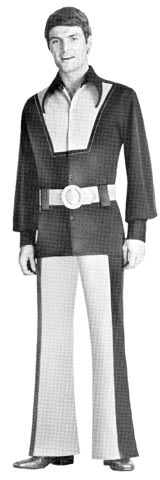
Just a few highlights of It's a Wonderful Lifestyle: A Valentine to the 1970s are:
The Energy-Environment Game (1973) - In this fascinating slice of pre-Three Mile Island history, a "hip" teacher offers a "relevant" "role-playing" game to his class: high school students (in various Brady Bunch/Over The Edge fashions) take on the roles of different members of a fictional community to debate the proposed installation of a nuclear power plant. As the film was produced by a utility company, you can guess the result.
Television: Behind the Scenes (1978) - This educational film takes a look at the workers and work needed to put together a national TV series. Lucky for us it's The Donny and Marie Show!
The Amazing World of Kreskin (1971) - Rare kinescope from the first year of this popular syndicated TV series. Kreskin was a nebbishy Canadian magician who performed standard mindreading tricks but achieved a brief stardom by appearing at a time when audiences were hungry for proof of "paranormal" phenomenon.
Plus much, much more!
*NOTE: The phrase "It's a Wonderful Lifestyle" is both homage to and utter theft from Candi Strecker's identically-named fanzines of 1990 and 1993. Her brilliant analysis of the Seventies stands as the last word on the subject. The fanzines may still be available somewhere in cyberspace.

New chapter of Archive Discoveries:
Unseen Curiosities from the Secret Cinema Collection
at Rotunda
Thursday, September 12, 2019
8:00 pm
Admission: FREE
The Rotunda
4014 Walnut Street, Philadelphia
On Thursday, September 12, The Secret Cinema will return to the Rotunda with another chapter of our ongoing series, Archive Discoveries: Unseen Curiosities from the Secret Cinema Collection. Once again we'll feature a mélange of fascinating short films from the past. As we go through our collection, reel by reel, we continually find films that don't necessarily lend themselves to fitting into a themed group, yet are too interesting, or fun, or funny to not share. None have been shown in previous Secret Cinema programs. Indeed, few of these films are likely to have been seen anywhere in recent years.
While the program as a whole has no dedicated theme, there will be a special look at the fascinating "Technocracy" movement of the twentieth century, it being the subject of two longer (and very rare) shorts that we'll show.
There will be one complete show at 8:00 pm. Admission is free.
As always -- still -- Secret Cinema programs are shown using 16mm (not video, not digital) film projected on a giant screen.
A few highlights from this new edition of Archive Discoveries… include:
Brooklyn Goes to Hong Kong (1958) - Those who have viewed another favorite Secret Cinema film, Brooklyn Goes to Philadelphia, will have an idea of the tone of this series, in which a Brooklyn-accented wise guy makes fun of various travel destinations. Meanwhile, we get a nice look at the then-independent city of Hong Kong, and its neon-lit nightlife…and a cameo appearance of Burgess Meredith?

Mystery of the River Boat, Chapter 4 (1944) - A typical episode of a 1940s cliffhanger serial, this one involving stolen maps, murder, dynamite and hidden oil deposits in a Louisiana swamp.
The Story of English Inns (1932) - This vintage topical short from Paramount takes an entertaining look at traditional lodging around the British countryside, ranging from modern (as of 1932) to inns hundreds of years old.

Operation Columbia (1947) - Technocracy was a word on everyone's lips in the 1930s. It described a philosophy that the world should be controlled by technical experts rather than elected bureaucrats. That's the short version, and its espousers spun off a lot of complicated theories about world economies, productivity versus consumption, and "an energy theory of value," which many found confusing. Nonetheless, their ideas gained considerable traction during the great depression -- especially after Howard Scott founded a publicity-savvy organization called Technocracy Incorporated. Their officials wore grey uniforms with "monad" logos on the lapels, and members reportedly saluted Scott in public. While membership declined after New Deal policies restored some faith in more traditional methods of governance, interest in the movement continued, as documented in this remarkable film. It offers no explanation of the group's beliefs, but instead chronicles a huge motorcade from Los Angeles to Vancouver, a show of strength that also promoted a series of lectures Scott delivered in cities along the way. The convoy included hundreds of members' automobiles -- each one dutifully repainted in official Technocracy grey with large, red Technocracy Inc. logo decals applied to the sides. Surprisingly, Technocracy Inc. exists to the present day, though in greatly diminished form.
Techno-Crazy (1933) - While technocracy got a lot of press coverage in its early-1930s heyday, it also suffered a fair amount of lampooning in the media, as seen in this delightful two-reel comedy starring slapstick veterans Monty Collins and Billy Bevan. As was typical in criticism of technocracy, much of the humor centered on followers not being able to effectively explain what technocracy was. 1933 was the year of peak parody for the movement; at least one other comedy short about the movement was released then, Your Technocracy and Mine, starring famous humorist Robert Benchley. Animator Ub Iwerks made the 1933 cartoon Techno-Cracked, but limited any satire to its title.
Plus much, much more!

D.J. Silvia and Jay Schwartz bring Worldwide Sixties Discotheque
to the International bar
Saturday, September 7, 2019
10:00 pm until 2:00 am
Admission: FREE
The International
1624 N. Front St (at Cecil B. Moore Avenue)
Philadelphia
On Saturday, September 7, the pair that created the popular Made in Spain and Salut les Copains record parties will get even more global. That's the day D.J. Silvia and Jay Schwartz will launch Worldwide International Discotheque: Beat, Mod, Soul and Garage from All Over to the International bar.
Worldwide International Discotheque... will feature a variety of retro sounds from nations not usually heard from, including Italy, the Netherlands, Sweden, Japan, Australia, Czechoslovakia, Hungary, Poland, Germany, Greece, Mexico, Brazil, Uruguay, Peru, and more.
Just a few of the groups to be heard from are Los Shakers, The Motions, The Golden Earrings, The Spiders, The Easybeats, Os Mutantes, Die Rattles...plus some more obscure artists! If the names are not known, their sounds should (literally) strike familiar chords to any fan of sixties music. It was the decade when the youth movement truly exploded, and teenagers all around the world picked up electric guitars, inspired especially by the unprecedented success of the Beatles. But while many English language hit songs were covered in native tongues, the best groups wrote their own music and brought something of their own heritage to the ever-expanding phenomenon of rock 'n' roll.
The session starts at 10:00 pm and lasts until 2:00 am. Admission is of course free.
Jay Schwartz is the long-time programmer/creator of the Secret Cinema film series, and is the musical (and marital!) partner of D.J. Silvia.
The International, under the El on the border between Fishtown and "Olde Kensington," is the latest offering from the people who brought the Standard Tap and Johnny Brenda's to Philly nightlife (and daylife!). They offer a global variety of spirits and light bites, as well as a variety of music from local d.j.'s.

Secret Cinema's Jay Schwartz spins '60s Sunshine Pop
at Johnny Brenda's
Sunday, August 25, 2019
8:00 pm until Midnight
Admission: FREE
Johnny Brenda's
1201 N. Frankford Avenue, Philadelphia
215-739-9684
On Sunday, August 25, Johnny Brenda's will provide an upbeat, tuneful nighttime session when it hosts It's a Sunshine Day, featuring Jay Schwartz spinning a mix of "Sunshine Pop" music from the 1960s. As Spanky and Our Gang once nearly sang, Sunday night will never be the same!
Sunshine pop (or "soft rock," as Japanese record collectors call it) is melodic, harmony-drenched music, a la The Association, The Beach Boys, The Millennium, Sagittarius, The Yellow Balloon, The Free Design, The Fifth Dimension and many others. These groups (as well as such key sunshine pop auteur/producers as Brian Wilson, Curt Boettcher and Gary Zekley) have received a lot of attention in recent decades. Reissue labels like Now Sounds and Sundazed have uncovered many previously ignored obscurities, and the sunshine sound has been explored by such critically-loved latter-day acts as Belle & Sebastian and the Polyphonic Spree.
Jay Schwartz, known as the long-time programmer/creator of the Secret Cinema film series, has, in the last year, been carting large swaths of his record collection to nightspots like the International and Johnny Brenda's. Often working in partnership with D.J. Silvia, he has presented d.j. sessions devoted to 1970s punk and new wave, and 1960s pop music from Spain and France.
It's a Sunshine Day! runs from 8:00 pm until Midnight. Admission is free.

Jay Schwartz spins '60s French pop for Salut les Copains
at The International bar...on Bastille Day!
Sunday, July 14, 2019
8:00 pm until Midnight
Admission: FREE
The International
1624 N. Front St (at Cecil B. Moore Avenue)
Philadelphia
On Bastille Day -- Sunday, July 14 -- the International bar will provide a Gallic, retro evening session when it again hosts Salut les Copains, featuring Jay Schwartz spinning an upbeat mix of sixties French pop records.
The session starts at 8:00 pm and lasts until Midnight. Admission is free.
In early-'60s France, a new style of pop music developed alongside the New Wave cinema movement, in response to the rock 'n' roll revolution that was still reverberating worldwide. "Yé Yé" music (or "Yeh Yeh," or "Ya Ya") was perky and youthful, and often emphasized singers' style and sassy attitude rather than smooth technique. The new music was championed on a radio show and then a fan magazine that became huge influences on the nation's teenagers. Both were called Salut les Copains.
Major Yé Yé stars included Francoise Hardy, Sylvie Vartan, France Gall, Serge Gainsbourg, Michel Polnareff, and Jacques Dutronc. Expect to hear all of these, plus many more assorted Ultra Chicks and Swingin' Mademoiselles at Salut les Copains.
Jay Schwartz is the long-time programmer/creator of the Secret Cinema film series, and is the musical (and marital!) partner of D.J. Silvia (who regrets she was unavailable for this session of Salut les Copains). He bought his first Francoise Hardy albums after reading a profile of her in the late, lamented Bomp! fanzine.
The International, under the El on the border between Fishtown and "Olde Kensington," is the latest offering from the people who brought the Standard Tap and Johnny Brenda's to Philly nightlife (and daylife!). They offer a global variety of spirits and light bites, as well as a variety of music from local d.j.'s.

Tuesday, July 2, 2019
8:00 pm until Midnight
Admission: FREE
Johnny Brenda's
1201 N. Frankford Avenue, Philadelphia
215-739-9684
Jay Schwartz spins Roxy Music vs. Sparks
at Johnny Brenda's
This town ain't big enough for both of them! On Tuesday, July 2, d.j. Jay Schwartz (of the Secret Cinema) will bring a brand new, '70s-centric music mix to Johnny Brenda's, when he spins Roxy Music vs. Sparks. Who will emerge the victor?
We don't know if those two bands really had a serious rivalry back then, though they did battle each other for chart positions in the U.K., where both groups were huge. Stateside, both of these "art rock" practitioners were relegated to cult hero status -- and for several years were probably Schwartz's favorite artists (along with David Bowie).
The night will feature well-known favorites, deeper album tracks, and lots of rarities: non-LP b-sides of import singles, solo albums and side projects, and maybe even some bootleg live recordings.
Roxy Music vs. Sparks runs from 8:00 pm until Midnight. Of course, admission is free.
Roxy Music vs. Sparks will probably never be repeated (unless a whole lot of people show up), so don't miss it!
Jay Schwartz, known as the long-time programmer/creator of the Secret Cinema film series, has, in the last year, been carting large swaths of his record collection to nightspots like the International and Johnny Brenda's. Often working in partnership with D.J. Silvia, he has presented d.j. sessions devoted to 1970s punk and new wave, sunshine pop, and 1960s pop music from Spain and France.

From Philadelphia With Love II: More
Industrial, Educational and other Lost Local Films
at Bryn Mawr Film Institute
Bryn Mawr Film Institute
824 W. Lancaster Avenue, Bryn Mawr, PA
(610) 527-9898
Wednesday, May 29, 2019
7:30 pm
Admission: $12.50, $10 seniors/students, $8.00 children/members
On Wednesday, May 29, the Secret Cinema will return to the Bryn Mawr Film Institute to present a unique program of short films called From Philadelphia With Love II: More Industrial, Educational and other Lost Local Films. While most area residents are familiar with Philadelphia films such as Rocky, Trading Places, and the works of M. Night Shayamalan, there is a whole world of locally-made films that has been forgotten -- the "ephemeral" short films that were primarily made by small independent companies for the then-booming non-theatrical market. While most school districts, television stations and traveling salesman have long ago discarded their 16mm film projectors, we at Secret Cinema have not, and are proud to present a look back at these celluloid time capsules that would otherwise not be seen again.
The Secret Cinema has been collecting, archiving and screening this fascinating area of local film history for over two decades now. Our second BMFI presentation of Philly film will be another "best of" selection from past volumes (with no repeats from the previous Bryn Mawr edition, and some titles that have not been screened anywhere in over a decade).
There will be one complete show at 7:30 pm. Admission is $12.50, $8.00 (children/BMFI members), $10 (seniors and students).

Highlights of From Philadelphia With Love II… will include:
Assembly Line (1961, Dir: Morton Heilig) - This dramatic short film focuses on a lonely worker who toils at the Hunting Park plant of the Budd auto body factory. Ignoring the warnings of his alcoholic roommate, he heads out for what he imagines will be a big night on the town, but instead finds only betrayal and disappointment. The incredibly grim, noir mood could have come from a David Goodis pulp novel. It was a co-production of two departments at Penn: the Annenberg School of Communications, and the somewhat-mysterious Institute for Cooperative Research. Director Heilig, a winner of a fellowship in the first year of the School, would go on to make many documentaries, and also invented some early virtual reality devices. Besides its compelling narrative, Assembly Line captures amazing footage of mid-century Philadelphia, including Horn & Hardart’s, movie theater marquees, long-gone bars, and streetscapes both neon-lit and gloomy.
The Philadelphia Story of 1963 (1963) - This rare sales film was made to promote a new televised bingo game/program called “RINGO,” played with game cards distributed to shoppers at local Acme Markets.
Westside Store (1982) - This amusing school film presents an unusual view of supposed gang activity. Though it shows some incredibly squalid North Philly streetscapes, the multi-racial, mixed-gender members of the fictitious “Seveners gang” (of 7th & Indiana Streets) seem to have been cast right out of a Benetton fashion ad. They pool their efforts and meager assets to start a thrift store (and learn about responsibility). Adding to the fun are early appearances of two now-famous Philadelphians: Ahmir Thompson (aka Questlove from the Roots) and actor/comedian Paul F. Tompkins.
Dupont Theater: "Date With a Stranger" (1956) - A rare episode of a 50s TV anthology drama program, in which a romance is launched by a chance meeting of two lonely tourists—in Independence Hall.
Plus much more!
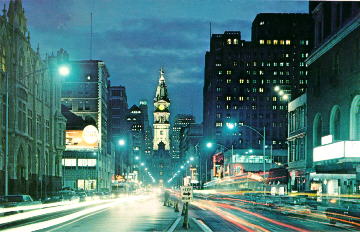
Link to BMFI's interview with Secret Cinema programmer Jay Schwartz.

Technorama program at Rotunda
Thursday, May 9, 2019
8:00 pm
Admission: FREE
The Rotunda
4014 Walnut Street, Philadelphia
Last year the Secret Cinema was invited by Towson University in Maryland to create a special film program about fashion and beauty, to complement a related gallery exhibition. We thought the resulting set of short films worked so well that we presented the same program back here at home, at the Rotunda.
This year Towson asked us to tie in to another gallery exhibition, focusing on technology, computers and machines. And guess what? Yep, we were so pleased with our work that we'd feel guilty not sharing it with our regular Philly audience!
On Thursday, May 9, we'll present Technorama at the Rotunda in University City. The program showcases films spanning eight decades, and made for different purposes, but all related to technology. There are vintage theatrical shorts, educational films, school guidance films, promotional films and even cartoons, all tracking the progress man has made since that ape first killed another ape with a bone (or whenever the first use of a tool/machine really was). All of the films to be included we've either not shown in a long time, or never showed here at all (to meet this goal, we've replaced a few recently-shown films from the Towson screening).
There will be one complete program, starting at 8:00 pm. As with all screenings in the Rotunda's monthly film series, admission is free.
Just a few highlights of Technorama are:
Melody for Machines (1963, Dir: Kenneth Baldwin) - Originally made as an advertising film for Volkswagen, this colorful, fast-moving short was deemed good enough for theatrical release by Paramount -- re-edited, with narration replaced by an upbeat jazz score. It shows machines (computers) controlling machines (robots) to make more machines (automobiles). It's almost disappointing when a few human workers appear.
The Story of Television (1956) - Fascinating sponsored film (made by leading equipment manufacturer R.C.A.) detailing the already complicated history of a once amazing invention that would soon be labeled "the idiot box." It chronicles early experiments, live coverage of the 1940 presidential convention, and the then-new broadcasting of color programs.

The Law and the Lab (1956) - This topical theatrical film demonstrated the increasing importance of science and technology in modern (1950s) police work. While essentially non-fiction and one short reel in length, it displays the film noir style so prevalent in fiction features of its era.
What on Earth! (1966, Dir: Les Drew & Kaj Pindal) - An amusing animated view of man's seemingly most precious machine, the automobile -- as viewed by Martians.
Plus General Electric Radio Controlled Guidance System, House of Tomorrow, It's an Electric Life and much more!


Philadelphia: The Changing City
at Parkway Central Library
Monday, March 25, 2019
6:00 pm
Admission: FREE*
Parkway Central Library
1901 Vine Street, Philadelphia
(between 19th and 20th Streets on the Parkway)
215-686-5322
On Monday, March 25, the Secret Cinema will present a special film screening at the Parkway Central Library, in celebration of their current exhibition "Philadelphia: The Changing City." (This date replaces the original date of Wednesday, February 20, which was cancelled because of snow).

The program will include films about city planning, urban renewal, discriminatory lending practices and other issues that shaped the Philadelphia of today.
Some films were shown in past Philly-centric Secret Cinema programs, many years ago, while others will be shown for the first time.
There will be one complete program starting at 6:00 pm in the Montgomery Auditorium.
*Admission is FREE, but advance registration is requested.
Highlights of Philadelphia: The Changing City (the film program) include:
Our Changing City (1955) - Made by the city during the administration of Mayor Joseph Clark, this vivid color film makes the case for urban renewal (i.e., demolition and new construction) while showing a wide range of cityscapes -- from new homes in the Northeast to the poverty of people living in houses without plumbing or electricity.
Not in My Block (1964, Dir: Robert Disraeli) - An exploration of housing segregation in Philadelphia, with views of residents, real estate brokers and appraisers, bankers and builders. Narrated by famed ABC-TV reporter (and later anchorman) Howard K. Smith, the film was co-produced by the City of Philadelphia's Commission on Human Relations and the American Jewish Committee Institute of Human Relations.

Lewis Mumford on the City: The City and the Future (1963, Ian MacNeill) - This film, (which does not focus on Philadelphia), was the final chapter of a series hosted by the eminent American historian, sociologist, philosopher of technology, and literary critic Lewis Mumford. In this episode, Mumford considers the "loss of vitality" that he perceives in contemporary cities that have become crowded and resulted in suburban flight. The National Film Board of Canada spent five years producing this ambitious series, filming in eleven countries.
…and more.
PHILADELPHIA: THE CHANGING CITY website


All-new Jazz & Swing Rarities II
at Fleisher Art Memorial
Friday, March 8, 2019
8:00 pm
Admission: $9.00
Fleisher Art Memorial
719 Catharine Street, Philadelphia
215-922-3456 ext. 300
On Friday, March 8, The Secret Cinema will present Jazz & Swing Rarities II, a program of short films from Hollywood's golden age showcasing musicians such as Artie Shaw, Buddy Rich, Nat "King" Cole, Gene Krupa, Anita O'Day, Noble Sissle, Jimmy Dorsey, Helen O'Connell, and many others. This program will include 100% different material than our last Jazz & Swing Rarities screening…and that happened ten years ago. So if swing is your thing, you'd better not miss this!

Jazz, America's own music, came of age roughly at the same time as the motion picture, and they have shared a long and fruitful history together. Many of the first experiments in synchronizing sound with movies were used to capture performances of early jazz musicians, and the first talking feature film starred Al Jolson as The Jazz Singer.
Jazz & Swing Rarities II will include a variety of vintage short subject genres: straight performance films, musical shorts with dramatic and comedic plots, a cartoon, and "Soundies" films produced for use in the Mills Panoram film jukebox of the early 1940s. The Secret Cinema has presented other programs in the past that have included these types of films, but most of the films to be included in Jazz & Swing Rarities II will be making their Secret Cinema debut.
The screening will be shown in the beautiful Sanctuary of the Fleisher Art Memorial in Philadelphia's Bella Vista neighborhood (just South of Center City). Free parking is available in the Fleisher's parking lot, just across the street.
There will be one complete screening at 8:00 pm. Admission is $9.00.


Sunday, February 3, 2019
Noon until 4:00 pm
Admission: FREE
Johnny Brenda's
1201 N. Frankford Avenue, Philadelphia
215-739-9684
Jay Schwartz spins '60s Sunshine Pop
at Johnny Brenda's
On Sunday, February 3, Johnny Brenda's will provide an upbeat, tuneful retro brunch session when it hosts It's a Sunshine Day, featuring Jay Schwartz spinning a mix of "Sunshine Pop" music from the 1960s.
Sunshine pop (or "soft rock," as Japanese record collectors call it) is melodic, harmony-drenched music, a la The Association, The Beach Boys, The Millennium, Sagittarius, The Yellow Balloon, The Free Design, The Fifth Dimension and many others. These groups (as well as such key sunshine pop auteur/producers as Brian Wilson, Curt Boettcher and Gary Zekley) have received a lot of attention in recent decades. Reissue labels like Now Sounds and Sundazed have uncovered many previously ignored obscurities, and the sunshine sound has been explored by such critically-loved latter-day acts as Belle & Sebastian and the Polyphonic Spree.
Jay Schwartz, known as the long-time programmer/creator of the Secret Cinema film series, has, in the last year, been carting large swaths of his record collection to nightspots like the International and Johnny Brenda's. Often working in partnership with D.J. Silvia, he has presented d.j. sessions devoted to 1970s punk and new wave, and 1960s pop music from Spain and France.
It's a Sunshine Day! runs from noon until 4:00 pm. Admission is free.
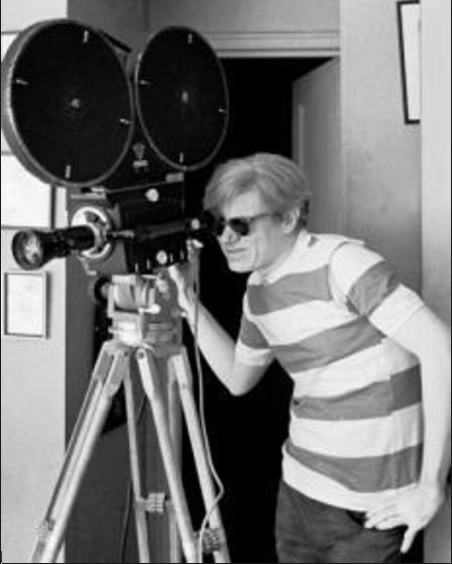
Andy Warhol and Friends:
'60/'70s Art Documentaries at Maas Building
Friday, January 25, 2019
8:00 pm
Admission: $9.00
The Maas Building
1325 N. Randolph Street, Philadelphia, PA
267-239-2851
On Friday, January 25, The Secret Cinema will return to the historic Maas Building with a new program showcasing documentaries from the 1960s and 1970s about the contemporary modern art world, with a heavy emphasis on Andy Warhol and his Factory scene. While we've previously presented several screenings devoted to films made by Warhol, we've never shown any of the films that comprise Andy Warhol and Friends: '60/'70s Art Documentaries (the "Friends" in our title refers to coverage of or comments by other major artists such as Robert Rauschenberg, Jackson Pollack, Willem de Kooning, and several others).
There will be one complete show at 8:00 pm. Admission is $9.00.
Andy Warhol and Friends: '60/'70s Art Documentaries will include:
Andy Warhol (1973) - This excellent, nearly hour-long look at Warhol at the start of the Seventies includes interviews with many friends and contemporaries of the artist and filmmaker, who is himself seen at the Factory, the Cannes Film Festival and the Brooklyn Museum. Many art works and film clips are presented, as are Henry Geldzahler, Barbara Rose, Emile de Antonio, Phillip Johnson, Taylor Mead, Brigid Polk, Viva, Paul Morrissey, Jasper Johns and many more. Andy is fascinating and funny as always, declaring that "Department stores are the new museums," and that he'd be a better president than Richard Nixon because, "I'd put carpets in the streets."

Andy Warhol and Roy Lichtenstein (1966) - This incredible film, from the golden age of cinéma vérité, was made by PBS-predecessor National Educational Television. It starts with a fairly relaxed interview with Pop Art pioneer Lichtenstein, who shows his studio. Warhol is then interviewed about various topics (including his legendary appearance at his ICA show in Philadelphia). He's then shown using silkscreens with Gerard Malanga, threading up The 13 Most Beautiful Women on his own 16mm projector in the Factory…and then discussing his new discovery, rock band the Velvet Underground. In the absolute best footage of the group that exists, the full original lineup perform live takes of "Venus in Furs" and "Heroin" while Andy and Gerard fill silver balloons with helium. If only we'd had access to this reel when we presented our Velvet Underground Film Festivals!
Art of the Sixties (1967) - This wide-ranging film was produced by Leonard Harris, culture critic for New York's WCBS-TV (and the actor playing Senator Pallantine in Taxi Driver!). Seen talking and working are artists Claes Oldenburg, Donald Judd, Robert Rauschenberg, George Segal, Jackson Pollack, Willem de Kooning, Franz Kline, light show artist Rudy Stern, installation artist Les Levine, filmmaker Len Lye, and more.
The Maas Building was previously a brewery and a trolley repair shop. This beautifully restored 1859 brick and timber workshop today serves as a multipurpose art event and catering space. Free street parking is available.

National Film Registry 30th Anniversary program
Thursday, January 10, 2019
8:00 pm
Admission: FREE
The Rotunda
4014 Walnut Street, Philadelphia
On Thursday, January 10, as the Secret Cinema enters its 27th year, we'll present a special program of short films paying tribute to the National Film Registry, on it 30th anniversary. It happens at the Rotunda, in University City.
In our current, divided political climate, the legislative branch of government often seems frozen, but in 1988 it managed to pass, of all things, laws mandating the establishment of "a National Film Registry to register films that are culturally, historically, or aesthetically significant." This unusual legislation was a side effect of public controversy over the colorizing of classic black and white Hollywood films, and the fear that future generations would not be able to see such works as they were originally created. In 1989 the first group of 25 titles was named to the Registry (including The Wizard of Oz, Nanook of the North and Star Wars). The National Film Registry today lists 725 films, including many obscure and "orphan works" -- not just features, but short films that encompass early cinema, documentaries, cartoons, newsreels, educational films and even home movies.11
A quick look through the Secret Cinema archive shows that we hold prints of over 50 films from this list -- including one title (the locally made The Jungle*) whose inclusion was the result of our lobbying. Quite a few are feature-length, but since any of those would constitute a whole show, we'll instead focus on shorts for our National Film Registry 30th Anniversary program, to show the variety of our film heritage that is honored in this important pantheon.
Additionally, Secret Cinema's Jay Schwartz will speak briefly about his experience working behind the scenes to get a forgotten but important film named to the Registry.
There will be one complete program, starting at 8:00 pm. Admission is free.
Highlights of the National Film Registry 30th Anniversary program are:

A Corner in Wheat (1909, Dir: D.W. Griffith) - D.W. Griffith began his directing career making hundreds of mostly one-reel dramas for the Biograph company, between 1908 and 1913. During this period Griffith's experimentation with pictorial grammar were hugely influential, and these ideas would culminate in his controversial feature masterpiece The Birth of a Nation. A Corner in Wheat, made with Griffith's stock company of players (including his wife Linda Arvidson, H. B. Walthall and Blanche Sweet) combined Billy Bitzer's lush cinematography with social criticism derived from Frank Norris' short stories. The plot contrasted the poor who cannot afford bread with a greedy speculator who gains at their expense, but ultimately gets his just reward.
Hindenburg Disaster Newsreel Footage (1937) - This Registry entry is unusual in that it includes, under one listing, the work of many newreel cameramen and companies who shot similar footage of the tragic explosion that quickly consumed the Hindenburg airship in Lakewood, New Jersey on May 6, 1937. We'll show a Pathé newsreel that includes graceful scenes flying over Manhattan, as well as the dirigible's fiery end.
The Plow That Broke the Plains (1936, Dir: Pare Lorentz) - This unique film documents not only its subject (soil erosion and the resulting dust bowl of the depression years), but a fascinating, long-gone time when the federal government funded politically progressive and artistically avant-garde art. FDR's Resettlement Administration assigned this project to Pare Lorentz, a political columnist freshly-fired by William Randolph Hearst. Lorentz assembled a crew of notable photographers, including Leo Hurwitz, Ralph Steiner and Paul Strand, all from the leftist Film and Photo league. He set their dramatic footage to haunting music from prominent modernist composer Virgil Thomson, and poetic narration read by Metropolitan Opera baritone Thomas Chalmers. The troubled and controversial production ultimately became one of the most famous documentaries of all time. It was hugely popular with theater audiences, and its influence on later Hollywood productions like The Grapes of Wrath is clear. Shown using the director's personal print.

The Inner World of Aphasia (1968, Dir: Edward and Naomi Feil) - This, a medical training film made by a small regional production company and starring the director's wife, is surely one of the most unlikely entries in the National Film Registry -- and one of its most powerful viewing experiences. It details the frustration of a nurse whose traumatic injury causes her to lose the ability to speak. For sheer emotional impact, this rather startling film handily matches any Hollywood product.
Plus The Great Train Robbery and Steamboat Willie.
*We will not be including The Jungle in this program, only because we showed it (along with an illustrated talk on its history) at the Fleisher Art Memorial just 14 months ago...and it was subsequently shown again, at the Lightbox Film Center (as part of the touring UCLA Festival of Preservation), in 2018.


Thursday, December 27, 2018
8:00 pm until Midnight
Admission: FREE
Johnny Brenda's
1201 N. Frankford Avenue, Philadelphia
215-739-9684
On Thursday, December 27, the Secret Cinema's Jay Schwartz will again guest D.J. at Johnny Brenda's bar/restaurant (downstairs). Jay will present the fourth installment of a music mix called I Belonged to the Blank Generation: Hard Hits and Deep Cuts from the Original Punk/New Wave Era, 1976-1979.
The event runs from 8:00 pm through Midnight, and admission is free.
While Schwartz is best known (for the last 26+ years) for helming the Secret Cinema film series, his involvement in local nightlife goes back a bit earlier. When Philadelphia's first new wave nightclub, the Hot Club, started in 1977, Schwartz covered its opening night as local correspondent for the important music paper New York Rocker. He also contributed writing and photography to other local and national publications for the next several years, and in 1979 was hired as the Hot Club's publicist. Schwartz continued this work later at such fabled nightspots as the original (Kensington) Starlite Ballroom, the East Side Club and Filly's Saloon.
In addition to rock journalism, photography and publicity work, Schwartz also managed to capture the first video footage of Philly's new wave music scene -- still embryonic in 1978 -- for a Temple University student project. The resulting short documentary, Philadelphia Seen, includes very early footage of the band X, legendary d.j. Lee Paris, local punks the Jags, and nightclub impresario David Carroll. The original tapes were recently preserved by the University of Southern California's film archive (expect a screening soon!).
The Starlite Ballroom was also where Jay first worked as a club disk jockey, and parts of his growing record collection were shared at several other places in the ensuing years. However, the initial installment of I Belonged... last January was Jay's first d.j. job since the 2007 closing of Rick D's Tritone nightclub, where he had spun at many different thematic events.
Schwartz had a front row seat to a musical revolution, and that will set the theme of I Belonged to the Blank Generation... All of the music (most of it played using first pressing vinyl issues) will come from the crucial first years of punk and new wave. Iconic artists like Television, Richard Hell, Blondie and the Ramones will be heard, but the night will also find room for more obscure records and forgotten local bands.

Secret Cinema part of multi-presenter Assembly screening
at South Philly's historic Bok Building
Thursday, November 29, 2018
7:30 pm
Admission: $25.00 (See below for details on limited-time discount code)
Bok Building
800 Mifflin St., Philadelphia
The Secret Cinema will participate in a multi-presenter program called Assembly on Thursday, November 29, at the historic Bok Building in South Philadelphia. The event is produced by the website Atlas Obscura.
Our participation will be limited to showing a rare short film made by University of Pennsylvania students in 1967, along with a brief illustrated talk by Jay Schwartz on the history of the Secret Cinema.
The ticket price is admittedly on the high side for a Secret Cinema event -- $25.00 -- but will include several other interesting presentations, an opportunity to see the Bok Building's beautiful Art Deco auditorium, and, we're told, "complimentary deluxe movie treats."
However, this being Black Friday weekend, Atlas Obscura is offering a $10 discount for any tickets bought by Monday evening using the discount code "blackfriday."
Tickets are available here.
Atlas Obscura's full announcement for Assembly (with details on the whole program) can be seen here.


Top Secret: Films You Weren't Supposed to See at Rotunda
Thursday, November 8, 2018
8:00 pm
Admission: FREE
The Rotunda
4014 Walnut Street, Philadelphia
On Thursday, November 8, the Secret Cinema will present a program of short films never intended for viewing by the general public. It will screen at University City's Rotunda, as part of their monthly free film series.

Top Secret: Films You Weren't Supposed to See showcases films produced to convey private information from the government, the military and big business, instructional or motivational in nature, to carefully targeted audiences of battle forces in the field, farmers, middle management and wholesale buyers of products. Spanning from World War II through the 1970s, these forgotten reels reveal long hidden and often surprising views of mid-century America. At least one of these films was originally marked as containing "Restricted" information (and for all we know it is still officially restricted!).
There will be one complete program, starting at 8:00 pm. Admission is free.
Just a few highlights of Top Secret: Films You Weren't Supposed to See are:

Army-Air Force Combat Digest #53 (1944) - A weekly newsreel made just for soldiers, bringing news, developments in the war, and aerial footage of bombing missions right to the barracks via portable 16mm projectors. This episode is from October 4, 1944.
Coca Cola: Operation Tiger (1975?) - This corporate motivational film was made to instill pride and passion in the hearts of Coca Cola bottlers and their delivery men, in hope that they would take extra care when setting up store displays of the "beautiful red and white labels" on countless cases of Coca Cola. It was part of a 1970s campaign secretly titled "Operation Tiger," and attempted to inspire these men to become fierce kings of the soft drink jungle. A rare view from inside the belly of the carbonated corporate beast!

Cull For Profit (1951) - Made by the U.S. Department of Agriculture, this color educational film argues in favor of eugenics in egg farming, advising farmers to carefully remove from their coops hens that are lower egg producers. It might have just as easily been called Kill for Profit.
Recognition of AFV's (1943) - Adapted by the U.S. Signal Corps from a British training film, this short aims to teach soldiers a valuable lesson: how to distinguish Allied tanks (or Armored Fighting Vehicles) from those of the enemy.
1104 Sutton Road (1958) - Motivational dramatization shows the story of a dissatisfied factory worker who imagines what it would be like to become foreman or the company president. He learns that every employee must be productive to succeed. Sponsored by the Champion Paper and Fibre Company, with blazing Technicolor views of home and workplace life.
Plus much more!
This Secret Cinema program is a slightly modified version of one previously presented in 2011, at Moore College of Art and at Stephen Parr's Oddball Film & Video in San Francisco.
All-new From Philadelphia With Love
at Fleisher Art Memorial
Friday, October 19, 2018,
8:00 pm
Admission: $9.00
Fleisher Art Memorial
719 Catharine Street, Philadelphia
215-922-3456 ext. 300
On Friday, October 19, the Secret Cinema will present the latest chapter in its ongoing series From Philadelphia with Love: Industrial, Educational and other Lost Local Films (2018 Edition). Once again, it will contain 100% new programming, and this time it will be shown at the Fleisher Art Memorial.
From Philadelphia with Love... showcases rare 16mm prints from the Secret Cinema archive and beyond about different aspects of life in the Philadelphia region . Some were made as sponsored films promoting goods or institutions, and others are educational, documentary or dramatic in nature. Most are virtually impossible to see elsewhere.
The Secret Cinema began showcasing these ephemeral scenes of lost local history back in 1999, and our last such presentation was a year ago. We've now projected over 65 of these films -- and none of them will be repeated in our October program. In fact, few have been seen by anyone since they were originally made.
There will be one complete show at 8:00 pm. Admission is $9.00.
The screening will be shown in the beautiful Sanctuary of the Fleisher Art Memorial in Philadelphia's Bella Vista neighborhood (just South of Center City). Free parking is available in the Fleisher's parking lot, just across the street.
Just a few highlights of this 2018 edition of From Philadelphia with Love... are:

The Wyeth Phenomenon (1967) - There's a lot of interest in renowned area painter Andrew Wyeth lately, particularly in the wake of Philadelphia filmmaker Glenn Holsten's Wyeth documentary for PBS' American Masters series. Here is an earlier look at the great artist, originally made for CBS News. It includes scenes of a museum opening and a PAFA award reception, and interviews with contemporary critics, Wyeth's sister Henriette and son Andrew.
The Truck and the Driver (1930s) - This short film promoting safe driving of trucks, produced by Aetna Insurance before many films of this type were made, would be interesting enough by virtue of its age and the vintage vehicles and streetscapes on display. That it appears to have been made entirely in the Philadelphia region should make it doubly so for local audiences. We have not been able to identify all of the locations (please come and help!), but are pretty confident that it includes scenes of Center City, Delaware Avenue, East Passyunk, and possibly Olney and the Philadelphia countryside...plus some still-valid lessons on road safety.

Harlem Renaissance: The Black Poets (1970) - An educational film, featuring folk singing, and the words of great black poets. But Harlem? Langston Hughes? What's that got to do with Philly? Look closely and you'll notice sets graffitied with the tags of actual North Philly street gangs (Camac & Diamond, Moroccos)...and a poem called, "On Lombard Street in Philadelphia." Harlem Renaissance... began life as an episode of a WCAU public affairs television program called Tell it Like it Was, starring singer/actress Dallie (aka Dallie Mohammed). Besides studio readings and songs, there are photos and footage of gritty urban settings (no, not that Gritty!). Produced in cooperation with the Free Library of Philadelphia.
Historic Philadelphia (1940s) - Breyer's Ice Cream sponsored this filmed tour of famous local sites, from Independence Hall and the Betsy Ross House to City Hall and Valley Forge. While we've shown several similar films in the past, none were of this vintage -- or filmed in vivid Anscochrome! With narration by Lowell Thomas.
Plus much more!

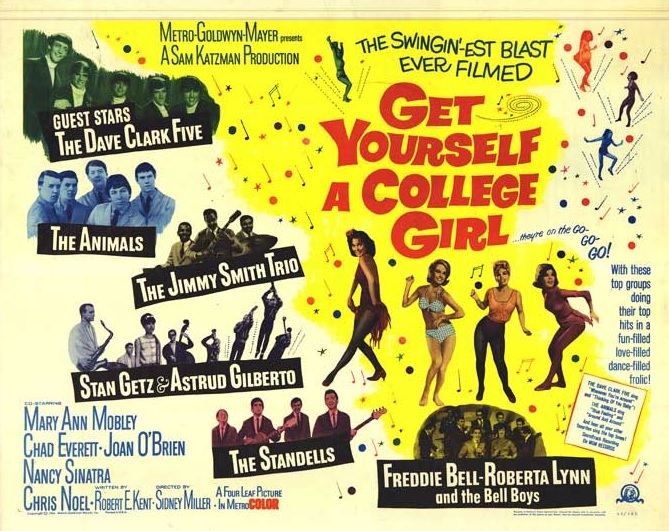
All-new Trailer Trash III in 35mm
at Bryn Mawr Film Institute
Bryn Mawr Film Institute
824 W. Lancaster Avenue, Bryn Mawr, PA
(610) 527-9898
Thursday, September 20, 2018
7:30 pm
Admission:$12.50, $6.50 (members), $10 (seniors/students)
The Secret Cinema will again follow up our biggest presentations ever on Thursday, September 20, when it presents Trailer Trash III on the big screen at the Bryn Mawr Film Institute. Like the original Trailer Trash programs this all-new program is a non-stop orgy of rare, original preview "trailers" advertising some of the Secret Cinema's favorite (and least favorite!) films of the 1960s and '70s -- exploitation, sexploitation, science-fiction, bikers, horror, rock musicals, beach movies, and unclassifiable movies. All will be shown from archival 35mm prints (with several in true, IB Technicolor) on the BMFI's gigantic screen, along with vintage drive-in messages, theater commercials and date strips, from the 1950s and beyond.
This will be the first all-new Trailer Trash program since 2002! That's when we premiered Son of Trailer Trash at the Prince Music Theater (later repeated at International House and Bryn Mawr Film Institute. In the 16 years since then the Secret Cinema archive has acquired a lot of trailers, and we are frantically going through them to assemble next week's program. An exact list of titles is not yet possible, but we would not be surprised if some of the choices are Countdown, Luv, Day of the Jackal, No Way to Treat a Lady, The Mack, The Molesters, Carmen Baby, The Grissom Gang, The People that Time Forgot, Bless the Beasts and Children, Work is a Four Letter Word, The Damned, Get Yourself a College Girl, Cry Uncle, Pufnstuf, Point Blank, Scream Blacula Scream, The Love Machine, Pretty Maids All in a Row, Quadrophenia, Catch My Soul…and more!
This program is suggested for mature audiences.
There will be one complete show at 7:30 pm. Admission is $12.50, $6.50 (BMFI members), $10 (seniors and students).
Since 1992, the Secret Cinema has been the Philadelphia area's premiere floating repertory cinema series, bringing hundreds of unique programs to nightclubs, bars, coffee houses, museums, open fields, colleges, art galleries, bookstores, and sometimes even theaters and film festivals. Drawing on its own large private film archive (as well as other collections), the Secret Cinema attempts to explore the uncharted territory and the genres that fall between the cracks, with programs devoted to educational and industrial films, cult and exploitation features, cartoons, rare television, local history, home movies, erotic films, politically incorrect material, and the odd Hollywood classic. As long as it exists on real celluloid, that is -- Secret Cinema screenings never use video/digital projection. While mainly based in Philadelphia, the Secret Cinema has also brought programming to other cities and countries.

Link to BMFI's interview with Secret Cinema programmer Jay Schwartz.

Totally Wired: The Films of Bell Telephone at Rotunda
Thursday, September 13, 2018
8:00 pm
Admission: FREE
The Rotunda
4014 Walnut Street, Philadelphia
On Thursday, September 13, the Secret Cinema will present an evening of short films from one of the major motion picture producers of the 20th century -- the phone company! It will screen at University City's Rotunda, as part of their monthly free film series.

For 99 years, until its breakup in 1984, the Bell System (aka A.T. & T.) enjoyed an unprecedented monopoly of the telephone communications business in America. And one of the ways it consolidated its strength was by utilizing movies to their fullest potential as a shaper of attitudes: of its employees, its business customers and the general public.
Totally Wired: The Films of Bell Telephone is a varied collection of short, non-theatrical films produced by the Bell System, covering all of these uses. As the largest corporation in the world, Bell had unlimited resources, producing corporate films more skillfully and more entertainingly than most companies could. They spared little expense, with frequent use of color, animation, and expert talent, on both sides of the camera.
We will show an assortment of rare Bell sales films, in-house training films, commercials and public relations films. As they depict the various missions and agendas of one business throughout the years, the movies also provide a revealing look at mid-century America in general. Many of these reels were never meant to be shown to the general public.
There will be one complete show, starting at 8:00 pm. Admission is free.
Just a few of the highlights of Totally Wired: The Films of Bell Telephone will be:

Telephone Highlights (1947) - Using the lively techniques of the classic theatrical newsreel (quick editing, enthusiastic narration, peppy background music), this action-packed one-reeler details post-war news and accomplishments of the New York Telephone Company. Shown are the top-to-bottom construction of a new (pre-electronic) phone exchange in midtown Manhattan, and the connecting of the one-millionth telephone in upstate New York. Producer Leslie Roush was a veteran director of short subjects for Paramount in earlier years.
What's in a Name? (1950s) - This rare business office training film uses a dramatized story to explain the potentially snowballing impact of getting just one character of a customer's phone listing incorrect.
Dial "O" for Operator (1965) - A peculiar and possibly frightening short, using dramatic scenes from the Sidney Poitier film The Slender Thread to demonstrate the advancements made in the technology of...tracing phone calls.

Invisible Diplomats (1965) - This humorous look at business telephone etiquette, made in gorgeous Technicolor, tells its message through the perspective of two cheerful but harried PBX (private branch exchange, or in-house switchboard) operators. The familiar cast includes not only The Honeymooners' Audrey Meadows, but also One Day at a Time's Bonnie Franklin and Harold Peary of radio's The Great Gildersleeve (he was also a character actor in countless TV and voiceover credits). Directed by prolific Hollywood choreographer Leroy Prinz.
Operator (1969) - Director Nell Cox, with help from documentary pioneer Richard Leacock (working here for Maysles Films) uses the cinema verite techniques Leacock helped invent to show the challenging but rewarding work of a telephone operator, in an effort to recruit young women into the profession. With psychedelic music provided by the New York Rock and Roll Ensemble.
Picture Phone (1970) - This demonstration film shows off the enhanced business capabilities of an updated version of the Picture Phone, famously demonstrated at the 1964 New York World's Fair. It was sadly to remain one of Bell Telephone's greatest failures.
This Secret Cinema program was previously presented in 2007 at Moore College of Art, and in 2012 at New York's Anthology Film Archives.

D.J.'s Silvia & Jay spin international vinyl rarities (again!)
for Made in Spain night, at new bar The International
Saturday, September 8, 2018
10:00 pm until 2:00 am
Admission: FREE
The International
1624 N. Front St (at Cecil B. Moore Avenue)
Philadelphia
On Saturday, September 8, the new bar The International will host the second edition of a special music party called Made in Spain, featuring a variety of beat, mod and soul music from the sixties -- all of it recorded in Spain.
It all starts at 10:00 pm and runs until 2:00 am. Admission is free.
Some of the artists to be played at Made in Spain will be Los Brincos (the period's most inventive group; arguably the Beatles of Spain), Los Bravos (Spain's most successful export act, of "Black is Black" fame), Los Iberos (produced by U.K. "Nothing But a Heartache" songwriting team Bickerton and Waddington), Los Salvajes, Los Sirex, Formula V, and many more, plus Spanish "Ye Ye" girls like Karina and Conchita Velasco. Records played will include both original songs and several Spanish language versions of familiar American and British pop hits.
In addition to sixties sounds, some time will also be devoted to Spanish music of today in the garage, indie and power pop styles.
The event will again be led by "La Chica Ye Ye," D.J. Silvia. A favorite spinner at many past sixties-music events in Philly, New York and her native country of Spain, Silvia is sure to have some new surprises and rare sides in the multiplying boxes of discs she stuffs in her trans-oceanic luggage. Silvia moved to Philadelphia in 2004, from her birthplace in the Spanish city of Gijón, in the green province of Asturias.
Assisting will be Jay Schwartz. Jay is the long-time programmer/creator of the Secret Cinema film series, and is the musical (and marital!) partner of D.J. Silvia.
The International -- under the El on the border between Fishtown and "Olde Kensington" -- is the latest offering from the team that brought the Standard Tap and Johnny Brenda's to Philly nightlife. They offer a global variety of spirits and light bites, as well as a variety of music from local d.j.'s.
Made in Spain is co-sponsored by The Secret Cinema and Los de Patanegra en Philadelphia, a group formed to unify the growing community of Spaniards in Philadelphia and promote friendship, culture and networking.
The initial Made in Spain party in June saw the International filled with Spanish expatriates singing along to hits from their homeland. The many native Philadelphians present seemed to enjoy the music too (if not always understanding the words). LOS DE PATANEGRA EN PHILADELPHIA WEBSITE
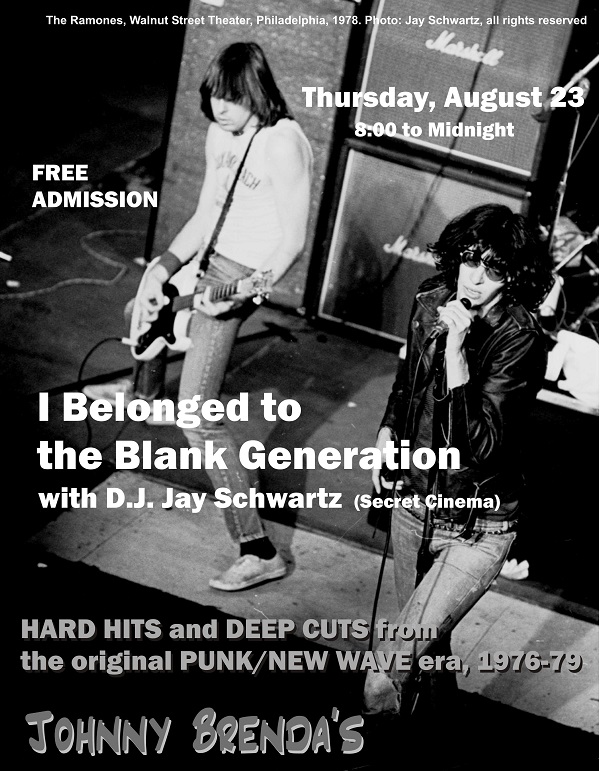
Thursday, August 23, 2018
8:00 pm until Midnight
Admission: FREE
Johnny Brenda's
1201 N. Frankford Avenue, Philadelphia
215-739-9684
On Thursday, August 23, the Secret Cinema's Jay Schwartz will again guest D.J. at Johnny Brenda's bar/restaurant (downstairs). Jay will present the third round of a music mix called I Belonged to the Blank Generation: Hard Hits and Deep Cuts from the Original Punk/New Wave Era, 1976-1979.
The event runs from 8:00 pm through Midnight, and admission is free.
While Schwartz is best known (for the last 26 years) for helming the Secret Cinema film series, his involvement in local nightlife goes back a bit earlier. When Philadelphia's first new wave nightclub, the Hot Club, started in 1977, Schwartz covered its opening night as local correspondent for the important music paper New York Rocker. He also contributed writing and photography to other local and national publications for the next several years, and in 1979 was hired as the Hot Club's publicist. Schwartz continued this work later at such fabled nightspots as the original (Kensington) Starlite Ballroom, the East Side Club and Filly's Saloon.
In addition to rock journalism, photography and publicity work, Schwartz also managed to capture the first video footage of Philly's new wave music scene -- still embryonic in 1978 -- for a Temple University student project. The resulting short documentary, Philadelphia Seen, includes very early footage of the band X, legendary d.j. Lee Paris, local punks the Jags, and nightclub impresario David Carroll. The original tapes were recently preserved by the University of Southern California's film archive (expect a screening soon!).
The Starlite Ballroom was also where Jay first worked as a club disk jockey, and parts of his growing record collection were shared at several other places in the ensuing years. However, the initial installment of I Belonged... last January was Jay's first d.j. job since the 2007 closing of Rick D's Tritone nightclub, where he had spun at many different thematic events.
Schwartz had a front row seat to a musical revolution, and that will set the theme of I Belonged to the Blank Generation... All of the music (most of it played using first pressing vinyl issues) will come from the crucial first years of punk and new wave. Iconic artists like Television, Richard Hell, Blondie and the Ramones will be heard, but the night will also find room for more obscure records and forgotten local bands.

New chapter of Archive Discoveries: Unseen Curiosities from
the Secret Cinema Collection at Maas Building
Friday, June 29, 2018
8:00 pm
Admission: $9.00
The Maas Building
1325 N. Randolph Street, Philadelphia, PA
267-239-2851
On Friday, June 29, The Secret Cinema will return to the historic Maas Building with another chapter of our ongoing series, Archive Discoveries: Unseen Curiosities from the Secret Cinema Collection. Once again we'll feature a mélange of fascinating short films from the past. As we go through our collection, reel by reel, we continually find films that don't necessarily lend themselves to fitting into a themed group, yet are too interesting, or fun, or funny to not share. None have been shown in previous Secret Cinema programs. Indeed, few of these films are likely to have been seen anywhere in recent years.
This month's program accidentally has a recurring theme, however: several of the films are about music, in one way or another.
There will be one complete show at 8:00 pm. Admission is $9.00.
A few highlights from this new edition of Archive Discoveries… include:

American Music: From Folk to Jazz to Pop (1966) – A segment from a sprawling, behind-the-scenes documentary about the mid-sixties music industry. Not much rock 'n' roll is on display, but we get to visit Nashville's Music Row and Grand Ole Opry, catch Peter, Paul & Mary at the Newport Folk Festival, hear interviews with Richard Rodgers and Duke Ellington, and watch Tony Bennett in the recording studio.
Musical Justice (1931) – An entertaining, and frankly weird theatrical short from Paramount starring Rudy Vallée, the famed crooner and bandleader who was arguably the first pop music star of the 20th century. Vallée plays the judge in a court of musical misdemeanors, while his band the Connecticut Yankees is the jury that deliberates, in closed-door jam sessions, over the fates of assorted oddballs charged with melodic offenses. Also appearing is the real-life voice of Betty Boop, Mae Questal -- who pleads with the court to not take her boop-oop-a-doop away(!)
Hungarian Rhapsody (1930) – William Cameron Menzies was the most important and influential art director of Hollywood's golden age: Menzies created the look of everything from Douglas Fairbanks' The Thief of Bagdad to Gone With the Wind to the visionary sci-fi masterpiece Things to Come (which he also directed). In the early years of talkies Menzies, in partnership with pioneering film composer Hugo Riesenfeld, produced a series of short films that visualized operettas and other classical works. These films displayed much higher production values than typical one-reelers (or even many features). Hungarian Rhapsody, based on Franz Liszt's folk music adaptations, is no exception, with gorgeous photography, special effects, sumptuous sets and a wordless story.
Elvis Work Tape kinescope (1968) – Rare footage of rehearsal sessions for Elvis Presley's 1968 "Comeback Special" for NBC (which was actually titled Singer Presents...ELVIS). Revealed is some rather lascivious grinding among the dancers, throat clearing, guitar straps failing, and some mild cussing from the King.
Plus much, much more!
The Maas Building was previously a brewery and a trolley repair shop. This beautifully restored 1859 brick and timber workshop today serves as a multipurpose art event and catering space. Free street parking is available.

D.J.'s Silvia & Jay spin international vinyl rarities for
Made in Spain night, at new bar The International
Thursday, June 21, 2018
8:00 pm until MIdnight
Admission: FREE
The International
1624 N. Front St (at Cecil B. Moore Avenue)
Philadelphia
On Thursday, June 21, the brand new bar The International will host a special music party called Made in Spain, featuring a variety of beat, mod and soul music from the sixties -- all of it recorded in Spain.
It all starts at 8:00 pm and runs until midnight. Admission is free.
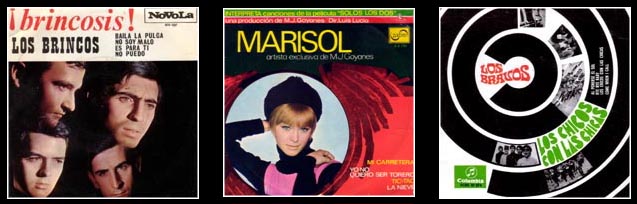
Some of the artists to be played at Made in Spain will be Los Brincos (the period's most inventive group; arguably the Beatles of Spain), Los Bravos (Spain's most successful export act, of "Black is Black" fame), Los Iberos (produced by U.K. "Nothing But a Heartache" songwriting team Bickerton and Waddington), Los Salvajes, Los Sirex, Formula V, and many more, plus Spanish "Ye Ye" girls like Karina and Conchita Velasco. Records played will include both original songs and several Spanish language versions of familiar American and British pop hits.
In addition to sixties sounds, some time will also be devoted to Spanish music of today in the garage, indie and power pop styles.
The event will mark the return of "La Chica Ye Ye," D.J. Silvia. A favorite spinner at many past sixties-music events in Philly, New York and her native country of Spain, Silvia is sure to have some new surprises and rare sides in the multiplying boxes of discs she stuffs in her trans-oceanic luggage. Silvia moved to Philadelphia in 2004, from her birthplace in the Spanish city of Gijón, in the green province of Asturias.
Assisting will be Jay Schwartz. Jay is the long-time programmer/creator of the Secret Cinema film series, and is the musical (and marital!) partner of D.J. Silvia.
The International -- under the El on the border between Fishtown and "Olde Kensington" -- is the latest offering from the team that brought the Standard Tap and Johnny Brenda's to Philly nightlife. They offer a global variety of spirits and light bites, as well as a variety of music from local d.j.'s.
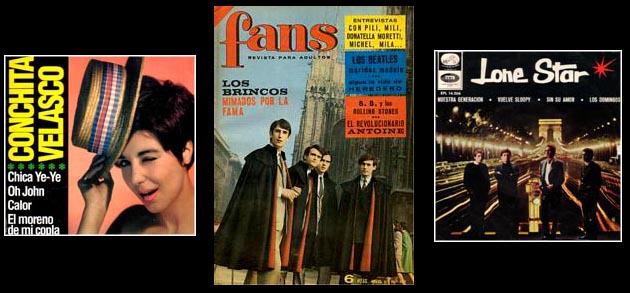
This will be the first Made in Spain party since Silvia and Jay did one at the late, lamented Tritone...circa 2007!
Made in Spain is co-sponsored by The Secret Cinema and Los de Patanegra en Philadelphia, a group formed to unify the growing community of Spaniards in Philadelphia and promote friendship, culture and networking. LOS DE PATANEGRA EN PHILADELPHIA WEBSITE

New York City's Cartoon Roots
with special guest Tommy José Stathes
at Fleisher Art Memorial
Saturday, June 9, 2018
8:00 pm
Admission: $9.00
Fleisher Art Memorial
719 Catharine Street, Philadelphia
215-922-3456 ext. 300
On Saturday, June 9, the Secret Cinema's screening at the Fleisher Art Memorial will include a very special guest: early animation historian and film archivist Tommy José Stathes, who will provide a look into New York's budding animation industry of the 1910s and 1920s.

The program is called New York City's Cartoon Roots. With a selection of rare archival 16mm prints from Stathes' personal archive, a fairly comprehensive cross-section of this silent-era subgenre will showcase the work of pioneers such as Winsor McCay, Raoul Barré, Earl Hurd, Otto Messmer, Max Fleischer and Paul Terry. Fledgling cartoon superstars like Bobby Bumps, Koko the Clown, Felix the Cat, Farmer Alfalfa, Krazy Kay, and Mutt & Jeff will all be included.
Stathes will give an informative introduction about this fascinating, yet little-studied period of animation, and answer questions about the films.
There will be one complete show at 8:00 pm. Admission is $9.00.
The screening will be shown in the beautiful Sanctuary of the Fleisher Art Memorial in Philadelphia's Bella Vista neighborhood (just South of Center City). Free parking is available in the Fleisher's parking lot, just across the street.
Just a few of the films to be included are:
Cartoons On Tour (Barré, 1915)
Bobby Bumps Puts a Beanery On the Bum (Hurd, 1918)
The Flying House (McCay, 1921)
The Tantalizing Fly (Fleischer, 1919)
The Great Cheese Robbery (Bray Studios, 1920)
Felix Revolts (Messmer, 1923)
Barnyard Artists (Terry, 1928)
...and much more.

Tommy José Stathes is an archivist, historian, distributor, and educator in the realm of early animated films. Stathes is best known in film history circles for creating the Bray Animation Project research initiative; the Cartoons On Film early animation re-release label and Cartoon Roots Blu-rays; supplying early animated films to and co-hosting them on Turner Classic Movies; as well as for his 16mm "Cartoon Carnival" film screening series in New York City. Stathes is also a faculty member at the School of Visual Arts and the Feirstein Graduate School of Cinema, and is Consulting Producer on Cartoon Carnival: The Documentary, which is soon to be released.

The Secret Cinema's Greatest Hits
at Ardmore's Living Room at 35 East
Saturday, May 26, 2018
8:00 pm
Admission: $10.00
The Living Room at 35 East
35 East Lancaster Avenue
Ardmore, Pa.
The Secret Cinema will bring its 16mm film projectors and reels to a brand new location on Saturday, May 26: The Living Room at 35 East, in the heart of downtown Ardmore. Singer-songwriter Laura Mann recently opened this intimate space to provide a comfortable setting for the enjoyment of live music, poetry, comedy and now, films.
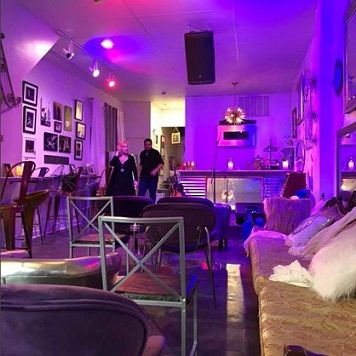
Our initial program at the Living Room will serve as a primer for new audience members and a refresher course for old fans: The Secret Cinema's Greatest Hits will include audience favorites from 26 years of screening obscure short films from the miscellaneous, most forgotten corners of film history. Campy educational reels, industrial films, TV commercials, cartoons, musical shorts and more will all be included. Housed in the Secret Cinema's large, private film archive, most are unavailable for viewing anywhere else.
There will be one complete show at 8:00 pm. Admission is $10.00.
The Living Room at 35 East serves coffee, soft drinks and snacks, but is BYOB for alcohol.
Advance tickets can be purchased here: https://www.brownpapertickets.com/venue/261699
Just a few highlights of The Secret Cinema's Greatest Hits are:
The Stranger At Our Door (1940) - This dramatic two-reeler, made by a religious group to promote ethnic tolerance, shouldn't be funny -- but the outrageous overacting by Bowery Boys rejects and their non-specific European-born target make it surreally so.
How Quiet Helps at School (1953) - The answer should be obvious, but the level of quiet expected by the uptight narrator of this classic '50s social guidance film probably had kids holding their breath in class.
Pro Kleen commercial (1950s) - A mind-numbingly crass eight minute TV commercial in which an unappealing pitchman with a thick Baltimore accent extols the wonders of a new spot cleaner.
The Story of Bubblegum (1952) - This beautiful Kodachrome film sets out to answer the question, "Can bubblegum be good food?" Made at the old Fleer bubblegum plant in Olney, showing its giant vats of pink rubber, plant cafeteria and garden, and their amazing R&D department. Quite possibly the greatest film ever made, short or long.
Inside Test City, U.S.A. (1959) - Reader's Digest produced this promotional film publicizing the magazine's test-marketing service for consumer product manufacturers. "For the last two decades," the narrator explains, "American business has tested more of its products in Columbus [Ohio] than in any other major American community. Through the years, industry has discovered that what happens in Columbus today will be happening all over America tomorrow."
Plus much more!
Fashion Undressed: Films of Style and Beauty at Rotunda
Thursday, May 10, 2018
8:00 pm
Admission: FREE
The Rotunda
4014 Walnut Street, Philadelphia
Earlier this year, the Secret Cinema was asked by Towson University in Maryland to create a special film program...to complement a gallery exhibition on the history of women's undergarments! We were encouraged to include any films touching on the themes of fashion and beauty, so we searched through the archive and came up with an assemblage of shorts (short films, that is!) from the 1930s through the 1970s. Included were educational and advertising films, entertainment shorts and newsreels. Some were old Secret Cinema favorites, and others had never been projected before.
We were so pleased with the results that we decided that we had to share this program with our regular audience -- and where better than in our new free screening series at University City's Rotunda? So, on Thursday, May 10 we'll present Fashion Undressed: Films of Style and Beauty.
There will be one complete screening at 8:00 pm. Admission is free.
Just a few highlights of Fashion Undressed... are:
The Costume Designer (1950) - In 1950 the Academy of Motion Picture Arts & Sciences oversaw the production of a series of one-reel shorts covering different aspects of the film industry, each film being produced by a different studio. R.K.O. made this reel on the importance of the wardrobe department, with a special focus on sunglass-wearing designer Edith Head (who, oddly, is not named).
Figure Forum (1954) - Warner Brothers -- not the famous film studio, but the Warner Brothers Foundations and Bras Company of Bridgeport, Connecticut -- made this film about choosing the proper bra and girdle. Trivia note: This reel was among the first 3 or 4 16mm films the Secret Cinema ever owned -- it was thrown in with the first projector we purchased, back in 1975!
Girls in Short Short Dresses (1966) - Paramount made this topical film in the final days of the theatrical short subject era, to capitalize on the worldwide interest in then very-Swinging London. It stars actual mod band The Thoughts, best known to record collectors for their recording of Ray Davies' (of the Kinks) otherwise unreleased song "All Night Stand." In this rare Technicolor pictorial, they perform two songs in the famous Blaise's nightclub, and in a reverse on the usual rock band scenario, they chase girls around tube stations and Carnaby Street boutiques. The film also makes a visit to the studio of fashion designer Mary Quant, inventor of the miniskirt.
The Look of Shangri-La (1973) - A "production reel," or promotional short showing behind-the-scenes looks at a then-forthcoming major motion picture. This one was made to plug the disastrous 1970s musical remake of Frank Capra's classic 1937 fantasy Lost Horizon, with an emphasis on the new version's now very dated costume design.
How to Undress in Front of Your Husband (1937) - Curious comedy short made by indie exploitation producer and distributor Dwain Esper (Maniac, Reefer Madness). While not quite as salacious as its title implies, it nonetheless achieved notoriety by virtue (?) of its leading lady, Elaine Barrie, who was then in the middle of a rocky marriage to legendary actor John Barrymore.
Plus Heavenly Body (1975), Winning Styles (1968), How Do They Tie-dye Cloth? (1970) and more!
Crazy 1960s Eurospy epic Lightning Bolt
in 35mm at Bryn Mawr Film Institute

Bryn Mawr Film Institute
824 W. Lancaster Avenue, Bryn Mawr, PA
(610) 527-9898
Thursday, May 3, 2018
7:30 pm
Admission:$12.50, $6.50 (members), $10 (seniors/students)
On Thursday, May 3, the Secret Cinema will return to the Bryn Mawr Film Institute for a screening of the 1966 "Eurospy" classic Lightning Bolt. This Italian-made, low-budget cash-in on the James Bond phenomenon is campy fun, yet still manages to dazzle with impressive sets, snappy music (from celebrated composer Riz Ortolani) and explosive special effects. Lightning Bolt will be shown using a rare IB Technicolor, Cinemascope 35mm print, projected onto the BMFI big screen -- the way all movies should be seen!
In addition to the feature, the program will also include surprise short subjects.
There will be one complete show at 7:30 pm. Admission is $12.50, $6.50 (BMFI members), $10 (seniors and students).
While we normally are proud to announce that "All Secret Cinema presentations are projected in 16mm film on a giant screen," once again we are even prouder to announce that this show will be projected in even higher-quality 35mm film, on an even gianter screen than usual. As always, we will be having nothing to do with video/digital presentation.
A complete description of the feature follows...
Lightning Bolt (1966. Dir: Antonio Margheriti)
James Bond movies became a full-fledged global phenomenon in the mid-1960s, and the entertainment industry responded with a flood of imitations. Hollywood gave us Matt Helm, Derek Flint and Napoleon Solo, while Italy, Spain and France gave us a seemingly non-stop barrage of what are now called "Eurospy" movies: low-budget secret agent flicks, often starring lesser-known American actors in the lead roles. Some Eurospies made it to our shores with dubbed soundtracks and varying success, and one of the most enjoyable of these was Lightning Bolt (or Operazione Goldman in its native Italy).
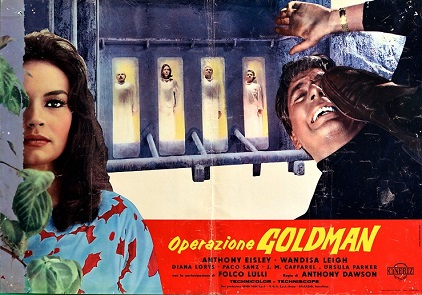
The story concerns an evil beer brewer (!) who is sabotaging NASA launches (shown via grainy stock footage), in an attempt to place a laser gun on the moon and thus control Earth. Sent to stop this is handsome American actor Anthony Eisley (Philadelphia-born former star of TV's Hawaiian Eye). Eisley narrates the film in a Bogart-derived detective-ese, and oddly, he often gets his way by buying rather than spying, wielding a fat checkbook to thwart his enemies! Lightning Bolt borders on parody, with often impossible to follow plot elements, but remains fun with plenty of action, beautiful female superagents and an impressive, Our Man Flint-type hi-tech hideout for the villain. The bad dubbing, crazy story-line and weird sight of Italian actors dressed as American soldiers only add to the feverish, surreal experience of the movie. Dismissed by most (if noticed at all) on its original American release, in recent times Lightning Bolt has been rediscovered by modern viewers as one of the most enjoyable entries among dozens of more routine Eurospy movies.
The film's perky music was created by Italian composer Riz Ortolani, a Grammy winner for the international hit song "More" (from his soundtrack to notorious "shockumentary" Mondo Cane. Ortolani's work began to be rediscovered (and his soundtrack albums became more collectible) during the exotica/lounge music revival of the 1990s.
NOTE: Our print looks much nicer than the low-res trailer seen here!

Program of 35mm rarities at
Bryn Mawr Film Institute
Bryn Mawr Film Institute
824 W. Lancaster Avenue, Bryn Mawr, PA
(610) 527-9898
Thursday, February 1, 2018
7:30 pm
Admission:$12.50, $6.50 (members), $10 (seniors/students)
On Thursday, February 1, the Secret Cinema will return to the Bryn Mawr Film Institute with hidden treasures from the rarely-seen 35mm section of the Secret Cinema archives -- many of which can not be seen anywhere else.
The program, named The Secret Secret Cinema, is a multi-genre pop culture mash-up of forgotten advertising films, theatrical short subjects, clips and trailers.

Some highlights are: La Danse a Go Go, a 1964 short about twisting discotheque go-go dancers; A Touch of Magic, a surreal Technicolor musical promoting Populuxe cars and kitchens; Mexican Rhythm, a 1953 one-reeler starring "Mexico's Jazz King" Luis Arcaraz; network TV promos; ads for long-gone local businesses; and original previews for such offbeat classics as Groupies, Hells Angels '69, Bummer, Mondo Mod… and much more!
This program is suggested for mature audiences (though immature adults are welcome also).
There will be one complete show at 7:30 pm. Admission is $12.50, $6.50 (BMFI members), $10 (seniors and students).
Like most Secret Cinema programs, The Secret Secret Cinema strives to expose forgotten delights from the often-overlooked annals of motion picture ephemera, films which would be difficult to experience in any other way.
While we normally are proud to announce that "All Secret Cinema presentations are projected in 16mm film on a giant screen," this time we are even prouder to announce that the entirety of The Secret Secret Cinema program will be projected in even higher-quality 35mm film, on an even gianter screen than usual. As always, we will be having nothing to do with video/digital presentation.

I Belonged to the Blank Generation
with D.J. Jay Schwartz at Johnny Brenda's
Monday, January 29, 2018
8:00 pm until Midnight
Admission: FREE
Johnny Brenda's
1201 N. Frankford Avenue, Philadelphia
215-739-9684
On Monday, January 29, the Secret Cinema's Jay Schwartz will be guest D.J. at Johnny Brenda's bar/restaurant (downstairs). Jay will present a music mix called I Belonged to the Blank Generation: Hard Hits and Deep Cuts from the Original Punk/New Wave Era, 1976-1979.
The event runs from 8:00 pm through Midnight, and admission is free.
While Schwartz is best known (for the last 26 years) for helming the Secret Cinema film series, his involvement in local nightlife goes back a bit earlier. When Philadelphia's first new wave nightclub, the Hot Club, started in 1977, Schwartz covered its opening night as local correspondent for the important music paper New York Rocker. He also contributed writing and photography to other local and national publications for the next several years, and in 1979 was hired as the Hot Club's publicist. Schwartz continued this work later at such fabled nightspots as the original (Kensington) Starlite Ballroom, the East Side Club and Filly's Saloon.
In addition to rock journalism, photography and publicity work, Schwartz also managed to capture the first video footage of Philly's new wave music scene -- still embryonic in 1978 -- for a Temple University student project. The resulting short documentary, Philadelphia Seen, includes very early footage of the band X, legendary d.j. Lee Paris, local punks the Jags, and nightclub impresario David Carroll. The original tapes were recently preserved by the University of Southern California's film archive (expect a screening soon!).
The Starlite Ballroom was also where Jay first worked as a club disk jockey, and parts of his growing record collection were shared at several other places in the ensuing years. However, January's night at Johnny Brenda's will be Jay's first d.j. job since the 2007 closing of Rick D's Tritone nightclub, where he had spun at many different thematic events.
Schwartz had a front row seat to a musical revolution, and that will set the theme of I Belonged to the Blank Generation... All of the music (most of it played using first pressing vinyl issues) will come from the crucial first years of punk and new wave. Iconic artists like Television, Richard Hell, Blondie and the Ramones will be heard, but the night will also find room for more obscure records and forgotten local bands.

Classic program Creepy Christmas Films
at Fleisher Art Memorial
Thursday, December 14, 2017
8:00 pm
Admission: $9.00
Fleisher Art Memorial
719 Catharine Street, Philadelphia
215-922-3456 ext. 300
On Thursday, December 14, the Secret Cinema will return to the Fleisher Art Memorial, to present another audience favorite from our 25-year history. Creepy Christmas Films is a special program of vintage Yuletide shorts featuring frightening puppets, demonic animals, and maudlin sentiments. As an added bonus, interspersed randomly between the films will be glimpses of strangers' Christmas home movies, showcasing a nostalgic array of old toys and synthetic trees.
This popular program was shown last at the Sedgwick Cultural Center in 2004 (and before that, at the Prince Music Theater and the long-gone Griffin Cafe). It will be our final presentation of 2017.
There will be one complete show at 8:00 pm. Admission is $9.00
The screening will be shown in the beautiful sanctuary of the Fleisher Art Memorial in Philadelphia's Bella Vista neighborhood (just South of Center City). Free parking is available in the Fleisher's parking lot, just across the street.
A few highlights of the program include:
Santa In Animal Land (1948) - In this bizarre one-reeler, animal puppets (with some of the most painfully cloying voices ever recorded) bemoan the fact that there is no official Christmas celebration in the animal kingdom, and set out to protest to Santa Claus about their situation.
Davey & Goliath: Christmas Lost & Found (1965) - A special edition of the early-'60s, long-rerun clay animation series from Gumby creator Art Clokey (and funded by the Lutheran Council of Churches). Sourpuss Davey searches his town in desperation for the true Christmas spirit, finding little consolation even in the antics of his lovable dog Goliath.
A Visitor For Christmas (1967) - "But we can't have Aunt Hattie here -- she'll ruin our Christmas!" Mawkish live-action drama produced by religious studio Family Films, in which every member of a typical American family complains about the impending visit of their hated Aunt Hattie. With Lassie star Tommy Rettig.

Howdy Doody's Christmas (1951) - Buffalo Bob, Clarabelle, "Ugly Sam," and the grandfather of creepy marionettes, Howdy Doody, all join forces in this excruciating short film that was made especially for home and school projectors, to capitalize on the popularity of television's The Howdy Doody Show.
Plus more!
Secret Cinema participates in Franklin Institute's
"Science After Dark" program
On Tuesday, November 28, the Secret Cinema will present just one of the many attractions offered at the Franklin Institute's "Science After Dark" program, all of which feature a special Hollywood theme.
Read more about it here.

All-new From Philadelphia With Love
at Fairmount Park Horticulture Center
Friday, November 24, 2017
8:00 pm
Admission: $9.00
Horticulture Center
West Fairmount Park
North Horticultural Drive & Montgomery Avenue, Philadelphia
(215) 685-0096
On Friday, November 24, 2017, the Secret Cinema will present the latest chapter in its ongoing series From Philadelphia with Love: Industrial, Educational and other Lost Local Films (2017 Edition). Once again, it will contain 100% new programming, and this time it will be shown at Fairmount Park's beautiful and verdant Horticulture Center. This exhibition hall and glass-walled greenhouse is filled inside and out with rare plants and historic statuary. It sits on the site of the former Horticultural Hall, an 1876 Centennial Exposition building (and is kept comfortably warm inside, regardless of outdoor conditions).
From Philadelphia with Love... showcases rare 16mm prints from the Secret Cinema archive about different aspects of life in the Philadelphia region. Some were made as sponsored films promoting goods or institutions, and others are educational, documentary or dramatic in nature. Most are virtually impossible to see elsewhere.
The Secret Cinema began showcasing these ephemeral scenes of lost local history back in 1999, and our last such presentation was two years ago. We've now projected over 60 of these films -- and none of them will be repeated for our November program. In fact, few have been seen by anyone since they were originally made.
There will be one complete show at 8:00 pm. Admission is $9.00.

The Fairmount Park Horticulture Center, minutes off of the Schuylkill Expressway, features a large, free parking lot. It is near Memorial Hall (Please Touch Museum) and is a short walk from Septa Routes 38, 40, 43, and 64 (Route 38 comes closest, with a stop at Belmont Avenue and Montgomery Drive).
Just a few highlights of this 2017 edition of From Philadelphia with Love... are:
20 to the 3rd Power (1967, Dir: Edward J. Bergman, Alan Soffin) - This somewhat experimental student work was produced by the Documentary Film Laboratory of Penn's Annenberg School, under the supervision of Sol Worth. The film, mostly without dialogue, depicts a fashionable, attractive group of young people (perhaps all age 20?) in cocktail parties, nightspots and office buildings -- assumedly adding up to a statement on the lives and lifestyles of modern, well-off undergrads. It's set in a lively Philadelphia of new architecture and expressways, though foreboding radio reports of the Vietnam War are never too far off.

"Mister Rivets" footage (1954) - In the early days of television, Let Skinner Do It on WPTZ-TV (today's KYW) was one of the success stories of local daytime programming. When veteran radio personality Alan Scott took over for host George Skinner, the renamed Let Scott Do It was touted in the trades as the "top rated kitchen show" in the nation, offering light conversation, music...and a beloved mechanical man named "Mister Rivets." In reality this was actor Joe Earley, in a comical robot suit, playing gentle pranks on the genial host. The show was usually broadcast live and thus not recorded for posterity, but occasionally outdoor segments were shot on 16mm film, for use when one of the personalities was on vacation. This ultra-rare surviving reel (we know of only one other) shows some of Mister Rivets' typical antics: hanging laundry behind a house, feeding zoo animals, and hunting groundhogs(!), as well as scenes of the gigantic crowds that turned out to meet the friendly robot at a personal appearance.
Mystery Atlantic City film (197?, Dir: Unknown) - It's unclear why this short was made, and though seemingly uncut, it bears no title and no credits. It begins as a spoof of television's Mission Impossible, with a special agent flying to an early-70s Atlantic City, well after its heyday as America's Playground and some years before casino gambling. There are views of the skyline and boardwalk, and even a car chase through narrow streets. We welcome any information on this film!

Werner - Hunger Project (1976, Dir: Unknown) - Though not likely shot in this area, we included this film because it stars one of Philadelphia's most controversial native sons, Werner Erhard. The former car salesman born as John Rosenberg changed his name after leaving the city (and abandoning his wife and four children), eventually founding the notorious self-help enterprise Erhard Seminar Training (or EST). Widely criticized as a kind of brainwashing cult, EST nonetheless attracted hundreds of thousands to its seminars, in the "Me Decade" of the 1970s. This in-house promotional film features Erhard speaking directly to his followers about a then-new scheme labeled the Hunger Project, which aimed to end world hunger -- not by sending food to hungry people, but by spreading the idea that ending hunger was possible (via a large fundraising program). This rare glimpse of Erhard offers a close-up view of his persuasive powers (with a subtle Philadelphia accent occasionally slipping through), urging followers across the nation to attend a "talk at your center next month."
Plus Rites of Women, Where it All Began: Philadelphia, and much more!
The Secret Cinema reprises/updates
City Of Brotherly Crime program at Fleisher

Friday, November 10, 2017
8:00 pm
Admission: $9.00
Fleisher Art Memorial
719 Catharine Street, Philadelphia
215-922-3456 ext. 300
On Friday, November 10, the Secret Cinema will dust off another of our most popular programs, as part of the year-long celebration of our 25th anniversary. City Of Brotherly Crime, featuring films produced in Philadelphia covering urban crime from very different perspectives, will be shown at the Fleisher Art Memorial on Friday, November 10. This edition will include some new material (film and other) that was not seen in earlier screenings.
Shown again will be The Jungle, a groundbreaking short film made by a North Philadelphia street gang about their violent world. The Jungle was named to the Library of Congress' prestigious National Film Registry in 2009 -- in no small part due to the lobbying efforts of the Secret Cinema.

We will also present, for the first time locally, an illustrated talk detailing the fascinating, tragic story of The Jungle's creation and aftermath (the talk was originally presented in 2012 at the 8th Orphan Film Symposium, in New York).
There will be one complete screening, at 8:00 pm. Admission is $9.00.
City Of Brotherly Crime will include:

The Besieged Majority (1970, Dir: Pamela Hill)
The rise of violent crime was an inevitable topic of conversation throughout the 1960s, and at the decade's end, NBC News made it the topic of one of their irregular "White Paper" documentary specials. The Besieged Majority looked at the phenomenon by focusing on a single urban neighborhood that was rapidly changing from a peaceful residential area to an unstable crime zone where people no longer felt safe. They chose the Germantown/East Mt. Airy section of Philadelphia, interviewing its homeowners, shopkeepers and bartenders about their experiences as victims. Also seen talking for the camera are then-Police Commissioner Frank Rizzo and then-District Attorney Arlen Specter. dIn addition to the many neighborhood scenes, there are glimpses of Center City at the dawn of a new decade.
The Jungle (1967, Dir: Charlie "Brown" Davis, David "Bat" Williams, Jimmy "Country" Robinson)
If The Jungle looks different from other filmed depictions of gang life, there is a reason: Every aspect of its creation, from the script to its photography, editing and acting was manned by the young members of a real Philadelphia street gang. Project director Harold Haskins was an eager young social worker when he approached the 12th & Oxford Street Gang and convinced them they should try to make a movie. The result is a completely inside view of this usually hidden world, with authentic depictions of their unique social codes, activities, fashion and music (the soundtrack includes an early street-corner rap about the joys of cheap wine). Soon the gang was transformed into the 12th & Oxford Film Makers Corporation, presenting their work around the world and committed to positive change in their community. Yet, their cameraman, specially trained for this project, was later slain by a rival gang jealous of their filmmaking success.
Plus more!
The Secret Cinema Afterschool Special:
School Life and Moral Guidance in the '70s & '80s
Friday, October 6, 2017
8:00 pm
Admission: $9.00
The Maas Building
1325 N. Randolph Street, Philadelphia, PA
267-239-2851
Break out the Crayolas and circle Friday, October 6 on your inner child's appointment book -- that's when the Secret Cinema goes warm and fuzzy and presents The Secret Cinema Afterschool Special: School Life and Moral Guidance in the '70s & '80s at the Maas Building.
The program consists of several rare short films made for school projectors and television. While none of them are believed to be from The ABC Afterschool Special (which featured longer programs), some perhaps share that series' comforting and now nostalgic perspective on the problems of growing up.
T.S.C.A.S. is yet another in the continuing series of "Greatest Hits" presentations that we are dusting off this year, to mark 25 years of the Secret Cinema. It was originally presented in our very first season at Moore College of Art & Design, in 1997 (and revisited in 2002 with a packed screening at the Print Center).
There will be one complete show at 8:00 pm. Admission is $9.00.
Some highlights of the program are:
Insight: The Party (1971) - Picture this...three high school couples make a weekend trip to the seaside home of someone's absent hipster uncle, with the primary objective of getting laid. A young Meredith Baxter (later Baxter-Birney of Bridget Loves Bernie and Family Ties) counsels her nervous, virgin friend ("Hey, don't get uptight... all you have to do is relax. You've got it all together -- you've got a guy you dig with experience, a fantastic pad, the ocean -- the whole thing!"), all as a very long-haired Billy Mumy (Lost in Space, Bless the Beasts and Children) sings and strums a James Taylor-ish love ballad in the background. This long-running series (25 years) was created by Catholic priest Ellwood E. "Bud" Kieser, for his Paulist Productions company.
In 2006, Mark Quigley and Dan Einstein of the UCLA Film & Television Archive presented a fascinating illustrated talk at the Orphan Film Symposium on this unusual series, called "A Meeting of Church and State: Television's Paulist Twilight Zone: Insight (1963-1980)" It can be listened to (minus illustrations) here and here.
Junior High School (1977) - A 40-minute featurette offering embarrassing musical slices of life in school, most notable for the appearance of a 14 or 15-year-old Paula Abdul (who gives a perky performance singing "We're Gonna Have a Party!"). The plot focuses on a Ricky Segall-lookalike who wears puka shells and frets over asking a girl to the dance, between countless painfully cloying songs, like a modern, shorter (but perhaps not better) Grease. The music was arranged by Julius Wechter, known to A&M Records fans as leader of the Baja Marimba Band.
The participation of Abdul, Wechter, and jazz composer Dave "Schoolhouse Rock" Frishberg (who appears as a rather sadistic shop teacher) marks this otherwise obscure film as having genuine "before and after they were famous" significance. However, we would be remiss if we did not point out an error in IMDB's listing for Junior High School: the cast member named Ira Kaplan did not go on to start the popular indie rock band Yo La Tengo.

Revenge of the Nerd (1983, Dir: Ken Kwapis) - Not to be confused with that Anthony Edwards feature film you're thinking of (that was made one year later, and with plural Nerds), this charming short film was initially seen on CBS' Afternoon Playhouse series. It follows a similar (if more concise) plot arc, however, with the titular hero using his superior skills with early microcomputers and other high-tech devices in an attempt to gain the respect of his intellectually inferior classmates.
...and more!
The Maas Building was previously a brewery and a trolley repair shop. This beautifully restored 1859 brick and timber workshop today serves as a multipurpose art event and catering space. Free parking is available on the street and in the adjacent lot of the James R. Ludlow Elementary School.
Son of Trailer Trash in 35mm
at Bryn Mawr Film Institute
Friday, September 15, 2017
8:00 pm (doors open 7:00 pm)
Admission: $10 online, $12 at the door.
Bryn Mawr Film Institute
824 W. Lancaster Avenue, Bryn Mawr, PA
(610) 527-9898
Thursday, September 28, 2017
7:30 pm
Admission:$12.50, $6.50 (members), $10 (seniors/students)
The Secret Cinema will follow up on perhaps its biggest presentation ever on Thursday, September 28, when it presents Son of Trailer Trash on the big screen at the Bryn Mawr Film Institute. Like the original Trailer Trash program (presented at BMFI last May), this all-new program is a non-stop orgy of rare, original preview "trailers" advertising some of the Secret Cinema's favorite films of the 1960s and '70s -- exploitation, sexploitation, science-fiction, bikers, horror, rock musicals, beach movies, and unclassifiable movies. All will be shown from archival 35mm prints (with several in true, IB Technicolor) on the BMFI's gigantic screen, along with vintage drive-in messages, theater commercials and date strips, from the 1950s and beyond.
A sampling of the many trailers to be shown includes Invasion Of The Bee Girls, Riot On Sunset Strip, The Third Sex, Bedazzled, The Big TNT Show, Psycho, Hallucination Generation, The Devil's Wedding Night, and many, many more. There will be some guaranteed surprises, not to mention several movies that nobody has ever heard of! The combined giant cast this time includes Nancy Sinatra, Frank Sinatra, Rock Hudson, Maurice Chevalier, The Byrds, Simone Signoret, George Jones, Frankie & Annette, Bob Denver, George Raft, Peter Cushing, Linda Blair, and Francoise Hardy. Son of Trailer Trash was directed by a huge team of greats and less-than-greats which includes John Frankenheimer, Russ Meyer, Alfred Hitchcock, Stanley Donen, and Chuck Barris (we feel all those cited here qualify as greats).
There will be one complete show at 7:30 pm. Admission is $12.50, $6.50 (BMFI members), $10 (seniors and students).
Throughout 2017, the Secret Cinema will be celebrating its 25th anniversary, presenting favorite programs from its past, as well as several all-new presentations, in venues throughout the Philadelphia area. Son of Trailer Trash was first presented at the Prince Music Theater in 2002.
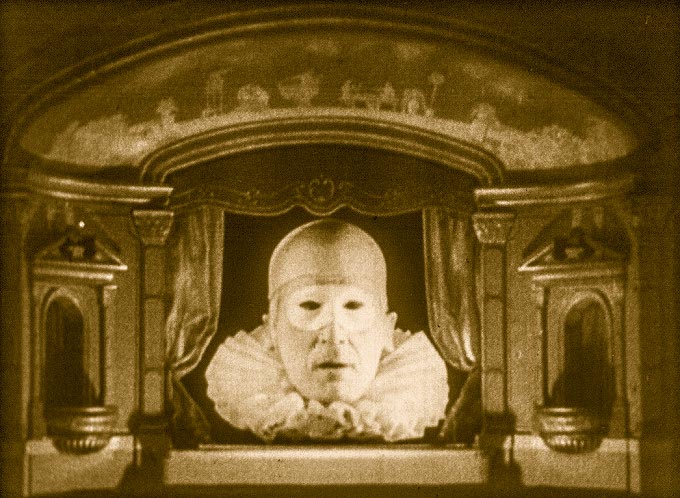
More Archive Discoveries: Unseen Curiosities from
the Secret Cinema Collection at the Maas Building
Saturday, July 22, 2017
8:00 pm
Admission: $9.00
The Maas Building
1325 N. Randolph Street, Philadelphia, PA
267-239-2851
On Saturday, July 22, The Secret Cinema will return to the historic Maas Building with an all-new program called Archive Discoveries: Unseen Curiosities from the Secret Cinema Collection. It features a mélange of fascinating short films from the past, representing a variety of genres and subject matter. None have been shown in previous Secret Cinema programs; indeed, few of these films are likely to have been seen anywhere in recent years.
There will be one complete show at 8:00 pm. Admission is $9.00.
The Secret Cinema's private archive contains literally thousands of reels of 16mm (and 35mm, and 8mm) features, theatrical shorts, cartoons, newsreels, television shows, educational films, travel films, industrial films, and home movies. Together, they add up to well over three million feet of often rare celluloid, with several prints thought to be the only extant copies in the world.
Some of the more interesting of these amazing films will again see the light of a projector bulb in Archive Discoveries… This previously ungroupable group of short films will include films that were made to entertain, to teach, to encourage commerce and to alter opinion. Spanning many decades, they show wondrous places, styles and things that have long-since vanished. Some of them now seem campy, others still have valid lessons to teach, but all are fascinating, and extremely unlikely to be seen anywhere else.
A few highlights from this new edition of Archive Discoveries… include:
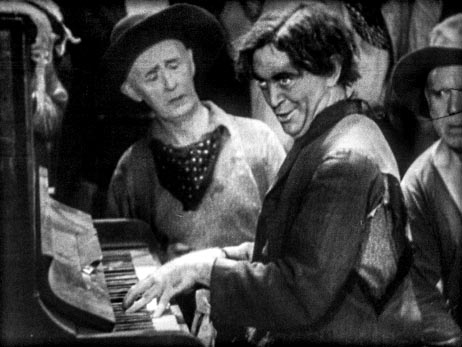
Wide Open Spaces (1932, Dir: Arthur Rossen) - The Masquers Club of Hollywood was officially an actors fraternity, though it also included directors, theater owners, and studio executives in its all-male membership. Like other acting fraternities in Hollywood, they eventually began to producing their own short films, as an activity for their sometimes out-of-work members, and to raise funds for the clubhouse. The Masquers' films were distributed by RKO Radio Pictures, and were all professionally filmed. Wide Open Spaces is a good example of their house style, being a wild spoof of the Western -- with every line of dialogue being a hilariously well-worn genre cliche, and comically out-of-place sound effects. The cast includes dozens of character actors whose faces would mostly have been familiar to contemporary audiences, (but are largely forgotten now). The most notable of these include Antonio Moreno, William Farnum, Frank McHugh, Mack Swain, and in the lead role of "Sheriff Jack Rancid," deadpan comic genius Ned Sparks.
Andy (1968, Dir: Peter Bryant) - Short, stark drama of a tomboyish farm girl who lives a seemingly idyllic life taking care of herself and her animals. And then there is a startling interruption. Produced by the National Film Board of Canada.
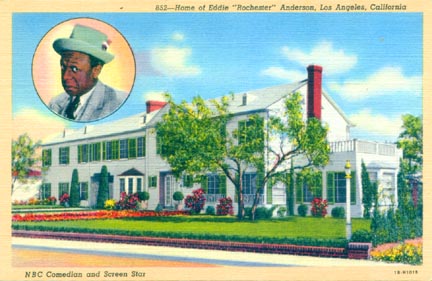
Rochester's Railroad (1957) - This fascinating film clip was found in the middle of a reel containing unrelated footage. It probably originated on a television program showing celebrities in their home life. In this clip we meet Eddie "Rochester" Anderson, beloved sidekick to comedian Jack Benny. Anderson shows off the elaborate model railroad layout he designed and built in his home, complete with custom-built control board. In his lifetime, Anderson also built model airplanes and a working sports car, piloted a boat, and owned racehorses, besides being a star of radio, TV, and over 60 movies.
The Gooney Bird (1950s) - For some reason now lost to history, the Evinrude Motors company sponsored this documentary about the peculiar habits of the albatross, or "gooney bird." The film was shot entirely on the Midway Atoll in the Pacific Ocean, shortly after the Navy decommissioned their Naval Air Station there, leaving the island to the birds. The Goonies are seen in their comical mating dance, and in awkward take-offs and landings. Made in Anscochrome.
The Code: The U.S. Fighting Man's Code of Conduct (1959) - In 1955, President Eisenhower signed an executive order outlining how members of the U.S. armed forces should act if captured in battle (in short, not to surrender, accept any favors form the enemy, nor reveal anything besides minimal personal identification). This film, hosted by stone-faced actor Jack Webb (of Dragnet) was made to explain the importance of the code to new servicemen -- using dramatic recreations of captured Americans standing up to psychological torture during the then-recent Korean conflict.
Shopping Around (1954) - "Successful selling is largely a matter of point of view." This Chevrolet sales training film shows the point of view of a rather choosy automobile customer -- as portrayed by William Frawley (better known as "Fred Mertz" from I Love Lucy). He explains, in his trademark, growly voice, that he now runs from rude salesmen, because, "Today, I can shop around!"
Plus much, much more!
The Maas Building was previously a brewery and a trolley repair shop. This beautifully restored 1859 brick and timber workshop today serves as a multipurpose art event and catering space. Free parking is available on the street and in the adjacent lot of the James R. Ludlow Elementary School.

Anniversary screening of Bicycle Shorts
at Rotunda
Saturday, June 10, 2017
8:00 pm
Admission: $8.00
The Rotunda
4014 Walnut Street
Philadelphia
On Saturday, June 10, The Secret Cinema will present Bicycle Shorts, a program of vintage short films all about the bicycle. Bicycle Shorts will include rare retro educational films on bike safety, as well as bicycle-focused documentary, drama, and even a musical short. This popular special program was last shown eight years ago (at Moore College of Art) -- and is being revived as part of the ongoing celebration of the Secret Cinema's 25th anniversary.*
There will be one complete screening at 8:00 pm. Admission is $8.00.
Just a few highlights are:

The Day the Bicycles Disappeared (1967) - By way of intriguing special effects, a town's population of bicycles ride off by themselves and announce they are on strike, until they can be convinced that local kids will adopt safer riding practices.
We Decide: Trade-offs (1978) - In what will likely prove to be a prescient educational film, a class must analyze and then vote on how to solve a serious problem in their school: a severe shortage of bike rack spaces!
I'm No Fool with a Bicycle (1955) - A colorful, animated history of self-propelled locomotion precedes a comical safety lesson, hosted by beloved Disney character Jiminy Cricket (voiced by Cliff "Ukulele Ike" Edwards).
The Bike (1969) - When two young boys steal a neighbor's fancy new banana-seated bike for a joyride, it's just the beginning of their problems. A surprisingly compelling mini-drama, with then-unusual handheld camerawork from future Oscar-winning cinematographer Caleb Deschanel, a Philadelphia native (and father of actress/singer Zooey Deschanel).
Psychling (1981) - This fascinating documentary chronicles cyclist John Marino's grueling attempt to set a speed record for riding a bicycle from coast to coast.
The Eton Boys: "Bicycle Built for Two" (1941) - A "Soundies" musical clip originally shown on coin-operated film jukeboxes, this features the Eton Boys belting out the title song (a.k.a. "Daisy Bell") in a barbershop quartet style that was already quite retro in 1941.
…plus more.
*The Secret Cinema presented a second, completely different program of films about bicycles in 2012, at the Broad Street Ministry (it included a talk by author Steven Rea). Our Rotunda screening will be a repeat of the original Moore program from 2009.
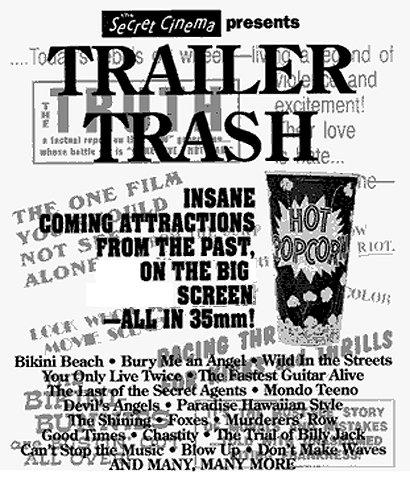
Trailer Trash in 35mm
at Bryn Mawr Film Institute
Thursday, May 11, 2017
7:30 pm
Admission:$12.50, $6.50 (members), $10 (seniors/students)
Bryn Mawr Film Institute
824 W. Lancaster Avenue, Bryn Mawr, PA
(610) 527-9898
On Thursday, May 11, the Secret Cinema will return to the Bryn Mawr Film Institute with a revival of one of its biggest presentations ever. It stars Elvis Presley, Sean Connery, Nancy Sinatra, Roy Orbison, Sonny & Cher, Jerry Lewis, Frank Sinatra, Linda Blair, Dean Martin, Cherie Currie, Tony Curtis, The Village People, The Yardbirds, and a cast of unknowns. It was directed by a team that includes Stanley Kubrick, Charlie Chaplin, Tom Laughlin, William Friedkin, John Boorman, John Cassavetes and several forgotten hacks. Its budget (adjusted for inflation) was in the hundreds of millions of dollars, it's in black and white and color, and it has laughs, screams, spies, monsters, sex, drugs, rock n' roll and bikinis. What is it?
Why, it's Trailer Trash, a non-stop orgy of rare, original preview "trailers" advertising some of the Secret Cinema's favorite films of the 1960s and 70s -- exploitation, sexploitation, science-fiction, bikers, horror, rock musicals, beach movies, bloated big budget bombs and possibly some films that no longer survive in feature form. All will be shown from archival 35mm prints (with several in true, IB Technicolor) on the BMFI big screen.
A sampling of the many trailers to be shown includes Bikini Beach, Bury Me an Angel, Wild in the Streets, You Only Live Twice, Mondo Teeno, Devil's Angels, Paradise Hawaiian Style, Foxes, Murderers' Row, Chastity, The Trial of Billy Jack, Blow Up and many, many more, with some guaranteed surprises.
As if this weren't enough, additional graphic eye candy will be provided in the form of vintage drive-in messages, theater commercials and date strips, from the 1950s and beyond.
There will be one complete show at 7:30 pm. Admission is $12.50, $6.50 (BMFI members), $10 (seniors and students).
Throughout 2017, the Secret Cinema will be celebrating its 25th anniversary, presenting favorite programs from its past, as well as several all-new presentations, in venues throughout the Philadelphia area. Trailer Trash was first presented at the Prince Music Theater in 2001.
Since 1992, the Secret Cinema has been the Philadelphia area's premiere floating repertory cinema series, bringing hundreds of unique programs to nightclubs, bars, coffee houses, museums, open fields, colleges, art galleries, bookstores, and sometimes even theaters and film festivals. Drawing on its own large private film archive (as well as other collections), the Secret Cinema attempts to explore the uncharted territory and the genres that fall between the cracks, with programs devoted to educational and industrial films, cult and exploitation features, cartoons, rare television, local history, home movies, erotic films, politically incorrect material, and the odd Hollywood classic. As long as it exists on real celluloid, that is -- Secret Cinema screenings never use video/digital projection. While mainly based in Philadelphia, the Secret Cinema has also brought programming to other cities and countries.

Secret Cinema presents famous films (again!)
Wednesday, April 19, 2017
8:00 pm
Admission: $8.00
The Rotunda
4014 Walnut Street, Philadelphia
In this, our 25th anniversary year, we'll again present a popular theme from our past...but this time, with all new content...
The Secret Cinema is known for showing rarest-of-the-rare, otherwise impossible to see celluloid treasures. That changes on Wednesday, April 19, as we revive our Famous Films program concept, at University City's Rotunda.
Once again, we've scoured our archive shelves for the most famous short film titles we could find...and realized there was still more great, non-obscure viewing that we'd not shown before. The program will include legendary documentaries, notable silent films, animation milestones, and once-mainstream theatrical subjects. Some were landmark achievements for their unusual style, or other innovative techniques. Others endure simply as great entertainment.
Of course, "famous" is a relative term, and fame is a fleeting thing. One reason we wish to share these great works is the growing realization that even classic films are becoming hard to see in their original form (projected celluloid on a large screen). Not so long ago, all of these films would have been mandatory viewing (via 16mm or 35mm prints) in university courses and repertory cinemas, but that is sadly no longer true. Indeed, several of these reels will be unknown to today's casual viewer -- all the more reason to celebrate them again.
There will be one complete show, starting at 8:00 pm. Admission is $8.00.
Just a few highlights of Famous Films 2017 include:

The Adventures Of Dollie (1908, Dir: D.W. Griffith) - A true landmark in film history, this film was the very first directorial effort by D. W. Griffith. He is generally credited with developing, in a series of short dramas made for the Biograph studio, the very grammar of the motion picture. Those advancements took another leap forward a few years later, when he made his first feature, The Birth of A Nation. Griffith's wife Linda Arvidson co-starred in this story of the kidnapping of a young girl by gypsies.

Lot in Sodom (1933, Dir: James Sibley Watson & Melville Webber) - This pioneering avant garde film, based on the Biblical tale of Sodom and Gomorrah, was experimental in both its expressionistic style and its fearless, erotic depiction of sexuality (both homo- and hetero-). Watson, heir to the Western Union fortune, was a true renaissance man, with achievements as a medical doctor, philanthropist, publisher, editor, and photographer, in addition to his highly influential amateur filmmaking. Other Watson and Webber credits include Tomatoes Another Day and National Film Registry entry The Fall of the House of Usher. Watson's close friend, the noted composer Alec Wilder, recruited cast members and served as assistant director on Lot in Sodom.
Humorous Phases of Funny Faces (1906, Dir: J. Stuart Blackton) - A series of chalk drawings that come to life, this is thought to be the very first animated cartoon. It inspired many others to animate drawings, though it is marred by the inclusion of some unfortunate racial stereotypes. Blackton was a newspaper reporter and illustrator until he purchased an early projector and films from Thomas Edison. This led to his co-founding of Vitagraph, one of the most important of the early film studios.
Vitaphone trailer for The Jazz Singer (1927) - Al Jolson famously ad-libbed "You ain't heard nothing yet!" in The Jazz Singer, the first talking feature film. However, audiences lucky enough to catch this coming attraction preview for the film had already heard something! In what must have been the first talking trailer, prolific character actor John Miljan awkwardly addresses the camera to promote the new Vitaphone sound process, and shows scenes of the film's star-studded New York opening.

Plus Tacoma Narrows Bridge Collapse, The Incredible Jewel Robbery, What's Opera Doc, I'll Never Heil Again, and much more!
Secret Cinema history/trivia: Our first Famous Films program was presented in 2007. Additional volumes were screened in 2008 and 2011. No films from these earlier editions will be repeated in Famous Films 2017.

Secret Cinema celebrates 25 years with
The Best of Secret Cinema Short Films: The Early Years
Friday, March 10, 2017
8:00 pm
Admission: $9.00
The Maas Building
1325 N. Randolph Street, Philadelphia, PA
267-239-2851
On Friday, March 10, we will present what will be for us, at least, a very special screening at the Maas Building, called The Best of Secret Cinema Short Films: The Early Years. That's because twenty-five years and one day earlier marked the very first Secret Cinema screening!
Yes, it is now twenty-five years since we first carried our 16mm projector (we only had one then) up the steep stairs to the second floor of the Khyber Pas Pub. We began our series there with a screening of Don't Knock The Rock (plus "unusual short films"). Since then, there have been as many as 1000 Secret Cinema screenings (we're not exactly sure how many, but that is probably close to accurate), attended by thousands of people, in over 100 venues. We're very happy to still be here!
During 2017, we plan to revive several of our most popular programs, possibly a few unpopular ones, and will also continue presenting brand new programs. The Best of Secret Cinema Short Films: The Early Years will be the year's first anniversary event, and will include miscellaneous audience favorites that were shown in our first five years. These films, which include rare educational, advertising, musical and theatrical short subjects (and maybe a found home movie), are all very unlikely to be seen elsewhere. Some of them were featured in past "best of" programs…while others have not been shown again since 1992! (In the interest of variety, no titles will be repeated from our last "Best of shorts" program, which was shown June 2015, also at the Maas Building.)
Just a few of the titles to be screened are Let's Have a Tea (campy, Kodachrome 1940s etiquette film), Whatta Built (amusing theatrical short about body builders), Sponge Divers of Tarpon (actually fascinating 1932 documentary about Florida sponge industry), Latin Soundies (1940s musical performances photographed for a film jukebox, including "Chaquita Banana"), and Yours, Mine, Ours (1960s Technicolor fun teaches grade school kids respect for others' property)…plus much, much more.
There will be one complete show at 8:00 pm. Admission is $9.00. Beer and refreshments will be available at the screening.
The Maas Building was previously a brewery and a trolley repair shop. This beautifully restored 1859 brick and timber workshop today serves as a multipurpose art event and catering space. Free parking is available on the street and in the adjacent lot of the James R. Ludlow Elementary School.
Fasten Your Seat Belts: Films from the Jet Set Era
in Fairmount Park Horticulture Center
Saturday, February 11, 2017
8:00 pm
Admission: $8.00
Horticulture Center
West Fairmount Park
North Horticultural Drive & Montgomery Avenue, Philadelphia
(215) 685-0096
On Saturday, February 11, take a break from the winter doldrums and escape to exotic lands and high living, as the Secret Cinema presents Fasten Your Seat Belts: Films from the Jet Set Era -- shown in an actual hothouse! We'll return to Fairmount Park's beautiful and verdant Horticulture Center, an exhibition hall and glass-walled greenhouse filled inside and out with rare plants and historic statuary. It sits on the site of the former Horticultural Hall, an 1876 Centennial Exposition building (and is kept comfortably warm inside, regardless of outdoor conditions).

The program will consist of shorts from the 1950s and '60s highlighting then new and luxurious air travel, and exotic vacation destinations. Many of these rare films were made by long-gone airlines like Pan Am and T.W.A. to promote overseas jet service, once a radical innovation that drastically reduced travel time to glamorous European capitals and Caribbean hot spots (for those who could afford it).
There will be one complete show, starting at 8:00 pm. Admission is $8.00.
The Fairmount Park Horticulture Center, minutes off of the Schuylkill Expressway, features a large, free parking lot. It is near Memorial Hall (Please Touch Museum) and is a short walk from Septa Routes 38, 40, 43, and 64 (Route 38 comes closest, with a stop at Belmont Avenue and Montgomery Drive).
Highlights of Fasten Your Seat Belts… will include:
6-1/2 Magic Hours (1954) - This delightful color film takes a promotional look at 1950s transatlantic air travel, complete with onboard powder rooms, lounges and gourmet food.
New Horizons: Caribbean (1958) - Pan-American airlines produced a series of short advertising films in the 1950s and '60s promoting then-novel travel destinations. This entry in the Technicolor series was particularly dream-like and meditative, its scenes of snorkeling, Calypso bands and beautiful women matched with poetic, hypnotic narration by Lee Vines smooth voice (among other notable work, he was the announcer for Korla Pandit's early television show). "One of these islands...will be your island."
The Tail that Wags the Dog (1966) - This fascinating film, made for the Boeing Vertol Division in nearby Morton, Pennsylvania, was intended to encourage the use of their twin-rotor transport helicopters for shuttling wealthier travelers from city center rooftops to nearby airports. Produced by Philadelphia's prolific Louis Kellman Productions in the same year they released the pop music theatrical feature Disk-O-Tek Holiday.

Across the World in Three Seconds (1962) - Color short from Pan-Am Airlines, showing off a new ease of booking international travel reservations, made possible by their new "Panamac" IBM computer system.
Plus much, much more!
Be Careful!: Social Guidance and Industrial Jeopardy Films
at Fleisher Art Memorial
Friday, January 27, 2017
8:00 pm
Admission: $8.00
Fleisher Art Memorial
719 Catharine Street, Philadelphia
215-922-3456 ext. 300

We've shown many themed groupings of short films over the nearly 25 years of Secret Cinema programming -- but surprisingly, only once before (10 years ago!) did we devote an evening to the social guidance film. A subset of the educational, or classroom film genre, social guidance films exist not to teach children the traditional school wisdom of history, science and grammar, but to impart to their unformed minds the correct attitudes and behavior. They came into their own in the post-war years, and were omnipresent in American schools in the 1950s and '60s. In recent decades they have been rediscovered, in documentaries like The Atomic Cafe, in books like Mental Hygiene, and on cable television and numerous home video compilations. The Congress-created National Film Registry even named one of the most (in)famous social guidance films, Duck and Cover, to its pantheon of important films.
It's time to revisit this rich genre, and we'll do so on Friday, January 27, when we will compile, for the second time, some of the best S.G. reels from our private archive into one big show. And while social guidance films seem to be everywhere nowadays (yep, on the internet too), the best way to see them is in the dark -- using real film projected onto a big screen (albeit a screen much bigger than found in any classroom), among a group of one's peers (albeit peers many years past the target audience of most of these films).
Be Careful!… will be shown in the beautiful Sanctuary of the Fleisher Art Memorial in Philadelphia's Bella Vista neighborhood (just South of Center City). Free parking is available in the Fleisher's parking lot, just across the street.
This new program will differ a bit from our previous social guidance outing, in that it will include films aimed at older audiences, as well as at children. "Industrial Jeopardy" is a genre named by film archivist Rick Prelinger (in ReSearch Publications' landmark 1986 book Incredibly Strange Films), to collectively include educational shorts that attempted to prevent life-threatening misbehavior by workers, motorists and homemakers.
There will be one complete show, at 8:00 pm. Admission is $8.00.
Be Careful!… will include many rare titles never before shown by us, and others not seen for many years. They will span many different years and show examples of work from important producers of social guidance film like Coronet (originally a division of Esquire Magazine) and Young America Films. Just a few highlights will be: You and Your Parents, Meeting Strangers: Red Light Green Light, Dope is for Dopes, Accidents Don't Happen and Options to Live.

From Philadelphia With Love:
Industrial, Educational and other Lost Local Films
at Bryn Mawr Film Institute
Wednesday, January 11, 2017
7:30 pm
Admission:$12.50, $6.50 (members), $10 (seniors/students)
Bryn Mawr Film Institute
824 W. Lancaster Avenue, Bryn Mawr, PA
(610) 527-9898

On Wednesday, January 11, the Secret Cinema will return to the Bryn Mawr Film Institute to present a unique program of short films called From Philadelphia With Love: Industrial, Educational and other Lost Local Films. While most area residents are familiar with Philadelphia films such as Rocky, Trading Places, and the works of M. Night Shayamalan, there is a whole world of locally-made films that has been forgotten -- the "ephemeral" short films that were primarily made by small independent companies for the then-booming non-theatrical market. While most school districts, television stations and traveling salesman have long ago discarded their 16mm film projectors, we at Secret Cinema have not, and are proud to present a look back at these celluloid time capsules that would otherwise not be seen again.
The Secret Cinema has been collecting, archiving and screening this fascinating area of local film history for over two decades now. Our BMFI presentation will be a "best of" selection from past volumes of From Philadelphia With Love…
There will be one complete show at 7:30 pm. Admission is $12.50, $6.50 (BMFI members), $10 (seniors and students).
Highlights of From Philadelphia With Love… will include:
Our Changing City (1955) - Made by the city during the administration of Mayor Joseph Clark, this vivid color film makes the case for urban renewal (i.e., demolition and new construction) while showing a wide range of cityscapes, from new homes in the Northeast to the poverty of people living in houses without plumbing or electricity.
Is a Career in Television or Radio For You? (1970s) - This educational film, part of a series of career guidance shorts for high school audiences, was shot locally at the City Line Avenue studios of WCAU and WPVI (shortly after the latter's call letter change from WFIL).While showing the work of different kinds of jobs available in the field, we see glimpses of past local broadcasters John Facenda, Gene London, Joe Pellegrino and Jim O'Brien.
The Spirit of Success (1984) - A tourism and business promotional film touting the many benefits of life in Montgomery County. It shows off numerous historical sites (Valley Forge, Pennypacker Mills, Hope Lodge), recreational and leisure facilities (Elmwood Park Zoo, Lily Langtry's nightclub), business headquarters, and bountiful shopping opportunities (including both King of Prussia Plaza and then-new Willow Grove Park Mall).
Brooklyn Goes To Philadelphia (1954) - This obscure theatrical release from Universal was part of a series of humorous travelogues narrated by wisecracking, thickly-accented Brooklynite Phil Foster. "Philadelphia is the third largest city in America ... big deal!" Aside from dwindling population, the jokes about demolition of historic property and confusing parking regulations show that some things don't change.

Portrait of a College (1963) - A colorful campus tour of what was then known as the Philadelphia Museum College of Art, and is today, in greatly expanded form, the University of the Arts. The film begins with a view of Haviland-Strickland Hall (originally the Pennsylvania Institution for the Deaf and Dumb, and the oldest building on Broad Street), and then visits facilities for painting, sculpture, ceramics, photography and graphic arts. "Since 1876, the best possible instruction in the arts happened here." Interestingly, this film was produced in the very last year of the school's affiliation with the Philadelphia Museum of Art.
Philadelphia With Love (1972) - Our "title film" is a colorful, tourism boosting paean to "Philadelphia, a fabulous city that puts it all together!" This perky reel manages to show a lot of things that are gone, including Playhouse In The Park, the Perelman Toy Museum, Pub Tiki and George X. Schwartz -- not to mention a lot of long-vanished hairstyles. With special guest Sergio Franchi, singing the theme song on the Ben Franklin Parkway!
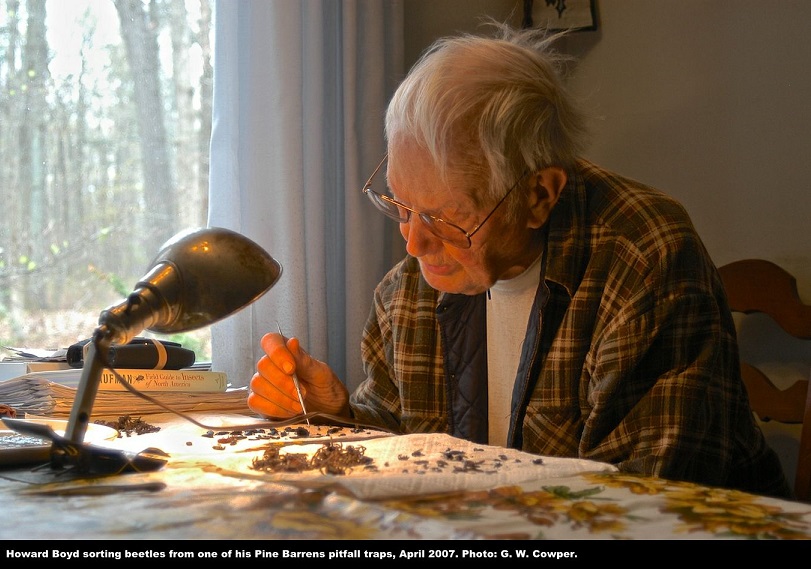
New Jersey Pine Barrens films in historic library
of Academy of Natural Sciences
Wednesday, November 30, 2016
7:00 pm
Admission: FREE
The Academy of Natural Sciences of Drexel University
Use 19th Street entrance.
1900 Benjamin Franklin Parkway, Philadelphia
(215) 299-1000
On Wednesday, November 30, the Secret Cinema will help present a program of nature films focusing on wildlife in the New Jersey Pine Barrens. The screening will take place in the historic library of the Academy of Natural Sciences (built 1876), during a working meeting of the equally historic American Entomological Society. This event honors the memory of late filmmaker, writer, and naturalist Howard P. Boyd, the pre-eminent scholar on the Pine Barrens.
The meeting starts promptly at 7:00 pm, and is open to the public. Admission is free. Attendees should use the 19th Street entrance to the Academy.
Featured will be Howard and Doris Boyd's film Life on a Coastal Plain, a beautifully photographed, silent look at the variety of flora and fauna found in the Pine Barrens. Howard and his wife would travel with films they had produced such as this, and present them with a live narration to groups around the country (AES members will provide narration for this showing).

Also on the bill is a rare 1940s short from the Secret Cinema archive, Cranberry Industry of New Jersey, which details the unusual process of growing and harvesting this traditional Thanksgiving treat, in glorious Kodachrome. Plus, we'll show some very early educational films about insects.
About Howard Boyd: The entomologist, author, activist and Pine Barrens guru served as president of the AES from 1977-1981, and was editor of its scientific journal, Entomological News, for almost 30 years. He was a leading expert in scientific circles on the insect group Cicindelinae, the Tiger Beetles. Howard was a conservationist, educator and authority on the ecology of the Pine Barrens. In 1991 he penned his first book, A Field Guide to the Pine Barrens of New Jersey: Its Flora, Fauna, Ecology and Historic Sites, which is recognized as the definitive field guide to the New Jersey Pinelands. In 2004, he was one of two premiere inductees into the Pine Barrens Hall of Fame, established by the Pinelands Preservation Alliance to honor heroes of Pine Barrens protection. By 2006, Howard, with the AES, spearheaded a five-year insect diversity study of the approximately 11,000 acre Franklin Parker Preserve, a reclaimed cranberry operation in Chatsworth, New Jersey. Howard, with his wife Doris as photographer, produced and presented films through the National Audubon Society Wildlife Film Tours from 1966 to 1976.
About the American Entomological Society: AES is the oldest continuously operating organization devoted to the study of insects in the New World. It began in Philadelphia in 1859 as the Entomological Society of Philadelphia, broadened its scope and name in 1867 to the American Entomological Society, and in 1876, moved its rooms, library and collections to the Academy of Natural Sciences, where it still holds its meetings today.
AMERICAN ENTOMOLOGICAL SOCIETY WEBSITE

Creepy Puppet Films
at University City's Rotunda
Saturday, November 26, 2016
8:00 pm
Admission: $8.00
The Rotunda
4014 Walnut Street, Philadelphia
Puppetry is an age-old artform that has charmed and delighted both children and adults for countless generations. And, puppets have been a source of inspiration to filmmakers almost since the movies began.
So why do puppets become so...creepy, when filmed and projected on a giant screen?
On Saturday, November 26, the Secret Cinema will attempt to answer that question -- or at least show our favorite examples of this peculiar genre of cinema -- when we present Creepy Puppet Films at the Rotunda. Using assorted educational and entertainment shorts from past decades, we'll show films using hand puppets, marionettes, and stop-motion animated figures and claymation. Some were made by great masters of special effects like George Pal and Ray Harryhausen. Others were made by nameless hacks for forgotten educational film mills. Yet, they are all creepy.
Secret Cinema originally presented Creepy Puppet Films seven years ago, almost to the date (and we showed it one more time, more recently, at New York's Anthology Film Archives).
There will be one complete screening starting at 8:00 pm. Admission is $8.00.
A few highlights of Creepy Puppet Films include:

Hansel and Gretel (1951, Dir: Ray Harryhausen) - This early work from stop-motion master Ray Harryhausen was from a series of animated fairy tale shorts in which he explored the techniques he would soon perfect in features like Jason and the Argonauts. Harryhausen began his experimentation as a teenager, shortly after being entranced by Willis O'Brien's pioneering special effects in King Kong.
George Pal Puppetoon (1940s, Dir: George Pal) - George Pal's "Puppetoon" shorts showed a brilliant imagination and flawless stop-motion technique. We'll show an example from this oft-overlooked series, from the Hungarian animator who went on to create sci-fi feature film classics like War of the Worlds.
Making Change (1970s, Dir: Unknown) - From the sublime to the hackneyed-beyond-belief: This short was made during the peak sales years of the 16mm educational film industry. It employs the crudest of stick puppets to teach money math skills to grade school kids.
Gumby: Hot Rod Granny (1957, Dir: Art Clokey) - Claymation superstar Gumby encounters a speed crazed senior citizen racing an animated plastic model kit roadster around the town.
Pirro and the Scale (1948, Dir: Alvin J. Gordon) - Marionette clown Pirro imparts a valuable lesson on weight and measurement. A 1951 guide book for teachers thought that "Pat Patterson, who created and manipulates the puppet, provides the running commentary, which is warm and pleasant at its best, at worst too nervously repetitive." That's part right.
...and much, much more!
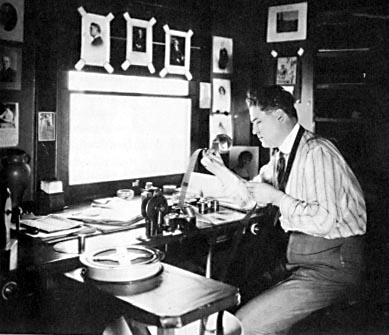
Archive Discoveries: Unseen and Forgotten Favorites
from the Secret Cinema Collection at the Maas Building
Friday, November 11, 2016
8:00 pm
Admission: $9.00
The Maas Building
1325 N. Randolph Street, Philadelphia, PA
267-239-2851
On Friday, November 11, The Secret Cinema will return to the historic Maas Building with a new program called Archive Discoveries: Unseen and Forgotten Favorites from the Secret Cinema Collection. It features a mélange of fascinating short films from the past, representing a variety of genres and subject matter.
There will be one complete show at 8:00 pm. Admission is $9.00. Beer and refreshments will be available at the screening.
The Secret Cinema's private archive contains literally thousands of reels of 16mm (and 35mm, and 8mm) features, theatrical shorts, cartoons, newsreels, television shows, educational films, travel films, industrial films, and home movies. Together, they add up to well over three million feet of often rare celluloid, with several prints thought to be the only extant copies in the world.
Some of the best of these amazing films will again see the light of a projector bulb in Archive Discoveries… This previously ungroupable group of short films will include films that were made to entertain, to teach, to encourage commerce and to alter opinion. Spanning many decades, they show wondrous places, styles and things that have long-since vanished. Some of them now seem campy, others still have valid lessons to teach, but all are fascinating, and extremely unlikely to be seen anywhere else, including on video.*
A few highlights from Archive Discoveries… include:
Alexander Calder: From the Circus to the Moon (1963, Dir: Hans Richter) - This film presents a whimsical look at the celebrated, Philadelphia-born artist and his creations, as he constructs miniature mobiles in a very cluttered studio-barn. Filmmaker Richter had collaborated with Calder years before, in his groundbreaking 1947 feature Dreams that Money Can Buy.
Cab Calloway & his Orchestra: "Virginia, Georgia and Caroline" (1942, Dir: unknown) - This film clip of a typically high-spirited Calloway performance was originally seen on the Mills Panoram "Soundies" film jukebox.
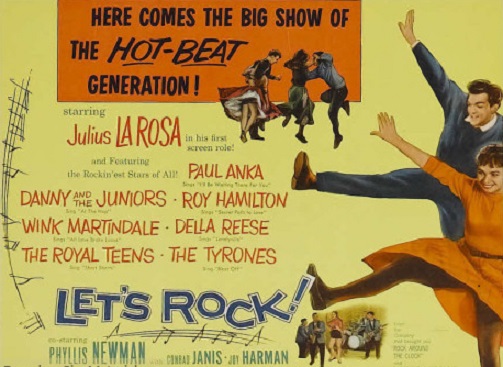
Rock 'n' Roll Trailers (1957-59, Dir: Fred Sears et al) - A collection of coming attraction previews for early rock and related movies, with (brief) appearances by Little Richard, Bill Haley and Danny and the Juniors. Several of the films were produced by exploitation genius Sam Katzman (including Calypso Heat Wave).
The Wooden Soldier (1928, Dir: Jacques Rollens) - This bizarre silent short was released in a series called "Laemmle Novelties," billed as "Something new under the sun." What made them novel is that they mostly did not focus on human actors. In this film, a ghoulish toymaker enacts an experiment with "Oxo-Vapor" to bring his toy creations to life -- though some of them wind up dead.
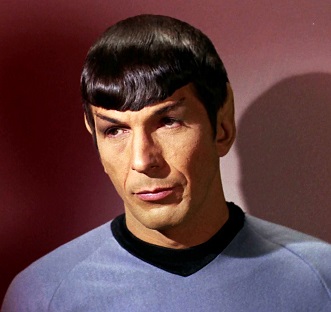
Star Trek bloopers (1966-69) - Shatner, Nimoy and company flub lines, crack jokes, and crack up in several unaired takes from the beloved, original sci-fi series. With bonus Mission Impossible bloopers.
Plus Middletown Goes to War (1942), This World of Ours: Chicago (1951), and more!
The Maas Building was previously a brewery and a trolley repair shop. This beautifully restored 1859 brick and timber workshop today serves as a multipurpose art event and catering space. Free parking is available on the street and in the adjacent lot of the James R. Ludlow Elementary School.
*If this program description sounds familiar, that's because Archive Discoveries… is the latest round of a series we've presented for some time, but under another title: Curator's Choice. We've retired that name, owing to the egregious, pretentious misuse of the words "curator" and "curated" in recent years. While Secret Cinema boss Jay Schwartz, as caretaker of a collection, really is a curator, those words have ceased to have any actual meaning. So, we'll stick with Archive Discoveries (or we'll do so until gallery owners, band bookers, menu makers, d.j.'s, shopkeepers, film programmers, and similarly high-minded folks decide that they are presenting offerings from their "archives"). P>

1930 American Indian documentary The Silent Enemy
at American Philosophical Society
Wednesday, October 19, 2016
7:00 pm (Museum open 6:00 pm)
Admission: FREE
American Philosophical Society
Franklin Hall
427 Chestnut Street, Philadelphia
(215) 440-3442
On Wednesday, October 19, 2016, the Secret Cinema will return to the American Philosophical Society to present The Silent Enemy. An independently made, mostly silent film (with spoken introduction and musical soundtrack), its producers attempted to document the original lifestyle of the Ojibway tribe of Native Americans, in the Canadian Far North -- and their perpetual fight against the silent enemy of hunger. The result is a fascinating, exciting and beautiful film, which critic Leonard Maltin called a "remarkable blend of documentary footage and a fictional story…(the) climactic caribou run is one of the most astonishing sights you'll ever witness."
The Silent Enemy has been most often seen (when seen at all) in an edited version, made for the educational market. Our screening will be a rare showing of the film's original version, as rescued by film preservationist David Shepard.
The screening celebrates the exhibition, Gathering Voices: Thomas Jefferson and Native America, which will be on display at the APS Museum through December 30.
This Secret Cinema event will feature a chance to explore the exhibition, free refreshments and snacks, and the screening of a rarely shown documentary (as always with Secret Cinema, using real film projected on a giant screen). Best of all, admission is free.
On the screening day, the museum doors will open at 6:00 pm, allowing time to explore the exhibition. The film screening starts at 7:00 pm. Seating is limited.
Please note that there is no longer free meter parking offered in Center City on Wednesday evenings! The Philadelphia Parking Authority announced that this long-standing program would end starting in October, and that all posted regulations will now be enforced as on other days.
A full description of the feature follows.

The Silent Enemy (1930, Dir: H.P. Carver)
The desire to make a film that would authentically record Native American life before the arrival of Columbus is very much the idea at the heart of W. Douglas Burden's production. As Burden told Kevin Brownlow, "it was all too obvious that the Indians were dying off so rapidly from the white man's diseases that if the story of their endless struggle for survival against starvation was ever to be captured on film, we had no time to lose."
It is hard to say whether The Silent Enemy achieves its goal of ethnographic accuracy, but it is easy to see that it achieves its cinematic goal of being a beautiful and exciting film. While the story is fictional, Burden based it on a 73-volume account of missionary work entitled Jesuit Relations, and he claimed that "not one episode was invented by us, with the exception of the bear on a cliff." Indeed, by striving for anthropological precision, Burden and his co-producer William Chanler took on a larger challenge than the already formidable task of making a feature film in the harsh environment of Northern Canada.
Seeking to correct the spurious and demeaning image of Native Americans in mainstream films, Burden and Chanler attempted to film only aboriginal people, their tools and their activities, in their actual habitat. Some of their achievements in this regard are staggering. Filming into the harsh Canadian winter, the cast and crew lived exclusively in teepees. Burden himself shared a teepee with Chief Yellow Robe. All the hunting implements and crafts shown in the film were made on the set by local Ojibway Indians. In a further tragic twist, some of the Ojibway who appeared in The Silent Enemy died soon after of tuberculosis, flu or pneumonia contracted from the white filmmakers.
Ultimately, we should be cautious in responding to the film as an authentic anthropological document. However, we should equally be eager to view it as the immensely impressive and exciting film it is. The filmmakers, cast and crew were unequivocal in their intention and commitment to honor the heritage of a noble and disappearing people, and to overcome the enormous challenges associated with making it. - David Shepard

About Gathering Voices: Thomas Jefferson and Native America:
The last of three exhibitions at the American Philosophical Society on Jefferson, Gathering Voices tells the story of Jefferson's effort to collect Native American languages and its legacy at the Society. Jefferson had an abiding interest in Native American culture and language, while at the same time supporting policies that ultimately threatened the survival of indigenous peoples. As president of the APS from 1797 to 1814, Jefferson charged the Society with collecting vocabularies and artifacts from Native American nations. Over the next two hundred years, the APS would become a major repository for linguistic, ethnographic, and anthropological research on Native American cultures. Gathering Voices traces the Native American language collection at the APS from Jefferson's vocabularies to the current language revitalization projects at the Society's Center for Native American and Indigenous Research (CNAIR).
About the APS: When Benjamin Franklin and friends decided, in 1743, to establish the American Philosophical Society (APS), they studied nature and called themselves natural philosophers. Now we'd call them scientists. But the word "philosophical" stuck. Over the years, the APS has counted among its members individuals as varied as George Washington, Charles Darwin, and Yo-Yo Ma. The APS has gathered and preserved a rich collection that traces American history and science from the Founding Fathers to the computer age. It includes scientific specimens and instruments, and more than ten million manuscripts. The APS combines sophisticated exhibitions of its collections with provocative works by contemporary artists. Museum visitors will find challenging new perspectives on history, science, and art. The galleries are at Philosophical Hall, 104 S. Fifth Street, Philadelphia, right next to Independence Hall. Admission and all programs are free.
The Inside View: Short Films about Prison
at Eastern State Penitentiary
Friday, September 9, 2016
8:00 pm (doors open 7:00 pm)
Admission: $10
Eastern State Penitentiary Historic Site
2027 Fairmount Avenue, Philadelphia
(215) 236-3300
On Friday, September 9, the Secret Cinema will return to Eastern State Penitentiary, to present our 16th film screening at the historic site and museum. This year -- for the first time -- the program will not be based around a prison-themed feature film. The Inside View: Short Films About Prison will instead be a collection of rare documentaries, television drama and even a cartoon, all about life behind bars, with none longer than 30 minutes. Some of these reels were used as "opening acts" for prior Secret Cinema events at ESP, and some will be getting their first-ever showing.
As usual, we'll be entertaining our "captive" audience by projecting prison-themed film fare in a screening room complete with real steel bars, echoing the scenes on screen in a unique twist on "3-D" movies. Since the first Secret Cinema/ESP event, we've presented prison film subgenres ranging from death row drama, women in prison, tough film noir, '70s sexploitation, chilling documentary, and even a prison-set Laurel and Hardy comedy.
There will be one complete show, starting at 8:00 pm. Doors open at 7:00 pm, allowing the audience time to take a look at many new and existing museum exhibits at ESP. Admission is $10.00.
A few highlights of The Inside View: Short Films about Prison include:
The Expert (1983, Dir: Don Petrie, Jr.)
The Expert follows a state execution doctor as he trains his replacement in how to administer a gas chamber execution. The American Film Institute produced this thoughtful, thought-provoking, and little-seen short drama. Director Petrie would go on to make many successful comedy features (including Mystic Pizza, Grumpy Old Men and Miss Congeniality), but The Expert shows a decidedly darker sensibility.
Types of Inmates (1965, Dir: Ernest Reid)
Produced by the National Film Board of Canada for that nation's Department of Justice, Types Of Inmates was made strictly for the purpose of training prison personnel, as evidenced by a warning title that limits the short film's viewing to working professionals. This fascinating documentary then proceeds to classify various inmates by their psychological profiles, defining such breeds as "Rebel," "Dependent," "Manipulator" and "Mental." The grim filmed interviews with actual inmates provide a close-up view of a difficult life faced by men on both sides of the cell door.
M-Squad: The Hard Case (1957, Dir: Bernard Girard)
The noirish 1950s TV series M-Squad served as a showcase for the screen's ultimate tough guy, Lee Marvin. In this episode, Marvin's detective character poses as a new prison convict, to help clear a night watchman that was framed for a robbery.
Plus The Prison Community, Northwest Hounded Police and more!
Eastern State Penitentiary, built in the 1820s, is a world famous historic landmark, which influenced the design of hundreds of other prisons. Closed as a working prison since 1971, the decaying structure, which once housed Al Capone and Willie Sutton, has become a popular tourist attraction and museum over the last two decades. The film will be projected right inside the main prison building in a hallway just outside Capone's cell, surrounded by iron bars and the memories of convicts past.

Cinema Ephemera festival in Baltimore
Friday, June 24 - Sunday, June 26 @ Baltimore, MD (various locations): Cinema Ephemera: The Festival of Useful Film (Click link for full details!)

Old Films About Old Films About...
at Bryn Mawr Film Institute
Thursday, July 21, 2016
7:00 pm
Admission: $12.00 adults, $6.50 members, $9.00 seniors, $8.00 students
Bryn Mawr Film Institute
824 W. Lancaster Avenue
, Bryn Mawr, PA
(610) 527-9898
On Thursday, July 21, the Secret Cinema will present a unique program of rare short subjects, all of them concerned with filmmaking and film history. Old Films About Old Films About... provides several self-reflexive glimpses of the film industry, made when its story was only partially written. The films range from a comprehensive tour of a silent film studio to a promotional film for home movie cameras.
The selection combines highlights from two earlier Old Films About... programs (shown back in 1999 and 2011) with a few new acquisitions that we've never shown before. This will be the Secret Cinema's first presentation at the Bryn Mawr Film Institute, and ties in with their summer series of "Hollywood Classics."
There will be one complete show at 7:00 pm. Admission is $12.00 adults, $6.50 members, $9.00 seniors and $8.00 students.
As always -- still -- Secret Cinema programs are shown using 16mm (not video, not digital) film projected on a giant screen (an extra giant one in this case!).
A few highlights of Old Films About Old Films About... include:

MGM Studio Tour (1925) - A grand tour of the grandest of Hollywood studios, seen at the peak moment of the silent era. We see different creative and technical departments, directors like John Ford, Victor Seastrom and Tod Browning, and countless stars, from a young Joan Crawford to Zasu Pitts.
The Film That Was Lost (1942) - This vintage, MGM one-reeler, from their "John Nesbitt's Passing Parade" series, takes a look at the work of the Museum of Modern Art Film Library -- America's first film archive.
A.M.P.A.S. shorts (1950) - In 1950, a series of one-reel theatrical shorts was made about various aspects of the film industry, under the guidance of the Academy of Motion Picture Arts & Sciences. Each short was produced by a different studio. We'll show three: The Soundman (made by Columbia), plus…
Screen Actors (1950) - M.G.M, the studio with "more stars than there are in heaven," made this look at the lives of actors, with special attention to their off-screen activities. A Screen Actors Guild meeting is seen, as is Dan Duryea's work as a Cub Scout leader!

The Costume Designer (1950) - This A.M.P.A.S. short, produced by RKO, explains the importance of the wardrobe department -- with a special focus on sunglass-wearing designer Edith Head (who, surprisingly, is not identified).
The Movie...a Window on Life (1964) - "I'd like to introduce you to my Bolex..." The famed Swiss movie camera manufacturer produced this promotional film, most likely for screenings in camera stores. With tips on making better home movies, and some colorful shots of Bolex's line of 8mm moviemaking gear.
Plus much, much more.
Made to Persuade: Propaganda Films
at Fleisher Art Memorial
Saturday, June 4, 2016
8:00 pm
Admission: $8.00
Fleisher Art Memorial,
The Sanctuary
719 Catharine Street, Philadelphia
(215)922-3456, ext. 300
On Saturday, June 4, the Secret Cinema will present Made to Persuade: Propaganda Films, with a new program of rare short films which were intended to sell ideas.
While a media theorist could probably make a good case that most films (and certainly all of the sponsored films that we frequently showcase) have ideological agendas, for this screening we will mainly focus on films that strongly promote messages about patriotism, the military, and religion. Many of the shorts will be having their Secret Cinema debut in this program.
Made to Persuade: Propaganda Films will be presented in the beautiful Sanctuary of the Fleisher Art Memorial, in Philadelphia's Bella Vista neighborhood (just South of Center City). Free parking is available in the Fleisher's parking lot, just across the street.
There will be one complete show, starting at 8:00 pm. Admission is $8.00.
The final sequence of Made to Persuade... is still being assembled, but should include the following…
The Bond (1918) - Charlie Chaplin wrote, directed and starred in this comical pitch to sell war U.S. Liberty Bonds during World War I. It co-starred his regular players Edna Purviance and Albert Austin, as well as his half-brother Sydney.
The House I Live In (1945) - Frank Sinatra starred in this famous short promoting tolerance and respect of different religions and ethnicity's.
The American Way (1944) - As the ravages and sacrifices of World War II peaked, this film stressed that at home, democracy was still working -- by focusing on Americans both humble and famous (like actors Lewis Stone and Bob Hope) voting in the year's presidential election.
Our Cities Must Fight (1952) - Made at the height of Cold War paranoia, this Civil Defense reel attempts to encourage city dwellers to remain at home in case of enemy attack, and if needed, engage him in combat. "Have you got the guts?"
Wendell Willkie campaign films (1940) - Produced by the Republican National Committee, for Willkie's unsuccessful run against F.D.R. (We'll show different Willkie films than we've shown before!)
It's Everybody's War (1942) - Henry Fonda tells America how to help win World War II on the homefront, by showing it's impact on a typical small town.
My Japan (1945) - This incredible short was made to show that Japan was a much more formidable foe than many had assumed. It is narrated by a white actor in the role of a seemingly invincible Japanese military spokesman.
…plus much more!
About the Fleisher Art Memorial:
Founded in 1898, Fleisher is one of the country's oldest nonprofit community art schools. Fleisher's mission is to make art accessible to everyone, regardless of economic means, background, or artistic experience. In 1916, Fleisher acquired the former building of the Saint Martin's College for Indigent Boys on Christian Street, and in 1922, added the adjacent Romanesque church which had formerly been the Episcopal Church of the Evangelist. The space was converted to house Fleisher's private collections of paintings and sculptures, and he made it available to neighborhood residents day and night as a quiet place for contemplation and reflection. Fleisher serves over 16,000 annually, with 1,702 young people attending tuition-free classes and low-cost workshops, 3,820 adults taking free and low-cost classes and workshops, 358 children and youth being served in public schools and community centers throughout Southeast Philadelphia, and 8,430 visitors to the galleries annually.
The Secret Cinema Cavalcade of Commercials
at Manayunk's Venice Island Performing Arts & Recreation Center
Wednesday, May 25, 2016
8:00 pm
Admission: $8.00
Venice Island Performing Arts & Recreation Center
7 Lock Street
Philadelphia, PA 19127
215-685-3583
On Wednesday, May 25, The Secret Cinema will bring a classic old program -- The Secret Cinema Cavalcade of Commercials -- to an exciting new venue, Manayunk's Venice Island Performing Arts & Recreation Center.
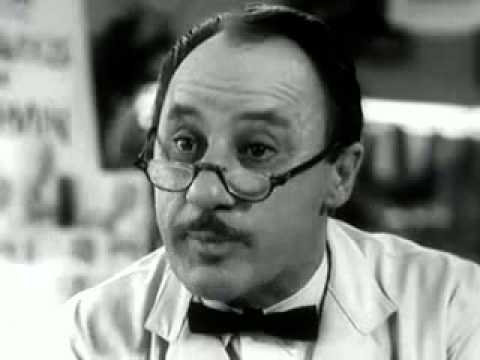
Cavalcade is a specially assembled evening of rare TV commercials from the '50s, '60s and '70s, both classic and obscure. The vintage views of toothpaste, pain reliever, cereal, cigarettes, automobiles, soft drinks, appliances, hair spray, cleansers and much more should leave the audience with a craving to consume -- or at least a strong urge to run to the bathroom.
Our last all-commercial program was presented nearly 13 years ago! This enhanced Cavalcade will include the best from past presentations, plus some never-shown reels.
Just a few highlights from the feature-length program are: A pre-stardom Cybill Shepherd flashing a smile for Ultra Brite, circa 1969; '70s TV icons Mr. Whipple (Charmin toilet paper) and Cora (Maxwell House coffee, played by screen great Margaret Hamilton); examples of the lost television contraband known as cigarette commercials (including Lee Marvin pitching Pall Mall's); and an informative minute from Carter's Little Liver Pills all about "The Miracle of Your Liver Bile."
Interspersed with the above will be forgotten public service announcements and a few TV spots for feature films. The entire program will be projected in 16mm film (not video) on a screen frighteningly larger than these ads were ever meant to be seen.
There will be one complete show at 8:00 pm. Admission is $8.00.

The Venice Island Performing Arts & Recreation Center is the best-kept secret in Manayunk. This 250-seat auditorium, with stadium seating and state-of-the art lighting and sound systems opened as a community theater in late 2014. Located steps off of Main Street, the facility has an on-site pay parking lot ($8 evening flat rate), and is close to street parking, public transportation, and the Schuylkill River Trail for cyclists.
PARKING
Once you arrive you may use Venice Island's parking lot. The lot is managed through the Manayunk Development Corporation and not through the Venice Island Performing Arts Center. Pay at the kiosk, or take advantage of Manayunk's free street parking a short walk away
SEPTA
Google Maps will show different public transit options. Here's a link to
getting to the show from City Hall using Septa. Change the starting point
as needed...
Movies for Every Occasion: The Best and Worst of
Castle and Official Films at Maas Building
Friday, April 15, 2016
8:00 pm
Admission: $9.00
The Maas Building
1325 N. Randolph Street
Philadelphia
267-239-2851
On Friday, April 15, The Secret Cinema will return to the beautiful Maas Building with a new program called Movies for Every Occasion: The Best and Worst of Castle and Official Films. Culled from the depths of the Secret Cinema archive, it will highlight the abundant and varied output of two companies that were pioneers in home entertainment.
For four decades starting in 1937, Castle Films and Official Films released hundreds of unique short subjects sold (through mail order, camera and department stores) to owners of 8mm and 16mm home movie projectors. Long before home video, consumers could buy their own film prints of travelogues, cartoons, sports reels, musical shorts, newsreels and much more. While home editions of Hollywood-made cartoons and comedy short subjects were popular, and highlight reels of Universal horror features doubly so, many of their best-selling titles were original productions -- with many earlier releases made by Castle founder Eugene Castle himself (Official Films, founded in 1939 by freelance cameraman Leslie Winik, was pretty much a direct copy of Castle's business model).
Often amusingly dated, but just as often surprisingly captivating, the 9-minute reels from these two companies have enlivened many Secret Cinema programs over the last quarter-century (yes, we are now in our 25th year!). Yet, this will be our very first program exclusively devoted to these two former giants of movies in the home, and will include favorites from previous screenings as well as several titles never before shown. And as an added attraction, deluxe Castle Films t-shirts will be available for sale!
There will be one complete show at 8:00 pm. Admission is $9.00. Beer and refreshments will be available at the screening.
A few highlights from Movies for Every Occasion… include:
Fishing Vagabonds (1955) - Castle and Official each released countless sports-themed topical films, aimed at the dads who were presumably the operators of their family's home movie equipment. This is a typical fishing short, but unlike most was shot in blazingly-saturated Ansco Color. The choice helped to show off not only angling technique, but also the fishermen's bikini-clad boatmates, who do their best to stay out of the way. The narrator notes, "Our heroine makes a smart decision…this is man's work!"
The Chimp's Adventure (aka Monkey Shines, 1934) - The "Chimp" series of comedy shorts were a staple of Castle Films catalogs for many years. They all depicted an actual chimpanzee wandering around the civilized world and getting mixed up in various mischief. This was the first entry in the series, shot on location in Manhattan, and was originally released by Paramount for their "Shorty the Chimp" series. Castle's generic "The Chimp…" retitling allowed them to keep the franchise going after the Paramount series ended, later substituting films featuring television star Zippy the Chimp.
Survival Under Atomic Attack (1951) - Castle released a series of eight "Official U.S. Civil Defense Motion Pictures" to instruct the population how to best survive nuclear war. These films were sold at a slight discount form their usual prices, and also included titles such as Disaster on Main Street, What You Should Know About Biological Warfare, and the ever popular Duck and Cover. "Let us face the realities of our times…"
Atlantic City (1951) - Castle made countless travel films, showcasing exotic lands across the globe, but this one was made closer to home. The seaside resort was shown in all of its pre-gambling glory, with views of long-demolished, palatial hotels, the boardwalk and its rolling chairs, restaurants Hackney's, Mammy's, and the Knife & Fork Inn, and a Miss America parade.
Let's Sing a Western Song (1947, Dir: Harold James) - From Universal's theatrically-released Sing and Be Happy series, one of many "bouncing ball" sing-along films, this one featuring Fred Waring and his Pennsylvanians. Feel free to join in (and be happy!).
Roaring Wheels (1952) - A look at all kinds of fast-moving vehicles, including gas-powered miniature cars, midget race cars, soap-box derby cars, dirt bikes and experimental vehicles at the Bonneville salt flats.
Four Melodies in Allegretto (1940s?) - "A free interpretation of four musical compositions whose themes are based on animal life." That's a rather high-falutin' introduction to what is actually a super-low budget production made to showcase the cuteness of kittens and baby chicks (and stock footage of…bees?). All of their activity ostensibly occurs in the dreams of a sleeping little girl, who favors the music of Mussorgsky and Saint-Saens. Castle and Official films were rarely pretentious, but is seems there were exceptions.
Castle Quiz Game: Movies Greatest Headlines (1952) - An interactive film game n which the audience is tested on their knowledge of (then) current events, using newsreel clips and a ticking timer.
…and much more!
The Maas Building was previously a brewery and a trolley repair shop. This beautifully restored 1859 brick and timber workshop today serves as a multipurpose art event and catering space. Free parking is available on the street and in the adjacent lot of the James R. Ludlow Elementary School.

Parks and Rec Rarities
at Fairmount Park Horticulture Center
Friday, March 25, 2016
8:00 pm
Admission: $8.00
Horticulture Center
West Fairmount Park
North Horticultural Drive & Montgomery Avenue, Philadelphia
(215) 685-0096
On Friday, March 25 the Secret Cinema and Philadelphia Parks and Recreation will present Parks and Rec Rarities, a screening of little-seen city-made films. The event will take place in Fairmount Park's beautiful and verdant Horticulture Center, an exhibition hall and glass-walled greenhouse filled inside and out with rare plants and historic statuary. It sits on the site of the former Horticultural Hall, an 1876 Centennial Exposition building.
The program will consist of shorts from the 1960s, '70s and '80s, documenting leisurely times gone by in Philadelphia's abundant park and recreation facilities. We showed the park films, from the Fairmount Park archive, just once before, at a 2010 event at Northeast Philly's Ryerss Museum. The Recreation Department films, however, have probably not been seen since they were made -- the reels were recently found in a rec center storage closet. (Upon the discovery of each set of films, PPR's Rob Armstrong called on the Secret Cinema for help in inspecting, repairing and viewing the aging reels).
There will be one complete show, starting at 8:00 pm. Admission is $8.00.
The Fairmount Park Horticulture Center, minutes off of the Schuylkill Expressway, features a large, free parking lot. It is near Memorial Hall (Please Touch Museum) and is a short walk from Septa Routes 38, 40, 43, and 64 (Route 38 comes closest, with a stop at Belmont Avenue and Montgomery Drive).
Highlights of Parks and Rec Rarities include:

WFIL Salutes the Philadelphia Department of Recreation (1965, Produced/edited: Bill Lawrence) - This television documentary (made by the station known today as WPVI), gives a broad overview of our recreation system and its programs as they existed 50 years ago -- from swimming pools in the Northeast's Jardel Rec Center, to a Eugene Ormandy-led Philadelphia Orchestra concert with Van Cliburn, to folk guitar lessons for teenaged girls, and to programs at the Chamounix youth hostel. Robert Crawford, the city's influential Commissioner of Recreation for nearly 30 years, discusses changes that introduced during his tenure.

Journey of a Philadelphia Zoo Sculpture (c. 1962, Ralph Lopatin Productions) - Heinz Warneke's granite sculpture called Cow Elephant and Calf was designed for the Philadelphia Zoo and created in Norway. This archival footage depicts the massive sculpture arriving on a ship, driven on an open truck through Philadelphia's streets, and finally installed by the artist at the Philadelphia Zoo, where it can be seen today.

Better Break (1978) - A young Larry Kane introduces this short by asking. "Can we take a tour of the city in ten minutes?" The film then offers just that, while highlighting various activities funded by the "Better Break" program. This decade-long initiative was started in 1968 to provide jobs for vacationing school youth and "give the hope needed to keep the City 'cool' from social unrest which had been manifested so tragically in other major cities throughout the nation" (as per a 1969 Better Break press release). Shown are a boxing match, ballerinas dancing near City Hall, Mayor Rizzo, a "Gospelrama" concert, and notable musical talents like Lionel Hampton, Arthur Prysock, Maynard Ferguson, Carmen McRae and Ray Charles, all performing at the Robin Hood Dell.
A Day with the Fairmount Park Mounted Patrol (c. 1960, Dir: George Smith and Charles Bender) - Between 1867 and 1972, the Fairmount Park system was patrolled by the Fairmount Park Guard, an elite park police force separate from the Philadelphia Police Department. This charming amateur production, produced by home movie hobbyists within the Fairmount Park Mounted Unit, humorously depicts a typical day in the life of the Park Guard as they patrol Fairmount Park...and keep the park safe from litterbugs and perverts!
The Valley Green (1981, Dir: Jeff Farber) - In his 1844 essay "Morning on the Wissahiccon," Edgar Allan Poe wrote: "Now the Wissahiccon is of so remarkable a loveliness that, were it flowing in England, it would be the theme of every bard, and the common topic of every tongue..." This film, produced nearly 30 years ago (and 137 years later) by the Friends of the Wissahickon, offers a tour of the sights and sounds of the Wissahickon Creek, as it winds through Montgomery County and into Philadelphia. Along the way there are discussions of environmental and conservation issues with urban planners, developers and park officials

Pop art feature The Touchables
at Philadelphia Museum of Art
Wednesday, February 24, 2016
6:00 pm
Admission: Pay What You Wish
Philadelphia Museum of Art
2600 Benjamin Franklin Parkway, Philadelphia
(215) 763-8100
After twenty-four years of film screenings, the Secret Cinema is happy to announce our first-ever event at the Philadelphia Museum of Art. On Wednesday, February 24, we'll present The Touchables, a "psychedelic screwball comedy" -- filled with mod fashions and pop art décor -- that we've championed since our very first year. This audacious and colorful feature, capturing peak "Swinging London," is being shown to celebrate PMA's new exhibition "International Pop." The screening is part of the museum's weekly "pay what you want" Wednesday nights.
The program will also include a surprise short film, and free popcorn and refreshments will be provided. The feature will be introduced by critic and WPRB disk jockey Dan Buskirk, who will also lead a post-screening discussion. Seating is limited.
There will be one complete show, starting at 6:00 pm. Admission is free after Pay What You Wish museum admission (This admission policy begins at 5:00 pm, and the museum will remain open until 8:45 pm)
A complete description of the feature follows.
The Touchables (1968, Great Britain, Dir: Robert Freeman)
A group of four beautiful, inexplicably wealthy and exceptionally whimsical girls live together. When not attending their American friend's ballet-like pro-wrestling bouts, they commit outlandish pranks such as stealing a wax dummy of Michael Caine. They take their impulsive behavior a step further when they abduct a young pop star to their bizarre country retreat, a large inflatable dome filled with pinball machines and mod furnishings. There they tie him down and take turns having their way with him. Things start to get out of hand -- especially when their friend's wrestling rival, a wealthy black gangster, decides he must also possess the pretty boy.
The Touchables is a cult film waiting to be discovered. Ignored or quickly dismissed in most film reference books, it is both ahead and wholly a part of its unique moment in time. The Touchables is also the best example of a heretofore unrecognized film genre, the Psychedelic Screwball Comedy (other British examples include The Magic Christian and the obscure Work Is A Four Letter Word). Like the classic screwball comedies of earlier decades, the plot zigzags through a series of unlikely complications and is populated by outrageous characters. Unlike any Carole Lombard or Cary Grant vehicle, The Touchables is set in a surreal, pop-art world and features characters that act irrationally and with little exposition (possibly Cary Grant imagined such a world during his admitted LSD experiments!).
Robert Freeman was a top fashion photographer who made many memorable photos of the Beatles (including the Rubber Soul album cover). He directed The Touchables with great pop-art flair. Combining bright, colorful photography, stylish editing, spirited performances, and a snazzy Ken Thorne score, Freeman has left a film that is both a unique vision and an evocative time capsule.
The long awaited return of Stag Movie Night:
Vintage Porno from the 1920s, 30s & 40s
at Maas Building
Saturday, November 21, 2015
8:00 pm
Admission: $9.00
The Maas Building,
1325 N. Randolph Street, Philadelphia
(267) 239-2851
On Saturday, November 21, The Secret Cinema will return to the beautiful Maas Building for a revival of one of our most popular thematic programs of archival film -- Stag Movie Night: Vintage Porno from the 1920s, 30s & 40s.
This collection of rare erotica films will surprise and shock those who believe the "sexual revolution" of the sixties and seventies gave birth to the celluloid depiction of sex. True, the seedy adult theaters of the seventies and the home video industry that followed it did not exist when these films were made behind closed doors. The original stag movies were distributed through a covert network of all-male screenings at lodges, bachelor parties, and fraternities. Seeing these forbidden films was nonetheless a fairly common rite of passage for American men back then, as the surviving reels of film testify.
The earliest extant pornographic film dates from 1915, and they were probably made well before then. The introduction of 16mm film in 1923 really opened the floodgates of stag production, and a standard format was established. Virtually all stag films are black and white, one 10 to 15 minute reel in length, and silent -- assuring compatibility with the relatively low-cost home movie projectors that were typically rented along with a night's worth of programming.
What shocks today's audiences about these films is that most (though not all) of them are completely explicit in their depiction of sexual acts. The variety of acts and couplings filmed long ago is another eye-opener, and it is somehow comforting to note that the camera angles for such action, worked out over half a century ago, survive in today's adult videos.
The silent films will be accompanied by recordings of period music, including early jazz, crooners, and dirty blues songs.
This new edition of Stag Movie Night will include both new, never shown material as well as the return of some favorite reels from the past screenings. The final selection is still being planned, but titles likely to be chosen include Hollywood Honeys, A Jazz Jag, Through the Keyhole, Mortimer the Salesman, and more, plus Buried Treasure, a hilarious pornographic cartoon from the 1920s attributed to the Max Fleischer studios and others.
There will be one complete show at 8:00 pm. Admission is $9.00. Beer and refreshments will be available at the screening.
Secret Cinema's first Stag Movie Night was presented at the old Silk City Lounge way back in 1996, and that venue also hosted several sequel volumes (with different content). Our last presentation of Stag Movie Night was almost 9 years ago (at a sold-out screening in the 2007 Philadelphia Film Festival) -- so it is definitely overdue for a new showing.
The Maas Building was previously a brewery and a trolley repair shop. This beautifully restored 1859 brick and timber workshop today serves as a multipurpose art event and catering space. Free parking is available on the street and in the adjacent lot of the James R. Ludlow Elementary School.
From Philadelphia with Love: Industrial, Educational
and other Lost Local Films (2015 Edition)
at Fleisher Art Memorial
NEWS FLASH!
We are very excited to announce that Michael Lopatin, who, back in the 1970s, directed two of the short films in this program, will be present at our screening! Michael will share his memories of sponsored filmmaking in the 16mm era, when just a few pioneering local companies dominated the field.
Saturday, November 14, 2015
8:00 pm
Admission: $8.00
Fleisher Art Memorial,
The Sanctuary
719 Catharine Street, Philadelphia
(215)922-3456, ext. 300
On Saturday, November 14, 2015, the Secret Cinema will present the latest chapter in its ongoing series From Philadelphia with Love: Industrial, Educational and other Lost Local Films. Once again, it will contain 100% new programming, and this time it will be shown in a 100% new venue -- the beautiful Sanctuary of the Fleisher Art Memorial, in Philadelphia's Bella Vista neighborhood (just South of Center City).
Beer and refreshments will be available during the screening.
From Philadelphia with Love... showcases rare 16mm prints from the Secret Cinema archive about different aspects of life in the Philadelphia region. Some were made as sponsored films promoting goods or institutions, and others are educational, documentary or dramatic in nature. Most are virtually impossible to see elsewhere.
The Secret Cinema began showcasing these ephemeral scenes of lost local history back in 1999, and our last such presentation was two years ago. We've now projected over 50 of these films -- and none of them will be repeated for our November program. In fact, few have been seen by anyone since they were originally made.
There will be one complete show at 8:00 pm. Admission is $8.00. Seating is limited.
Just a few highlights of this new edition of From Philadelphia with Love... are:
Assembly Line (1961, Dir: Morton Heilig) - This dramatic short film focuses on a lonely worker who toils at the Hunting Park plant of the Budd auto body factory. Ignoring the warnings of his alcoholic roommate, he heads out for what he imagines will be a big night on the town, but instead finds only betrayal and disappointment. The incredibly grim, noir mood could have come from a David Goodis pulp novel. It was a co-production of two departments at Penn: the Annenberg School of Communications, and the somewhat-mysterious Institute for Cooperative Research. Director Heilig, a winner of a fellowship in the first year of the School, would go on to make many documentaries, and also invented some early virtual reality devices. Besides its compelling narrative, Assembly Line captures amazing footage of mid-century Philadelphia, including Horn & Hardart's, movie theater marquees, bars and streetscapes both neon-lit and gloomy.

They Do Come Back (1940, Dir: Edgar Ulmer) - Celebrated Hollywood auteur Ulmer (Detour, The Black Cat) directed this and several other sponsored short films for the National Tuberculosis Association, with the aim of educating the public about good hygiene practices. This one was shot around Philadelphia with the help of prolific local industrial film studio the DeFrenes Company. It dramatizes the tale of a young couple whose first kiss leads to the boy coughing up blood, but he soon learns how to treat his problem.

Ready for Tomorrow (1970s, Dir: Michael Lopatin) - Legendary broadcaster John Facenda appeared in this overview of new innovations in the School District of Philadelphia. Scenes were shot throughout the city, including looks at Central and Girl's High, and the Parkway program.
Temple RTF film scraps (1975-6) - Random footage from Rosa, a film shot by Temple University's Radio-Television-Film department, for use in film editing classes. The scenes showcase Center City during its first urban renaissance. Also included are bonus, student-shot camera tests starring then-young film critic Irv Slifkin and future musician/bon vivant Rocco Sacco.
Plus Glass at PCA, A Day Behind the Beagles, and much more!

About the Fleisher Art Memorial:
Founded in 1898, Fleisher is one of the country's oldest nonprofit community art schools. Fleisher's mission is to make art accessible to everyone, regardless of economic means, background, or artistic experience. In 1916, Fleisher acquired the former building of the Saint Martin's College for Indigent Boys on Christian Street, and in 1922, added the adjacent Romanesque church which had formerly been the Episcopal Church of the Evangelist. The space was converted to house Fleisher's private collections of paintings and sculptures, and he made it available to neighborhood residents day and night as a quiet place for contemplation and reflection. Fleisher serves over 16,000 annually, with 1,702 young people attending tuition-free classes and low-cost workshops, 3,820 adults taking free and low-cost classes and workshops, 358 children and youth being served in public schools and community centers throughout Southeast Philadelphia, and 8,430 visitors to the galleries annually.

D.W. Griffith's silent epic America, live music
at American Philosophical Society
Wednesday, October 28, 2015
7:00 pm (Museum doors open at 6:00 pm)
Admission: FREE
American Philosophical Society
Franklin Hall
427 Chestnut Street, Philadelphia
(215) 440-3442

On Wednesday, October 28, 2015, the Secret Cinema will return to the American Philosophical Society to present the rarely-screened 1924 silent film America. This sprawling historical spectacle, dramatizing the battles and events of the American Revolution, was the last big-budget epic from pioneering director D.W. Griffith (The Birth of a Nation, Intolerance).
This silent film presentation will not be silent, as expert keyboardist Don Kinnier (veteran collaborator for several past Secret Cinema programs) will bring the movie alive with his accompaniment.
America will be the second of two Secret Cinema events at the APS this year celebrating their current exhibition, Jefferson, Science, and Exploration.
This Secret Cinema event will feature a chance to explore the exhibition, free refreshments and snacks, and a fascinating screening (as always with Secret Cinema, using real film projected on a giant screen). Best of all, admission is free.
On the screening day, the museum doors will open at 6:00 pm, allowing time to explore the exhibition. The film screening starts at 7:00 pm. Seating is limited.
There is free meter parking available in Center City on Wednesday evenings. For details, see: http://www.philapark.org/2012/03/free-meter-parking-on-wednedays/
A full description of the feature follows.

America (1924, Dir: D.W. Griffith)
D.W. Griffith virtually invented the grammar of film while making short films for the Biograph studio. These ideas culminated in the groundbreaking and controversial Civil War feature The Birth of a Nation, and Griffith's reputation as the master of the new art form was firmly established. He followed this with the even larger-scale Intolerance, and such popular features as Broken Blossoms, Way Down East and Orphans of the Storm, made with exacting attention to period detail at Griffith's own studio in Mamaroneck, New York. It was here that he began work on what would be his last grand historical epic, America.
With America, Griffith attempted to repeat the success of Birth of A Nation, once again placing a personal story in the middle of sweeping public events - here, the American War of Independence. The script was adapted from a story by popular historian-novelist Robert Chambers, and was approved by both the Daughters of the American Revolution and the War Department. There were careful reenactments of the battles of Bunker Hill, Lexington and Concord, Paul Revere's ride, and Indian wars in the Mohawk Valley. There was also a romance between a Minuteman (Neil Hamilton, much later to play Commissioner Gordon on TV's Batman) and the daughter of a Tory-leaning family (Carol Dempster, who had replaced Lillian Gish as Griffith's lead actress). Lionel Barrymore appeared as the villainous Captain Butler, and other actors portrayed George Washington, Thomas Jefferson and King George III.

America's giant budget ultimately forced the sale of Griffith's studio, and the loss of his independence. The critics gave it mixed reviews and it fared poorly at the box office, "possibly," as film historian Eileen Bowser suggested, "because its historical detail and educational spirit were at odds with the Jazz Age in which it was produced." That attention to accuracy enabled the film to enjoy a more successful afterlife, however -- America reportedly turned a profit thanks to numerous school rentals and stock footage sales.

About Don Kinnier:
The silent film era, from its tentative first steps to its final artistic masterpieces, lasted for about 35 years. Musician Don Kinnier has been accompanying silent film screenings for over 50 years! Pennsylvania's foremost exponent of this very specialized art form, he has studied the techniques and repertoires of the original theater musicians of the silent era. A Philadelphia native (now based in Lititz), Don has provided the soundtrack for the local Betzwood Film Festival since its inception, as well as for many Secret Cinema events.
About Jefferson, Science, and Exploration:
Thomas Jefferson had a passion for knowledge that encompassed theoretical and applied sciences. As president of the APS for 17 years -- before, during, and after he was president of the nation -- he fostered American participation in a broad range of fields from paleontology to botany to meteorology, all of which are featured in this exhibition. President Jefferson advocated for westward exploration, providing explorers with detailed instructions on how to prepare for their expeditions. He sent Meriwether Lewis to study with five Philadelphians, all APS members with specific expertise that Lewis would need to be successful. This exhibition demonstrates the inseparable connections between science and national pride in Jefferson's time and takes visitors up to the eve of Lewis and Clark's journey.
Jefferson, Science, and Exploration is the second of three exhibitions on Jefferson to be held at the American Philosophical Society (APS) from 2014 through 2016. Support provided in part by the Philadelphia Cultural Fund and the Pennsylvania Historical and Museum Commission.
About the APS:
When Benjamin Franklin and friends decided, in 1743, to establish the American Philosophical Society (APS), they studied nature and called themselves natural philosophers. Now we'd call them scientists. But the word "philosophical" stuck. Over the years, the APS has counted among its members individuals as varied as George Washington, Charles Darwin, and Yo-Yo Ma.
The APS has gathered and preserved a rich collection that traces American history and science from the Founding Fathers to the computer age. It includes scientific specimens and instruments, and more than ten million manuscripts.
The APS combines sophisticated exhibitions of its collections with provocative works by contemporary artists. Museum visitors will find challenging new perspectives on history, science, and art. The galleries are at Philosophical Hall, 104 S. Fifth Street, Philadelphia, right next to Independence Hall. Admission and all programs are free.
Poe-themed Halloween program
in Community College film festival

Thursday, October 22, 2015
6:00 pm
Admission: FREE
Community College of Philadelphia
Bonnell Building
S. 17th Street below Spring Garden Street, Philadelphia
On Thursday, October 22, 2015, the Secret Cinema will participate in the Community Underground Film Festival (CUFF) at Community College of Philadelphia's Bonnell Auditorium. The college is simultaneously hosting a special celebration called "The Philadelphia Work of Edgar Allan Poe," and this Secret Cinema event will tie-into both festivals -- with a screening of Jean Epstein's 1928 feature The Fall of the House of Usher, a silent, avant-garde adaptation of Poe's dark tale.
The program will be rounded out with surprise, Halloween-themed short films.
As always with Secret Cinema screenings, we will show real film projected onto a giant screen (in a giant auditorium!).
This screening starts at 6:00 pm and lasts about 90 minutes. Admission is free.
The rest of CUFF (which starts that morning and runs through October 23) includes new documentaries, lectures, student films and a short film competition.
A full description of the feature follows.
The Fall Of The House Of Usher (La Chute De La Maison Usher) (1928, France. Dir: Jean Epstein)
Jean Epstein's last film before he broke with the avant-garde movement is based on the tales of Edgar Allan Poe. The mysterious house of Usher is visited by a friend who finds Roderick following the family tradition of painting his wife's portrait with such passion that he draws the life from her to put it into his picture. Refusing to accept her death he declines to have her coffin nailed shut.
Everything in the film is subordinated to the creation of' atmosphere. Misty, fog-shrouded scenes, slow-motion filming, low angles, lighting, and camera tricks lend themselves to eerie supernatural effects. Epstein was a cinema theoretician, and the maker of the important Impressionist film Coeur Fidèle. After this film, he launched a series of lyric documentaries among the fishermen of Brittany, and found a new use for slow-motion in drawing emotional performances from nonactors.
The Best of Secret Cinema Short Films
at Maas Building...outdoors!
Saturday, June 27, 2015
9:00 pm (after dark!)
Admission: $8.00
The Maas Building
1325 N. Randolph Street
Philadelphia, PA, 19122
267-239-2851
UPDATE: Due to the forecast of potentially heavy rain, Saturday night's screening at the Maas Building is being moved from the outdoor garden space to indoors, in the upstairs main event room we used in April. Note that the entrance will therefore be at 1325 N. Randolph Street (as before), NOT on 5th Street. The 9:00 pm start time will stay the same.
Note also that free parking is available, in the school lot across Randolph Street!
We hope to show off the Maas Building's lovely garden patio at a future event!
TOMORROW -- Saturday, June 27 -- The Secret Cinema will return to the beautiful Maas Building to present the unique program The Best of Secret Cinema Short Films.
Since we began in early 1992, all Secret Cinema screenings of feature films have included bonus short subjects, and some of our best presentations have been comprised entirely of short films: such oddities as campy educational reels, industrial films, TV commercials, and home movies. Most of these films -- literally hundreds of them -- have only been shown once or twice, despite frequent requests to repeat them. The Best of Secret Cinema Short Films will compile the most memorable of these celluloid treasures, most of which are impossible to view anywhere else. We try not to repeat ourselves too much, which is why our last "greatest hits" program was presented eight years ago

The Maas Building was previously a brewery and a trolley repair shop. This beautifully restored 1859 brick and timber workshop today serves as a multipurpose art event and catering space.
There will be one complete show at 9:00 pm. Admission is $8.00.
Just a few highlights of The Best of Secret Cinema Short Films are:
The Stranger At Our Door (1940) - This dramatic two-reeler, made by a religious group to promote ethnic tolerance, shouldn't be funny -- but the outrageous overacting by Bowery Boys rejects and their non-specific European-born target make it surreally so.
How Quiet Helps at School (1953) - The answer should be obvious, but the level of quiet expected by the uptight narrator of this classic '50s social guidance film probably had kids holding their breath in class.
Skateboarding To Safety (1976) - One of the most beloved films ever shown by Secret Cinema is this 1976 look at thrills and spills of young daredevils as they maneuver skinny wheeled boards through the streets of Southern California -- enhanced in this print by a dubbed Swedish soundtrack.
Big Mouth Goes to the Dentist (1984) - A frightening, McDonaldland-esque giant mouth attempts to teach kids not to be afraid of the dentist.
Pro Kleen commercial (1950s) - A mind-numbingly crass eight minute TV commercial in which an unappealing pitchman with a thick Baltimore accent extols the wonders of a new spot cleaner.
The Story of Bubblegum (1952) - This beautiful Kodachrome film sets out to answer the question, "Can bubblegum be good food?" Made at the old Fleer bubblegum plant in Olney, showing its giant vats of pink rubber, plant cafeteria and garden, and their amazing R&D department. Quite possibly the greatest film ever made, short or long.

Betzwood Film Festival celebrates "Powerful Katrinka"
with screening, author talk
Saturday, May 9th, 2015
8:00 pm
Admission: $15.00
Science Center Theater
Montgomery County Community College
340 DeKalb Pike, Blue Bell, Pennsylvania
215-641-6518
Silent film star Wilna Hervey was a very big girl. At six foot three and over three hundred pounds, she was perfect for the role of "Powerful Katrinka" in the Toonerville Trolley comedy shorts. These silent comedies, faithful adaptations of Fontaine Fox's popular comic strip, were made in the early 1920s in the Betzwood film studios, built by Siegmund Lubin outside of Philadelphia. After her Betzwood work, she played a similar role in series of films made in San Francisco, and even had a "big" part in a Three Stooges short in the 1930s.
Beyond the movies, Wilna Hervey's life held more unexpected twists and turns than the plots of the three-dozen comedies she made. A skilled portrait painter, award-winning enamel artist, and erstwhile farmer, she also hosted some of the wildest parties ever seen in the Catskills. With her companion Nan Mason, Ms. Hervey became a legend in the Woodstock, New York, art colony where she lived for over fifty years.

On Saturday, May 9th, 2015, The adventurous life of Wilna Hervey is the focus of the 2015 Betzwood Film Festival. Along with a program of her ever-popular Toonerville Trolley films, we will present an illustrated retrospective of Ms. Hervey's career, from her early days as "Katrinka" to her later years as a celebrity artist, when she numbered among her friends some of 20th Century America's top writers, painters and movie directors.
As always, we strive to recreate the experience of going to the movies one hundred years ago. Our films are shown using real film, at their original projection speed, and are accompanied live on the organ by the incomparable Don Kinnier.
And, after the show, stick around for a "Meet the Author" reception and book signing. Wilna Hervey's remarkable story is now the subject of a full-length biography, Living Large, by Betzwood Film Festival founder and author, Joseph Eckhardt. Copies of Living Large will be offered at the event, at a 20% discount.
Once again, Secret Cinema will provide 16mm projection for this very special event.
There will be one complete show, starting at 8:00 pm
Tickets are $15, and available at the Box Office or by phone, 215-641-6518.
Free Parking (enter the Blue Bell Campus using the 1313 Morris Road entrance).

The Secret Cinema presents Selected Short Subjects at
Union Transfer's Stephin Merritt concert
Friday, April 10, 2015
8:00 pm
Admission: $8.00
Union Transfer
10th & Spring Garden Streets, Philadelphia, PA
215-568-1616
On Saturday, May 2, the Secret Cinema will present a special film screening called Selected Short Subjects before a concert performance by the Magnetic Fields' Stephin Merritt, at the large and popular Union Transfer live music venue.
For this special pre-concert movie program -- still being selected from the Secret Cinema archive, in consultation with Stephin Merritt -- expect an emphasis on filmed pop music spanning multiple decades past and…more past, including clips originally viewed on early film jukeboxes, movie trailers, and other surprises.
Doors will open at 8:00 pm, and the screening will start at 8:30 pm. Tickets are $25.00.
This will be only the second time the Secret Cinema has served as a support act for a musical performance (the first was at a 2009 Halloween concert at the Trocadero, starring the Dead Milkmen). However, in our 23+ year history, we've brought our projection equipment to countless local music venues, and we look forward to lighting up a movie screen at Union Transfer - especially at this concert, with an artist whose music we've long admired.
This show will be the very first date of a rare solo tour for Merritt, who will be accompanied by long-time bandmate Sam Davol on cello. For this series of performances, Merritt will present a set of solo, acoustic versions of selected songs from his extensive catalog. Merritt will perform exactly 26 songs with each song title starting with a different letter of the alphabet and running in alphabetical order.
The concert will be seated, and all-ages.
ABOUT STEPHIN MERRITT: He has written and recorded ten Magnetic Fields albums over two decades, starting with Distant Plastic Trees in 1991. In 1999, the three-CD collection, 69 Love Songs, established Merritt as one of his generation's most talented songwriters and garnered widespread acclaim, including year-end "best of" lists in Rolling Stone, SPIN, The New York Times, LA Times, Washington Post and other national publications.
Between Magnetic Fields releases, Merritt has recorded side projects and albums with his other bands, Future Bible Heroes, the Gothic Archies and the 6ths, as well as soundtracks to the films Eban and Charley and Pieces of April. In 2009, Merritt scored the Off-Broadway adaptation of Neil Gaiman's novel Coraline -- for which he received an Obie Award.
Merritt and the Magnetic Fields have performed as part of Lincoln Center's "American Songwriters" series and at BAM's "Next Wave of Song." In 2012, saw the latest Magnetic Fields album, Love at the Bottom of the Sea, and in 2013, Merritt released a Future Bible Heroes album, Partygoing. In the fall of 2014, he penned the first-ever musical episode of NPR's popular show, "This American Life." Around the same time, his book 101 Two-Letter Words, a whimsical aid for Scrabble players with illustrations by Roz Chast, was published. An avid film buff, Stephin Merritt has created original scores for the silent films 20,000 Leagues Under the Sea and The Unknown.
"[The Magnetic Fields' Stephin Merritt is] a contrarian* pop genius." -- The New York Times
"The Cole Porter of his generation." -- Rolling Stone
*NOTE: We beg to differ about the "contrarian" label.
ABOUT US: Since 1992, the Secret Cinema has been the Philadelphia area's premiere floating repertory cinema series, bringing hundreds of unique programs to nightclubs, bars, coffee houses, museums, open fields, colleges, art galleries, bookstores, and sometimes even theaters and film festivals. Drawing on its own large private film archive, as well as other collections, the Secret Cinema attempts to explore the uncharted territory and the genres that fall between the cracks, with programs devoted to educational and industrial films, cult and exploitation features, cartoons, rare television, local history, home movies, erotic films, politically incorrect material, and the odd Hollywood classic, as long as it exists on real celluloid -- Secret Cinema screenings never use video/digital projection. While mainly based in Philadelphia, the Secret Cinema has also brought programming to other cities and countries.
The Secret Cinema is back!
Curator's Choice 2015: Unseen Corners of the Secret Cinema Archives
at new venue!
Friday, April 10, 2015
8:00 pm
Admission: $8.00
The Maas Building
1325 N. Randolph Street, Philadelphia, PA
267-239-2851
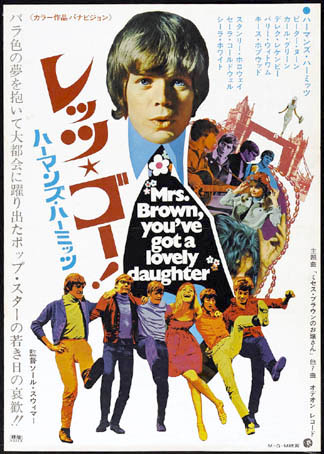
On Friday, April 10, The Secret Cinema will present its first program in eight months, with a hand-picked program of nearly-lost treasures from the deepest depths of the Secret Cinema film vaults. Curator's* Choice 2015: Unseen Corners of the Secret Cinema Archives will include just that -- films never shown before by us, and probably not by anybody else either since their original release.
This will be the first full-fledged Secret Cinema event since SC founder Jay Schwartz was injured in a bicycle accident last September. This unfortunate event (and subsequent hospital stay and recuperation period) forced the cancellation of several Secret Cinema events last fall. We'll celebrate the return of our series by showing unseen films in a brand new venue, the Maas Building. A former brewery and trolley repair shop, this beautifully restored 1859 brick and timber workshop today serves as a multipurpose art event and catering space.
There will be one complete program, starting at 8:00 pm. Admission is $8.00.
The Secret Cinema's private archive contains literally thousands of reels of 16mm (and 35mm, and 8mm) features, theatrical shorts, cartoons, newsreels, television shows, educational films, travel films, industrial films, and home movies. Together, they add up to well over one million feet of often rare celluloid, with several prints thought to be the only extant copies in the world.
Since 1992, the Secret Cinema has created programming that exposes every category of such films, by showing these fascinating, historical, and often hilarious shorts before features or in themed groupings. Yet, despite exposing hundreds of rare works this way, there are still many choice reels that we've never got around to screening publicly, often unclassifiable films that had inconvenient running times or could fit into no common theme.
Some of the best of these rare prints will at last see the light of a projector bulb in Curator's Choice 2015. This previously ungroupable group of shorts will include films that were made to entertain, to teach, to encourage commerce and to alter opinion. Spanning many decades, they show wondrous places, styles and things that have long-since vanished. Some them now seem campy, others still have valid lessons to teach, but all are fascinating, and extremely unlikely to be seen anywhere else, including on video.
The program is still being assembled, but just a few highlights are:
Camp Meetin' (1936, Dir: Leslie Goodwins) - Staged one-reel musical short subjects were a bread and butter studio product in the first decades of talkies, but this one from Radio Pictures feels different than most. Evidently shot on location, with a documentary-like realism, it captures an open-air tent-and-camp meeting of the Hall Johnson Negro Choir, somewhere in the deep South. Johnson, who helped train Marian Anderson, lent the sound of true spiritual music to many Hollywood films, from The Green Pastures to Song of the South. The film manages to include some humor, with help from cast member Stymie (Our Gang) Beard.
Wringo (1940s? Dir: Unknown) - This comic yet x-rated novelty item was made to be shown at men's "smoker" parties, and is quite unusual among its made-on-a-shoestring "stag movie" peers in that it has a soundtrack, with synchronous dialog. The setting is a carnival sideshow and the action centers on a most unusual attraction therein…but to say more would be a terrible spoiler. This film was a sensation at the first "Bastard Film Encounter," an academic symposium held in Raleigh, North Carolina.
Herman's Hermits (1968) - A common form of movie promotion in the 1960s and '70s was the "production reel," short "making of" documentaries that were usually provided to television stations to fill out extra minutes after the broadcasting of feature films. This one takes us behind the scenes of Mrs. Brown, You've Got a Lovely Daughter, the second musical feature to star Peter Noone and his titular British invasion rock band.
The Renunciation (1909, Dir: D.W.Griffith) - A.K.A. Divided Love. One of many short dramas D.W. Griffith shot at the Biograph studio, where he perfected the art that would fully blossom in The Birth of a Nation and several other classic silent features. Mary Pickford (who would similarly go on to greater things in longer films) stars as the shared object of affection for two miners whose friendship turns to violence, but the surprise climax shows that the melodrama was tongue in cheek.
Today's Teens (1964) - An uncredited Boris Karloff narrates this mini "mondo" documentary with eyebrows raised, as we take a tour of the wild doings of teenagers around the globe - in nightclubs, record stores, and on beaches, often in bikinis and always to the pounding beat of a non-stop instrumental rock soundtrack.
Plus: How to Undress (1937), White Treasure (1945) and much more!
*It should be noted that we object to the expanding, and now quite cliched usage of the word "curated" to describe what was called "programming" in less pretentious times. However, we stubbornly label this program "Curator's Choice" because: A) It's a title we've used for this ongoing, if sporadic program concept since 2004, and B) As caretaker of the Secret Cinema film archive, programmer Jay Schwartz really is a curator (too).
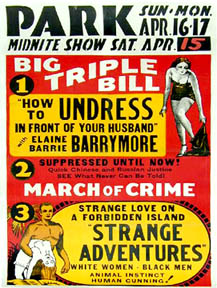
The Secret Cinema returns to Freeman's auction house for,
all-new edition of From Philadelphia With Love

Friday, September 6, 2013
8:00 pm
Admission: $9.00
Freeman's
1808 Chestnut Street, Philadelphia
215-563-9275
On Friday, September 6, the Secret Cinema will return to Freeman's historic Chestnut Street auction house for an all-new edition of From Philadelphia With Love: Industrial, Educational and other Lost Local Films.
From Philadelphia With Love... showcases rare 16mm prints from the Secret Cinema archive about different aspects of life in the Philadelphia region. Some were made as sponsored films promoting goods or institutions, and some are educational or documentary in nature. All are virtually impossible to see elsewhere.
Last April, as part of the first Cinedelphia Film Festival, we presented a "best of" edition with many of our favorite selections from the nearly 50 Philadelphia-related short films we've presented in several past volumes of this popular (if irregular) series. But September's event will include a batch of 100% never-before shown films -- well, never shown by us, and probably not by anybody else either, since their original release in the 1940s, '50s, '60s and '70s!

And to make the screening even more different, it will take place in another grand space in Freeman's 1924 Beaux Arts building than April's screening (in their third-floor auditorium). This time, the walls will be covered with lots offered in Freeman's upcoming Photographs & Photobooks auction, with images from photographers such as Cindy Sherman, Berenice Abbott, Imogen Cunningham, and Eugene Atget; a portfolio of 10 Marilyn Monroe photos from 1962;and everything from daguerreotypes and tin types to contemporary photography to signed and limited-edition photo books.
There will be one complete show at 8:00 pm. Admission is $9.00. Seating is limited.
As usual, all Secret Cinema programs are projected in 16mm film on a giant screen (not video).
Just a few highlights of this new edition of From Philadelphia With Love... are:
Holiday in Philadelphia (1954) - This promotional travelogue takes us on a tour of many sights and sites in our fair city, some of which are long gone, others drastically changed, and many happily still around. From a "clothesline art show" in Rittenhouse Square, to the Penn Relays, to the now demolished Convention Hall and Commercial Museum, to the Spring Garden Mint (today part of Community College), we see a very different Philadelphia, then at its population peak. Especially intriguing is a quick look at WFIL-TV's "Bandstand" program, a few years before Dick Clark took the host job from Bob Horn -- ironically, Clark narrates this short, just two years after he moved to our town to work for WFIL-AM
Portrait of a College (1963) - A colorful campus tour of what was then known as the Philadelphia Museum College of Art, and is today, in greatly expanded form, the University of the Arts. The film begins with a view of Haviland-Strickland Hall (originally the Pennsylvania Institution for the Deaf and Dumb, and the oldest building on Broad Street), and then visits facilities for painting, sculpture, ceramics, photography and graphic arts. "Since 1876, the best possible instruction in the arts happened here." Interestingly, this film was produced in the very last year of the school's affiliation with the Philadelphia Museum of Art.
Philadelphia Celebrates (1975) - This short film documents a giant outdoor fair called "Old City Sunday," complete with vendors, carnival rides, dance troupes, costumed colonial reenactors, Frank Rizzo and an assortment of musical performers, ranging from Mummers and a modern funk band to a baroque classical ensemble. The event, and film, were produced by Philadelphia 76 as a sneak peek/trial run for the following year's bicentennial events. Narrated by E.G. Marshall.

Maggie Kuhn: Wrinkled Radical (1975) - An intimate portrait of Maggie Kuhn, 69-year old founder of the Gray Panthers -- the locally-based organization that became world famous in their advocacy for the rights of seniors. Journalist Studs Terkel introduces this made-for-public television documentary, which takes us inside the Germantown Victorian house where Kuhn lived and also her office inside the Tabernacle Church (near International House).
Is a Career in the Performing Arts for You? (1973) - We'll show yet another entry from the "Library of Career Counseling Films," a multi-film project made for the U.S. Department of Labor by Philadelphia's Ralph Lopatin Productions, often taking advantage of local sites and resources. This time future high school graduates are invited to consider the career paths of musicians, actors and assorted support staff. Along the way they see the Shubert and Forrest theaters, Latin Casino and Just Jazz nightclubs, and local educational facilities for performing arts.
Atlantic City (1951) - Castle Films, the most successful purveyor of movie prints for home projectors, released this now-nostalgic look at "America's Playground," when it was still the most popular destination for seashore-bound Philadelphians -- but long before the invasion of the casinos. We see glimpses of the Claridge Hotel and fountain, a Miss America parade, rolling chairs on the boardwalk, salt-water swimming pools, and the Knife and Fork Inn restaurant. From a gentler time, when the phrase "Do A.C." would have been considered a grammatical atrocity.

Plus The 1946 Army-Navy Football Game, Build Yourself a City (1968), Rikki the Baby Monkey (1949), and more!
The headquarters of Freeman's Auctioneers & Appraisers is the oldest purpose-built auction house in America, and Freeman's, established in 1805, is America's oldest auction business.

Green films at
American Philosophical Society Museum
Wednesday, July 24, 2013
7:00 pm (doors open 6:00 pm)
Admission: FREE
American Philosophical Society Museum
Philosophical Hall
104 South Fifth Street, Philadelphia
(215) 440-3442
The Secret Cinema will return to the American Philosophical Society Museum to present two screenings celebrating the Museum's current exhibition, featuring unusual films that explore, respectively, the plant kingdom, and optics and photography.
That's fitting, as the exhibition, Through the Looking Lens: Cornelius Varley's Wondrous Images of Art and Science, 1800-1860 documents the nexus of Varley's interest in these two areas. On display, for the first time, are his beautiful, innovative watercolor illustrations of flora, as well as the optical devices he invented to see and reproduce their hidden worlds.

The first Secret Cinema event tied to this exhibition will be on Wednesday, July 24, 2013, and is called The Beauty in Nature: Short Films from the Secret Cinema Archive. This unique program will include a careful selection of rare and vintage (from the 1920s through the 1960s) educational films, newsreels, cartoons and even home movies focusing on different unusual aspects of plants, flowers and agriculture.
This Secret Cinema event will feature a chance to explore the exhibit, free refreshments and snacks, and a fascinating screening (as always with Secret Cinema, using real film projected on a giant screen). Best of all, admission is free.
On the screening day, the museum doors will open at 6:00 pm, allowing time to explore the exhibition. The film screening starts at 7:00 pm. Seating is limited.
Just a few highlights of The Beauty in Nature will be:
The Battle of Plants (1926, silent, British Instructional Films, Ltd.,) - Incredible time-lapse photography reveals the literal "turf war" of neighboring species of seemingly mild-mannered plants as they fight to the end to become "the victor in the struggle for existence." Filmed by pioneering nature cinematographer F. Percy Smith.
Cranberry Industry of New Jersey (late 1940s) - Beautiful Kodachrome educational film shows the laborious process of farming cranberries, which are grown in bogs and harvested by hand. Filmed in nearby Chatsworth, New Jersey.
Flower home movies (1940s-60s) - A representative sampling from one (unknown) amateur filmmaker's obsession with filming his gardening work.
Seeds Grow Into Plants (1956) - Colorful and charming educational short for young children with stop-motion footage of growing wildflowers and plants.

The March of Time: New Ways of Farming (1945) - The famous, provocative newsreel series looks at the (then) latest developments in agriculture, including South Jersey's Seabrook Farm, whose methods get food "from field to can in less than three hours."
Plus much more!
On Wednesday, October 16, 2013, we'll return to the APS Museum to present Lured by Lenses: Short Films from the Secret Cinema Archive, this time devoted to films about optics, telescopes and photography (program details to be announced later).
About the APS: When Benjamin Franklin and friends decided, in 1743, to establish the American Philosophical Society (APS), they studied nature and called themselves natural philosophers. Now we'd call them scientists. But the word "philosophical" stuck. Over the years, the APS has counted among its members individuals as varied as George Washington, Charles Darwin, and Yo-Yo Ma.
The APS has gathered and preserved a rich collection that traces American history and science from the Founding Fathers to the computer age. It includes scientific specimens and instruments, and more than ten million manuscripts.
The APS Museum combines sophisticated exhibitions of its collections with provocative works by contemporary artists. Museum visitors will find challenging new perspectives on history, science, and art. The galleries are at Philosophical Hall, 104 S. Fifth Street, Philadelphia, right next to Independence Hall. Admission and all programs are free.
Trailer Trash
at Phoenixville's Colonial Theater
Sunday, July 28, 2013
2:00 pm
Admission: $9.00, $7.00 students and seniors (62+), $5.00 members
Colonial Theatre
227 Bridge Street, Phoenixville, PA
610-917-0223
On Sunday, July 28, 2013, the Secret Cinema will return to Phoenixville's historic Colonial Theatre with one of its biggest presentations ever. It stars Elvis Presley, Sean Connery, Nancy Sinatra, Roy Orbison, Sonny & Cher, Jerry Lewis, Frank Sinatra, Linda Blair, Dean Martin, Cherie Currie, Tony Curtis, The Village People, The Yardbirds, and a cast of unknowns. It was directed by a team that includes Stanley Kubrick, Charlie Chaplin, Tom Laughlin, William Friedkin, John Boorman, John Cassavetes and several forgotten hacks. Its budget (adjusted for inflation) was in the hundreds of millions of dollars, it's in black and white and color, and it has laughs, screams, spies, monsters, sex, drugs, rock n' roll and bikinis. What is it?
Why, it's Trailer Trash, a non-stop orgy of rare, original preview "trailers" advertising some of the Secret Cinema's favorite films of the 1960s and 70s -- exploitation, sexploitation, science-fiction, bikers, horror, rock musicals, beach movies, bloated big budget bombs and possibly some films that no longer survive in feature form. All will be shown from archival 35mm prints (with several in true, IB Technicolor) on the Colonial's big screen.
A sampling of the many trailers to be shown includes Bikini Beach, Bury Me an Angel, Wild in the Streets, You Only Live Twice, Mondo Teeno, Devil's Angels, Paradise Hawaiian Style, Foxes, Murderers' Row, Chastity, The Trial of Billy Jack, Blow Up and many, many more, with some guaranteed surprises.
As if this weren't enough, additional graphic eye candy will be provided in the form of vintage drive-in messages, theater commercials and date strips, from the 1950s and beyond.
Trailer Trash was previously shown by the Secret Cinema at the Colonial in 2001 -- so catch it now, or come back in 2025!
There will be one complete show at 2:00 pm.
Admission: $9.00, $7.00 students and seniors (62+), $5.00 members.
Early space travel feature Rocketship XM,
at "PAFA After Dark"
Thursday, May 2, 2013
6:00 pm until 9:00 pm (whole event)
Admission: $10 in advance, $15 at door, FREE for PAFA members
Pennsylvania Academy of Fine Arts
118 N. Broad Street, Philadelphia
215-972-7600
On Thursday, May 2, the Secret Cinema will be at the Pennsylvania Academy of Fine Arts, to participate in their popular PAFA After Dark series. The theme this evening will be "Spaced-Out," with a variety of activities that reflect on our rich history of celestial exploration, on the eve of National Space Day. Fittingly, we will present the 1950 science fiction film Rocketship XM, the first film of its era depicting practical space travel. Our presentation will use the original, full version of the film, which is rarely shown today -- complete with red tinting effects for scenes on the planet Mars. We will also show a surprise, space-themed short film.
PAFA After Dark runs from 6:00 pm through 9:00 pm. We're actually not certain at press time when the film starts -- probably around 7:00 -- but come on time, so you can sample some of the other fun stuff on offer:
Play with light and shadows and take home your own Self-Portrait Silhouette
Sign up for special Flashlight Tours of the Historic Galleries
Join the Space Bingo Tournament and sip a Cosmos, the evening's signature cocktail
Enjoy free, fresh popcorn all night for your movie viewing pleasure!
And more fun surprises!
Space is limited. Admission is $10 in advance, $15 at the door (or FREE for PAFA members).
A complete description of the feature follows...
Rocketship XM (1950, Dir: Kurt Neumann)
B-movie studio Lippert Pictures rushed Rocketship XM into production, explicitly to beat Destination Moon onto theater screens. That higher-toned release, in full color with a much bigger budget and superior special effects from stop-motion master George Pal, was one of the most anticipated of 1950s films -- and a huge hit. Yet Lippert, normally an assembly line of routine programmers, did indeed cash in by releasing the first feature of the space age to depict rocket travel as a practical reality. What surprises many viewers is that more than just being the first, Rocketship XM may in fact be the superior film.
Being the first of its kind, its story was simple: a crew (led by Lloyd Bridges) on board the first flight to the Moon is thrown off course by a meteor storm, and forced to land on Mars. There they encounter a primitive race, and the film begins to take a surprisingly dark tone.
Some significant talent worked on the project. The soundtrack was written by Ferde Grofé, who besides scoring several films, was an accomplished jazz arranger and classical composer (most famously for "Grand Canyon Suite"). Cinematographer Karl Struss had worked for D.W. Griffith and F.W. Murnau (and won the first Oscar for his work on Murnau's Sunrise). One ingenious photographic touch was also economical. While Rocketship XM could not afford Technicolor, the scenes that depict Mars were tinted red, to striking effect. Most modern video copies get this color effect completely wrong (using sepia toning rather than red tinting), and worse, insert modern special effects footage shot in 1976 by a later producer. We will show the all-original version of the film, with the correct color effect.
The Secret Cinema celebrates 21 years of screenings,
with Cinedelphia Film Festival event From Philadelphia With Love,
Friday, April 5, 2013
8:00 pm
Admission: $9.00
Festival info: www.cinedelphia.com
Freeman's
1808 Chestnut Street, Philadelphia
215-563-9275
April 2013 brings the first ever Cinedelphia Film Festival. It's a nearly month-long assortment of film screenings and special events, honoring Philly film history past and present, and produced by the popular local movie news and reviews website Cinedelphia. And naturally, the Secret Cinema is participating, with a very special screening/presentation in the Festival's opening weekend, at a brand new (and surprising!) location.
On Friday, April 5, the Secret Cinema will offer a "best of" edition of From Philadelphia With Love: Industrial, Educational and other Lost Local Films. There is a whole world of locally-made films that have been forgotten -- the "ephemeral" short films that were primarily made by small independent companies for a once-booming non-theatrical market. While most school districts, television stations and traveling salesman have long ago discarded their 16mm film projectors, the Secret Cinema have not, and thus can properly present a look back at these celluloid time capsules that would otherwise not be seen again.
We'll present many of our favorite selections from the nearly 50 Philadelphia-related short films we've presented in several volumes of this popular (if irregular) series -- most of which we have not shown for at least seven years.
The evening will also include an illustrated talk by programmer Jay Schwartz on the 21-year history of the Secret Cinema. This will be an expanded, updated version of a lecture first presented a few years back at the Association of Moving Image Archivists international conference.
This event will take place in Freeman's Auctioneers & Appraisers historic headquarters. This 1924 Beaux Arts building is the oldest purpose-built auction house in America (and Freeman's, established in 1805, is America's oldest auction business).
There will be one complete show at 8:00 pm. Admission is $9.00.
Just a few highlights of From Philadelphia With Love... are:
Our Changing City (1955) - Made by the city during the administration of Mayor Joseph Clark, this vivid color film makes the case for urban renewal (i.e., demolition and new construction) while showing a wide range of cityscapes, from new homes in the Northeast to the poverty of people living in houses without plumbing or electricity.
Philadelphia With Love (1972) - Our "title film" is a colorful, tourism boosting paean to "Philadelphia, a fabulous city that puts it all together!" This perky reel still manages to show a lot of things that are gone, including Playhouse In The Park, the Perelman Toy Museum, Pub Tiki and George X. Schwartz -- not to mention a lot of long-vanished hairstyles. With special guest Sergio Franchi, singing the theme song on the Ben Franklin Parkway!
The Story of Bubblegum (1952) - This beautiful Kodachrome film sets out to answer the question, "Can bubblegum be good food?" Along the way we get a complete tour of the recently shuttered Fleer bubblegum plant in Olney, from its giant vats of pink rubber to its plant cafeteria and gardens and their amazing R&D department. Fleer is believed to have invented bubblegum in 1928, and its Dubble Bubble brand was a household name for most of this century.
The Troc (1966) - A confusing yet amusing University of Pennsylvania student film, with dancers creating interpretive art along colorful views of the Schuylkill River banks, and a climactic visit to the titular burlesque house, all set to 60's pop music. Directed by a young Randy Swartz, today prominent in Philly's dance community.
The Philadelphia Story of 1963 (1963) - This rare sales film was made to promote a new televised bingo game/program called "RINGO," played with game cards distributed to shoppers at Acme Markets.
Friends in Philadelphia (1970) - A quick cinematic portrait of the Friends Select school on the Benjamin Franklin Parkway.
The Philadelphia-Lancaster Counterfeiters (1931) - The "William J. Burns Detective Mysteries" series of one-reel shorts, filmed in the early 1930s by Educational Pictures, is beginning to acquire a cult reputation among savvy vintage film buffs. This is due more to the stiff yet non-stop narration style of nationally-famous detective Burns, and the campy, stagy recreations of prominent true crimes, than for any inherent quality. This locally themed entry in the series is typical, as Burns breathlessly recounts the fantastic (and perhaps difficult to follow) tale of a counterfeiting ring that operated within Philadelphia's Moyamensing Prison. The trade publication Motion Picture Herald rated this short as "gripping."

Exotica Music Films 2: Music and More!
at The Trestle Inn
Wednesday, January 23, 2013
8:00 pm
Admission: $7.00
The Trestle Inn
11th & Callowhill, Philadelphia, PA
267-239-0290
On Wednesday, January 23, 2013, the Secret Cinema returns to The Trestle Inn, the popular "Whiskey and Go Go" nightspot in Philadelphia's emerging "loft district." On that night we'll again revisit a favorite Secret Cinema program concept: Exotica Music Films. This new collection of ultra-rare footage from a variety of sources -- including lost TV shows, theatrical shorts, industrial and educational films, and film jukeboxes of the 1940s -- offers a chance to hear, and see, a wondrous assortment of international music (both authentic and gloriously fake), from a carefree, boozy time, before David Byrne rendered "World Music" a politically-correct bore.

This new program will contain 100% different programming from the Exotica Music Films show we did at the Trestle Inn in November, little of which is likely to have been seen before by anyone attending (unless, of course, they attended our last screening of this material in the 1990s)! As noted in the title, it will contain music and more, meaning some films explore exotic locales and culture (both indigenous and artificial).
All of the films will be projected from 16mm film prints on a giant movie screen (not video).
There will be one complete show, starting at 8:00 pm. Admission is $7.00.
A few highlights of Exotica Music Films 2: Music and More! include:

Astrud Gilberto and Jimmy Smith clips (1964) - Gilberto performs the song that launched the Bossa Nova movement in the United States -- the softly haunting "Girl from Ipanema" --backed by Stan Getz and band. Philadelphia's Jimmy Smith Trio lay down some of their archetypal, super-cool Hammond groove. Both clips come from the beachless beach party feature Get Yourself a College Girl.
New Horizons: Caribbean (1958) - Pan-American airlines produced a series of short advertising films in the 1950s and '60s promoting then-novel travel destinations. This entry in the Technicolor series was particularly dream-like and meditative, its scenes of snorkeling, Calypso bands and beautiful women matched with poetic, hypnotic narration by Lee Vines smooth voice (among other notable work, he was the announcer for Korla Pandit's early television show). "One of these islands...will be your island."

André Brasseur et son Orchestre: World Music et Setect (mid-1960s) - Brasseur was a Belgian keyboard player who played a "now sound" blend of instrumental jazz and pop music that was popular throughout Europe in the 1960s. This film was a possibly never shown TV special or pilot that used rock video-style clips with Peter Max-like animation and pop-art special effects. We'll show a nice sample of the show, from an ultra-rare 16mm workprint (so unique that we'll need to manually synchronize the separate soundtrack tape...wish us luck!).
Polynesia in America (early 1960s) - This documentary, probably made for television, offers a colorful look at a Polynesian cultural center in Hawaii, showcasing tiki carving and other customs of the South Seas.
Hawaiian Nights (1954) - Pinky Lee started as (and pretty much remained) a baggy-pantsed, seltzer-squirting burlesque comedian. Though mostly forgotten today, he was famed for hosting a 1950s kiddie TV show that was one of the inspirations for Pee Wee's Playhouse. This rare theatrical musical comedy short, however, was intended for older audiences -- as evidenced by the casting of Mamie Van Doren! Also included are singer Alfred Apaka, the Tani Marsh dancers, several Miss Universe contestants and lots of Hawaiian music.

Plus... filmed performances by Trini Lopez, Korla Pandit, The Three Suns, Latin music Soundies, and much more!
The latter-day explosion of interest in "exotica" music stemmed from the publication of Re/Search's Incredibly Strange Music books in 1993. That set forth a wave of unforeseeable events: prices for old Martin Denny albums skyrocketed, bands like Combustible Edison explored new "cocktail" music, and the success of Esquivel reissues and martini bars prompted nearly every record label to start up a "lounge" division. While most of those imprints (or indeed, many record labels) do not survive, today interest continues with international Tiki conventions, and new groups exploring their ancestors' record collections for musical inspiration. The opportunity to see vintage exotica music performances on a big screen remains rare, however.
The Trestle Inn presents a mash up of retro entertainment, music, food and drink. Expect to find Barbarella-clad Go Go dancers swinging to French pop, blue-eyed soul, psychobilly, funk, garage and disco on most other nights of the week.
Second screening of "timely" films at
American Philosophical Society Museum
Wednesday, December 5, 2012
IT'S ABOUT TIME: Short films from the Secret Cinema Archive
7:00 pm (doors open 6:00 pm)
Admission: FREE
American Philosophical Society Museum
Philosophical Hall
104 South Fifth Street, Philadelphia
(215) 440-3442

The Secret Cinema will return to the American Philosophical Society Museum to present the second (and final) of two screenings featuring unusual films that explore, in multiple ways, the topic of time. The screenings are inspired by the APS Museum's current exhibition TEMPUS FUGIT: Time Flies, which explores how we try to capture, measure, and find meaning in the midst of time's inevitable passage.
On Wednesday, December 5, we'll conclude the series with a feature-length collection of rare short films about time, called IT'S ABOUT TIME: Short Films from the Secret Cinema Archive. The program will explore our subject through vintage educational, experimental, industrial and dramatic films, from the 1930s through the 1970s.
This Secret Cinema event will again feature a chance to explore the exhibit, a screening (as always with Secret Cinema screenings, using real film projected on a giant screen), and a moderated post-film discussion. Best of all, admission is free.
On the screening day, the museum doors will open at 6:00 pm, allowing time to explore the exhibition. The film screening starts at 7:00 pm. Seating is limited.
The moderator for the evening's post-screening discussion will be Phawker.Com film critic and WPRB jazz disk jockey Dan Buskirk, who capably served this role in two previous Secret Cinema events at APS.
Our first "timely" screening in October, showcasing the little-seen science-fiction musical time-travel comedy Just Imagine, was especially memorable: It drew a large audience and things were going smoothly -- until the projector stopped ten minutes before the film's conclusion, due to a sudden, block-long power outage! Film historian and author Richard Barrios kept the room entertained (under the room's ample emergency lighting) by starting his Q & A session a bit early, and when it became clear that the electricity was not coming back on any time soon, he recounted how Just Imagine ended. Everybody left satisfied! We anticipate no further problems with the power supply.
IT'S ABOUT TIME: Short films from the Secret Cinema Archive
A few highlights of this feature-length collection of vintage educational, experimental, industrial and dramatic films are...
Time Piece (1966) - This fast-moving series of visual gags, abstract animation and unclassifiable slices of the filmmaker's imagination loosely detail the travails of one man's daily grind. Starring and directed by Jim Henson.
Travelling Through Time (1965) - Pan-Am sponsored this Technicolor educational film that looks at man's long history of measuring his days (as well as the impact of developments in air travel that effectively shrank the size of our world).
An Occurrence at Owl Creek Bridge (1963) - Expertly filmed depiction of Ambrose Bierce's short story about a Civil War prisoner's last moments as he faces execution, and treasures each second of living. This popular, legendary film won best short film honors at both Cannes and the Oscars, and was the only external production to be shown on television's The Twilight Zone.
Secrets of the Plant World (1956) - Gorgeous Technicolor time-lapse photography shows a wide array of flowers and plants as they blossom and maneuver for survival, all skillfully edited to classical music.
The Time Machine trailer (1960) - Original theatrical "coming attractions" preview for this sci-fi time travel classic.
Drive-In Countdown Clock (1960s) - Colorfully animated snack foods fill the minutes between the clicking of this giant projected clock, which kept drive-in theater audiences appraised of the time remaining until the main feature's start.
Plus more!
About the APS: When Benjamin Franklin and friends decided, in 1743, to establish the American Philosophical Society (APS), they studied nature and called themselves natural philosophers. Now we'd call them scientists. But the word "philosophical" stuck. Over the years, the APS has counted among its members individuals as varied as George Washington, Charles Darwin, and Yo-Yo Ma.
The APS has gathered and preserved a rich collection that traces American history and science from the Founding Fathers to the computer age. It includes scientific specimens and instruments, and more than ten million manuscripts.
The APS Museum combines sophisticated exhibitions of its collections with provocative works by contemporary artists. Museum visitors will find challenging new perspectives on history, science, and art. The galleries are at Philosophical Hall, 104 S. Fifth Street, Philadelphia, right next to Independence Hall. Admission and all programs are free.
About the exhibition: TEMPUS FUGIT: Time Flies: Time flies, leaving its mark on the people and objects it touches. This exhibition explores how we try to capture, measure, and find meaning in the midst of time's inevitable passage. Award-winning Chicago artist Antonia Contro has selected books, manuscripts, and curiosities from the APS collections and juxtaposed them with her own artwork, including drawings, paintings, videos, and a sound installation.
Exotica Music Films at The Trestle Inn

Wednesday, November 14, 2012
8:00 pm
Admission: $7.00
The Trestle Inn
11th & Callowhill, Philadelphia, PA
267-239-0290
On Wednesday, November 14, 2012, the Secret Cinema returns to The Trestle Inn, the popular "Whiskey and Go Go" nightspot in Philadelphia's emerging "loft district." On that night we'll revisit a favorite Secret Cinema program concept that we last presented nine years ago,* Exotica Music Films. This collection of ultra-rare footage from a variety of sources -- including very early TV shows and film jukeboxes from the 1940s -- offers a chance to hear, and see, a wondrous assortment of international music (both authentic and gloriously fake), from a carefree, boozy time, before David Byrne rendered "World Music" a politically-correct bore.
All of the films will be projected from 16mm film prints on a giant movie screen (not video).
There will be one complete show, starting at 8:00 pm. Admission is $7.00,

The latter-day explosion of interest in "exotica" music stemmed from the publication of Re/Search's Incredibly Strange Music books in 1993. That set forth a wave of unforeseeable events: prices for old Martin Denny albums skyrocketed, bands like Combustible Edison explored new "cocktail" music, and the success of Esquivel reissues and martini bars prompted nearly every record label to start up a "lounge" division. While most of those imprints (or indeed, many record labels) do not survive, today interest continues with international Tiki conventions, and new groups exploring their ancestors' record collections for musical inspiration. The opportunity to see vintage exotica music performances on a big screen remains rare, however.
The November edition of Exotica Music Films at the Trestle Inn will include past favorites, as well as some reels never shown by us before. A few highlights include:
Korla Pandit - The handsome Hindu master of the Hammond organ captivated women with his beautiful music and hypnotic eyes, even though he never spoke during his 15-minute TV show, allegedly the first all-music program on television. We'll screen a complete episode of this show, featuring Pandit's haunting, mystical keyboard sounds. Korla was seen in Tim Burton's film Ed Wood, and Fantasy has reissued some of his original '50s albums.
Yma Sumac - Exotica personified, the beautiful Peruvian legend burst onto the international scene in 1950, displaying all four of her octaves on the LP Voice of the Xtabay, and creating new musical languages with her abstract, wordless vocals. We'll show a kinescope of Sumac performing on The Frank Sinatra Show, a CBS television series of the early 50s.
The Three Suns - Another cause célèbre of the Incredibly Strange books, this guitar/organ/accord ion instrumental trio from Philadelphia sold lots of albums for RCA in the'50s, and figured prominently on that label's Space Age Pop series of CDs in the 1990s. Guitarist Al Nevins teamed with Don Kirshner in 1959 to form Aldon Music, which became the most successful music publisher of the Brill Building era. We will present rare early footage of the group from 1944.

Plus ... Hawaiian sing-alongs, Latin music from the 1940s, and much more!
The Trestle Inn presents a mash up of retro entertainment, music, food and drink. Expect to find Barbarella-clad Go Go dancers swinging to French pop, blue-eyed soul, psychobilly, funk, garage and disco on most other nights of the week.
*The Secret Cinema often describes itself as a "floating repertory cinema." But in 2012, does everyone even know what "repertory cinema" means, in its purest sense? We suspect the phrase was not coined until the 1970s, when a nationwide network of movie theaters (such as Philadelphia's TLA Cinema and the Bandbox) programmed an eclectic mix of Hollywood classics, midnight oddities, and recent cult favorites, establishing a repertoire of worthy film fare that could be repeatedly showcased to those who had not seen them, as well as allow repeat viewings over a period of time -- much as live repertory theaters had kept alive the great plays of the past for new audiences.
The Secret Cinema was started with the aim of rescuing forgotten films from the past to add to this repertoire of great viewing, by showing films of all kinds that traditional repertory outlets had ignored. We did not foresee in 1992 that we would someday be one of the only presenters of the cinema of the past left -- or that we would be just about the only one to do so by consistently projecting actual film. On the other hand, we did not anticipate lasting more than 20 years, either.
Over that period of time we've presented hundreds of programs of films never revived by anyone else. We've also created our own repertoire of these programs, which we occasionally revive for new audiences. We're still working on brand new ideas for Secret Cinema programs, but as we return to our "roots" by showing films in a small nightclub (the Trestle Inn), we take the opportunity to revive one of our favorite revivals, with a program concept we first developed in 1996: Exotica Music Films. This collection of fascinating filmed musical performances from the pre-rock era was later expanded to include three separate "volumes," and was eventually presented by us in venues in New York, Baltimore and San Francisco, as well as here in Philly. We last presented an Exotica Music Films program nine years ago.
Scopitone Party screening and talk
at Phoenixville's Colonial Theater


Sunday, October 14, 2012
2:00 pm
Admission: $8.00, $6.00 students and seniors, $5.00 members
Colonial Theatre
227 Bridge Street, Phoenixville, PA
610-917-0223
On Sunday, October 14, The Secret Cinema will present Scopitone Party, a unique collection of music films from the early and mid 1960s. They were originally made for a French film jukebox called Scopitone, which entertained patrons in bars, cafes and bus stations in both Europe and America. The film clips, which feature performers both famous and obscure -- and are considered to be among the more important of the many predecessors to the modern rock video -- are today quite scarce, and difficult to see in their original form.

Shown will be a large assortment of the precious prints (most of which were discovered by a film collector, in pristine, never-used condition, in the long-warehoused inventory of a retired Virginia jukebox dealer). Adding interest to the Scopitone Party program will be a special talk about the history of film jukeboxes (which date back to the 1940s), illustrated with color slides of rare photos and original advertising materials.
There will be one complete show at 2:00 pm.
As always with Secret Cinema events, the films will be shown using real film (not video) projected on a giant screen.
The talk will be given by Secret Cinema director Jay Schwartz, who has now presented the Scopitone Party program at the Yerba Buena Center for the Arts in San Francisco, Columbia University in New York, the Festival Internacional de Cine de Gijon (Spain), the Benicassim music festival (also Spain), and a rock film festival in Athens, Greece.

Scopitone Party will include performances by such well-known oldies icons as Dion, Nancy Sinatra, Paul Anka and Procul Harum. Also on view will be many French pop performers, including currently in retro-vogue names like Francoise Hardy, Sylvie Vartan, Michel Polnareff, Juliette Gréco, rockabilly-belting Johnny Hallyday, and doomed chanteuse Dalida. And then there are mystifying, bizarre clips by the British Elvis imitator Vince Taylor, a quartet of singing Jerry Lewis-types named Les Brutos, and even a few songs by performers whose names were lost to history.


Two screenings of "timely" films at
American Philosophical Society Museum
Wednesday, October 10, 2012
Just Imagine
7:00 pm (doors open 6:00 pm)
Admission: FREE
Wednesday, December 5, 2012
IT'S ABOUT TIME: Short films from the Secret Cinema Archive
7:00 pm (doors open 6:00 pm)
Admission: FREE
American Philosophical Society Museum
Philosophical Hall
104 South Fifth Street, Philadelphia
(215) 440-3442
The Secret Cinema will return to the American Philosophical Society Museum to present two screenings featuring unusual films that explore, in multiple ways, the topic of time. The screenings are inspired by the APS Museum's current exhibition TEMPUS FUGIT: Time Flies, which explores how we try to capture, measure, and find meaning in the midst of time's inevitable passage.
The two Secret Cinema events will feature a chance to explore the exhibit, a screening (as always with Secret Cinema screenings, using real film projected on a giant screen), and a moderated post-film discussion. Best of all, admission is free.
On the two screening days, the museum doors will open at 6:00 pm, allowing time to explore the exhibition. The film screening starts at 7:00 pm. Seating is limited.
The first screening will happen on Wednesday, October 10, and will showcase a little-seen science-fiction musical time-travel comedy (!) from the early talkie era, Just Imagine. Film historian and author Richard Barrios, an expert on the screen's first musicals, will introduce the film and lead a discussion afterwards.
On Wednesday, December 5, we'll conclude the series with a feature-length collection of rare short films about time, called IT'S ABOUT TIME: Short Films from the Secret Cinema Archive. The program will explore our subject through vintage educational, experimental, industrial and dramatic films, from the 1930s through the 1970s. (The moderator for this program's post-screening discussion will be announced later).
Below are complete descriptions of the two programs...

Wednesday, October 10, 2012 - 7:00 pm (doors open 6:00 pm)
Admission: FREE
Just Imagine (1930, Dir: David Butler)
Time travel and the world of the future have long been staples of science fiction, both on paper and on film. But putting them into a 1930 musical comedy is quite another, and stranger, proposition. Just Imagine is a product of that long-ago time when films were finding their voice, musicals were still trying to figure out what form they could take, and anything went. So why not a look at the faraway future of 1980, inspired by Fritz Lang's Metropolis and fitted out with songs and dances? And, for good measure, add a top-of-the-line million-dollar budget and spectacular, Oscar-nominated designs. The plot takes its cue from Rip Van Winkle and Sleeper: a boob from 1930 (Swedish-dialect comedian El Brendel) passes out and wakes up fifty years in the future, after which he hitches a ride on the first spaceship to Mars and runs afoul of a Star Trek-like race of evil twins. Also on hand: a pre-Tarzan Maureen O'Sullivan as the leading lady, an avant-garde Martian ballet, and wisecracks about gay men, birth control, and Henry Ford's anti-Semitism. Truly, this is a film like none other, and you may find yourself leaving the screening singing the bouncy "Never Swat a Fly"! - Richard Barrios
Wednesday, December 5, 2012 - 7:00 pm (doors open 6:00 pm)
Admission: FREE
IT'S ABOUT TIME: Short films from the Secret Cinema Archive
A few highlights of this feature-length collection of vintage educational, experimental, industrial and dramatic films are...
Time Piece (1966) - This fast-moving series of visual gags, abstract animation and unclassifiable slices of the filmmaker's imagination loosely detail the travails of one man's daily grind. Starring and directed by Jim Henson.
Travelling Through Time (1965) - Pan-Am sponsored this Technicolor educational film that looks at man's long history of measuring his days (as well as the impact of developments in air travel that effectively shrank the size of our world).
An Occurrence at Owl Creek Bridge (1963) - Expertly filmed depiction of Ambrose Bierce's short story about a Civil War prisoner's last moments as he faces execution, and treasures each second of living. This popular, legendary film won best short film honors at both Cannes and the Oscars, and was the only external production to be shown on television's The Twilight Zone.
Secrets of the Plant World (1956) - Gorgeous Technicolor time-lapse photography shows a wide array of flowers and plants as they blossom and maneuver for survival, all skillfully edited to classical music.
The Time Machine trailer (1960) - Original theatrical "coming attractions" preview for this sci-fi time travel classic.
Drive-In Countdown Clock (1960s) - Colorfully animated snack foods fill the minutes between the clicking of this giant projected clock, which kept drive-in theater audiences appraised of the time remaining until the main feature's start.
Plus more!
About Richard Barrios: Film historian Richard Barrios is the author of the award-winning A Song in the Dark: The Birth of the Musical Film, first published in 1995 and recently re-published in a much-updated second edition. After the publication of his second book, Screened Out: Playing Gay in Hollywood from Edison to Stonewall, Barrios served as programmer and co-host of the month-long film series it inspired, on the Turner Classic Movies cable network. Barrios has written on film for the New York Times, provided commentary tracks for the DVDs of State Fair, The King and I, South Pacific and Words And Music, and appeared in the PBS film Busby Berkeley: Going Through The Roof as well as numerous DVD documentaries, plus the recent HBO documentary feature Vito. He has lectured for the Library of Congress and the American Film Institute, and serves on the Advisory Board of the Smithsonian Institution's new Warner Bros. Theater.. Barrios lives just outside of Philadelphia, where he is working on his next book,.Dangerous Rhythm: Why Movie Musicals Matter.
About the APS: When Benjamin Franklin and friends decided, in 1743, to establish the American Philosophical Society (APS), they studied nature and called themselves natural philosophers. Now we'd call them scientists. But the word "philosophical" stuck. Over the years, the APS has counted among its members individuals as varied as George Washington, Charles Darwin, and Yo-Yo Ma.
The APS has gathered and preserved a rich collection that traces American history and science from the Founding Fathers to the computer age. It includes scientific specimens and instruments, and more than ten million manuscripts.
The APS Museum combines sophisticated exhibitions of its collections with provocative works by contemporary artists. Museum visitors will find challenging new perspectives on history, science, and art. The galleries are at Philosophical Hall, 104 S. Fifth Street, Philadelphia, right next to Independence Hall. Admission and all programs are free.
About the exhibition: TEMPUS FUGIT: Time Flies: Time flies, leaving its mark on the people and objects it touches. This exhibition explores how we try to capture, measure, and find meaning in the midst of time's inevitable passage. Award-winning Chicago artist Antonia Contro has selected books, manuscripts, and curiosities from the APS collections and juxtaposed them with her own artwork, including drawings, paintings, videos, and a sound installation. APS MUSEUM WEBSITE: www.apsmuseum.org
Plan Nine from Outer Space and eerie exhumation film
at historic Laurel Hill Cemetery

Friday, July 13, 2012
9:00 pm
Admission: $10.00
Laurel Hill Cemetery,
3822 Ridge Avenue, Philadelphia, PA
215-228-8200
The Secret Cinema has brought its 16mm film projectors to many diverse venues over its 20-plus year history, but none have been quite as unusual as their destination this Friday the 13th of July. On that evening, after the sun sets, we'll begin the first ever movie screening amid the historic tombs of Laurel Hill Cemetery (and we do mean amid-there is no open field or event space at this now-crowded old burial site, so the audience will need to sit between and on top of the graves).
Recognizing the significance of this event, we chose our films carefully. The feature presentation will be cult auteur Ed Wood's 1959 sci-fi horror opus Plan Nine From Outer Space, named by many buffs as "the worst film ever made." The film, also released as Grave Robbers from Outer Space, appropriately includes many spooky scenes inside of a cemetery.
Many Secret Cinema screenings have been advertised as including "unusual short subjects," but this evening's opening film may be the most bizarre one ever: a mysterious reel of found home movies, depicting vacation travel and the court-ordered 1937 exhumation of the Laurel Hill grave of Henrietta Garrett! It's a long story-and we'll tell it at the screening, which will be its first public viewing since its identification by Laurel Hill historians. We don't know who shot the film, or why fate placed it in our hands, but we're glad it did.

There will be one complete screening, starting at 9:00 pm.
There is a rain date of Friday, July 20.
Admission is $10.00. Advance reservations are recommended, and can be made by phone (215) 228-8200 or email tours@thelaurelhillcemetery.org. Tickets can be purchased at the door, or online at www.thelaurelhillcemetery.org.
Ticket holders can check in at Laurel Hill Cemetery's Gatehouse entrance, 3822 Ridge Avenue, Philadelphia, PA. Free parking is located in the lot across the street from the Gatehouse. Bring your own blankets, beach chairs, snacks, beer, wine and/or other beverage.
Laurel Hill Cemetery is the first cemetery in the United States to be honored as a National Historic Landmark, and is among Philadelphia's most unique destinations. Founded 175 years ago, it is the final resting place for numerous notables who have impacted our city and nation, including influential politicians, important inventors, visionary artists, and powerful industrialists, whose lavish gilded age mausoleums are among the most striking features of the beautifully landscaped site. Open daily with free admission for self-guided exploration and recreation, the site also offers diverse tours and programs for all ages and interests. For more information, visit www.thelaurelhillcemetery.org.

Plan 9 from Outer Space (1959, Dir: Edward D. Wood, Jr.) Starring Bela Lugosi, Gregory Walcott, Mona McKinnon, Vampira, Tor Johnson, Dudley Manlove, Paul Marco, Conrad Brooks and Criswell. Originally titled Grave Robbers from Outer Space, the science fiction thriller was directed by Ed Wood and bills Bela Lugosi, posthumously, as the star. The film's plot (which hinges on aliens resurrecting the Earth's dead), awkward acting and meager production values have earned it the title of "Worst Film Ever Made" in various polls. Its charm and entertainment value has spurred continuing interest for decades. Tim Burton explored its production in Ed Wood, and it has been referenced in television series including Seinfeld and The X-Files. Video games, comic books and plays have been based on the film. Love it or hate it, this cult classic leaves a lasting impression.

About Henrietta Garrett: When Henrietta Garrett died in 1930, she left behind a 22 million dollar fortune from her late husband's snuff company, but no will to divide it, and no direct heirs to claim it. Before her affairs were settled, 26,000 people from all over the world came forward filing false claims as relatives. Numerous threats of grave robbers yielded the need for armed guards to keep nightly vigils at the Garrett gravesite in Laurel Hill Cemetery. In 1937, the court ruled that Henrietta's body be exhumed to determine if the missing will had been buried with her. The violation of her right to rest in peace was mysteriously captured in a stranger's shaky, black-and-white home movie, which was unearthed by the Secret Cinema. Now, exactly 75 years after this celluloid vestige was made, it will be screened for the public among the very graves that gave it purpose.
D.J. Silvia and Secret Cinema's Jay Schwartz spin records
at The Trestle Inn at Saturday's Child

Saturday, June 30, 2012
9:30 pm - 2:00 am
Admission: FREE
The Trestle Inn
11th & Callowhill, Philadelphia, PA
267-239-0290
This Saturday, June 30, D.J. Silvia ("La Chica Ye Ye," from Gijon, Spain), and the Secret Cinema's Jay Schwartz (from good old Philadelphia) return to the Trestle Inn to spin "mostly '60s mod/psych/soul/bubblegum/French/Spanish/everywhere/everything dance music" (whew!) at our newest cleverly-named music event, Saturday's Child. At least, that is what is promised in the descriptive blurb we supplied to the club last month, when asked what we were planning to do! It will no doubt include all that and more (little girl). The title pretty much guarantees at least one spin of The Monkees, and the reference in the prior sentence suggests the potential playing of punk rock. But you'll just have to attend (and stay late!) to know for sure.
And yes, there will be live go-go dancers!
Saturday's Child will start at 9:30 pm, and last until 2:00 am.
Admission is FREE.
This event comes in the middle of a resurgence in Secret Cinema d.j. events, but fear not, our film screenings will return in July (starting with a newsworthy event at Laurel Hill Cemetery on Friday the 13th).
The Trestle Inn presents a mash up of retro entertainment, music, food and drink. Expect to find Barbarella-clad Go Go dancers swinging to French pop, blue-eyed soul, psychobilly, funk, garage and disco on most nights of the week.
Baroque hoedown (with Secret Cinema D.J's)
at the Level Room

Friday, June 1, 2012
8:00 pm - 2:00 am
Admission: $8.00
Market Live at The Level Room
2102 Market Street, Philadelphia, PA
215-564-4202
In June the Secret Cinema d.j. team-Jay Schwartz and D.J. Silvia (La Chica Ye Ye) will be carrying our bulging boxes of vintage vinyl (and some now-vintage CD's) to two different downtown nightspots. On Saturday, June 30, we'll make a hopefully triumphant return to the dance floor of the Trestle Inn (where many of you attended our two film screenings) with a party called Saturday's Child.
THIS Friday, June 1, we'll be spinning for the first time at the still-being-discovered club, Market Live at The Level Room. We hear it's a comfortable size, and it certainly has a central location at 21st & Market. You can use your old Moore parking tricks!
The event is a garage/psych happening with two great sounding visiting bands...
Jake Starr and the Delicious Fullness hail from Washington, D.C., and make their Philly debut to support their brand new single, "Don't Need Your Lovin'", available on Ghost Highway Recordings. After this show they head to a mod scooter rally in Wildwood! They tear it up on many mod classics, and can be heard...
Jake was previously in the band Adam West and here's a bio on them:
Local faves House of Fire also perform, with a more psychey (psychy? sike-ee?) groove. Some have compared them to the Brian Jonestown Massacre. You should hear them
and make your own comparisons.
Jay and Silvia will be playing 60s and 60s-inspired sounds in a mod/psych/soul/sunshinebubblefreak vein.
There will also be a guest d.j. set by Sir Christian Oz-Goode.
Very approximate set times are as follows:
Doors open: 8:00 pm
DJ's:8:00 -10:00 pm
House of Fire: 10:00 -11:00 pm
Jake Starr and the Delicious Fullness: 11:15 pm -12:15 am
DJ's: 12:15-2:00 am
Admission is $8.00
Hope to see you there!

35mm Archival Surprises at International House:
A Secret Cinema Blind Date
Friday, May 11, 2012
7:00 pm
Admission: $9.00 ($7.00 for students & seniors, $5.00 IHP members)
International House Philadelphia
3701 Chestnut Street
Philadelphia, PA 19104
(215) 387-5125
On Friday, May 11, 2012, the Secret Cinema will return to International House for A Secret Cinema Blind Date: 35mm Archival Surprises. It's a program so mysterious that even we don't know what it is!
Huh? A bit of background is in order...

The Secret Cinema film archive has been collecting 35mm film prints for about a dozen years (in addition to our large, longer-collected collection of 16mm films). However, we have not owned a functioning 35mm projector in nearly ten years. Still, we continued accumulating prints in this high-quality format -- called 'the real thing' by some cinema purists, because it has reigned as the standard medium of movie theaters from 1895 until...January 1, 2013, the date that most film distributors have declared as when they will forever cease to issue 35mm (or any size) film prints of new releases.
Not having a 35mm projector at Secret Cinema headquarters has resulted in a backlog of acquisitions that we have never viewed. A Secret Cinema Blind Date is sure to be filled with surprises, as it consists of an assortment of 35mm reels with one thing in common: We have never watched any of them before!

This intriguing potpourri of rare short theatrical subjects, odd reels of features, sponsored/industrial films, and trailers were acquired mainly by instinct, often solely on the basis of their intriguing titles (and in some cases, our infatuation with dye-transfer Technicolor prints). Come and see if our collecting instincts were right, in a unique program likely to include the good, the bad and occasionally the mundane.
There will be one complete program, starting at 7:00 pm.
A complete description of the program does not follow...you'll have to trust us on this one!

The Secret Cinema and film critic Steven Rea celebrate
bike culture with Hollywood Rides a Bike
Thursday, April 26, 2012
8:00 pm
Admission: $8.00
Broad Street Ministry,
315 South Broad Street, Philadelphia (across from Kimmel Center, between Spruce & Pine,
215-735-4847
On Thursday, April 26, The Secret Cinema will bring its projectors to yet another new venue, to collaborate with Inquirer film critic Steven Rea in a combined live presentation and film screening called Hollywood Rides a Bike -- a two-part celebration of 20th-century cycling culture.

Hollywood Rides a Bike: Cycling with the Stars is the name of Rea's brand-new book (Angel City Press), consisting of vintage photographs of bike-riding stars from the movies' golden age. Steven will present a carefully chosen slide show based on the book, displaying how often bicycles found their way into the studios' publicity photos. His narration will comment on the images' origin and on the varied bike hardware shown, graced by a range of movie royalty from Shirley Temple to Brigitte Bardot. Rea will also answer questions about his dual passions of movies and cycling. (NOTE: This presentation will be a different one than that recently given at the Central Library).
Following the still photos, we'll show an assortment of short films about bikes, ranging from retro educational shorts to old newsreels to a beloved New Wave auteur's earliest surviving work (these films have mostly never been shown by Secret Cinema before)
There will be one complete screening at 8:00 pm. Admission is $8.00.

This special program will be the Secret Cinema's debut screening at the Broad Street Ministry. BSM fosters the arts as an expression of imagination, beauty and a medium to raise social consciousness. The century-old Chambers-Wylie church building, in the heart of the city (across from the Kimmel Center) boasts a large and beautiful space that we are excited to set up in.
Just a few highlights from Hollywood Rides a Bike (the films) are:
Bicycle Thrills (1951, Dir: Harry Foster) - This fast-paced entry from Columbia Pictures' newsreel series "Bill Stern's World of Sports" finds the legendary sportscaster bringing theater audiences close-up looks at "the Butcher Boy Sweepstakes" (a race of bicycling delivery men); velodrome racing in Holland ("The names of the riders are as familiar to the Dutch as the name of Joe DiMaggio is to us."); and a startling look at Amsterdam's rush hour, jam-packed with self-propelled vehicles.

Handlebars (1933, Dir: Jules White) - From the one-reel series "MGM Oddities." After working as a movie critic and a press agent, Pete Smith launched one of the longest careers in the once prevalent world of theatrical short films. Starting with a series called "Fisherman's Paradise," and ending with over 200 "Pete Smith Specialties," he created topical newsreels, compilations of old footage, and short gag scenes, all marked by Smith's breezy, pun-filled, wise-guy narration. Handlebars (directed by prolific Three Stooges director White) offers a comical history of the bicycle, with satiric recreations illustrating its evolution. From a pedal-less, brakeless vehicle to its modern (1933) state-of-the-art.

Les Mistons (1957, Dir: Francois Truffaut) - Truffaut's second short film (the first is lost) is charming, bittersweet, and visually lovely. It chronicles a group of mischievous boys who follow and torment a beautiful older girl (Bernadette Lafont, later to star in the director's Such a Gorgeous Kid Like Me) as she rides her cycle through the French countryside to rendezvous with her boyfriend.
Paul Gordon: Bicycle Tricks (1951, Dir: unknown) - Snader/Studio Telescriptions offered canned filler programming in the form of small reels of 16mm film that were sold outright to early television stations, to schedule as they pleased. The films captured studio-set bound performances of usually musical guests, from Mel Torme to Korla Pandit, but occasionally veered towards novelty acts -- such as this circus trick bike rider doing his thing for an imaginary audience.
Plus Bicycling on the Safe Side (197?), and more.
Rare carnival/burlesque exploitation feature
Girl on the Run at The Trestle Inn

Wednesday, March 28
8:00 pm
Admission: $7.00
The Trestle Inn
11th & Callowhill, Philadelphia, PA
267-239-0290
On Wednesday, March 28, the Secret Cinema will bring its 16mm film projectors for the first time to The Trestle Inn, the new and buzz-worthy "Whiskey and Go Go" nightspot in Philadelphia's emerging "loft district." On that night, we'll present Girl on the Run, a 1953 ultra-low budget, noirish crime film set in the tawdry world of a carnival burlesque show. The program will also include selected short subjects, including some vintage girlie films.
There will be one complete show, starting at 8:00 pm. Admission is $7.00.
The Trestle Inn presents a mash up of retro entertainment, music, food and drink. Expect to find Barbarella-clad Go Go dancers swinging to French pop, blue-eyed soul, psychobilly, funk, garage and disco on most nights of the week.
A complete description of the feature follows...

Girl on the Run (1953, Dir: Joseph Lee and Arthur J. Beckhard)
This ultra-low budget independent production drops a standard crime melodrama into the noirish, tawdry world of a carnival burlesque show. This soon-to-vanish world was seemingly captured on film largely on location, which is also where much of the cast was evidently found (the credits list six women as simply "the Carny Girls"). The minimal plot concerns a reporter visiting the midway to uncover the facts of the murder of his editor; simultaneously hiding from the law, he is also the primary suspect. In between expected dance routines and some nasty exchanges between a corrupt cop and the carnival's hard-boiled midget owner, there are some surreal plot twists. But the technical qualities of Girl on the Run offer perhaps the most unexpected pleasures on display (the Carny Girls' ample bodies notwithstanding) -- the often striking black and white cinematography features extreme close-ups, dramatic lighting and sometimes surprising compositions. The low-angled shots in a boxing scene resemble an earlier, cruder Raging Bull.
Some of the makers of Girl on the Run had substantial Hollywood resumes. Supervising editor Sidney Katz won an A.C.E. Lifetime Achievement Award in 2009 (the year he died). Producer Robert Presnell, Sr. wrote and produced classics and programmers alike for major studios. While little is known about Joseph Lee, co-director (and co-writer) Arthur J. Beckhard had a fascinating career. In the 1930s he wrote a couple of Shirley Temple vehicles, and for many years was a successful producer and director of Broadway plays. Late in life he authored biographies of Einstein, Eisenhower, Tesla, and William D. Beckhard, a pioneering surgeon who was addicted to drugs throughout his life.

The most notable cast member of Girl on the Run has one of the smallest roles: Steve McQueen, seen in the background of two scenes during his first known film role.

The Secret Cinema presents "B" Picture Double Feature
at Chestnut Hill Film Group screening
Tuesday, March 20
7:30 pm
Admission: FREE
Chestnut Hill Branch of the Free Library of Philadelphia
8711 Germantown Avenue, Philadelphia
215-248-0977
The Secret Cinema will return to the Chestnut Hill Film Group on the first day of spring -- that's Tuesday, March 20 -- to present a unique program called "B" Picture Double Feature, consisting of two brisk-paced genre features from the 1940s, plus surprise short subjects.

The phrase "B-Movies" has come to have many connotations over the years, mostly negative, but originally the designation simply meant a film was the "second feature" on a standard double bill. As this usually meant it was a lower-budgeted, shorter-length affair, the format lent itself to fast-paced genre films that didn't require big-name stars, such as Westerns, mysteries, and horror films (though there were also many comedies, romantic dramas and even musicals made as "b" pictures).
Our double feature includes two films with close to one-hour running times, and combines comic strip crime with creepy horror.
There will be one complete screening, at 7:30 pm. Admission is free.
Complete descriptions of the two features appears below:
Dick Tracy Meets Gruesome (1947, Dir: John Rawlins)
Chester Gould's comic strip police detective debuted in 1932, and has remained one of the most popular media characters ever since. Besides the still-syndicated newspaper strip, he has appeared in radio dramatizations, television cartoons, comic books, children's record albums, and of course, motion pictures. Dick Tracy's big screen debut was in a Republic serial starring Ralph Byrd, considered by many the actor who portrayed Gould's square-jawed creation most accurately. After four different complete serials, a series of Dick Tracy b-features was produced by RKO. First they put Morgan Conway in the lead role, but before long they recruited Byrd to return and complete the series.
Dick Tracy Meets Gruesome is fast and lively, and probably the best of the Tracy b-features, thanks largely to the strong cast. Besides Ralph Byrd, the film is enlivened considerably by the appearance of no less than Boris Karloff as the titular villain. Gruesome is an evil ex-con who enlists Dr. A. Tomic's invention for temporarily freezing human motion as an aid to bank robbing. Also on hand are Anne Gwynne (as Tess Trueheart), Lex Barker, and the unforgettable Skelton Knaggs as X-Ray. Director John Rawlins also helmed Arabian Nights, the Maria Montez vehicle shown in an earlier Secret Cinema presentation at CHFG.

The Brute Man (1946, Dir: Jean Yarbrough)
Rondo Hatton may have had the saddest of all movie careers. In his youth he was a handsome college athlete and popular with women, but while fighting in France in World War I, Hatton was injured by poison gas, and as a side effect contracted acromegaly. This rare, progressive disease makes the pituitary gland overly active, causing severe disfigurement of the hand, hands and feet. While working as a journalist on a Florida movie set, Rondo's unusual looks were noticed by director Henry King, who cast him as rugged saloon owner in the 1930 film Hell Harbor. Hatton eventually moved to Hollywood and was signed to Universal, usually playing heavies in small, non-speaking parts.
Despite possessing no real acting ability, Hatton's unique looks resulted in a lot of work. Beginning with the Sherlock Holmes series entry The Pearl of Death, Hatton was featured in a succession of films as "The Creeper," a super-strong giant, usually used by others to dispose of their enemies. Other "Creeper" films include The Spider Woman Strikes Back, House of Horrors, and Hatton's final film, The Brute Man. Eerily paralleling Rondo's own life, it is the story of a bright college student who is physically and mentally disfigured in a lab accident, and then enacts violent revenge on those he judges responsible. In real life, Rondo Hatton died shortly after the film was completed, for in those days acromegaly was both incurable and fatally damaging to the heart. Feeling that the film's release might now appear in bad taste, Universal sold off The Brute Man to Poverty Row studio PRC. Appearing as the pre-disfigured student was doomed tough guy/actor Tom Neal, who would star in PRC's film noir classic Detour (and later go to jail for killing his wife).
Insane double-feature at International House:
Trailer Trash and The Black Angels

Saturday, February 4, 2012,
8:00 pm - Trailer Trash
10:00 pm - The Black Angels
Admission: $9.00 (Free to IHP members, $7.00 for students & seniors)
Click here to purchase advance tickets
International House Philadelphia
3701 Chestnut Street
Philadelphia, PA 19104
(215) 387-5125

On Saturday, February 4, 2012, the Secret Cinema will return to International House for a fun-filled and quite unusual Saturday-night double-feature, all shown from scarce 35mm prints. It begins with Trailer Trash, a mind-blowing assortment of coming attractions previews culled from the Secret Cinema archive, featuring "our kind of movies" from the 1960s and '70s. That will be followed by the ultra-rare race-baiting biker film The Black Angels.
Trailer Trash was previously shown by the Secret Cinema ages ago (at the Prince Music Theatre and Colonial Theatre), but is long overdue for a revival-while we're pretty sure The Black Angels has not been shown anywhere since 1970!
General admission is $9.00 (Free to IHP members, $7.00 for students & seniors).
A single admission covers one or both features.
A complete description of the program follows...
8:00 PM
Trailer Trash (First showing in 10 years!) 35mm
Trailer Trash is a non-stop orgy of rare, original preview "trailers" advertising some of the Secret Cinema's favorite films of the 1960s and 70s-exploitation, sexploitation, science-fiction, bikers, horror, rock musicals, beach movies, bloated big budget bombs and possibly some films that no longer survive in feature form. All will be shown from archival 35mm prints (with several in true, IB Technicolor). Trailer Trash stars Elvis Presley, Sean Connery, Nancy Sinatra, Roy Orbison, Sonny & Cher, Jerry Lewis, Frank Sinatra, Linda Blair, Dean Martin, Cherie Currie, Tony Curtis, The Village People, The Yardbirds, and a cast of unknowns. It was directed by a team that includes Stanley Kubrick, Charlie Chaplin, William Friedkin, John Boorman, John Cassavetes and several forgotten hacks. Its budget (adjusted for inflation) was in the hundreds of millions of dollars, it's in black and white and color, and it has laughs, screams, spies, monsters, sex, drugs, rock n' roll and bikinis. As if this weren't enough, additional graphic eye candy will be provided in the form of vintage drive-in messages, theater commercials and date strips, from the 1950s and beyond.
A sampling of the many trailers to be shown includes Bikini Beach, Bury Me an Angel, Wild in the Streets, You Only Live Twice, Mondo Teeno, Devil's Angels, Paradise Hawaiian Style, Foxes, Murderers' Row, Chastity, The Trial of Billy Jack, Blow Up and many, many more, with some guaranteed surprises.
PLUS:
10:00 PM
The Black Angels (1970, Dir: Laurence Merrick) 35mm
"White is pale, and pale is sick -- and I hate all sickness!" This extremely rare entry from the biker genre also sought to cash in on the newer phenomenon of blaxploitation films, by pitting two rival motorcycle gangs, one white and one black, against each other in a race-motivated war for turf. This intriguing idea is either foiled or enhanced (depending on one's tastes) by mostly amateur acting, aimless script and a nearly-constant stream of awkward dialogue, intermittently interrupted by some thoughtful commentary on race relations. The film was written and photographed by the director in various locations in and outside of Los Angeles. The black biker gang "The Choppers" was portrayed by a real-life black biker gang. The original rock music soundtrack contains several decent instrumentals and songs in assorted styles, some performed by Smokey Roberds, previously of soft rock band The Parade. Much of the cast and crew from The Black Angels worked on the equally obscure Guess What Happened to Count Dracula.
And here's a little teaser that shows off both halves of our program: A Trashy Trailer for The Black Angels!
Penn Museum film series continues
University of Pennsylvania Museum of Archaeology and Anthropology
3260 South Street, Philadelphia
(215) 898-4000
The Secret Cinema will collaborate with the University of Pennsylvania Museum of Archaeology and Anthropology (aka Penn Museum) for a four-part film series. On the third Wednesday of the month in September, October, November, and January, Penn Museum welcomes audiences to view a mix of rarely-screened, significant, and still powerful vintage films from the 1920s and '30s, as part of the "PM @ Penn Museum" fall/winter programming.

The Secret Cinema selected the feature films (plus occasional surprise short subjects) for having themes and geographic settings that fit in with the Museum's exhibits, as well as its last century of archeological expeditions. The screenings will take place in different areas of the historic Museum building, adding an evocative flair to the screening experience and providing an intimate look at this architectural gem.

The programs are free with Museum admission, and free popcorn will be provided.
Museum Admission Donation
$10 general admission
$7 senior citizens (65 and above)
$6 for children 6 to 17 and full-time students with college ID
FREE for Museum members, children 5 and under, and PENNcard holders
Program details for the final film in the series are as follows...

Wednesday, January 18, 2012
6:00 pm
Chang: A Drama of the Wilderness (1927, Dir: Merian C. Cooper and Ernest B. Schoedsack)
Silent with music soundtrack
Before they dreamed up that oversized ape, King Kong's creators Merian C. Cooper and Ernest B. Schoedsack filmed this amazing semi-documentary film, which was, along with the team's earlier Grass, an early example of the adventure-exploration movie. Chang is not only the obvious prototype for their later masterpiece, King Kong, but a terrifically entertaining film in its own right. Shot entirely on location in Siam under dangerous conditions, the film tells the story of a farmer and his family who have settled a small patch of land on the edge of the jungle. Their existence is a constant struggle against the many wild animals around them -- bear, tigers, and even -- changs! The climactic elephant stampede remains one of the most exciting scenes in cinema history. "It's still the best picture I ever made." - Merian C. Cooper, 1966
A Swingin' Summer at International House --
with Richie Rotkin of the Rip Chords, in person!

Thursday, December 15, 2011
7:00 pm
Admission: $9.00 (Free to IHP members, $7.00 for students & seniors)
International House Philadelphia
3701 Chestnut Street
Philadelphia, PA 19104
(215) 387-5125
On Thursday, December 15, the Secret Cinema will return to International House to celebrate the imminent arrival of winter with, yes, A Swingin' Summer. This lesser-known entry in the "beach party" genre of 1960s drive-in movies includes all of the key elements of the breed -- not to mention a singing, gyrating Raquel Welch in her first major role. Who cares if there's no beach?
If that weren't enough, we'll be showing a gorgeous 35mm vintage, archival print, made in real, vibrant, dye-transfer Technicolor, and shot in the widescreen "Techniscope" format.

And as if that weren't enough, we'll have on hand one of the film's stars! Richie Rotkin, of surf rock band the Rip Chords, will be present to introduce the film, and answer questions about what it was like to make a sixties teen movie.
There will be one complete show, starting at 7:00 pm.
General admission is $9.00 (Free to IHP members, $7.00 for students & seniors).
A complete description of the feature follows...

A Swingin' Summer (1965, Dir: Robert Sparr)
After the success of Gidget and Beach Party, there was a tidal wave of 1960s drive-in movies that featured surfing, dancing teens, bikinis, rock 'n' toll music, and minimal plotlines. Independent production A Swingin' Summer combined all of those genre trademarks sans the surfing, since the setting was shifted inland from the Pacific Ocean to the mountainside (and waveless) resort of Lake Arrowhead, California. The story concerns some good-natured kids, led by James Stacy and William Wellman, Jr. (son of the legendary Hollywood director), who plan to take over the dance pavilion and become rock concert promoters for the summer. They somehow recruit such acts as the Righteous Brothers, Gary Lewis and the Playboys, Donnie Brooks and surf-rock group The Rip Chords (famed for their hit "Hey Little Cobra"). While planning the big event, the gang still finds time for both romance and swimwear-oriented recreation, including a tense "chicken race" on water skis. The eclectic cast includes choreographer/actor Michael Blodgett (blond "Lance Rocke" in Beyond the Valley of the Dolls), pioneer hippie/health food advocate "Gypsy Boots," and a young and especially striking Raquel Welch, in her first featured role -- she brings down the house with her scorching song "I'm Ready to Groove."
Richie Rotkin appeared in A Swingin' Summer as a singer in featured act The Rip Chords, and still performs across the nation with the group to this day. Richie will be present at the screening to introduce the film and share stories about what it was like to make a teen movie and live in Hollywood during the sixties.

Another Romance of Celluloid:
More Old Films About Film
at Moore College of Art & Design

Saturday, October 22, 2011
8:00 pm
Admission: $8.00
Moore College of Art & Design
20th & Race Streets, Philadelphia
(215) 965-4099
Not a day seems to go by lately without another reminder that the world of movies as we've known it since 1895 is about to change in a big way. While the "non-theatrical" world that Secret Cinema theoretically sits in has preferred the economies of video projection for most of our two decades of existence, the neighborhood multiplex (what's left of them, anyway) is now getting in on the act and scrapping their film projectors en masse in favor of "digital cinema." In 2013, Hollywood is scheduled to cease making celluloid prints of movies.
It is hopefully needless to state that the Secret Cinema is not jumping on this bandwagon anytime soon, and we aim to keep the film-as-film experience alive for as long as possible. Indeed, we go to great effort and expense to maintain our film archive and maintain our 16mm projectors, the newest models of which date to the mid-1980s (and the ones we use more often are 20 years older than those!). But with all of this gloomy news about, we felt like saluting both the material and art-form of motion picture film with a special cinephilic program.
On Saturday, October 22, the Secret Cinema will present Another Romance of Celluloid: More Old Films About Film. The screening will include a variety of just what its name* suggests, including films about film technology, studios, movie stars, film archives, and home movies, plus, if time permits, some vintage promotional shorts and trailers. These original short films date from the 1920s through the 1970s.
There will be one complete show, starting at 8:00 pm. Admission is $8.00.
Just a few highlights of Another Romance of Celluloid: More Old Films About Film are:
The Hollywood Kid (1924, Dir: Roy Del Ruth & Del Lord) - This frenzied silent comedy packed more stars and celebrities into its running time than usual -- that's because its minimal plot concerns the making of a slapstick film at the real-life studios of Mack Sennett. With Charles Murray, Vernon Dent, Andy Clyde, Ben Turpin, Marie Prevost, Billy Bevan, Teddy the Dog and many more!
MGM Studio Tour (1925) - A grand tour of the grandest of Hollywood studios, seen at the peak moment of the silent era. We see different creative and technical departments, directors like John Ford, Victor Seastrom and Tod Browning, and countless stars, from a young Joan Crawford to Zasu Pitts.

The Voice of Hollywood #3 (1930) - This was one of the earlier series of short films to capitalize on the public's fascination with seeing movie stars having fun off the set, and depicts two ancient periods of show-biz history by setting their banter in the format of a fictitious radio program. This episode features Reginald Denny, Bobby Vernon, Anita Page, bandleader Paul Whiteman, female impersonator Julian Eltinge, and more.
Screen Actors (1950) - In 1950 the Academy of Motion Picture Arts & Sciences (A.M.P.A.S.) oversaw the production of a series of one-reel shorts covering different aspects of the film industry, each short being produced by a different studio. M.G.M, the studio with "more stars than there are in heaven," made this look at the lives of actors, with special attention to their off-screen activities. A Screen Actors Guild meeting is seen, as is Dan Duryea's work as a Cub Scout leader!
The Costume Designer (1950) - Another short from the A.M.P.A.S. series of behind-the-scenes looks at moviemaking, this one on the importance of the wardrobe department, with a special focus on sunglass-wearing designer Edith Head (who, oddly, is not named).

The Movie...a Window on Life (1964) - "I'd like to introduce you to my Bolex..." The famed Swiss movie camera manufacturer produced this promotional film, most likely for screenings in camera stores. With tips on making better home movies, and some colorful shots of Bolex's line of 8mm moviemaking gear.
Documentaries Unlimited (1965?) - This beautiful sponsored film, printed in true I.B. Technicolor, follows a frustrated filmmaker searching for just the right slant to give his new assignment. Along the way we are provided with a rare glimpse inside a fully-equipped industrial film studio of its time. Too bad it's all in the service of propaganda promoting evil power utilities! Produced by the Edison Electric Institute.
Plus much, much more.
*The first half of the title of this program pays homage to a promotional MGM short of the same name from 1938. We were sadly unable to secure a print for inclusion here, though it can occasionally be seen on TCM. Nonetheless, we happily borrow the poetry of its title. The last Secret Cinema program on this theme was the perhaps awkwardly-titled Old Films About Old Films About..., shown on December 17, 1999. Despite waiting 12 years to venture back to this subject, ...More Old Films About Film repeats none of the earlier program's material.

The Secret Cinema presents summer screenings
at Institute of Contemporary Art

July 13, July 27 & August 3
Institute of Contemporary Art
118 S. 36th Street, Philadelphia (next to Urban Outfitters and Pod)
(215) 898-7108
The Secret Cinema is excited to announce our latest three screenings, happening in a succession of Wednesday evenings In July and August at the Institute of Contemporary Art, in the heart of University City. The films will focus on a variety of summery and artful concerns, and will take place on the ICA's delightful rooftop patio (weather permitting -- otherwise, the screenings will be moved to ICA's indoor auditorium).
After two themed Secret Cinema programs of short films, we'll collaborate with ICA on a special multi-media party celebrating ICA's current gallery exhibition "That's How We Escaped: Reflections on Warhol," complete with live music and film projections.

Wednesday, July 13
9:00 pm
Admission: $7.00
The Secret Cinema presents Summer Means Fun!
This unique program of long-unseen newsreels, educational films, comedy shorts, and cartoons focuses on assorted aspects of summertime recreation: surfing, swimming, camping, fishing, the rodeo and more, as seen by classrooms and moviegoers of the past. Highlights include New England Holiday (1947), Swim Parade (1949), Helter Swelter (1950), Skaterdater (1966), How Do They Make Surfboards? (1970)...plus Shemp Howard in Boobs in the Woods (1940)!

Wednesday, July 27
9:00 pm
Admission: $7.00
The Secret Cinema presents Art for Art's Sake
This selection of short films about art and artists, all from The Secret Cinema archive, features two rare television documentaries: "Art of the Sixties" (1968, from the CBS series The 21st Century) takes a behind-the-scenes look at such established art world personalities as Willem de Kooning, Robert Rauschenberg, Sol LeWitt, and George Segal, as well as artists working in filmmaking and light shows. What I Did on My Summer Vacation (1966) examines the work of "art happening" pioneer Allan Kaprow, as he produces a series of interactive events among surprised yet game vacationers in the Hamptons. Plus, Let's Paint with Water Color, Texture, Grandpa Called it Art, and other vintage school films and theatrical shorts.

Wednesday, August 3
8:00 pm - 11:00 pm
Admission: FREE
Sister Ray Slam with Secret Cinema
The Secret Cinema will help make the media more multi as all celebrate the close of ICA's summer season with screenings of rare Andy Warhol short films and "Screen Tests," accompanied by four live bands reinterpreting the Velvet Underground's epic "Sister Ray." Many of the films selected were originally part of Warhol's "Exploding Plastic Inevitable" shows with the Velvet Underground. In conjunction with the exhibition "That's How We Escaped: Reflections on Warhol," come channel The Factory with music by U.S. Girls, Dry Feet, Megajam Booze Band, and The Sweet Sister Ray Band (featuring Dan Murphy of Megawords). Plus artisanal treats by Little Baby's Ice Cream!
Famous Films III, plus
"A History of the Secret Cinema"
at Moore College of Art & Design

Friday, May 6, 2011
8:00 pm
Admission: $8.00*
Moore College of Art & Design
20th & Race Streets, Philadelphia
(215) 965-4099
The Secret Cinema is known for presenting rarest-of-the-rare, otherwise impossible to see celluloid treasures. That changes on Friday, May 6, 2011, as we present our third program of Famous Films (yes, this is just one week after the Top Secret program at Moore).
Once again, we've scoured our archive shelves for the most famous short film titles we could find...and realized there was still more great, non-obscure viewing that we'd not shown before. The program will include legendary documentaries, a couple of notorious parody films, notable silent works, and once-mainstream theatrical subjects. Some were landmark achievements for their unusual style, beautiful photography, or other innovative techniques. Others endure simply as great entertainment.

Of course, "famous" is a relative term, and fame is a fleeting thing. One reason we wish to air these great works is the growing realization that even classic films are becoming hard to see in their original form (projected celluloid on a large screen). Not so long ago, all of these films would have been mandatory viewing (via 16mm or 35mm prints) in university courses and repertory cinemas, but that is sadly no longer true. Indeed, several of these reels will be unknown to today's casual viewer -- all the more reason to celebrate them again.

Speaking of fame, the Secret Cinema attained a little more name recognition in the archival community during the annual conference of the Association of Moving Image Archivists, held in Philadelphia's Loew's Hotel last November. We were invited to provide "A History of the Secret Cinema," projecting a sampling of our favorite films as well as giving a brief Powerpoint look back at nearly two decades of Secret Cinema. The thought struck us that it might be fun to share this illustrated talk with our regular audience, and we will do so just before the Famous Films III screening.
There will be one complete show, starting at 8:00 pm. Admission is $8.00.
Highlights of Famous Films III include:

Lumière's First Picture Show (1895, Dir: Louis Lumière) - This compilation reel recreates nothing less than the first program of motion pictures ever presented for a public audience, as originally seen in the Salon Indien of the Grand Cafe in the Boulevard des Capucines, in Paris, on December 28, 1895. Several of the very-short titles included, such as Workers Leaving the Lumière Factory, Arrival of a Train and Watering the Gardener are now iconic; other of these early "actualities" film are less well remembered by history. Among the audience that first night was magician Georges Méliès, who soon set out to make his own fantastic films. The original prints used for this restored reel were of good quality, but had non-standard perforations that required special printing techniques devised by pioneer cinematographer and historian Don Malkames, using an original Lumière projector.
Hardware Wars (1978, Dir: Ernie Fosselius) - This beloved parody of Star Wars was made and released just months after its big budget subject. Using bargain basement special effects, props made from barely-disguised steam irons and vacuum cleaners and brutal send-ups of the original film's characters, Ernie Fosselius and his friends made a hilarious short that went on to win numerous awards at film festivals and fan conventions. The narration was by veteran (and instantly recognizable) voiceover artist Paul Frees.
The River (1938, Dir: Pare Lorentz) - As with The Plow That Broke the Plains and Valley Town (earlier entries in our "Famous Films" series), The River documents not only its subject, but a fascinating, long-gone time when the federal government funded politically progressive and artistically avant-garde art. Lorentz made this project after the success of The Plow... to tell what he described to his bosses as "the biggest story in the world -- the Mississippi River." The subject encompassed several issues of importance to the FDR administration: flood control, soil and timber conservation, and rural electrification, and turned them into a powerful narrative via rhythmic and lyrical narration (read by baritone Thomas Chalmers), discordant music (by modernist composer Virgil Thomson), and striking photography (by, among others, Floyd Crosby). The River was, like The Plow..., a popular and box office success, but it had ruffled many feathers. Lorentz was slated to head a new agency established by presidential order, the U.S. Film Service, but before this project could get underway its budget was written out of existence by a hostile congress. Named to the National Film Registry in 1990.

Mama's Little Pirate (1934, Dir: Gus Meins) - This short from the Our Gang series, remembered especially fondly by many fans, deftly blends comedy, thrills and fantasy. Spanky, Stymie, Buckwheat and the rest of the gang explore a dark cave hoping to find an abandoned pirate's treasure. They find themselves instead in the lair of a terrifying giant, who discovers -- and captures! -- the kids. When did you last get to see Our Gang on the big screen?
De Düva: The Dove (1968, Dir: George Coe, Anthony Lover) - A spot-on satire of the films of Ingmar Bergman (especially Wild Strawberries and The Seventh Seal), featuring ersatz Swedish dialogue, pseduo-stoic acting, and far-fetched symbolism, plus a young Madeline Kahn as "Sigfrid." De Düva was, naturally, a most popular short subject in the same art house circuit where Bergman's films had triumphed.
Ballet Mécanique (1924, Dir: Fernand Léger, Dudley Murphy) - An influential classic of the early avant garde, co-directed by artist Fernand Leger and filmmaker Dudley Murphy, whose career accommodated both his experimental instincts and studios' entertainment demands. This short uses special effects to animate the clockwork structure of everyday 20th-century life.

Plus A Corner in Wheat, Olympia diving sequence, and more.
TOP SECRET:
Films You Weren't Supposed to See
at Moore College of Art & Design
Friday, April 29, 2011
8:00 pm
Admission: $8.00*
Moore College of Art & Design
20th & Race Streets, Philadelphia
(215) 965-4099
On Friday, April 29, 2011, the Secret Cinema at Moore College of Art & Design will present a program of short films never intended for viewing by the general public.
Top Secret: Films You Weren't Supposed to See includes films produced to convey private information from the government, the military and big business, instructional or motivational in nature, to carefully targeted audiences of battle forces in the field, farmers, middle management and wholesale buyers of products. Spanning from World War II through the 1960s, these forgotten reels reveal long hidden and often surprising views of mid-century America. At least one of these films was originally marked as containing "Restricted" information (and for all we know it is still officially restricted!).
There will be one complete program, starting at 8:00 pm. Admission is $8.00.
Just a few highlights of Top Secret: Films You Weren't Supposed to See are:
Army-Air Force Combat Digest #53 (1944) - A weekly newsreel made just for soldiers, bringing news, developments in the war, and aerial footage of bombing missions right to the barracks via portable 16mm projectors. This episode is from October 4, 1944.
Cull For Profit (1951) - Made by the U.S. Department of Agriculture, this color educational film argues in favor of eugenics in egg farming, advising farmers to carefully remove from their coops hens that are lower egg producers. It might have just as easily been called Kill for Profit.

Inside Test City U.S.A. (1953) - A promotional film from Readers Digest magazine that declares "Industry has discovered that what happens in Columbus (Ohio) today will be happening all over America tomorrow." The filmmakers interview local businessmen and consumers, all of whom are loyal Reader's Digest readers. Two comment that "most people read the Bible and the Digest." The narrator points out with pride that the Reader's Digest has greater market penetration in affluent areas than in poorer ones.
Recognition of AFV's (1943) - Adapted by the U.S. Signal Corps from a British training film, this short aims to teach soldiers a valuable lesson: how to distinguish Allied tanks (or Armored Fighting Vehicles) from those of the enemy.
1104 Sutton Road (1958) - Motivational dramatization shows the story of a dissatisfied factory worker who imagines what it would be like to become foreman or the company president. He learns that every employee must be productive to succeed. Sponsored by the Champion Paper and Fibre Company, with blazing Technicolor views of home and workplace life.

Plus an in-house training film from Bell Telephone, Naval Aircraft Workers' Digest, The Delco 12-Volt System, and much more!
------
*The Secret Cinema regrets to announce our first increase in admission prices in nearly four years. This became a necessity due to recent changes in our financial arrangement with our host venue Moore College of Art & Design. In fact, our ultimately unsuccessful attempt to renegotiate what in the end was a sudden 60% rise in our rental fee (and this coming just one year after an even steeper raise) is the reason why we did not have a program at Moore in January or February. Combined with ever-increasing costs of many other things we do (like maintaining climate-controlled storage for our large private film archive), this means that even this $1.00 may not keep our program at Moore sustainable -- only time will tell. Meanwhile, we welcome any inquiries from other institutions interested in hosting the Secret Cinema.
Cinema/Science at
International House

Saturday, April 16, 2011
2:00 pm
Admission: $8.00 ($5.00-$6.00 for members, students & seniors). This event is FREE for all UPenn ID holders.
This event is FREE for all UPenn ID holders.
International House Philadelphia
3701 Chestnut Street
Philadelphia, PA 19104
(215) 387-5125
On Saturday, April 16, 2011, the Secret Cinema will return to International House to present Cinema/Science, a program of some of the oldest surviving educational films about science and nature. The program will be moderated by Oliver Gaycken, Visiting Assistant Professor in the Department of Cinema Studies at the University of Pennsylvania, who are sponsoring the event as part of a one-time seminar, also called "Cinema/Science."
Cinema/Science will feature an assortment of fascinating "popular science" shorts. The films range in date from the 1910s through the 1950s, and were distributed by pioneering companies such as Kodascope Libraries, Eastman Teaching Films, and Pathe. These ultra-rare reels, many of which haven't been seen in eight or nine decades, are still potent in their powers to entertain, amuse, and yes, educate modern-day viewers about a variety of subjects.
And, to keep things interesting, this program will include little or no duplication of titles from previous programs of silent classroom films shown recently at Moore, Delaware County Institute of Science or the Chemical Heritage Foundation. Many of the films have never been shown by Secret Cinema -- or anyone else, since the 1920s!
The actual 16mm prints to be projected, many of which are believed to be exclusive to the Secret Cinema archive, are mostly original prints (rather than restored or duplicated prints) dating to the time of the production. They are mostly in excellent condition.
There will be one complete show, starting at 2:00 pm.
General admission is $8.00 ($5.00-$6.00 for members, students & seniors). This event is FREE for all UPenn ID holders.

Just a few highlights of Cinema/Science include:
Honey Makers (Pathe Screen Studies, 1920s?) - Whimsical and occasionally poetic subtitles enhance this examination of the practice of beekeeping and honey farming, with detailed looks into the molding of honeycombs, and a look at "An Apiary in the Old Country." "For centuries, great scientists and philosophers have pondered these strange little creatures...Virgin Daughters of Toil."
Trip to the Sky (1937, Prod: Jean Painlevé, France) - Painlevé collaborated with special effects innovator A.P. Dufour to make this three-dimensional point-of-view tour through our solar system, as part of a series of films commissioned by the Palais de la Découverte science museum. Painlevé was a pioneering writer, photographer, filmmaker and inventor who made hundred of films on science and nature. He was just as interested in the creative as the factual and was friends with many giants in arts and avant-garde circles. Painlevé's prolific output is being rediscovered through screenings of his films scored by Yo La Tengo, a book, and a Criterion DVD collection (the latter two both titled Science is Fiction).
The Battle of the Plants (British Instructional Films, Ltd., 1920s?) - Incredible time-lapse photography reveals the literal "turf war" of neighboring species of seemingly mild-mannered plants as they fight to the end to become "the victor in the struggle for existence."
Laws of Motion (Encyclopedia Brittanica Films, 1952) - Billiard balls, model trains, and automobiles are filmed in visual experiments that show that Newton's theories still hold true, in this vintage school film.
The Science of Life (Bray Educational Films, 1920s?) - Microscopic photography and simple animated drawings depict reproduction in the higher forms of life, from fish to humans. Bray Studios was the first company founded, in 1916, to make animated cartoons, and many future animation giants passed through their doors, including Paul Terry, Max and Dave Fleischer and Walter Lantz, but by 1927 the company limited its output to educational fare such as this reel.
...plus much, much more!
After the Cinema/Science program, International House will screen another special program devoted to a different early use of motion pictures, Independent Artist Movement in Cinematography. The earliest experimental films were tied inextricably to certain painters, collagists, and photographers living principally in Paris, Berlin, and Munich during the twenties. Rarely shown works by Alberto Cavalcanti Hans Richter, Robert Florey, and others will be included.
Oliver Gaycken received his BA in English from Princeton University and his Ph.D. from the University of Chicago. His teaching interests include silent-era cinema history, the history of popular science, and the links between scientific and experimental cinema. He has published on the discovery of the ophthalmoscope, the flourishing of the popular science film in France at the turn of the 1910s, the figure of the supercriminal in Louis Feuillade's serial films, and the surrealist fascination with popular scientific images. He is currently writing about the figure of the detective/scientist in the films of Billy Wilder and conducting research into the American popular science film before 1920. His book project is entitled Devices of Curiosity: Early Cinema And Popular Science.
A Walk on the Soft Side:
Films of the Beach Boys and Friends at Moore
Musician/pop music historian Dennis Diken to speak

Saturday, March 26
8:00 pm
Admission: $8.00
Moore College of Art & Design
20th & Race Streets, Philadelphia
(215) 965-4099

On Saturday, March 26, the Secret Cinema at Moore College of Art & Design will present our first screening in several years centered on rock music, when we show A Walk on the Soft Side: Films of the Beach Boys and Friends. The program, sure to be welcomed by those rediscovering the charms of the "sunshine pop" and "soft rock"* genres, features difficult to find footage from lost television specials and educational films. Much of the program features the Beach Boys, but there are also rare appearances by the Fifth Dimension, Jimmy Webb, Johnny Rivers, Merrilee Rush and others.

Noted musician, pop historian, and Beach Boys authority Dennis Diken will join us to introduce the screening. Best known as the drummer for The Smithereens (and gaining attention for his solo project Bell Sound, who performed recently at Johnny Brenda's), Diken has written liner notes for and helped produce numerous reissue albums by artists such as the Lovin' Spoonful, the Four Seasons, Louis Prima, Del Shannon, Henry Mancini, Joe Meek, the Four Freshmen, and of course the Beach Boys -- whose every member he managed to meet. Diken will place our Beach Boys films in context within their time and the group's career, as well as discuss the other films to be shown, and if time allows, answer questions about his life of making and chronicling pop music.
There will be one complete program, starting at 8:00 pm. Admission is $8.00.**
The program will include:

It's OK: The Beach Boys 15th Anniversary TV Special (1976, NBC) - This documentary came at an odd juncture in the ever-fascinating career of that most American of '60s pop bands, the Beach Boys. They were at a commercial peak, coming off the platinum success of the Endless Summer and Spirit of America albums of repackaged '60s hits, which re-introduced their music to sizable new audiences (much as the "Red and Blue" albums had for the Beatles). And yet, the group's onetime leader Brian Wilson was seriously troubled, not quite recovered from the pain of seeing his Smile masterpiece get shelved, and watching from afar as his brothers and bandmates floundered their musical direction without his help. He became an overweight recluse and abused various substances, emerging from his bedroom only occasionally to embarrass himself with spontaneous, drunken public appearances, dressed in a bathrobe.
In 1976, Brian was brought -- some would say forced -- back into the studio to work again on new Beach Boys music, and that fact was widely trumpeted in a hugely successful publicity campaign built around the phrase "Brian's Back." It was at this point that Saturday Night Live executive producer Lorne Michaels made It's OK. Michaels and his director Gary Weis used the occasion to turn the Brian Wilson situation on its head and lampoon his eccentric image: In his first interview scene, talking about not leaving his room, Brian was filmed in bed and under the covers; while singing with his brothers in the studio, the song choice was the notorious "I'm Bugged at My Old Man," written about their often-cruel father Murry Wilson. In It's OK's most outrageous (and comical) bit, SNL cast members John Belushi and Dan Aykroyd appear at the Wilson front door dressed as California Highway Patrol officers and cite the bedridden Brian for such violations as "Failure to Surf." They then proceed to drag a very uncomfortable Brian to the beach and force him to ride a surfboard (probably for the first time in his life)! Between these surreal scenes is a lot of music, the band headlining at an outdoor concert in Anaheim, and sitting in to harmonize with the Double-Rock Baptist Church Choir -- as well as interviews with Smile collaborator Van Dyke Parks, a Dennis Wilson-judged beauty pageant, Al Jardine making out in a hot tub (!), and a Brian birthday party attended by Paul & Linda McCartney.
Brief scenes (and outtake footage) of It's OK appeared in Malcolm Leo's excellent 1985 documentary The Beach Boys: An American Band, but the complete TV special (which runs about 50 minutes) was never aired again, and is nearly impossible to see today. We will be showing an extremely rare 16mm print of the full program.
Musicmakers (1978, Phoenix Films) - Beach Boy Al Jardine co-stars with Johnny Rivers ("Secret Agent Man," et al) in this lively and unusually hip (and rare) educational film. It attempts to introduce basic music-making concepts to primary school viewers, with Al performing "Add Some Music to Your Day" as a recurring theme. The late jazz great George Shearing discusses the art of improvisation, and a visit is paid to songwriting genius Jimmy Webb, who plays portions of "Up, Up and Away," By the Time I Get to Phoenix," and a (then) new composition, "Christian, No." There are also brief cameos by Helen Reddy, and inexplicably, an especially wacky Michael Douglas.
It Couldn't Be Done clip (1970, Lee Mendelsohn Productions) - This brief segment is from a Bell Telephone-sponsored TV special about great engineering feats (produced by the makers of the Peanuts animated specials, and hosted by Lee Marvin!). It shows sunshine pop masters the Fifth Dimension performing their little-known, excellent song, "A Pocketful of Seeds."

Something Else (1970, ABC) - Comedian John Byner hosted this weekly TV series sponsored by the American Dairy Association, which featured Top 40-ish (and "Bubbling Under") pop groups of the day. This episode includes performances by the Clique and Merrilee Rush.
...plus other surprises!
*The study, appreciation, and naming of American "Soft Rock" as a subgenre of rock music was pioneered in the early 1990s by Japanese record collectors, and focused on upbeat melodic pop as created by artists such as the Association and the Cowsills, and producers like Curt Boettcher. It did not refer to the introspective "singer-songwriter" music of James Taylor or the likes of Hall & Oates, though some have since labeled these later genres as soft rock. We use the term here in its original sense.
**The Secret Cinema regrets to announce our first increase in admission prices in nearly four years. This became a necessity due to recent changes in our financial arrangement with our host venue Moore College of Art & Design. In fact, our ultimately unsuccessful attempt to renegotiate what in the end was a sudden 60% rise in our rental fee (and this coming just one year after an even steeper raise) is the reason why we did not have a program at Moore in January or February. Combined with ever-increasing costs of many other things we do (like maintaining climate-controlled storage for our large private film archive), this means that even this $1.00 admission increase may not keep our program at Moore sustainable -- only time will tell. Meanwhile, we welcome any inquiries from other institutions interested in hosting the Secret Cinema.

Velvet Underground Film Discoveries
at Moore
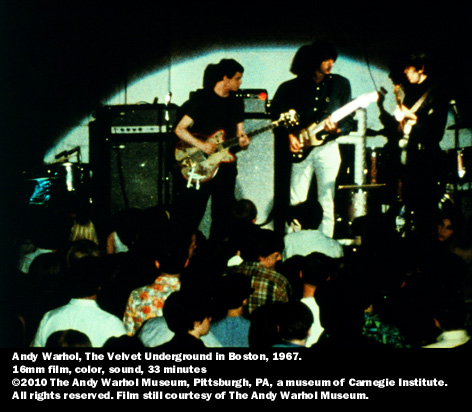
Friday, November 12, 2010
8:00 pm & 10:00 pm (each show includes both films)
Admission: $7.00
Moore College of Art & Design
20th & Race Streets, Philadelphia
(215) 965-4099
Over the years the Secret Cinema has devoted many programs to exploring the 1960s filmmaking activities of Andy Warhol, and of those, the shows that attracted the most interest were, not surprisingly, those that featured the legendary rock band the Velvet Underground. As big fans of the group, we attempted to show every known film they were in (including works from other filmmakers like Jonas Mekas and Ron Nameth).
Thus, we are quite excited to announce Velvet Underground Film Discoveries, an all-new program featuring two Velvet Underground films that are not only newly-restored, but whose existence was completely unknown until recently -- including one film with color, synchronous sound footage of the band playing live in Boston in 1967 (the only other live sync-sound footage of the band known to exist, capturing a long, untitled improvisation, is in The Velvet Underground and Nico, aka A Symphony of Sound, and was included in all of our previous VU screenings).
The second new film discovery was shot and edited not by Andy Warhol or Paul Morrissey, but by Danny Williams, a previously-obscure yet important figure in the early Warhol/Velvets scene. Thought to be a lover of Andy Warhol, Williams helped create the frenetic light shows for Warhol's multi-media experience "the Exploding Plastic Inevitable," which were centered around the Velvet Underground's dynamic performances.
There will be two complete screenings of Velvet Underground Film Discoveries (each screening includes both films), at 8:00 pm and 10:00 pm on Friday, November 12.
Admission is $7.00
As always with Secret Cinema events, the films will be shown using 16mm film (not video) projected on a giant screen.
Complete details of the individual films are as follows. Each screening will include both films.
The Velvet Underground in Boston (1967, sound, color, 33 mins. Dir: Andy Warhol)
This newly unearthed film, which Warhol shot during a concert at the Boston Tea Party, features a variety of filmmaking techniques. Sudden in-and-out zooms, sweeping panning shots, in-camera edits that create single frame images and bursts of light like paparazzi flash bulbs going off mirror the kinesthetic experience of the Exploding Plastic Inevitable, with its strobe lights, whip dancers, colorful slide shows, multi-screen projections, liberal use of amphetamines, and overpowering sound. It is a significant find indeed for fans of the Velvets, being one of only two known films with synchronous sound of the band performing live, and this the only one in color. It's fitting that it was shot at the Boston Tea Party, as the Beantown club became one of the band's favorite, most-played venues, and was where a 16-year-old Jonathan Richman faithfully attended every show and befriended the group. Richman, who would later have his debut recordings produced by John Cale, and later yet record a song about the group, is just possibly seen in the background of this film.
Uptight #3 (1966, 60 mins. Edited by Danny Williams. Photographed by Danny Williams and Barbara Rubin)
During the early days of the Velvet Underground's collaboration with Andy Warhol, they began to experiment with multi-media performances called "Andy Warhol's Uptight," a predecessor to the Exploding Plastic Inevitable shows that were staged later in 1966. Around this time, a series of films were shot, possibly for use as background projections in the shows. This reel, recently discovered and restored, is the only one that was edited into a finished form. It was shot on January 27 & 28, 1966, and chronicles the appearance of the Velvet Underground on David Susskind's television show, long before they signed their record contract or were known to almost anyone. The footage, shot by VU light-show engineer Danny Williams and young experimental filmmaker Barbara Rubin (Christmas on Earth), includes scenes in the television studio and travelling on a bus. Besides the band, the "cast" includes many notable faces from the New York avant garde underground and Warhol's entourage, including Tuli Kupferberg and Ed Sanders of the Fugs, Angus Maclise, Gerard Malanga, Paul Morrissey, and many more.
Danny Williams, who edited the footage shot by himself and Rubin, is just emerging as a rediscovered, previously-unchronicled yet crucial member of the early Warhol/Factory circle. Williams' filmmaking career got an auspicious start with his work as an editor for the Maysles brothers (notably on their 1964 documentary What's Happening! The Beatles in the U.S.). Soon after this he met Andy Warhol and became his boyfriend, moving into Warhol's Manhattan townhouse. He was put to work wiring the flashing, tension-inducing light shows that were a key element of the Velvet Undergound's performances, and also shot experimental reels using Warhol's own Bolex 16mm camera. These recently rediscovered films reveal an expert manipulator of in-camera editing and stroboscopic techniques. At age 27, Williams mysteriously vanished after visiting his family in Massachusetts, his borrowed car found next to the ocean but his body never found. Danny Williams' full story is told in the excellent 2007 documentary A Walk into the Sea: Danny Williams and the Warhol Factory, made by his niece Esther B. Robinson.

Secret Science and Bizarre Beliefs
with Stephen Parr at Moore
Friday, October 29, 2010
8:00 PM
Admission: $7.00
Moore College of Art & Design
20th & Race Streets, Philadelphia
(215) 965-4099

On Friday, October 29, the Secret Cinema at Moore College of Art & Design will kick off the Halloween weekend with an appropriately scary special program. Secret Science and Bizarre Beliefs is a mind-boggling collection of 1950s crackpot science films made by the world's strangest bible film producers, The Moody Institute of Science. Evangelist Erwin "The Million Volt Man" Moon stars in many of these eye-popping classroom films as he inhales helium, runs electricity through his body, makes metal float in space, experiments with electric eels and preaches god's creationist "intelligent design" ideology.
Secret Science and Bizarre Beliefs was compiled by guest programmer Stephen Parr, of San Francisco's Oddball Films, a screening series and stock footage house specializing in the offbeat and outré. Parr, who will be present at the screening to introduce the films and share his research on the Moody Institute, will be in Philadelphia to attend the conference of the Assocation of Moving Image Archivists -- an international gathering of film preservationists and scholars that will descend on our city the following week.
There will be one complete program, starting at 8:00 pm. Admission is $7.00.
Program notes by Stephen Parr:

Erwin Moon got his start In 1938 when he began traveling as a full-time as evangelist demonstrating his "Sermons From Science" under the auspices of The Moody Bible Institute. The next year, with the help of businessmen from San Francisco, a SFS pavilion was built at the 1939 San Francisco World's Fair. For nine months, Moon presented up to eight demonstrations each day, seven days a week. The crowds were so large that demonstrations began hours prior to the scheduled time because early arrivals had filled the auditorium while others waited outside. With more than two tons of equipment, most of it homemade, Moon performed such wonders as frying an egg on a cold stove, lighting a bulb on his bare fingers, and allowing one million volts of electricity to smash through his body. Following the presentation he asked, "Can you believe these miracles are the result of chance or accident? Or are they part of a divine pattern?"
In 1945 The Moody Institute of Science was founded with a two-pronged evangelistic approach incorporating films and live demonstrations. Operating on a shoestring budget, The Moody Institute of Science staff would remodel war surplus material and invent and build the equipment to perform live demonstrations and produce films. More than 6 million people have seen their live demonstrations at the 1939 San Francisco World's Fair, the 1964-65 New York World's Fair, the 1967 Montreal World's Fair and many more fairs and expositions. Their classroom science films were marketed to schools and churches across the United States and their biblical subtext hit the viewer over the head with the proverbial hammer of faith, far predating today's "debate" over "intelligent design". Tonight's program features a sample of some of the quirkiest gems from the Oddball Moody Science collection.
Program highlights include the following short films, all in color unless noted:
Blind as a Bat (1956) - The Moody Science bat truck goes on location to study the secrets of bat navigation. Their in-house mammal abuse experiments show us the science of bat radar. An Oddball screening favorite.
Freedom in Flight (1972) - Man's Law or Natural Law? This unusual aviation film compares the rules of man to the laws of god. Flying a Beechcraft Twin Bonanza plane around the world, Irwin Moon and son guide us through macabre audio of a pilot losing direction in mid air and crashing, a surreally blindfolded gymnast totally losing his sense of direction in an equilibrium experiment, an interview with astronaut John Glenn, and the mysterious story of the Lady Be Good, the WWII bomber lost in the Libyan desert. The inevitable end sums up the film's point of view as Moon honks: "It is only because of these laws, both man made and god given, and because of man's submission to them. that he has been able to make meaningful progress in his search for true freedom, both in the air and in his personal life."
Mystery of Time (1957) - Watch Erwin Moon demonstrate the theory of relativity -- in 15 minutes!
The Electric Eel (1954) - Irwin Moon shows us the electric eel and demonstrates its amazing abilities to shock fish for food and to use "radar" to find them. Don't miss the scene where he illuminates a florescent light tube using his eel then jolts his staff!
Facts of Faith (1956) - Mind-blowing science experiments showcase Moon running thousands of volts of god's creation though his entire body. A stunner!
Snowflakes (1956) - "Snow, given to us by the hand of god" Brilliant Kodachrome snowflake crystals. God made these!
Plus...rare clips from the 1950s B+W kinescope of Science in Action shot at the California Academy of Sciences; includes the Animal of the Week! Also a rare silent clip of the quack science short Sun Healing: The Ultra Violet Way with Life Lite.
About Stephen Parr
About Oddball Films
Press:
Links:
Saturday, October 23, 2010
Ryerss Museum & Library
Last year, Rob Armstrong of the Fairmount Park Historic Resource Archive called upon the Secret Cinema to help in viewing some mysterious 16mm films that were collecting dust on the archive's shelves. The films proved to be quite interesting, and it was decided that this discovery should be shown to the public as soon as possible.
On Saturday, October 23, the Secret Cinema will present Fairmount Park Film Treasures, a program of short films about various aspects of Philadelphia's Fairmount Park system, dating from the 1950s through the 1980s.
The site of this one-time only special event will be the historic Ryerss Museum and Library, in Burholme, the beautiful 1859 mansion that served as the opulent summer retreat of Joseph Waln Ryerss, in Northeast Philadelphia's Fox Chase neighborhood. The museum features period rooms with Victorian furnishings, as well as galleries showcasing art objects collected by Ryerss family members in their travels around the globe. The property was gifted to the city of Philadelphia in 1905, and the museum and library have operated continuously since 1910, under the administration of the Fairmount Park Commission. The museum and surrounding park are convenient to transportation by train, bus and car, with ample free parking.
Doors open at 5:30 pm, allowing time to tour the museum. The screening begins at 7:30 pm. Admission is $7.00.
Highlights of Fairmount Park Film Treasures include:
A Day with the Fairmount Park Mounted Patrol (c. 1960, Dir: George Smith and Charles Bender) - Between 1867 and 1972, the Fairmount Park system was patrolled by the Fairmount Park Guard, an elite park police force separate from the Philadelphia Police Department. This charming amateur production, produced by home movie hobbyists within the Fairmount Park Mounted Unit, humorously depicts a typical day in the life of the Park Guard as they patrol Fairmount Park...and keep the park safe from litterbugs and perverts!
A Japanese House (1955, Produced by Sidney Peterson for the Museum of Modern Art) - The Japanese House was constructed in Japan in 1953, and transported to the Museum of Modern Art (MOMA) in New York City in 1954, to illustrate aspects of Japanese architecture that have influenced modern theories of design. In 1957 it was once again moved, this time to West Fairmount Park, where it stands today. This lyrical film depicts the original installation of the Japanese House (Shofuso), familiar to today's Fairmount Park visitors, in its original MOMA setting by Japanese craftsman. Filmmaker Sidney Peterson was famed in the avant garde world for pioneering works like The Potted Psalm, but this documentary's directorial credit was reserved for "The Department of Architecture and Design" at MOMA.
Journey of a Philadelphia Zoo Sculpture (c. 1962, Ralph Lopatin Productions) - Heinz Warneke's granite sculpture called Cow Elephant and Calf was designed for the Philadelphia Zoo and created in Norway. This archival footage depicts the massive sculpture arriving on a ship, driven on an open truck through Philadelphia's streets, and finally installed by the artist at the Philadelphia Zoo, where it can be seen today.
The Valley Green (1981, Dir: Jeff Farber) - In his 1844 essay "Morning on the Wissahiccon," Edgar Allan Poe wrote: "Now the Wissahiccon is of so remarkable a loveliness that, were it flowing in England, it would be the theme of every bard, and the common topic of every tongue..." This film, produced nearly 30 years ago (and 137 years later) by the Friends of the Wissahickon, offers a tour of the sights and sounds of the Wissahickon Creek, as it winds through Montgomery County and into Philadelphia. Along the way there are discussions of environmental and conservation issues with urban planners, developers and park officials
Wednesday, October 13, 2010
Chemical Heritage Foundation
Throughout this year, the Secret Cinema is teaming up with the Chemical Heritage Foundation to present a science-fiction film series. The occasion is to celebrate the CHF Museum's exhibit "Marvels and Ciphers: A Look Inside the Flask." The exhibit, which opened March 1, is described as being "about reactions -- not chemical reactions -- but ordinary human reactions to chemical phenomena." The accompanying film series will explore depictions of public reaction to scientific debate and discovery, through science-fiction films of the past, both notable and obscure.
The film screenings will take place in the Chemical Heritage Foundation Museum's spacious auditorium. The features will be preceded by rare short science films from the Secret Cinema archive, and will be followed by discussions led by local humanities experts. Free popcorn and refreshments will be provided.
Each screening begins at 6:30 pm, and best of all, admission is free. The CHF Museum will stay open late on screening days (continuously from 10:00 am through showtime), allowing audience members a chance to take in "Marvels and Ciphers" and other exhibits.
Details for the third screening appears below:
Wednesday, October 13 - 6:30 pm
Things to Come's copyright lapsed into the public domain long ago, resulting in a flood of poor quality, multi-generational film and video copies denigrating this classic film. We will be projecting a rare, high-quality original film print.
Followed by a discussion led by Oliver Gaycken, Assistant Professor, English, Temple University.
(Our final program in this series will be on Wednesday, November 10; details to be announced soon).
Saturday, September 11, 2010
Moore College of Art & Design
The Secret Cinema at Moore College of Art & Design will launch its fall season with a new edition of From Philadelphia with Love, our ongoing investigation of industrial, educational and other lost local films. In addition to digging up a fresh batch of these hometown cinematic rarities, we'll feature a very special repeat showing of the remarkable 1967 short film The Jungle -- in recognition of it's addition last year to the prestigious National Film Registry.
When we chanced upon a 16mm print of this title about six years ago, we were fascinated. The Jungle was made not by professionals, but by the members of an actual North Philadelphia street gang, in order to tell their own story unfiltered, in an ultra-gritty documentary style. We then located Harold Haskins, the inspired social worker who instigated the project, and soon put together a special program called City of Brotherly Crime that many will recall. It included a screening of The Jungle, followed by a spirited discussion with Haskins and several of the surviving gang/crew members present.
But we felt The Jungle merited greater recognition, and thus began lobbying to have it added to the National Film Registry. This list of important films, created by an act of Congress, honors 25 films each year to be preserved for future generations. Through allies in the archive community and "orphan films" movement, The Jungle was placed under consideration for the Registry, and the Secret Cinema's print was eventually shown to voting members of the board at the Academy of Motion Pictures Arts & Science screening room. On December 30, 2009, Librarian of Congress James H. Billington announced the names on the newest list of films officially designated as "culturally, historically or aesthetically significant"...and that list included The Jungle (alongside Dog Day Afternoon, Winsor McCay's 1911 animation of Little Nemo In Slumberland, Michael Jackson's "Thriller" video and 21 other choices).
While this news circulated around the world, there has been surprisingly little coverage of this event in Philadelphia. Perhaps our September screening will help change that.
On Saturday, September 11, we'll proudly present From Philadelphia with Love 2010. In addition to our spotlight on The Jungle, the program will also include an all-new selection of other local film shorts from the past.
Project director Harold Haskins, today a recently-retired administrator for the University of Pennsylvania, will be present at our screening to discuss making The Jungle.
There will be one complete show at 8:00 pm. Admission is $7.00.
While most area residents are familiar with Philadelphia films such as Rocky, Trading Places, and the works of M. Night Shayamalan, there is a whole world of locally-made films that has been forgotten -- the "ephemeral" short films that were primarily made by small independent companies for the then-booming non-theatrical market. While most school districts, television stations and traveling salesman have long ago discarded their 16mm film projectors, we at Secret Cinema have not, and are proud to present a look back at these celluloid time capsules that would otherwise not be seen again.
Just a few highlights of From Philadelphia with Love 2010 are:
The Jungle (1967, Dir: Charlie "Brown" Davis, David "Bat" Williams, Jimmy "Country" Robinson) - If The Jungle looks different from other filmed depictions of gang life, there is a reason: Every aspect of its creation, from the script to its photography, editing and acting was manned by the young members of a real Philadelphia street gang. Project director Harold Haskins was an eager young social worker when he approached the 12th & Oxford Street Gang and convinced them they should try to make a movie. The result is a completely inside view of this usually hidden world, with authentic depictions of their unique social codes, activities, fashion and music (the soundtrack includes an early street-corner rap about the joys of cheap wine). Soon the gang was transformed into the 12th & Oxford Film Makers Corporation, presenting their work around the world and committed to positive change in their community. Yet, their cameraman, specially trained for this project, was later slain by a rival gang jealous of their filmmaking success. Hear the incredible story of this one-of-a-kind film, when Harold Haskins recounts its making over four decades ago.
Westside Store (1982) - An interesting contrast to The Jungle is this fun, color film that presents a very different view of supposed gang activity. Though this film shows some incredibly squalid North Philly streetscapes, the multi-racial, mixed-gender members of the fictitious "Seveners gang" (of 7th & Indiana Streets) seem to have been cast right out of a Benetton fashion ad! They pool their efforts and meager assets to start a thrift store and learn about responsibility.
Kid Gloves (1951, WCAU) - We'll show excerpts from this rare kinescope of a long-forgotten live TV show -- in which little kids compete in fierce boxing matches! See "two scrappy 9-year-olds," Irish Joe Gallagher versus Andy Fineman; see all 48 lbs. of 5-year-old Joltin' Joe Sidario...they may be small but they pull no punches! They sometimes cry, however.
Is a Career in the Hotel or Motel Business for You? (1972, Dir: Ralph Lopatin) - This guidance-counseling school film, made for the Department of Defense, introduces kids to an assortment of different jobs possible in the lodging industry. Along the way, it documents a near-complete catalog of long-gone Delaware Valley hotels and motels (plus a precious few that survive today), as well as equally extinct fashions and some hideous corporate design. See the Adelphia Hotel, Ben Franklin Hotel, Penn Center Inn, Marriott (with Kona Kai restaurant), Oasis Motel, Rickshaw Inn, and many more.
I & E Sports Reel clip (1957, Office of Armed Forces Information & Education) - In this short segment from a newsreel made by the military, we'll see highlights of a swimming and diving competition that was held at Fairmount Park's Kelly Pool, long before a hairy-backed Mayor Ed Rendell staged a photo opportunity in its previously clear waters.
...plus more!
Friday, July 9
RUBA Club
On Friday, July 9, The Secret Cinema and Philadelphia Q-Fest will present This Nude World, a rarely-seen 1933 documentary on the then-largely unknown phenomenon of nudism. The film offers a fast-moving travelogue of nudist colonies around the world, from upstate New York to more exotic locales in France and Germany. And while this may seem unexpected in a film from so long ago, This Nude World does show extensive nudity, with revealing scenes of naturalists of both genders and various ages. Before the feature, there will be a bonus short subject, Boy with a Knife.
The screening will take place at the historical RUBA (Russian United Beneficial Association) Club, the former ethnic social club located just behind the Silk City Lounge at 414 Green Street in Northern Liberties.
The RUBA Club is producing a special preliminary program of "nudist-themed" live skit comedy hosted by Christa D'Agostino, which starts at 8:30 pm in the downstairs cabaret. The Secret Cinema screening will follow at 10:00 pm in the rarely-opened upstairs ballroom.
Admission is $10.00 (or $9.00 for Philadelphia Cinema Alliance members). Advance tickets can be purchased online at www.qfest.com, or by phone at 267.765.9800, extension 4. Tickets can also be purchased at the screening.
A complete description of the feature appears below...
This Nude World (1933, Dir: Mike Mindlin)
This Nude World was either directed or reedited from a German import by Mike Mindlin, (who the following year made an exploitation feature, Hitler's Reign of Terror, that was surely the first anti-Nazi film made in the U.S.A.). This Nude World features brisk editing, glib (and campy) narration, and a globe-trekking continuity as it travels from the Catskill Mountains through France and into Germany in search of sun worshippers. In each outpost of nudism, countless naked enthusiasts are shown in all their glory, both male and female (as well as children). Along the way, more traditional travel scenes are shown as well, setting a backdrop for the different cultures where the movement had taken root.
Including an American nudist camp in this film was significant, for while the naturalism movement began in Europe around the turn of the century, the first known permanent nudist camp in the U.S. opened just the year before this film was shot. The controversial periodical The Nudist (later renamed Sunshine & Health) appeared on newstands also in 1933, and the nudist lifestyle continued to spread and flourish. This Nude World, a quickie exploitation film made to cash in on headlines, likely provided inspiration for new recruits to the lifestyle, at least among those who managed to see it in its original limited release.
Wednesday, July 14,
The William Way Center
On Wednesday, July 14, The Secret Cinema and Philadelphia Q-Fest will present the unique talk and screening Screened Out: Gay Images On Film, featuring author and film historian Richard Barrios in person. This special event is based on Barrios' detailed, witty book Screened Out: Playing Gay in Hollywood From Edison to Stonewall, which looks at portrayals of sexuality throughout the classic era of Hollywood cinema.
There will be one complete program, starting at 7:15 pm.
Admission is $10.00 (or $9.00 for Philadelphia Cinema Alliance members). Advance tickets can be purchased online at www.qfest.com, or by phone at 267.765.9800, extension 4. Tickets can also be purchased at the screening.
Rapacious dykes, self-loathing closet cases, hustlers, ambiguous sophisticates, and sadomasochistic rich kids: most of what America thought it knew about gay people it learned at the movies. Using carefully selected, often-hilarious clips from a variety of film genres and categories (including cartoons and comedy shorts), Barrios will show how much gay and lesbian lives have shaped the big screen. Spanning popular American cinema from the 1900s until today, his presentation will provide a rich and entertaining analysis of how Hollywood has used and depicted gays and the mixed signals it has given us. Such iconoclastic images, Barrios argues, send powerful messages about tragedy and obsession, but also about freedom and compassion, even empowerment.
The rare film clips to be shown will include Edward Everett Horton seducing Douglas Fairbanks in Reaching for the Moon, Marlene Dietrich in sailor's suit drag in Seven Sinners, Hans Conreid as the prissy piano instructor of The 5,000 Fingers of Dr. T, plus scenes from Caged, Screaming Mimi, The Boys in the Band, and many more. There will even be appearances by Bugs Bunny, Flip the Frog, and the Three Stooges!
As with all Secret Cinema screenings, the films will be shown using 16mm film (not video) projected onto a giant screen.
About Richard Barrios: After writing Screened Out, Barrios served as programmer and co-host of a month-long film series inspired by his book for the Turner Classic Movies cable network. His acclaimed earlier study, A Song in the Dark: The Birth of the Musical Film, was recently re-published in a much-updated second edition. Barrios has written on film for the New York Times, provided commentary tracks for the DVDs of State Fair, The King and I, South Pacific and Words And Music, appeared in the PBS film Busby Berkeley: Going Through The Roof as well as numerous DVD documentaries, and lectured for the Library of Congress and American Film Institute. He was interviewed for the upcoming documentary feature Activist: The Times of Vito Russo, to be released in 2011. A native of Louisiana, Barrios lives just outside of Philadelphia.
Friday, May 7, 2010
Moore College of Art & Design
On Friday, May 7, the Secret Cinema at Moore College of Art & Design will help shine a light into one of the most secret corners of cinema history, when we host a special presentation and film screening assembled by Noel Lawrence, curator of the J. X. Williams Archive. In Underworld Cinema: The Life and Works of J.X. Williams, Lawrence will give an illustrated talk on the previously lost work of this mysterious and legendary cult-film director. The program will also include several samples of Williams' films, including a screening of his best-known work, Peep Show.
There will be one complete program, starting at 8:00 pm. Admission is $7.00.
Numerous critics have proclaimed J.X. Williams as one of the most influential figures in American underground cinema as well as an innovative cult director for several notorious exploitation films produced in the 1960's and 1970's. Yet, his films are rarely exhibited today, due to legal issues and the poor condition of surviving prints. After a legal settlement in 1981 with several major film studios over copyright disputes, Mr. Williams moved to Zurich, Switzerland and retired from filmmaking. He is infamous for his reclusiveness and distaste for the public eye.
Archivist and film scholar Noel Lawrence has lectured about J.X. Williams at George Eastman House, Pacific Film Archives, The New York Underground Film Festival, as well as museums and universities worldwide. Lawrence has assembled programs for Other Cinema, a long-running experimental film series in San Francisco, and, along with director Craig Baldwin, founded Other Cinema Digital, a home video label for independent and documentary film.
Underworld Cinema: The Life and Works of J.X. Williams, will include the following films:
Peep Show (1965, 46:00) Chicago 1961. The Labor war between the Teamsters and the Seafarers is heating up and Union Cab Local #777 is caught in the frying pan...A passenger enters a taxi. Pulls a gun on himself. A backseat suicide? No. He just wants to talk. Needs a confessor. He's mobbed up. They've got a contract on him. Has one last story to tell. Fasten your seat belts for a wild ride through the mean streets of Chicago, the fleshpots of Hollywood, and the secret corridors of Washington where the real decisions are made. Hold your breath, shut your eyes and get ready for the Peep Show! - From a 1965 press kit for Peep Show, author unknown
Psych-Burn (1968, 3:00) 'Psych-Burn was what musicians call a 'contract-breaker'. ABC had given us some coin to make a few short films for a TV Pilot. Love-In Tonite was to be a psychedelic rock variety show with live performances, skits, and whatnot to cash in on the emerging hippie demographic. I quickly realized the show would be a disaster. So I decided to deliver the suits a farewell kick-in-the-butt called Psych-Burn' The best part was that they presented my film sight unseen at a board meeting about the new Fall Season. I heard some heads rolled over that one." - J.X. Williams (from the forthcoming documentary The Big Footnote)
Satan Claus (1975, 3:00) "In the mid-Seventies, I was working as a projectionist for this crummy movie theatre in downtown LA. The owner owed me six weeks back wages and when I ask him for the money, the scumbag has the gall to inform me that I'm getting laid off Christmas week. If he'd known my reputation for mischief, he might have thought twice about it. On my last day of work, I had to project a Christmas matinee for kids. Before the main feature, I added an unannounced opener to the program called "Satan Claus". I fled the theatre right after my film ended but I heard the owner had to refund the entire box office. Even then, several outraged parents filed a lawsuit against the theatre. Merry Christmas, you cheap bastard!" - J.X. Williams (excerpted from Sonny Jones' unpublished memoir Through a Lens Darkly: Reflections of a 'cine-spook')
The Virgin Sacrifice (excerpt) (1969, 9:00) "Before Virgin, I never put much stock in the idea of a 'cursed' production. Take a film like Incubus. Just cause the director's nephew died, the production company went belly up, and Roman Polanski and Sharon Tate attended the premiere....Those could all just be coincidences. But with Virgin, you could just smell the vapor of evil clouding the set. It didn't help that our chief investor was a ranking member of the Church of Satan. In the end, we tallied three OD's, a maimed-for-life set designer, bankruptcy, and a car bombing (sort of). Even the film itself disappeared. The film lab burnt down and we lost the negative. All I've got left is the nine minute opening to the main feature." - J.X. Williams (from the forthcoming documentary The Big Footnote).
J.X. WILLIAMS LINKS:
Site for forthcoming J.X. Williams documentary
Friday, April 30, 2010
Moore College of Art & Design
On Friday, April 30, the Secret Cinema at Moore College of Art & Design will host a special presentation on the long and colorful history of New York City filmmaking. "Hollywood on the Hudson" will include an illustrated talk by noted film historian Richard Koszarski, based on his book of the same name. Following the talk, Koszarski will introduce a rare screening of the 1950 independently made film noir feature Guilty Bystander, which was shot on location in various atmospheric Gotham locales..
Thomas Edison invented his motion picture system in New Jersey in the 1890s, and within a few years most American filmmakers could be found within a mile or two of the Hudson River. They needed the artistic and entrepreneurial energy that D. W. Griffith realized New York had in abundance. Most of them moved out as land and labor costs skyrocketed, yet many writers, producers, and directors continued to work there, especially if their independent vision was too big for the Hollywood production line. East Coast filmmakers -- Oscar Micheaux, Rudolph Valentino, Ben Hecht, Charles MacArthur, Paul Robeson, Gloria Swanson, Max Fleischer, and others -- quietly created a studio system without back-lots, long-term contracts or seasonal production slates. They substituted "newsreel photography" for Hollywood glamour, targeted niche audiences instead of middle-American families, and pushed the boundaries of motion picture censorship.
Richard Koszarski will bring this rich subject to life, using rare photos and film clips, in a talk based on his landmark study Hollywood On the Hudson: Film and Television in New York from Griffith to Sarnoff (which comes out in paperback just this month).
There will be one complete program, starting at 8:00 pm. Admission is $7.00.
After the presentation, we'll project a rare print of this little-known film noir feature...
Guilty Bystander (1950, Dir: Joseph Lerner)
Richard Koszarski is an associate professor of English and film studies at Rutgers University, and the editor-in-chief of Film History: An International Journal. His books include The Man You Loved to Hate: Erich von Stroheim and Hollywood and An Evening's Entertainment: The Age of the Silent Feature Picture. He is also the secretary of the Fort Lee Film Commission. In 1991, he was awarded the Prix Jean Mitry by the Giornate del cinema Muto "for safeguarding and apprising the cinematographic patrimony."
Saturday, April 17th
*We at the Secret Cinema have not been informed if there will be a minimum suggested donation, but we suspect that if there is one, it will be modest.
Ukrainian League of Philadelphia
The Ukrainian League of Philadelphia, located in the Fairmount neighborhood of Philadelphia, will be the site of a special party called Love It: Celebrating Ten Places We Want You To Love on Saturday, April 17th. The event celebrates a new mural by artists Jeffrey Wright and Thom Lessner, which itself celebrates ten notable and local non-profit organizations that do good things for Philadelphians.
Admission is by donation, and funds will be collected on behalf of your favorite organization of the group of ten. All proceeds will go directly to the organizations, which are: Philadelphia Animal Welfare Society (PAWS,) Indie Hall, Girls Rock Philly, West Philly Tool Library, Mill Creek Farm, Mazzoni Center, Breadboard, Free Library of Philadelphia, Smith Kids' Play Place, and Mighty Writers.
As part of the proceedings, the Secret Cinema will present a special program of "Short Films About Community" -- rare documentaries and educational films culled from the Secret Cinema archives. This program is still being assembled, but a few titles likely to be shown include The Welfare, The Crofters, Helpers in the Community and It Takes Everybody to Build This Land.
Just a few of the highlights of the film program are:
It Takes Everybody to Build This Land (1951) - This unusual educational film tells the story of "our basic interdependence," by showing various workers in industry and agriculture, and weaving their stories together through the voice of "Oscar Brand, American Folksinger." Brand, a nationally prominent performer since the 1940s, hosted radio and TV programs of American folklore (some of which featured a young Bob Dylan).
The Welfare (1966, Dir: Ernest Rose) - A documentary focusing on the different players trying to make the best of the public welfare system, from the overworked bureaucrats to the struggling single mothers attempting to better their troubled lives. The Welfare was shot in semi-verite style in vogue throughout the 1960s (though it does have narration), and gives revealing views of a pre-gentrified San Francisco.
Helpers in the Community (1958) - This educational short was a typical product of Coronet Films, perhaps the most prolific maker of "social guidance" school films during the baby boom era. Esquire magazine publisher David Smart reportedly started Coronet after observing the Nazis' use of propaganda film in the 1930s. This film, which was designed to be shown in grades 1-3, gave children a primer on the contributions to society by various members, from authority figures/protectors like police and firemen, to more ordinary workers like milkmen and switchboard operators.
The Crofters (1944, Dir: Ralph Keene) - Crofting is a unique form of cooperative land tenure which became popular in Scotland in the 19th Century. This film is one of three titles in the Pattern of Britain series, produced for the Ministry of Information in the latter half of the war. Superbly photographed and using complex off-camera narration, it was set in the small crofting township of Achriesgill in Sutherland. The community of crofters is seen working together in the difficult work of peat harvesting and shearing sheep by hand. A review in the Monthly Film Bulletin of the British Film Institute noted that, "The musical accompaniment, though pleasant in itself, is a hindrance to concentration."
Emperor Norton (193?) - John Hix's Strange as it Seems series was a long-running rival to Ripley's Believe it or Not -- in comic strips, a radio program, and at least two different short film series. This episode depicts the legend of John Norton, an eccentric character of old San Francisco who in 1859 declared himself "Emperor of these United States." Beloved in his community as a harmless and good-natured soul, the entire city humored his illusions and treated him with great respect.
There will also be a 4-6 PM open house at event partner Breadboard/Next Fab Studio (3711 Market Street Ground Floor) All are welcome to stop by to take a look at the facilities and talk to their members and staff.
You should RSVP to attend, as follows: Text "LOVE" and the name of your favorite organization to 44144. The organization that receives the most votes wins a very special prize.
Raffles! Info! Movies! Refreshments!
Friday, February 26, 2010
Moore College of Art & Design
Against all odds (and, perhaps, common sense), the Secret Cinema continues to acquire old films, on a fairly regular basis. Films of every category and genre, and from all eras, are constantly being added to the shelves of the Secret Cinema archive -- sometimes faster than we can watch them.
But watch them we eventually do, and many gems invariably turn up, which in turn are collated into future screenings within the various themes we've explored over our eighteen-year history. However, many great finds that we are eager to share fit into no obvious programming concept. When enough of these pile up, we do a "potpourri" program (though not very frequently; the last one was nearly two years ago).
On Friday, February 26, The Secret Cinema at Moore College of Art and Design will present Curator's Choice 2010: Unseen Corners of the Secret Cinema Archives. This hand-picked program of nearly-lost treasures from the deepest depths of the Secret Cinema film vaults will include just that -- films never shown before by us, and for that matter, probably 100% guaranteed to have never been seen before by any of the audience.
There will be one complete program, starting at 8:00 pm. Admission is $7.00.
The program is still being assembled, but just a few highlights are:
The Sound and the Story (1956, Jam Handy Productions) - This industrial film was made for RCA Victor, a company that began as the Victor Talking Machine Company of Camden, New Jersey. It shows in fascinating detail the complete process of making vinyl phonograph records, from the recording, through the mastering, pressing and packaging of the disks.
What is Modern Art? (1948, William Reithof Productions) - This low-budget yet effective Kodachrome production, shot at the Museum of Modern Art, aims to answer an age-old question, by showing a provocative discussion between an intellectual artist and a pretty young photographer who is baffled by the works of Picasso and Dalí. Screen actors Vladimir Sokoloff and Neva Patterson star.
Wendell Wilkie campaign films (1940, Produced by the Republican National Committee) - These rare 16mm prints, struck during Wilkie's 1940 presidential run against F.D.R., were likely originally projected in meeting halls throughout the land, in a pre-television era. By modern standards, Wilkie was a relatively progressive Republican who ultimately supported many of Roosevelt's policies, but that's hardly clear from the strident tone of some of these films -- the non-stop ranting against the New Deal is remarkably similar to today's conservative themes.
Hollywood Screen Test (1937, Dir: S. Sylvan Simon, Universal) - This theatrical two-reeler gave movie audiences a look behind-the-scenes at the star-making process during Hollywood's golden age. A nervous young ingenue is guided through the filming of her first screen test by friendly technicians and handsome star Cesar Romero (famous to later audiences as The Joker on television's Batman). Director Simon (who portrays himself) had spent years filming actual screen tests at Warner Brothers before moving to shorts and feature films at Universal.
Plus Corvair in Action, The Mechanics of Love, Pasatiempos Españoles, and much, much more!
The Secret Cinema's private archive contains literally thousands of reels of 16mm (and 35mm, and 8mm) features, theatrical shorts, cartoons, newsreels, television shows, educational films, travel films, industrial films, and home movies. Together, they add up to well over one million feet of often rare celluloid, with several prints thought to be the only extant copies in the world.
Some popular Secret Cinema programs get repeated over the years, to expose them to new audiences; other program ideas have been reused but with new/different films. Curator's Choice 2010 falls in the latter category. This is only the fourth outing for the Curator's Choice concept. We have never shown any of these actual films ever before.
Saturday, January 23
Moore College of Art & Design
On Saturday, January 23, The Secret Cinema at Moore College of Art and Design will
present A Medical Film Cabinet of Curiosities.
Medical films comprised one of the earliest film genres, but the majority of these films are unseen and unknown today. A Medical Film Cabinet of Curiosities will present various categories of medical films: actualities and documentations of surgical procedures, training films for health professionals, and hygiene tutorials for children and teenagers. These short films date from the 1920s through the 1980s, and display a wide range of filmmaking approaches, from quaintly dated or sweetly entertaining, to in-your-face explicitness and hide-your-eyes gore.
There will be one complete screening at 8:00 pm. Admission is $7.00.
This special screening will be the closing event of the four-day Medical Film Symposium, which will present screenings, presentations and papers by scholars and archivists from across the nation and globe, in venues throughout Philadelphia. The Moore screening is open to the general public as well as to symposium registrants. Information on the rest of the symposium can be found at: www.medicalfilmsymposium.com
A Medical Film Cabinet of Curiosities is co-programmed by Jay Schwartz of the Secret Cinema and Skip Elsheimer of North Carolina's A/V Geeks, who will be present at the screening. This will be Skip's first return visit since he presented his popular program S is for Sissy! at Moore, just over one year ago.
The program will include:
The Feet (1920s) - This reel, from the earliest era of 16mm educational films, aims to explain the physiology of feet and how to best take care of them. It demonstrates through x-rays how the well-dressed young flapper of the time often did not choose the best footwear. Made with the cooperation of M.I.T. and the American Posture League.
Cryoextraction (195?) - A sales and demonstration film showing off the Thomas Cryopter -- a device which resembles a power router, which is then shown in use for eye surgery.
Ro-Revus Talks About Worms (1971) - An amazing film about intestinal parasites made by the University of South Carolina, told by a frog puppet. This wacky character had a TV show on South Carolina Public Television in the early 1970s that supposedly became a cult hit with high school students.
Colds And Flu (1975) - Kids dressed in armor battle each other to seize control of a giant-mouthed castle.
Cell Wars (1987) - A lively introduction to immunology that shows kids how the body's cells defend themselves against invading germs. Crazy-costumed actors and dazzling video effects demonstrate what happens after germs enter the body through a skinned knee.
Achieving Sexual Maturity (1973) - At a time when Deep Throat played in neighborhood cinemas alongside traditional Hollywood fare, educators struggled as to how to best meet increasingly rebellious high school and college students on their own terms. It was during this possibly unique moment in pop culture that Achieving Sexual Maturity was successfully sold to school districts around the country. Its use of graphic live photography of nude males and females to explain and illustrate sexual anatomy from conception to adulthood is today quite surprising.
Non-Syphilitic Venereal Disease (195?) - This short film made for the medical community -- in still-stunning Kodachrome color -- details a variety of exotic venereal diseases, in close-up after horrifying close-up. This mainstay of Secret Cinema Halloween screenings is guaranteed to have audiences screaming in terror.
Just Awful (1972) - This film was made to help eradicate any fears children may have about visiting the school nurse.
Friday, November 20
Moore College of Art & Design
Puppetry is an age-old artform that has charmed and delighted both children and adults for countless generations. And, puppets have been a source of inspiration to filmmakers almost since the movies began.
So why do puppets become so...creepy, when filmed and projected on a giant screen?
On Friday, November 20, the Secret Cinema will attempt to answer that question -- or at least show our favorite examples of this peculiar genre of cinema -- when we present Creepy Puppet Films. Using assorted educational and entertainment shorts from past decades, we'll show films using hand puppets, marionettes, and stop-motion animated figures and claymation. Some were made by great masters of special effects like George Pal and Ray Harryhausen. Others were made by nameless hacks for forgotten educational film mills. Yet, they are all creepy.
Many Secret Cinema fans will recall our popular Creepy Christmas Films program of some years back. This will be similar, except that these are all puppet films, and minus the Yuletide theme (well, maybe we'll throw one of those in).
There will be one complete screening starting at 8:00 pm. Admission is $7.00
A few highlights of Creepy Puppet Films include:
Hansel and Gretel (1951, Dir: Ray Harryhausen) - This early work from stop-motion master Ray Harryhausen was from a series of animated fairy tale shorts in which he explored the techniques he would soon perfect in features like Jason and the Argonauts. Harryhausen began his experimentation as a teenager, shortly after being entranced by Willis O'Brien's pioneering special effects in King Kong.
Phillips Cavalcade (1942, Dir: George Pal) - George Pal's "Puppetoon" shorts showed a brilliant imagination and flawless stop-motion technique. This example also showed Pal's business savvy -- early on he made a series of sponsored films that were shown in theaters to promote Phillips shortwave radios, including this entertaining example.
Making Change (1970s, Dir: Unknown) - From the sublime to the hackneyed-beyond-belief: This short was made during the peak sales years of the 16mm educational film industry. It employs the crudest of stick puppets to teach money math skills to grade school kids.
Gumby: Hot Rod Granny (1957, Dir: Art Clokey) - Claymation superstar Gumby encounters a speed crazed senior citizen racing an animated plastic model kit roadster around the town.
Pirro and the Scale (1948, Dir: Alvin J. Gordon) - Marionette clown Pirro imparts a valuable lesson on weight and measurement. A 1951 guide book for teachers thought that "Pat Patterson, who created and manipulates the puppet, provides the running commentary, which is warm and pleasant at its best, at worst too nervously repetitive." That's part right.
...and much, much more!
Saturday, October 31 (Halloween)
The Trocadero
You may have read in the Philadelphia City Paper that this Saturday, October 31 -- Halloween -- the Secret Cinema will be bringing its 16mm projection equipment to the Trocadero nightclub (for the first time in many years). The occasion is a special Halloween concert with the Dead Milkmen and friends, and we will be showing assorted "scary" short films before and between the three bands that are playing that night. The Dead Milkmen have reunited for some scattered concerts around the country after a long time away. For about ten years they were Philadelphia's most successful and enduring band on the national alt-rock/punk rock/college radio/underground music circuit.
This message is not meant to convince you to attend this event. If you are mainly interested in the films, the ticket price might seem kind of high ($18.50 advance, $21 day of show). If you are a fan of the Dead Milkmen, you likely already have tickets (and if not, you might want to hurry and buy some!).
Instead, we send this message just to brag and say how happy we are to be supporting our friends...and to reminisce a little.
In the "pre-history" of the Secret Cinema, there were a handful of events that were trial runs for what developed into what SC ultimately became. Probably the most prototypical was a screening at Penn's Pi Lam fraternity house, around 1986-7, of the great "Swinging London" feature Smashing Time, plus assorted shorts and cartoons. The event was booked by future member of the Wishniaks Jim Moran, and timed to coincide with their weekly "happy hour" (yes, there was a time in America when college fraternities could promote regular free booze nights!). Most of the attendees passing through the doors were only momentarily distracted/confused by the movies showing near the entrance, which they quickly passed on their way to the open kegs in the basement. But sitting and enjoying the movies were a small handful of people, including, yep. the Dead Milkmen.
This led, some time later, to another experiment in 16mm film showing. The band was booked at the (now long-gone) Chestnut Cabaret, and asked me to bring my projector and show some of the same short films before their show...this time in front of hundreds of fans. The boisterous audience enjoyed the old cereal commercials, but asking them to get into films of 1940s swing music was probably a miscalculation on my part (though in fact, this very same reel was shown with good results this week at Ursinus College).
Our next project together was better received. Joe and Dave from the group had begun to play live in small clubs as "Ornamental Wigwam," a folky duo that actually pre-dated the Dead Milkmen. They felt that this act, which performed seated, needed another dimension to make it entertaining, and they wanted films projected on themselves. They wore white lab coats to make it easier to see the films, and we hung a screen as a background. I have fond memories of the three of us splicing random lengths of educational and industrial films in my kitchen for the set-long reel we pieced together (although ultimately, the parts that worked best with the music were longer uncut films about a river and the solar system). My table still has a mark where someone (I think me) spilled splicing cement on it that night. It was probably one of the last times I used cement (rather than tape splices), and I think it was the only time Dave Blood was in my home. I've come to like that the table still has this scar.
My one regret about Saturday's show is that Milkmen bassist Dave Blood will not be present. As many of you know, he took his own life in 2004, several years after the band originally broke up.
That said, we're lucky to have them back (and Dandrew Stevens does a great job filling in on bass). Sure, the Phillies are playing and the Spectrum is closing, but you could have no more fun this Halloween than to see the Dead Milkmen at the Troc.
Hope to see you there...
Jay Schwartz
Here is the tentative schedule of activities for Saturday's concert:
8:00 pm - doors open
Tuesday, October 27
Musser Lecture Hall, Pfahler Hall
On Tuesday, October 27, the Secret Cinema will travel for the first time to Ursinus College to present "The History of the Film Jukebox." This multi-media presentation will include an illustrated talk by the Secret Cinema's Jay Schwartz on the early pop music clips known as "Soundies" and "Scopitones," as well as screenings of several examples of both.
As at all Secret Cinema events, the films will be projected using 16mm film on a giant screen (not video).
The presentation begins at 7:00 pm, and is open to the public. Admission is free.
Ursinus College is in Collegeville, Pa., about 30 miles Northwest of Center City Philadelphia, in Montgomery County.
About Soundies and Scopitones
What they were seeing were Soundies -- the 16mm film software that fed an exhibition network of thousands of film jukeboxes, conveniently placed in bars, restaurants and bus terminals. Patrons of these gathering spots would insert a dime into a large cabinet resembling an overgrown record jukebox, but with a glass rear-projection screen. Shortly after, a 16mm projection mechanism inside would rumble to life, and the lucky clientele would see what was probably their first moving image of performers they had previously only heard on the radio.
Some of these film clips were straightforward recordings of a visual and audio music performance, showing a band in a nightclub-like setting. Others were much more complex and imaginative, using multiple scenes, fantasy story lines, comic relief and sophisticated optical effects -- in other words, exactly like what would later be shown on MTV, except shot in black and white and featuring swing and pop music of the World War II era.
In the early and mid 1960s, the film jukebox concept was revived. A French device called Scopitone entertained viewers in both Europe and America. The Scopitone film clips, featuring performers both famous and obscure, are considered (like Soundies) one of the more important of the many predecessors to the modern rock video. Today they are quite scarce, and difficult to see in their original form.
The "History of the Film Jukebox" talk will be given by Secret Cinema director Jay Schwartz, who has now presented similar programs at Moore College of Art & Design in Philadelphia, the Yerba Buena Center for the Arts in San Francisco, Columbia University in New York, the Festival Internacional de Cine de Gijon (Spain), the Benicassim music festival (also Spain), and the "Gimme Shelter" rock film festival in Athens, Greece.
The film screening will include rare jukebox clips with performances by Buddy Rogers, Yvonne De Carlo, Francis Faye, Paul Anka, Dion, Nancy Sinatra, Procul Harum and many more.
Friday, October 2
Philadelphia Society of Free Letts (Latvian Society)
The Secret Cinema is excited to participate in, for the first time, the 215 Festival, Philadelphia's weekend-long celebration of the written and spoken word. We'll be presenting a special program called Bookworms' Revenge: Various Short Films on the themes of Reading, Writing, and General Nerdy Bookness.
It happens on Friday, October 2 at the multi-leveled Philadelphia Society of Free Letts (Latvian Society), at 7th and Spring Garden Streets. The films will be screened in the venerable hall's roomy upstairs ballroom.
Throughout the event, the Latvian hall's funky (and reasonably priced!) downstairs bar will be open and serving refreshments. Immediately after the films, stick around for the built-in after-party, featuring music by D.J. Joey Sweeney.
Best of all, admission is free.
The bar will open at 8:00 pm, and the film screening will start at 9:00 pm.
Secret Cinema fans will recall the Latvian Society as the site of our 2007 screening/author event Riot on Sunset Strip.
The 215 Festival is a celebration of the written and spoken word, and has been held in Philadelphia since 2001. This annual festival focuses on Philadelphia-based writers, performers, and word connoisseurs, along with special guests from outside our fair city. The 2009 Festival will be held October 2nd through 4th, with performances, parties, and revelry scattered throughout Philadelphia.
Details of other festival events can be found here
Just a few highlights of Bookworms' Revenge: Various Short Films on the themes of Reading, Writing, and General Nerdy Bookness are:
Kurt Vonnegut, Jr.: A Self Portrait (1975, Dir: Harold Mantell) - The late and great author is captured in his own words, in his home and walking around New York City.
Revenge of the Nerd (1983, Dir: Ken Kwapis) - Not to be confused with that Anthony Edwards feature film you're thinking of (that was made one year later, and with plural Nerds), this charming short film was initially seen on CBS' "Afternoon Playhouse" series. It follows a similar (if more concise) plot arc, however, with the titular hero using his superior skills with early microcomputers and other high-tech devices in an attempt to gain the respect of his intellectually inferior classmates.
How to Use the Reader's Guide to Periodical Literature (1966) - Surfy guitar music and a spy movie plot enliven what might otherwise be a rather dry instructional film, about...well, you know exactly what it's about.
Grammar Rock (1973-4) - We'll unspool several episodes of this groundbreaking and much-loved short educational cartoon series, originally aired as add-on bits to regularly-scheduled Saturday morning television programs. Most feature the wonderful songwriting of Bob Dorough, and a post-psychdelic animation style that only could have been created during the early 1970s. If there's time, we may throw in Multiplication Rock as well.
...and much, much more!
Friday, September 25
Moore College of Art & Design
On Friday, September 25, The Secret Cinema at Moore College of Art and Design will present Jazz & Swing Rarities, a program of short films from Hollywood's golden age showcasing musicians such as Louis Armstrong, Cab Calloway, Stan Kenton, Eubie Blake, Rodgers & Hart, and many others.
Jazz, America's own music, came of age roughly at the same time as the motion picture, and they have shared a long and fruitful history together. Many of the first experiments in synchronizing sound with movies were used to capture performances of early jazz musicians, and the first talking feature film starred Al Jolson as The Jazz Singer.
Jazz & Swing Rarities will include a variety of vintage short subject genres: straight performance films, musical shorts with dramatic and comedic plots, a cartoon with both animated and live-action jazz, and "Soundies" films produced for use in the Mills Panoram film jukebox of the early 1940s. The Secret Cinema has presented other programs in the past that have included these types of films, but most of the films to be included in Jazz & Swing Rarities will be making their Secret Cinema debut.
There will be one complete screening at 8:00 pm. Admission is $7.00.
Just a few highlights Jazz & Swing Rarities are:
He Was Her Man (1929, Dir: Dudley Murphy) - The traditional 1870 murder ballad "Frankie & Johnny" has been sung by countless performers in the last 139 years (including Lena Horne, Johnny Cash and Elvis Presley). It is also the basis for this early melodramatic musical short, easily the rarest offering of Jazz & Swing Rarities. Director Dudley Murphy had a singular career, working both in the avant garde (he collaborated, with Fernand Léger, Man Ray and Ezra Pound on the experimental classic Ballet Mécanique) and the Hollywood mainstream, where he excelled in films focusing on black characters (such as Paul Robeson's The Emperor Jones or the Duke Ellington short Black & Tan Fantasy). This early project for Paramount shows some of the techniques he would use in all these projects. At least two film history books (including the recent biography Dudley Murphy, Hollywood Wild Card) state that He Was Her Man is a lost film, but the Secret Cinema archive has recently acquired a very scarce 16mm print.
Makers of Melody (1929, Dir: S. Jay Kaufman) - This enjoyably corny piece of fluff features Great American Songbook composing superstars Richard Rodgers and Lorenz Hart playing themselves, being interviewed by a pretty reporter about how they wrote some of their classic songs. Their anecdotes are interrupted by performances of "Manhattan," "The Girlfriend" and "The Blue Room." Filmed against some very false-looking backgrounds at Paramount's Astoria Studios in Queens, New York.
Pie Pie Blackbird (1932, Dir: Roy Mack) - This surreal one-reeler packs a lot of crazy visuals and hot music into it's short length, starring ragtime innovator Eubie Blake and his Band, striking actress/singer Nina Mae McKinney, and the jaw-dropping tap dancing of young Fayard and Harold Nicholas. Made by Warner Brothers' Vitaphone division, whose short films captured countless performers otherwise lost to history. Many of the more interesting Vitaphone shorts were directed by Roy Mack, whose career deserves further exploration.
Minnie the Moocher (1932, Dir: Dave Fleischer) - Contemporary music was used to enliven every product of the film industry, and animated cartoons were no exception. Amongst the producers of cartoons, Max Fleischer was surely the most astute at following trends in American music. His various cartoon series are filled with hot jazz scores, and some series were based on music itself, such as the sing-along bouncing ball shorts that he invented (and patented). Besides using great music, Fleischer recorded and photographed early performances of several jazz legends, including Louis Armstrong, Rudy Vallee, the Boswell Sisters and Don Redman. This incredible entry in the Betty Boop series includes a filmed performance of jazz wild man Cab Calloway, as well as an animated walrus that was rotoscoped to copy Calloway's filmed movements.
Let's Make Rhythm (1947, Dir: Wallace Grissell) - The originator of the phrase "Wall of Sound," was not Phil Spector, but innovative West Coast band leader Stan Kenton, who stars in this mini-musical comedy with his orchestra and vocalists June Christy and the Pastels. Kenton and combo perform several samples of what he would label "progressive jazz," including "Down in Chihuahua," "Concerto to End all Concertos" and "Tampico." The romantic subplot is based on a returning sailor's infatuation with the attractive voice on the other end of a switchboard jukebox line, highlighting a long-extinct technology sure to surprise (or perhaps puzzle) modern viewers.
...and much much more!
Friday, September 11, 2009
Eastern State Penitentiary
Now entering our second decade of collaboration with popular tourist destination Eastern State Penitentiary, we will present our first screening there of an outright comedy film on Friday, September 11. That's when we'll unreel Pardon Us, the prison-themed (naturally!) first feature-length film to star beloved comedy duo Laurel & Hardy. One of the pair's best effort's, this will be a one time opportunity to see this classic film as never before -- inside a genuine prison, with real steel bars in the screening room echoing the scenes on screen in a unique twist on "3-D" movies.
Pardon Us will be shown with a prison-themed short film to be announced. There will be one complete show, starting at 8:00 pm. Doors open at 7:00 pm, allowing the audience time to take a look at many new and existing museum exhibits at ESP. Admission is $8.00.
As always at our annual film screening at ESP, seating is limited, so early arrival is suggested (there's plenty to look at while you're there!).
Pardon Us (1931, Dir: James Parrott)
When production started on Pardon Us, Laurel & Hardy and their employer Hal Roach Studios were arguably at the peak of their respective powers. The comedy team had effortlessly survived, and even thrived during the recent transition from silent to sound filmmaking. They had just made a series of classic shorts, and would make their Academy Award-winning film The Music Box in less than a year. Roach was the most savvy producer of comedy shorts in the business, not only with Laurel & Hardy, but with Our Gang and other series starring less-remembered but still brilliant comedy talents, like Charlie Chase, Thelma Todd and Max Davidson.
Pardon Us was originally going to be another two-reel short, but Roach convinced his distributor MGM to allow re-use of large sets left over from their prison drama The Big House. He was thus able to afford to make the first feature film with his biggest stars, filling it out with memorable scenes supported by familiar comedy talents from the Roach stock company, like James Finlayson, Walter Long, Charlie Hall and Tiny Sandford.
Eastern State Penitentiary, built in the 1820s, is a world famous historic landmark, which influenced the design of hundreds of other prisons. Closed as a working prison since 1971, the decaying structure, which once housed Al Capone and Willie Sutton, has become a popular tourist attraction and museum over the last decade. The film will be projected right inside the main prison building in a hallway just outside Capone's cell, surrounded by iron bars and ghosts of convicts past.
Friday, May 29
Moore College of Art & Design
On Friday, May 29, The Secret Cinema at Moore College of Art and Design will present Bicycle Shorts, a program of vintage short films all about the bicycle. The screening will happen in tandem with the opening kickoff of the Galleries at Moore's new exhibition series "Bicycle: people + ideas in motion," celebrating various facets of local bike culture.
The Bicycle Shorts film program will include rare retro educational films on bike safety, as well as bicycle-focused documentary, drama, and even a musical short.
There will be one complete screening at 8:00 pm. Admission is $7.00.
There will be also be a gallery reception from 6:00 to 8:00 pm, open to all.
Just a few highlights are:
The Day the Bicycles Disappeared (1967) - By way of intriguing special effects, a town's population of bicycles ride off by themselves and announce they are on strike, until they can be convinced that local kids will adopt safer riding practices.
We Decide: Trade-offs (1978) - In what will likely prove to be a prescient educational film, a class must analyze and then vote on how to solve a serious problem in their school: a severe shortage of bike rack spaces!
I'm No Fool with a Bicycle (1955) - A colorful, animated history of self-propelled locomotion precedes a comical safety lesson, hosted by beloved Disney character Jiminy Cricket (voiced by Cliff "Ukelele Ike" Edwards).
The Bike (1969) - When two young boys steal a neighbor's fancy new banana-seated bike for a joyride, it's just the beginning of their problems. A suprisingly compelling mini-drama, with then-unusual handheld camerawork from future Oscar-winning cinematographer Caleb Deschanel, a Philadelphia native and father of actress/singer Zooey Deschanel.
Bicycle Built for Two (1941) - A "Soundies" musical clip originally shown on coin-operated film jukeboxes, this features the Eton Boys belting out the title song (a.k.a. "Daisy Bell") in a barbershop quartet style that was already quite retro in 1941.
...plus much more.
Friday, April 24
Moore College of Art & Design
On Friday, April 24, The Secret Cinema at Moore College of Art and Design will present a unique exploration into the style and meaning of 1970s design, called The Great Funk. The Seventies, though much-maligned, is the decade that will not go away, constantly referenced in movies (Boogie Nights, Almost Famous), television (That 70s Show), radio (oldies formats embracing disco), and advertising ("Survive the '70s?" Geico campaign). What forces have kept these loud, turbulent, and mismatched years in our consciousness?
The Great Funk will include the showing of Seventies short films and clips from the Secret Cinema archives, plus an illustrated talk and discussion with acclaimed pop culture critic Thomas Hine. Hine, whose first book Populuxe both defined a style and coined a new word, has recently written The Great Funk: Styles of the Shaggy, Sexy, Shameless 1970s, which just this month was released in paperback (yes, we borrowed the title).
There will be one complete show at 8:00 pm. Admission is $7.00.
The look of the Seventies will be revealed in rare films, including industrial propaganda, school films, television and feature clips, commercials, and trailers, all chosen for maximum visual impact.
Thomas Hine will present an introductory, illustrated talk, offer commentary between films, and answer questions from the audience.
We've dipped into the Seventies in many past Secret Cinema presentations, but this will surely be our most thorough, illuminating and entertaining look back at the double-knit decade -- a confused, confusing era that preached being "natural," yet often practiced a stylistic excess that seems more surreal with each passing year.
Thomas Hine writes on design, culture, and history. He is the author of five books, including Populuxe, the book which propelled his reputation as one of the world's most important and insightful analysts of pop culture. That title, coined by Hine to describe the style and enthusiasms of post-World War II America, has entered the American idiom and is now included in the American Heritage and Random House dictionaries. From 1973 until 1996, Hine was the architecture and design critic for The Philadelphia Inquirer, where he wrote a weekly column called "Surroundings." He has worked as an adviser for museums across the country and contributes frequently to magazines, including The Atlantic, Martha Stewart Living, Architectural Record, and others. He lives in Philadelphia.
This month The Boston Globe commissioned Hine to write an article on current echoes of 1970s style, viewable here.
FARRAR, STRAUS AND GIROUX WEBSITE
Thursday, April 16
Lecture Hall
On Thursday, April 16, the Secret Cinema will team up with Temple University Libraries' Urban Archives to present Films from the Urban Archives: Secrets from Philadelphia's Past. This event will be the first ever public screening of films held in this unique collection, comprised of the former news and public affairs film libraries of two Philadelphia television stations.
The Secret Cinema long ago added to its mission the collecting, documenting and exposing of lesser-known and rarely seen films made in the Philadelphia region. Thus, we are thrilled to help explore treasures from what is surely the city's largest film archive. The Television Audiovisual Collections of the Urban Archives consists of approximately 14,000 cans of 16mm film from WPVI (formerly WFIL) and KYW. They include both aired and unused news footage, original documentaries and other special programming. The footage dates back to 1947 (when WFIL-TV first went on the air) and continues through the early 1980s.
Our screening will take place in the Lecture Hall of Paley Library, in the center of Temple University's main campus. We will show two different blocks of film, each lasting approximately 90 minutes. The start times for each block is 4:00 pm and 6:00 pm.
Admission is free (photo ID is required to enter the library building).
The films to be shown are still being selected. In a hectic but fun collaboration, the staffs of Secret Cinema and the Urban Archives are pulling and checking items of potential interest that span the eras and subjects of the collection. Here are a few highlights that will be included:
Assignment: 1747 Randolph Street (1966) - A hard-hitting documentary from an ongoing series produced by WFIL-TV, this episode focuses on North Philadelphia's Ludlow neighborhood -- then awash with gangs, graffiti, abandoned homes, and violent crime. While many of these problems may now seem eternal, this close-up view of urban decay not yet taken for granted remains powerful and shocking.
The Electric Factory, news footage (1968?) - This reel of silent, outtake footage from a news report provides an invaluable look inside Philadelphia's legendary psychedelic rock ballroom, then located in a former tire warehouse at 22nd & Arch Streets. On display are lightshows, see-saws and sliding boards, clothing and face paint vendors, and coffin-like "body racks" for patrons in need of relaxation -- the one detail of the old club that was faithfully recreated in the much larger concert venue of the same name that opened in the 1990s. The original Electric Factory, which hosted concerts by Jimi Hendrix, The Mothers of Invention, The Who, and many other legends, closed forever in 1970.
Connie Mack Stadium closing, news footage (1970) - Another reel of outtake footage, showing the final game, fans removing seats, the man who stole home plate, and the final fan-made wreckage of the once proud baseball stadium in the calm of the following day.
The Spirit of Philadelphia: The Unending Renaissance (1966) - "By the end of the second World War, Philadelphia was a sick city." This documentary takes a hopeful look towards a better future, with looks at the redevelopment of Society Hill, Market East and Penn's Landing, archival scenes of the building of the Ben Franklin Parkway, and interviews with visionary city planner Ed Bacon.
Broad Street Station closing news footage (1952) - A nostalgic and sad view of the last train to leave Frank Furness' grand railroad station, with music played on board by the Philadelphia Orchestra.
Plus much, much more.
Saturday, March 14
Delaware County Institute of Science
The Secret Cinema will bring its roving film projectors to Media, Pennsylvania on Saturday, March 14, to present a program of early science films. The screening will take place in the historic 1867 lecture hall of the Delaware County Institute of Science, in downtown Media. The event coincides with Media's monthly "2nd Saturday" arts stroll -- as well as with Pi Day, an international celebration of math and science that happens annually on March 14 (or 3.14, an approximation of the mathematical constant that expresses the ratio of the circumference of a circle to its diameter).
The short film program (running about 45 minutes) will feature an assortment of vintage "popular science" shorts, all shown from rare original 16mm prints. The films range from the silent era through the 1950s, and were made by early film companies such as Pathe, Urban-Kineto and Eastman Classroom films. Titles include The Mysteries of Science (1910s), Food and Growth (1930), and Our World in Review: Astronomy (1932), which provides an early look at the Mount Wilson Observatory.
The screening begins at 7:30 pm. Admission is free.
This event, and Media 2nd Saturdays, are sponsored by the Media Arts Council.
On the 2nd Saturday of every month, over 30 businesses on and around State Street in Media stay open late as part of a free arts event. From 6:00 to 9:00 pm, shops, galleries and cafes host local musicians or display the work of local artists. Visitors can stroll the friendly streets of Media and use M.A.C.'s map to find music, art and participating shops.
The Delaware County Institute of Science was formed on September 21, 1833 as an association of five individuals interested in sciences and natural history. Today, its historic 1867 headquarters in Media's Veterans Square houses a museum, library, monthly lectures and other special events.
Friday, February 27
Moore College of Art & Design
On Friday, February 27, The Secret Cinema will present Scopitone Party, a unique collection of music films from the early and mid 1960s. They were originally made for a French film jukebox called Scopitone, which entertained patrons in bars, cafes and bus stations in both Europe and America. The film clips, which feature performers both famous and obscure -- and are considered to be among the more important of the many predecessors to the modern rock video -- are today quite scarce, and difficult to see in their original form.
Shown will be a large assortment of the precious prints (most of which were discovered by a film collector, in pristine, never-used condition, in the long-warehoused inventory of a retired Virginia jukebox dealer). Adding interest to the Scopitone Party program will be a special talk about the history of film jukeboxes (which date back to the 1940s), illustrated with color slides of rare photos and original advertising materials.
There will be one complete show, starting at 8:00 pm. Admission is $7.00.
The talk will be given by Secret Cinema director Jay Schwartz, who has now presented the Scopitone Party program at the Yerba Buena Center for the Arts in San Francisco, Columbia University in New York, the Festival Internacional de Cine de Gijon (Spain), the Benicassim music festival (also Spain), and a rock film festival in Athens, Greece.
Scopitone Party will include performances by such well-known names as Dion, Nancy Sinatra, Paul Anka and Procul Harum. Also on view will be many French pop performers, including currently in retro-vogue names like Francoise Hardy, Sylvie Vartan, Michel Polnareff, Juliette Gréco, rockabilly-belting Johnny Hallyday, and doomed chanteuse Dalida. And then there are mystifying, bizarre clips by the British Elvis imitator Vince Taylor, a quartet of singing Jerry Lewis-types named Les Brutos, and even a few songs by performers whose names were lost to history.
Friday, January 30
Moore College of Art & Design
On Friday, January 30, The Secret Cinema at Moore College of Art and Design will revisit an unusual program concept not tapped since we last used it in 2001: Early Educational: Classroom Films of the Silent Era. These ultra-rare reels, most of which haven't been seen in seven or eight decades, are still potent in their powers to entertain, amuse, and yes, educate modern-day viewers about a variety of subjects. The various short films, most of which were made in the 1920s, include now ancient travels to distant lands, historical dramatizations, looks at industry and nature studies.
And, just to keep things interesting, our 2009 edition of Early Educational will include no duplication of titles from our 2001 show. Most of the films have never been shown by Secret Cinema -- or anyone else, since the 1920s.
The prints to be projected, many of which are believed to be exclusive to the Secret Cinema archive, are mostly original prints (rather than restored or duplicated prints) dating to the time of the production, from pioneering companies such as Kodascope Libraries, Eastman Teaching Films, and Urban-Kineto. They are mostly in excellent condition, and many were made on tinted stock. The films will be projected at the correct speeds, with a live musical accompaniment from Don Kinnier.
There will be one complete show, starting at 8:00 pm. Admission is $7.00.
Don Kinnier has played music for several previous Secret Cinema presentations of silent movies. Don is Pennsylvania's most prominent silent film accompanist, and has been plying his craft for over forty years. The Philadelphia native (now based in Lititz) has studied the techniques and repertoires of the original theater musicians of the silent era. Don recently played for our screening of Nanook of the North at the American Philosophical Society.
A few highlights of the program include:
Studies in Animal Motion (1922, British Instructional Films, Ltd.) - A seemingly random (though no less fascinating) assortment of animals are shown ambulating in normal and slow motion, including seagulls, flamingos, snakes, snails...and a boxing kangaroo, seen with his human sparring partner!
First Aid: Control of Bleeding (1932?, Eastman Classroom Films) - Made in cooperation with the Department of Biology and Public Health, Massachusetts Institute of Technology. This film demonstrates the application of tourniquets to stop blood loss in various types of wounds, using simple animation as well as real models.
America's Little Lamb (1928, Fox Varieties, The World We Live In series) - Here's an example of how a Hollywood studio approach (i.e., lots of cute animals and corny subtitle copy) to an otherwise standard documentary about animals and industry can result in a releasable theatrical short. It was subsequently distributed to schools through the Kodascope rental library; their catalog entry promised that "in an unusually attractive portrayal, this film tells the story of a typical American range sheep...You'll like this picture."
Modern Basketball Fundamentals (1925, Eastman Classroom Films) - Basketball was a young sport when this instructional film was produced: metal hoops and backboards had replaced the game's original peach baskets just 19 years earlier, and the NBA was decades away from being formed. Vital passing and shooting skills are demonstrated in this film directed by legendary University of Kansas coach F.C. "Phog" Allen, who learned basketball while a freshman there directly from the sport's inventor, James Naismith.
Mendelsohn (1926, FitzPatrick Pictures, Famous Music Master series) - A fanciful dramatization of the famed composer's supposed inspiration for writing "The Wedding March," and a sweet love story as well. Producer James A. FitzPatrick became well-known as a leading producer of travelogues for MGM, but few have seen this earlier series, showcasing his flair for staging narrative scenes. We'll show a beautiful multi-tinted original print from the Universal Show-at-Home library.
PLUS In Rural Belgium, Monkeys of Asia, Ethyl Alcohol, and much, much more!
Thursday, January 22 - Saturday, January 24
International House Philadelphia
Secret Cinema is co-presenting a three-day screening at International House, called The Literary World of Frank and Eleanor Perry. We'd like to take full credit for this great idea, but in fact our participation was really limited to making sure the series included the great David and Lisa, and finding a rare television drama made by the Perrys, The Thanksgiving Visitor.
However, I've been curious about these filmmakers for a long time (since seeing David and Lisa and the equally amazing Diary of a Mad Housewife), and this is a great opportunity to see some rarely shown films on the big screen.
From the plot description (and from the site of my original viewings of this film, in school auditoriums), David and Lisa sounds potentially less than exciting. Two lonely, mentally-disturbed teenagers meet in a residential home for their kind, and form a romantic bond. Sounds like a TV movie-of-the-week, something that gets shown because it's good for you, educational about an important cause, and probably full of cliches?
David and Lisa is the opposite of such a film. It's incredibly entertaining, fun, funny, offbeat, weird and psychotronic (and indeed, is viewed as politically incorrect by some modern mental health experts). It features a stunning pair of performances from its young leads, especially Keir (2001) Dullea, seen here in only his second feature film, in the full-on, intense, nervous mode he was so good at). It has striking black and white photography. It has surrealist nightmare sequences worthy of Dali. If all that weren't enough reason to see it, it's a low-budget, independent production shot in the Philadelphia area 46 years ago, with key scenes taking place in the art museum!
We've never seen the other two features (Ladybug Ladybug and The Swimmer) but they both enjoy strong reputations as original (and bizarre) works. I'm looking forward to seeing them both.
Below is International House's program notes for the series, with a few added notes from me.
Jay Schwartz
Thursday, January 22 at 7pm
[Shot entirely (I think) in the Philadelphia area. According to Irv Slifkin's book Filmadelphia, the building that served as the school was the former Isaac Clothier estate in Wynnewood. Clothier was the famed department store partner of Justus Strawbridge. The Victorian mansion, near the intersection of Lancaster and Wynnewood Avenues close to the Wynnewood train station (which also appears in the film), was originally known as Ballytore. It was used by the Agnes Irwin School from 1933 to 1961, and was evidently conveniently vacant at the time of David And Lisa's filming. It was then remodeled for the Armenian Church of St. Sahag and St. Mesrob, which it remains today. Other scenes take place inside and outside the Philadelphia Museum of Art, and on a bustling nighttime Chestnut Street.]
preceded by
The Thanksgiving Visitor
[We'll see the original version that was broadcast by ABC-TV in 1967. In late 1969 it was shortened and renamed "A Christmas Memory" as one part of the Perrys' Truman Capote's Trilogy, aka Trilogy. This limited-release theatrical feature also included filmed versions of the Capote short stories "Miriam" and "Along The Paths To Eden."]
Friday, January 23 at 7pm
Saturday, January 24 at 7pm
Free admission members above Internationalist level; $5 Internationalist members, students + seniors; $7 general admission.
Friday, December 12
Moore College of Art & Design
On Friday, December 12, The Secret Cinema at Moore College of Art and Design will, for the first time ever, welcome a guest programmer: Skip Elsheimer, of A/V Geeks will come up from Raleigh, North Carolina just for us and present a unique program called S is for Sissy!
What could be worse than to have a little boy become a sissy? The program includes vintage and campy social guidance school films from the 1950s through the 1980s that examine the behavior of potential wimps and what can be done to correct it.
There will be one complete show at 8:00 pm. Admission is $7.00.
Skip will also project some nostalgic educational filmstrips as part of this presentation.
Skip Elsheimer founded and maintains the A/V Geeks Educational Film Archive, an archive of over 22,000 educational and industrial films which he screens for audiences across the country. He presents them at such venues at the American Museum of the Moving Image, Coolidge Corner Cinema, Anthology Film Archives, Aurora Picture Show and Chicago Filmmakers. He produced a popular series of DVD compilations called the "Educational Archives." Recently, Skip co-wrote an article with Marsha Orgeron entitled "Something Different In Science Films -- The Moody Institute of Science and the Canned Missionary Movement," published in The Moving Image: Journal of the Association of Moving Image Archivists.
Just a few highlights of S is for Sissy! are:
Soapy the Germ Fighter (1951)
William's Doll (1985)
Fears of Children (1951)
Neurotic Behavior - a Psychodynamic View (1973)
...plus much more!
Friday, November 14
Moore College of Art & Design
On Friday, November 14, The Secret Cinema at Moore College of Art and Design will offer From Philadelphia With Love 2008: More Industrial, Educational and other Lost Local Films. This new entry in one of our most ambitious and best-loved series (first presented in 1999) will feature 100% new programming -- and a special look back at the South Street Renaissance of the 1970s. After a rare showing of the 1977 documentary South Street Philadelphia: Street of Contrasts, there will be a live conversation with Ezekiel Zagar, who grew up in the neighborhood (and appeared in the film when he was 10 years old!).
While most area residents are familiar with Philadelphia films such as Rocky, Trading Places, and the works of M. Night Shayamalan, there is a whole world of locally-made films that has been forgotten -- the "ephemeral" short films that were primarily made by small independent companies for the then-booming non-theatrical market. While most school districts, television stations and traveling salesman have long ago discarded their 16mm film projectors, we at Secret Cinema have not, and are proud to present a look back at these celluloid time capsules that would otherwise not be seen again.
There will be one complete show at 8:00 pm. Admission is $7.00.
Just a few highlights of From Philadelphia With Love 2008 are:
South Street Philadelphia: Street of Contrasts (1977, Dir: Paulette Jellinek) - This early examination of what was then called the South Street Renaissance captured the vibrancy of a vital new part of the city, at a time before chain stores invaded. Interviews with the older shopkeepers (mostly Jewish immigrant garment sellers) and a younger generation of artists and merchants reveal the two groups' shared excitement about the recent changes on South Street. Shown are such pioneers as Rick and Ruth Snyderman of the Works Gallery, the Group Motion dance group, and now-legendary mosaic artist Isaiah Zagar, along with his wife Julia and young son Ezekiel. Following this film will be a discussion about the early days of the South Street renaissance with Ezekiel Zagar.
Ezekiel Zagar literally grew up with the new South Street, from the its rebirth in the late 1960s through its full blossoming in the 1970s. As a teenager he played music with early-'80s Philly hardcore bands F.O.D. and McRad. Today he upholds the traditions of South Street merchants with his new store, Ezekiel's Music and Culture, around the corner from where his parents helped revive the venerable shopping district.
Modern Magazine Magic (1956) - This colorful promotional film looks at the many skilled workers who are needed to produce the magazines we read, from the paper plant to the writers, editors, photographers, layout designers, illustrators, cartoonists, advertising salesmen, pressmen, and even typists of Braille editions. Made in vivid Kodachrome, the short film resembles a stock-footage company's "Fifties Lifestyles" demo reel, as we also glimpse families reading at home and shopping for groceries, not to mention artist Norman Rockwell at work in his studio. The film was sponsored by and made in the facilities of the Curtis Publishing Company, perhaps the most important publisher of periodicals in the 20th century, with The Saturday Evening Post, Ladies' Home Journal, and Jack & Jill among their roster. The company's eventual collapse is legendary and the subject of multiple books, though founder Cyrus Curtis' legacy endures today through his former real estate: the company's mammoth Independence Square headquarters building, and Curtis Arboretum in Wyncote, once the site of his palatial estate. His daughter founded the Curtis Institute of music.
Is a Career in Television or Radio For You? (1970s) - This educational film, part of a series of career guidance shorts for high school audiences, was shot locally at the City Line Avenue studios of WCAU and WPVI (shortly after the latter's call letter change from WFIL).While showing the work of different kinds of jobs available in the field, we see glimpses of past local broadcasters John Facenda, Gene London, Joe Pellegrino and Jim O'Brien.
The Philadelphia Story of 1963 (1963) - This rare sales film was made to promote a new televised bingo game/program called "RINGO," played with game cards distributed to shoppers at Acme Markets.
The Spirit of Success (1984) - A tourism and business promotional film touting the many benefits of life in Montgomery County, showing off numerous historical sites (Valley Forge, Pennypacker Mills, Hope Lodge), recreational and leisure facilities (Elmwood Park Zoo, Lily Langtry's nightclub), business headquarters, and bountiful shopping opportunities (including both King of Prussia Plaza and then-new Willow Grove Park Mall).
Friends in Philadelphia (1970) - A quick cinematic portrait of the Friends Select school on the Benjamin Franklin Parkway.
And much, much more, including a commercial for the Liberty Bell Park racetrack, a clip from an old Nova episode about Legionnaire's Disease, and home movies.
Friday, October 31
Moore College of Art & Design
October is always a special time for the Secret Cinema, and we've used it to showcase many different cinematic observances of Halloween, including "Scream-O-Thons," all-night horror feature fests, and even a William Castle feature shown with an approximation of its off-screen "Emergo" process (a skeleton that traveled through the theater on a wire). Well, this year we offer another SC first by actually showing films on Halloween!
Yes, a careful review of our records shows that we've never actually had a Secret Cinema screening on October 31. This year, with Halloween falling on a Friday night, it was time to change that. On Friday, October 31, the Secret Cinema at Moore College of Art and Design presents The Bela Lugosi Halloween Grab Bag. The program will be comprised of a surprise selection of spooky short films, two rarely-shown B-movie features starring Bela Lugosi (including a rare archival print of Scared To Death, Lugosi's only color film), plus for the first time in years, a dusting off of the two scariest reels of film in the Secret Cinema archives.
As with most 1940s B-movies, the running time of each feature is just over an hour, keeping our whole program to a manageable length.
Wearing of costumes is definitely encouraged!
Admission to any or all of the screening is $7.00.
All Secret Cinema programs are projected in 16mm film (not video).
Below are complete descriptions of the features.
Scared To Death (Dir: Christy Cabanne, 1947. 65 min.)
Scared To Death was made in the now-obscure Cinecolor process, a would-be rival to Technicolor that used a similar imbibition dye-transfer process, but with less chromatic range. The result is a gaudy, dreamlike look that perfectly suits this bizarre little film. We will be projecting a very rare, 61-year-old original Cinecolor print from the year of the film's production.
Director Christy Cabanne (pronounced CA-ba-nay) entered motion pictures in 1910 as an actor in D.W. Griffith's Biograph films. He soon became Griffith's assistant, and started directing in 1913, working with many of the greatest stars of the silent era. Cabanne worked as second unit director on the 1926 classic Ben-Hur, before settling into a later career of making low-budget programmers. Cabanne directed well over 100 feature films, of which Scared To Death was one of his last.
The Ape Man (Dir: William Beaudine, 1943. 64 min.)
In The Psychotronic Encyclopedia of Film, Michael Weldon raved: "An unbeatable combination: Beaudine and Lugsosi!...great stuff!" Beaudine was William "One Shot" Beaudine, a prolific director of mostly grade B and lower exploitation films of every genre, from The Cohens and Kellys in Paris to Mom and Dad to Billy the Kid Vs. Dracula. He earned his nickname by rarely shooting more than one take of any scene. Like Christy Cabanne, he started by assisting D.W. Griffith, and directed his first films in 1915. His early work included such prestigious, quality silent features like Mary Pickford's Sparrows; he later worked in television, directing episodes of The Mickey Mouse Club and Lassie. When he died in 1970 he was 78, and Hollywood's oldest active director.
Surprise Shorts
...and the promised two scariest reels of film?
Options To Live (1978)
Non-Syphilitic Venereal Disease (195?)
Friday, September 26
Moore College of Art & Design
On Friday, September 26, The Secret Cinema start its eleventh season at Moore College of Art and Design, with Curator's Choice 2008: Unseen Corners of the Secret Cinema Archives. This hand-picked program of nearly-lost treasures from the deepest depths of the Secret Cinema film vaults will include just that -- with all films never shown before by us, and for that matter, probably 100% guaranteed to have never been seen before by any of the audience!
Some popular Secret Cinema programs get repeated over the years, to expose them to new audiences; other program ideas have been reused but with new/different films. Curator's Choice 2008 falls in the latter category. This is only the third outing for the Curator's Choice concept, which we last did exactly two years ago. We have never shown any of these actual short films ever before.
The Secret Cinema's private archive contains literally thousands of reels of 16mm (and 35mm, and 8mm) features, theatrical shorts, cartoons, newsreels, television shows, educational films, travel films, industrial films, and home movies. Together, they add up to well over one million feet of often rare celluloid, with several prints thought to be the only extant copies in the world.
Since 1992, the Secret Cinema has sought to create programming that exposes every type of these films, by showing these fascinating, historical, and often hilarious short films before features or in themed groupings. Yet, despite exposing hundreds of rare works this way, there are still many choice reels that we've never got around to screening publicly, often unclassifiable films that had inconvenient running times or could fit into no common theme.
Some of the best of these amazing films will again see the light of a projector bulb in Curator's Choice 2008. This previously ungroupable group of short films will include films that were made to entertain, to teach, to encourage commerce and to alter opinion. Spanning many decades, many show wondrous places, styles and things that have long-since vanished. Some of them now seem campy, others still have valid lessons to teach, but all are fascinating, and extremely unlikely to be seen anywhere else, including on video.
There will be one complete program, starting at 8:00 pm. Admission is $7.00.
The program is still being assembled, but just a few highlights are:
You in Great Britain (1954) - This Armed Forces Information Film was never meant to be seen by a general audience, but a uniformed one -- specifically, members of our military who were stationed in a recovering England in the post-war era. The short begins with a short historical segment showing why the U.K., despite a very different temperament in its citizens, was much closer to the American ideal than other nations being harmed by "aggressive communism." We then take a more intimate peek at the lives of typical Britons. As England was still struggling to put its economy back together, the American soldiers were cautioned not to throw their money around in a boastful way that might offend our less-fortunate allies. A fascinating document, with Larry Hagman yet.
Coca Cola: Operation Tiger (1975?) - Yet another private film made for privileged eyes: This corporate motivational film was made to instill pride and passion in the hearts of Coca Cola bottlers and their delivery men, in hope that they would take extra care when setting up store displays of the "beautiful red and white labels" on countless cases of Coca Cola. It was part of a 1970s campaign secretly titled "Operation Tiger," and attempted to inspire these men to become fierce kings of the soft drink jungle. A rare view from inside the belly of the carbonated corporate beast!
The Making of the President 1960 (1961) - This timely classroom short, made entirely from period newsreel footage, looks at the presidential campaigns and political conventions that launched our most tumultuous decade. Includes close-up looks at the winners (Kennedy and Nixon) and also-rans (Lyndon Johnson, Hubert Humphrey, Nelson Rockefeller, Adlai Stevenson and others). This was the first presidential election to collect votes from our two newest states, which coincidentally were the childhood homes of Barack Obama (Hawaii) and Sarah Palin (Alaska). Neither were yet born, but they were no doubt later inspired by the presence of local voting booths.
Red Light, Green Light: Meeting Strangers (1969) - This potentially scary educational film uses a simple color-coded visual effect to allow its primary school audience to quickly divide people into two possible categories -- strangers, all of whom seem to be predatory perverts, and known, trustworthy authority figures (such as teachers, police, clergy and friends' parents!). Perhaps a more reliable litmus test would be to beware of anyone with an undue interest in the 1924 silent film Wild and Wooly.
Wild and Wooly (1924, silent) - The opening credits inform us that Wild and Wooly is "one of the Novelty Comedy Ribticklers," but little else is known about the origin of this truly bizarre short from the golden age of silent comedy. The brief story of a genteel mother who grooms her young boy to look like a sissy when he would rather play rough with the neighborhood tough kids is creepy enough...but it is rendered that much more disturbing by the filming of a gratuitous and shocking nude scene of the curly-haired child, as his mother dries him off after a shower! Not to be confused with the better-known Douglas Fairbanks film of the same title.
...plus much, much more!
Friday, May 16
Moore College of Art & Design
On Friday, May 16, The Secret Cinema at Moore College of Art & Design will present Bon Voyage II: More Vintage Travel Films. Another collection of rare original prints from the Secret Cinema archives, this program will focus on one of the earliest yet most enduring uses of motion pictures -- bringing views of far-off lands to audiences unlikely to experience them in person. This will be a sequel to the original Bon Voyage show, first presented at Moore in 2005 (and recently reprised at the Hiway Theatre). Bon Voyage II will feature 100% new programming with no repeats from the previous edition.
The assortment of short subjects collected for Bon Voyage II: More Vintage Travel Films illustrates the range of styles and approaches used by travel filmmakers through the years. There will be examples of shorts made by Burton Holmes, who originally gave live lectures illustrated by silent film footage, and also by his latter-day rival, James A. FitzPatrick, who produced dozens of one-reel "Traveltalks" for MGM. There will be some color and some silent tinted prints, some films made as promotion for travel and others meant to be more educational. Yet all are fascinating (and sometimes amusing) just by virtue of their vintage. The styles of filmmaking and narration are definitely from another time, and often politically incorrect by present standards. On the other hand, most of the films still have a lot to teach in the context of their original intent, too.
There will be one complete show at 8:00 pm. Admission is $7.00.
Just a few highlights of Bon Voyage II: More Vintage Travel Films are:
In Old New Orleans (1930s, Talking Picture Epics) - Made decades before Hurricane Katrina, with vintage views of Canal Street, a pre-Girls Gone Wild Mardi Gras, and dancing street kids -- all filmed an narrated in a style very much like the travel films of James FitzPatrick.
Sights of Suva (1918, Paramount-Burton Holmes Travel Pictures) - Burton Holmes, dubbed "the World's Greatest Traveler" in a recent Taschen book showcasing his hand-colored photography, was famous throughout the early 20th Century as a prolific travel lecturer, writer, photographer and filmmaker. His films are now the hardest of his works to find and experience. This rare early short takes us to the primitive capital of Fiji, where we see a general store, "coolie" laborers, a "good Indian" porter, and locals referred to as "sons of Fiji cannibals."
Bonus Land (1954, Universal-International Color Parade) - A trip through Venezuela, from bustling downtown Caracas streets to dizzying Angel Falls, all in blazing Kodachrome.
The Mystic East (1935, Ideal Pictures Corporation) - From the series "Quaint People in Queer Places," a look at then-unified Korea, which was under Japanese rule from 1910 through the end of World War II.
Hawaiian Islands (1926, Eastman Classroom Films) - Lovely multi-tinted print from long ago, showing Waikiki Beach complete with surfers, early animated graphics, an active volcano, and a fascinating look at the Dole Pineapple cannery.
Song of Siam (1948, Paul White Productions) - This independent production used vivid color photography to highlight the differences, and similarities, of Siamese culture to our own: "Witness these teenagers -- they could be any high school students from Main Street -- and their favorite dance music is American swing!"
Across the World in Three Seconds (1962, Pan-Am) - Color promotional short from Pan-Am Airlines, showing off a new ease of booking international travel reservations, thanks to their new "Panamac" IBM computer system.
...and much, much more
Friday, March 21
Moore College of Art & Design
In the past the Secret Cinema has presented programs of films about cars, films about war, and even a program called He-Man Films. In recognition of National Women's History Month (March), it's time for a kinder and gentler program, as the Secret Cinema presents special selections from the better half of our archive: Girl Films.
No, not "girlie films" (although we've been known to show those too) -- Girl Films is a program of rare short films made for, about, or by women. OK, only one of the shorts was (partially) produced by females, but that was kind of unusual in the time that these films were made (the 1930s through the 1970s).
Some of the shorts selected for Girl Films were originally intended for an all-girl audience, in segregated hygiene or home economics classrooms. Others were made for all to see, and celebrate women's contributions to sports, arts, the military, and industry. The one quality they all share is that they were the products of very different eras than the present one.
There will be one complete show, starting at 8:00 pm. Admission is $7.00.
Highlights of Girl Films include:
Mother Melodies (1930s) - Forgotten crooner Jack Arthur, with help from Philadelphia-born organist Lew White, sings a trio of sentimental songs about mothers, in what is surely the most maudlin film in the Secret Cinema archive.
The March of Time: Careers for Girls (1949) - This topical newsreel from Louis DeRochemont's legendary series (produced under the auspices of Time, Life and Fortune magazines) takes a look at the likely jobs women could aspire to in the post-war years. These included expected jobs in offices and retail stores, but also shows more glamorous possibilities, as we see glimpses of singing great Marian Anderson performing in the NBC radio studios.
The Ancient Art of Belly Dancing (1977) - An intimate look at an art form 5000 years old, featuring interviews with several of its practitioners. Produced by the Belly Dancing Co-op.
Arranging the Buffet Supper (1946) - Kodachrome educational film that instructs the precise rules of etiquette for the title subject.
She Serves Abroad (1943) - Produced by Britain's Ministry of Information, this fast-moving newsreel shows the female role in World War II, ranging from teletypists in the RAF's Middle East Command, to ambulance drivers in South Africa.
Women's Wrestling Matches (1950s) - Two pairs of tough gals go at each other in no-holds-barred style -- and heaven help the poor referee who winds up between them!
Love Carefully (1970s) - "This movie is about having babies...and about NOT having babies." Most hygiene classes were still single-sex at the time of this film, aimed at a presumably female audien/ce, but that didn't stop the male hippie announcer's gentle narration style from using "street" slang and terminology as he explains various birth control options.
...and much more!
Saturday, February 23 (new date because of Friday's snow)
Moore College of Art & Design
The Secret Cinema is known for presenting rarest-of-the-rare, otherwise impossible to see celluloid treasures. That changes on Saturday, February 23, as we present our second program of Famous Films.
Once again, we've scoured our archive shelves for the most famous short film titles we could find...and realized there was still more great, non-obscure viewing that we'd not shown before. The program will include legendary documentaries, silent films and theatrical subjects. Some were landmark achievements for their unusual style, use of music, or other innovative techniques. Others endure simply as great entertainment.
Of course, "famous" is a relative term, and fame is a fleeting thing. One reason we wish to air these great works is the growing realization that even classic films are becoming hard to see in their original form (projected celluloid on a large screen). Not so long ago, all of these films would have been mandatory viewing (via 16mm or 35mm prints) in university courses and repertory cinemas, but that is sadly no longer true. Indeed, several of these reels will be unknown to today's casual viewer -- all the more reason to celebrate them again.
There will be one complete show, starting at 8:00 pm. Admission is $7.00.
Highlights of Famous Films II include:
Kid's Auto Races (1914, Dir: Henry "Pathe" Lehrman) - Charlie Chaplin's second film -- and the first in which he adopts the "Little Tramp" costume and persona he was to use for more than 30 years. Improvised at a real-life children's soapbox derby in Venice, California, Charlie plays a mischievous troublemaker who comically interferes with the shooting of a newsreel.
The Plow That Broke the Plains (1936, Dir: Pare Lorentz) - This unique film documents not only its subject (soil erosion and the resulting dust bowl of the depression years), but a fascinating, long-gone time when the federal government funded politically progressive and artistically avant-garde art. FDR's Resettlement Administration assigned this project to Pare Lorentz, a political columnist freshly-fired by William Randolph Hearst. Lorentz assembled a crew of notable photographers, including Leo Hurwitz, Ralph Steiner and Paul Strand, all from the leftist Film and Photo league. He set their dramatic footage to haunting music from prominent modernist composer Virgil Thomson, and poetic narration read by Metropolitan Opera baritone Thomas Chalmers. The troubled and controversial production ultimately became one of the most famous documentaries of all time. It was hugely popular with theater audiences, and its influence on later Hollywood productions like The Grapes of Wrath is clear.
A Trip to the Moon (1902, Dir: Georges Méliès) - One of the very first science-fiction films, and one of the longest and most elaborately produced motion pictures of its time. Former stage magician Méliès employed his trademark whimsical two-dimensional sets and innovative special effects to their best and grandest use yet, showing the planning and execution of a manned flight to the moon and back (even predicting the "splashdown" landing method still used by NASA). Much of the story ideas were based on books by Jules Verne and H.G. Wells, but Méliès' unique vision infuses every frame. The shot of the rocket ship landing in the eye of the "man in the moon" is one of the most iconic (and charming) images in film history.
Toys (1966, Dir: Grant Munro) - This notable anti-war short was seen by millions, both in international film festivals and by schoolchildren (it was a staple of school film libraries). A group of schoolchildren stare into the window of a toy shop, where the toys come to life via stop-motion animation, to horrifying effect.
The Stolen Jools, aka The Slippery Pearls (1931, Dir: William C. McGann) - Over half a century before Band Aid's "Do They Know it's Christmas," this curio was made as an all-star and all-studio effort to raise funds for a Tuberculosis sanitarium (later to become the Will Rogers Hospital), under the aegis of the National Variety Artists. Every movie studio contributed its production facilities and contract players to make a star-studded spoof of a detective yarn, about the search for Norma Shearer's missing jewelry. Paramount handled distribution; the film stock was paid for by sponsor Chesterfield Cigarettes. The gigantic cast includes such 1930s superstars as Laurel & Hardy, Our Gang, Joan Crawford, Gary Cooper, Maurice Chevalier, and Barbara Stanwyck, plus many beloved character players such as Eugene Pallette, Charles Butterworth, Mitzi Green, and Gabby Hayes.
Plus: Men in Black (1934), The Musketeers of Pig Alley (1912, Dir: D.W. Griffith), Porky's Hare Hunt (1938), and more.
Friday, February 15, 2008
Hiway Theatre
On Friday, February 15, 2008, The Secret Cinema will present its first-ever screening at the historic Hiway Theatre, in Jenkintown. As part of the Hiway's Road Trips and Amazing Journeys, a week-long series of special programming, the Secret Cinema will show Bon Voyage: Vintage Travel Films. A collection of rare original prints from the Secret Cinema archives, this program will focus on one of the earliest yet most enduring uses of motion pictures -- bringing views of far-off lands to audiences unlikely to experience them in person.
(This is the same program that was shown at Moore College of Art & Design in 2005. An all-new Bon Voyage program is in the works for Moore in the coming months).
The assortment of short subjects collected for Bon Voyage: Vintage Travel Films illustrates the range of styles and approaches used by travel filmmakers through the years. There will be examples of shorts made by Burton Holmes, who originally gave live lectures illustrated by silent film footage, and also by his latter-day rival, James A. FitzPatrick, who produced dozens of one-reel "Traveltalks" for MGM. There will be some color and some silent tinted prints, some films made as promotion for travel and others meant to be more educational. Yet, all are fascinating (and sometimes amusing) just by virtue of their vintage. The styles of filmmaking and narration are definitely from another time, and often politically incorrect by present standards. On the other hand, most of the films still have a lot to teach in the context of their original intent, too.
There will be one complete show at 10:00 pm.
Just a few highlights of Bon Voyage: Vintage Travel Films are:
The Story of Our National Parks (U.S. Dept. of the Interior, 1920s silent) - Early government film promoting use of National Park system. Begins with the framing device of a well-to-do housewife showing off a photo album of her recent trip to Yellowstone; soon, the photos come to life for a detailed look at the park and its attractions.
6-1/2 Magic Hours (Pan Am, 1954) - This delightful color film takes a promotional look at 1950s transatlantic air travel, complete with onboard powder rooms, lounges and gourmet food.
A Dutch Treat (1920s) - Four very short films (in yellow and amber tints) made for direct sale to owners of home 16mm projectors, with picturesque looks at Amsterdam, Volendam, and "The Cheese Market of Alkmaar."
An Egyptian Adventure (1928) An early sound adaptation of an even earlier silent film, "produced in Egypt" by Louis de Rochemont, who later created the acclaimed March of Time documentary series. This short previews the March of Time modus operandi of using staged scenes in reality films, by mixing in an amusing story of U.S. sailors on shore leave being hoodwinked by crafty Egyptian antique traders.
Hong Kong: Gateway to the Orient (Castle Films, 1957) - Color short showing, by day and night, an already-crowded city that has changed greatly since this film.
European History Atlas: Ethiopia (1930s, Burton Holmes) - Rather disparaging narration sets the tone for this short, which shows then-ruler Haile Selassie, and the Coptic Church, "a strange mixture of the supernatural and barbarism."
Fairest Eden (1931, William M. Pizor Port O' Call series) - Early sound ("recorded on the Cinephone System") travel film of Pago Pago in American Samoa. See tattoos, ukuleles, a nude boy in a canoe made from discarded gasoline cans, and much more. "Unlike the women, the men are rarely corpulent."
Native Africa (1940s, Castle Films) - Sensational if exploitive narrated short made for the non-theatrical market, with looks at tamed elephants, rickshaws, Victoria Falls, ritual scarification, and much more.
Panama - The Peculiar Prodigy (1933, Kodascope Libraries) - A look at the Canal Zone and operations at the Panama Canal. Old tinted print has added bonus of a spliced-on title from its sub-distributor, Cunard-White Star Ltd.'s Sunshine Cruises.
With roots going back to 1913, the Hiway Theatre has had many names and owners over its nearly century-long history. After a period of being closed, the Hiway was bought by local residents and set up as a non-profit organization. The comfortable single-screen cinema has since undergone a major renovation. The Road Trips and Amazing Journeys series celebrates one year of operations in its present incarnation, and in addition to special programming, the Hiway shows first-run foreign and independent features throughout the year.
Moore College of Art & Design
Remember Pearl Harbor! Films of Vengeance and Fear
On December 7, 2007 -- the 66th anniversary of the "Day that will live in infamy," the Secret Cinema at Moore College of Art & Design presents a very special program, reflecting on both world history and film history. Remember Pearl Harbor! Films of Vengeance and Fear is a look back on Hollywood's response to the Japanese sneak attack on the American naval base in Pearl Harbor, Hawaii. The pre-emptive military strike by the Empire of Japan's Imperial Japanese Navy (which killed 2,333 men) not only immediately drew the United States into World War II, it just as quickly ignited flames of anti-Japanese hatred that would smolder for many years. And, as usual, Hollywood films both reflected and exploited their times, for better and worse.
Much popular culture of that era became xenophobic, racist, and jingoistic, though it is important to view them through the context of their place in history: the threat to the U.S. and the free world was certainly not imaginary, and there were clearly identifiable bad guys. That said, the Japanese probably fared even worse in Hollywood product than Hitler did.
Remember Pearl Harbor! will include two feature films, one made on a big budget by a major studio (R.K.O.'s Behind the Rising Sun) and one extremely independent "Poverty Row" production (Samurai). Filling out the program will be short films of the era, including rare propaganda reels and cartoons.
There will be a single admission charge of $7.00 for one or both parts.
Descriptions of the two features follow:
Behind the Rising Sun (1943, Dir: Edward Dmytryk)
Samurai (1944, Dir: Raymond Cannon)
This incredible tale is told in documentary style, with narration about the Samurai, "a creed of hate, lust and death." The film was made by the otherwise unknown Cavalcade Pictures on an incredibly low budget, making use of unknown Chinese actors, stock footage, and even backgrounds of stock still photos! Marketed with an exploitation-style ad campaign, the film was released in the final days of the war in the Pacific, and is virtually lost to history. "Has to be one of the most outrageous (and cheapest looking) American WWII propaganda movies" - Michael Weldon, Psychotronic Video magazine.
Moore College of Art & Design
Friday, September 14, 2007
Just a year and a half after a memorable tribute to underappreciated "third Stooge" Shemp Howard, the Secret Cinema at Moore College of Art & Design is excited to now turn the spotlight onto another member of the Three Stooges: one of Philadelphia's greatest movie stars, Larry Fine.
On October 5, 1902, Larry entered the world as Louis Feinberg, at the Southwest corner of Third and South Streets (today the site of Jon's Bar & Grille, which now features a giant mural of Larry). A childhood mishap with a bottle of acid in his father's jewelry shop burned his arm badly, and doctors suggested violin lessons as a form of therapy. His musical skill soon became so impressive that he became a professional entertainer, leading him, after graduation from Central High School, to a vaudeville career that took him across America. At a fateful Chicago booking in 1925, he was asked to join a rising comedy act called Ted Healy and his Stooges. Larry clicked with the group, and after they left Healy some years later, the Three Stooges began a movie career unparalleled in film history, starring in 190 two-reel shorts for Columbia that have been replayed on television around the world ever since. Today they are more popular than ever.
On Friday, October 5, 2007 -- Larry's 105th birthday! -- we will begin a two-day, two-location celebration that includes a screening of some of his greatest Stooge appearances, rare footage, guest speakers, and a special Secret Cinema visit to a nearly unbelievable, private Three Stooges museum containing the world's largest and greatest collection of Stoogeiana.
A Birthday Salute to Larry Fine, Part 1: The presentation at Moore
At the auditorium of Moore College of Art and Design, to celebrate Larry Fine's 105th birthday, we will present several of the best Three Stooges shorts from throughout their career, focusing on films that show Larry to especially good (or unusual!) effect. Additionally, we will show some extra-rare Stooges footage, including TV commercials and other little-seen clips.
Our presentation at Moore will also include two very special guest speakers, both of whom are travelling to Philadelphia just to be a part of this weekend celebration:
Scott Reboul is a lifelong Stooges fan, who in the early 1970s began a cross-country correspondence with Larry Fine. Larry invited his young pen pal to visit him if he was ever in Los Angeles, and thanks to a very understanding father, Scott got to do just that! In fact, he not only met Larry Fine, but also Moe Howard, Joe Besser and Curly Joe DeRita too. Scott will share his memories with a multi-media presentation, employing unique photos, audio recordings and home movie clips. This fascinating, funny, and touching talk will provide a revealing look at the real personalities of some of the world's best-loved screen comics.
Also appearing at Moore will be Larry Fine's niece, Phyllis Goldbloom. Phyllis' mother was Larry's younger sister Lyla Budnick, and her father Nate Budnick served as the Stooges' road manager for their personal appearance tours in the 1950s and '60s. Like Scott, as a child Phyllis was able to meet not only her famous uncle Larry, but the other Stooges as well (including Shemp!). Phyllis has many funny anecdotes to share.
All who attend the Moore event will receive a free voucher and directions to...
A Birthday Salute to Larry Fine, Part 2: The museum visit!
Screening of newly discovered color footage of the Three Stooges, and more.
In recent years, the Secret Cinema has partnered with some of the Philadelphia area's greatest museums to create some unique film events: The Franklin Institute, The Academy of Natural Sciences, and Eastern State Penitentiary, to name three. However, we've never been prouder than we'll be on this day, when we offer the second Secret Cinema visit to The Stoogeum.
What's a Stoogeum? Opened in 2004, it's a fantastic private museum devoted exclusively to the Three Stooges! This is not simply an array of collected objects mounted in somebody's rec room -- it's a bonafide, purpose-constructed, multi-floored museum, with exhibits created by a museum design firm in collaboration with owner Gary Lassin, president of the Three Stooges Fan Club and possessor of the world's largest and best collection of Stoogeiana. Housed there are thousands of rare posters, photos, clippings, fan merchandise, and jaw-dropping personal objects (The Three Stooges' pay checks! Jules White's driver's license! Shemp's custom-made watch chain! Shemp's honorable discharge papers from the army -- documenting his bedwetting!!) More than a collection of memorabilia, the informative displays and groupings provide a context explaining the Three Stooges long journey through stage, movies and television to become pop culture icons. There are also exhibits devoted to the many other performers and creative personnel they worked with. Even if you don't like the Three Stooges, the Stoogeum would provide a fascinating walk through the history of 20th century American show business.
Of course the designers of The Stoogeum thought to include a screening room, and our visit will take advantage of it! Throughout the day there will be various presentations (our Saturday trip coincides with a meeting of the Three Stooges Fan Club), including a viewing of newly discovered color footage of the Three Stooges at work filming a comedy short.
The Stoogeum would be on the maps of every regional tourism group, except that it is not open to the public. This private museum is usually open only to fan club members by special invitation, and very occasionally has special event open houses like this one. There is no extra charge to visit the Stoogeum, but to attend you must pick up the voucher (with directions) at the Friday night Moore screening. The Stoogeum is located in the nearby Northwestern suburbs of Philadelphia, easily accessible by car. Do not miss this rare opportunity!
The Stoogeum was recently covered in a nationally-distributed story by Associated Press, viewable here.
Moore College of Art & Design
Friday, September 14, 2007
Earlier in 2007, the Secret Cinema marked 15 years of showing weird and wonderful film fare in Philadelphia and beyond. This fall, we have another milestone to note. On Friday, September 14, The Secret Cinema will celebrate our tenth anniversary of showing films at our flagship venue, Moore College of Art & Design.
In September of 1997 we inaugurated the series with the Philadelphia premiere of So Wrong Theyt're Right, a feature-length documentary about people who collect 8-track tapes. Since then we've presented 87 unique programs on the big screen at Moore, including hard-to-see features, themed groupings of rare shorts and cartoons, silent films with live accompaniment, special guest filmmakers and speakers, and more.
We're very happy to be partners with Moore in this endeavor. Their auditorium is by far the best, most cinema-like setting we've been able to call home in all of our years of showing films, with a screen larger than that in many multiplexes, comfortable seating and great sight lines.
Friday, September 14 will be an opportunity to look back on our years at Moore, with another of our always-popular best-of programs, Secret Cinema Shorts: The Best of a Decade.
There will be one complete show, starting at 8:00 pm. Admission is $7.00.
Since we began in early 1992, all Secret Cinema screenings of feature films have included bonus short subjects, and some of our best presentations have been comprised entirely of short films. While we have shown several rare old theatrical shorts (including classic cartoons and musicals), often the most popular shorts have been such oddities as campy educational reels, industrial films, TV commercials, and home movies. Most of these films have only been shown once, despite frequent requests to repeat them. Just four times before, we presented all--encompassing "Best of" shorts programs. Secret Cinema Shorts: The Best of a Decade will highlight strange, funny and fascinating short subjects chosen from the 486 titles we've run at Moore in the last ten years.
The program is still being compiled, but a few highlights will likely be...a surprise! You'll just have to come and see!
To further mark this momentous occasion, we've prepared a mini-history of our years at Moore.
Philadelphia Society of Free Letts (Latvian Society)
Friday, August 10
Earlier this year, the Secret Cinema presented a sold-out evening of music and rock history, when Lenny Kaye co-hosted a garage-rock themed event called Nuggets. We're happy to continue that tradition on Friday, August 10, when the Secret Cinema presents another very special program called Riot on Sunset Strip, celebrating an old movie and a brand new book of the same name.
The subject of each is Hollywood's famed Sunset Strip itself, the winding road that for a brief but memorable time became the epicenter of a whole new world of youth based excitement, especially including a new wave of home-grown rock music. From the moment the Byrds debuted at Ciro's on March 26th 1965 -- with Bob Dylan joining them on stage -- through the demonstrations of November 1966, Sunset Strip nightclubs introduced Love, Buffalo Springfield, the Mothers of Invention, the Doors, and so many more.
Our special guest will be rock historian Domenic Priore. His just published book, Riot on Sunset Strip: Rock 'n' Roll's Last Stand in Hollywood (published by Jawbone Press, with foreword by the late Arthur Lee), shows how this legendary scene came together, burned briefly but brilliantly, and then fell apart after the Summer of Love.
Our August 10 event takes place in an exciting new venue for the Secret Cinema: The roomy upstairs ballroom of the venerable Philadelphia Society of Free Letts (Latvian Society), at 7th and Spring Garden. The night starts with an illustrated talk by Domenic about this fascinating moment in pop culture, accompanied by rare slides from original scene photographers like Henry Diltz, Yoram Kahana and Marc Wanamaker, as well as some relevant film clips from the Secret Cinema archives.
After some Q&A with our guest author, there will be a screening of the classic, garage rock-filled exploitation feature film Riot on Sunset Strip, which obviously provided the inspiration for the book's title (as well as the scorching Standells' theme song). The film will be presented, as usual, in glorious 16mm film on a giant screen.
Then, we provide a built-in after-party, in the funky (and reasonably priced!) downstairs bar of the Latvian hall with music provided by Domenic Priore and D.J. Silvia. Domenic will bring a choice selection of Sunset Strip sounds, including records by L.A. locals (Byrds, Standells, Bobby Fuller Four) and touring bands that made the Strip scene (Them, Velvet Underground), plus some valuable vinyl rarities. D.J. Silvia will add some international flavor, to show how the new sixties teen scene reverberated around the globe.
The approximate schedule is as follows:
8:00 pm - Illustrated talk by Domenic Priore: "Rock 'n' Roll's Last Stand in Hollywood"
Admission to all of the above is $8.00
More info follows about both the guest speaker and feature film...
Domenic Priore is a writer and television producer specializing in pop culture and music. He is the author of Beatsville (with Martin McIntosh) and Smile: The Story of Brian Wilson's Lost Masterpiece (with forewords by Brian Wilson and Van Dyke Parks), and was the main writer on the AMC documentaries Hollywood Rocks The Movies. His great and long running, if infrequently published (four issues spanning three decades!) zine, The Dumb Angel Gazette, explores his various obsessions; its 1989 book-sized special edition Look! Listen! Vibrate! Smile! kick-started a revival of interest in Brian Wilson's unreleased Smile project that ultimately led to Wilson recording a new album of this music. A native of Los Angeles, Priore met Secret Cinema programmer Jay Schwartz when both served as contributing editors to Marshall Crenshaw's book Hollywood Rock: A Guide to Rock 'n' Roll in the Movies (1994, Harper Collins).
Riot on Sunset Strip (1967, Dir: Arthur Dreifuss)
Mimsy Farmer (who also starred in Hot Rods to Hell before moving to Europe) plays a troubled girl who gets in with a bad crowd at the local rock club. She then goes off to a wild party where she is slipped LSD in her diet coke and is taken advantage of by five boys. Her absent father happens to be the chief of police, and the previously-tolerant man's violent reaction triggers a massive demonstration (the father is played by the late Aldo Ray, who began his career in mainstream movies and by the '70s had fallen to accepting a non-sexual role in a hardcore porno film).
As fun as all of this acid-crazed wild youth business is, the best reason to see Riot on Sunset Strip is the great footage of the garage rock heroes who appear in the nightclub scenes. The Standells (of "Dirty Water" near-fame) play the great title track and "Get Away From Here." The amazing Chocolate Watch Band, featuring genius Mick Jagger-imitator Dave Aguilar (now an astronomy professor) dish up two scorching punk anthems. Aguilar's snarling performance of "Don't Need Your Lovin" (a canny rewrite of "Milkcow Blues") stands as the cinematic definition of punk rock, past, present and future. The underrated Enemies (who left behind a few 45s on MGM before singer Cory Wells reunited with founding member Danny Hutton to form Three Dog Night) also perform.
International House
Thursday, May 17,
On Thursday, May 17, the Secret Cinema will return to guest program a night at International House, featuring a rare "shockumentary" from the early 1950s. The film, Karamoja!, features an unforgettable look at the primitive and brutal rites of an obscure African tribe. This rare film will be presented using an archival 35mm print.
The screening will include surprise short subjects.
There will be one complete show, starting at 7:00 pm.
General admission is $7.00 ($5.00 students & seniors)
A complete description of the feature follows:
Karamoja! (1954, Dir: William B. Treutle)
An early entry into the "Shockumentary" genre (an international phenomenon ten years later, in the wake of Mondo Cane, Ecco, and countless others), this often-unsettling look at the rites and lives of the primitive people of Karamoja does have a fascination with the bizarre and the visceral. There are graphic scenes of blood drinking, ritual scarification, tattooing, and knocking out of teeth, and the eating of raw bull intestines, not to mention copious full frontal nudity, both male and female.
Notorious exploitation distributor Kroger Babb played this up to the fullest ("See it all! Uncut! Uncensored! Unclothed! Unashamed!"), but behind the sensation was a revealing, sincere and even sensitive look into a way of life 6000 years out of step with the Western world. Treutle, who met and married his wife early on his African voyage (she worked as sound recordist while he ran the camera), surely felt a kinship with the excited, shy young nuptials in a filmed Karamojan wedding ceremony...as he documented their many differences (in one tradition, the bride and groom smear cattle dung on each other).
Saturday, May 12
Moore College of Art & Design
On Saturday, May 12, The Secret Cinema at Moore College of Art and Design will offer a special double-feature event called Counter-Culture Obscurities. Comprised of two ultra-rare feature-length films from the late-1960s. The two films are quite different from each other, but both clearly could only have been made in the hippie era, and oddly, are both centered around underground comedy troupes. Needless to say, both of these features are hopelessly forgotten in 2007, not available on DVD, and unlikely to be shown anywhere else ever again on the big screen!
First off will be The Monitors. This sci-fi farce, about an Orwellian race of bowler-hatted aliens who set out to control human behavior, was centered around the talents of the already-legendary Second City comedy group. It was produced by film-equipment maker Bell & Howell, who hoped to encourage filmmaking in their hometown of Chicago.
Next we'll show A Session With the Committee, a straight-up performance film showcasing a long-lost live concert with the titular improv comedy group, whose familiar faces included Howard Hesseman and Peter Bonerz.
Each feature will be preceded by unusual short subjects. Admission is $6.00 for either one or both films.
Complete descriptions of the two features follows:
The Monitors (1969, Dir: Jack Shea)
The Monitors is a real curiosity from a time when filmed strangeness was in theaters everywhere (just a few examples from the same year are Head, Alice's Restaurant, The Bed-Sitting Room, Putney Swope, and Wonderwall). The production of The Monitors was a collaboration between Bell & Howell (makers of motion picture equipment -- including Secret Cinema's most-used projectors!), prolific industrial film studio Wilding, and the then fast-rising (and now truly legendary) Second City comedy troupe. They all had hoped to promote Chicago as a major feature-filmmaking city, but The Monitors did not succeed in this mission (though the city's futuristic skyline contributed a suitably eerie look). The cast includes all of the following, and more: Guy Stockwell, Susan Oliver, Avery Schreiber, Keenan Wynn, Ed Begley, Larry Storch, Alan Arkin, Xavier Cugat, Senator Everett Dirksen, Stubby Kaye, Peter Boyle and Jackie Vernon. The often-excellent music was composed by Fred Kaz, with singing by Odetta. Cinematography was by Vilmos Zsigmond.
A Session With the Committee (1968, Dir: Del Jack)
The cast includes a few instantly recognizable faces -- Howard Hesseman (then calling himself "Don Sturdy") and Peter Bonerz (best known as the dentist on The Bob Newhart Show) -- and perhaps a few familiar yet less-placeable ones (character actors Garry Goodrow and Mel Stewart). Being from the late 1960s, there are some predictable comedy themes: marijuana, race relations, draft boards, and fear of police. Quite a few bits are still funny, however, and deserve to not be lost. Thanks to the past golden age of repertory cinemas (which provided a readymade market for movies like this), and to the hardy nature of non-digital media, the hippie humor of the Committee is still with us, to amuse and confuse future generations.
Friday, April 20
Moore College of Art & Design
On Friday, April 20, the Secret Cinema at Moore College of Art & Design will present an evening of short films from one of the major motion picture producers of the 20th century -- the phone company!
For 99 years, until its breakup in 1984, the Bell System (aka A.T. & T.) enjoyed an unprecedented monopoly of the telephone communications business in America. And one of the ways it consolidated its strength was by utilizing movies to their fullest potential as a shaper of attitudes: of its employees, its business customers and the general public.
Totally Wired: The Films of Bell Telephone is a varied collection of short, non-theatrical films produced by the Bell System, covering all of these uses. As the largest corporation in the world, Bell had unlimited resources, producing corporate films more skillfully and more entertainingly than most companies could. They spared little expense, with frequent use of color, animation, and expert talent, on both sides of the camera.
We will show an assortment of rare Bell sales films, in-house training films, commercials and public relations films. As they depict the various missions and agendas of one business throughout the years, the movies also provide a revealing look at mid-century America in general. Many of these reels have never been shown to the general public -- until now.
As with all Secret Cinema presentations, Totally Wired will be shown using real 16mm film projected on a giant screen (and not using video or DVD projection, which is inferior).
There will be one complete show, starting at 8:00 pm. Admission is $6.00
Just a few of the highlights of Totally Wired: The Films of Bell Telephone will be:
Telephone Highlights (1947) - Using the lively techniques of the classic theatrical newsreel (quick editing, enthusiastic narration, peppy background music), this action-packed one-reeler details post-war news and accomplishments of the New York Telephone Company. Shown are the top-to-bottom construction of a new (pre-electronic) phone exchange in midtown Manhattan, and the connecting of the one-millionth telephone in upstate New York. Producer Leslie Roush was a veteran director of short subjects for Paramount in earlier years.
What's in a Name? (1950s) - This rare business office training film uses a dramatized story to explain the potentially snowballing impact of getting just one character of a customer's phone listing incorrect.
Dial "O" for Operator (1965) - A peculiar and possibly frightening short, using dramatic scenes from the Sidney Poitier film The Slender Thread to demonstrate the advancements made in the technology of...tracing phone calls.
Invisible Diplomats (1965) - This humorous look at business telephone etiquette, made in gorgeous Technicolor, tells its message through the perspective of two cheerful but harried PBX (private branch exchange, or in-house switchboard) operators. The familiar cast includes not only The Honeymooners' Audrey Meadows, but also One Day at a Time's Bonnie Franklin and Harold Peary of radio's The Great Gildersleeve (he was also a character actor in countless TV and voiceover credits). Directed by prolific Hollywood choreographer Leroy Prinz.
Operator (1969) - Documentary pioneer Richard Leacock (working here for Maysles Films) uses the cinema verite techniques he helped invent to show the challenging but rewarding work of a telephone operator, in an effort to recruit young women into the profession. With psychedelic music provided by the New York Rock and Roll Ensemble.
Picture Phone (1970) - This demonstration film shows off the enhanced business capabilities of an updated version of the Picture Phone, famously demonstrated at the 1964 New York World's Fair. It was sadly to remain one of Bell Telephone's greatest failures.
Thanks for the kind words in response to our emailed memories of Rick D.
The last time we saw Rick was at the second Made in Spain party, a night of Spanish rock 'n' roll spun at Tritone by D.J. Silvia and Secret Cinema's Jay Schwartz (me). Our final conversation was about when we would do Made in Spain next -- while we originally contemplated this being a monthly event, as we parted that night we decided to hold off on doing it in April. Rick really felt it could build into a very popular monthly party, and I felt almost guilty saying we preferred to space them out more.
Well, as it turns out Rick will get his wish of an April Made in Spain: It seems he never did get a chance to book another event for Tuesday, April 24 before he passed away, which we realized when we saw Tritone's strip ad in the Philadelphia Weekly and City Paper this week. Rick's surviving Tritone partner Dave Rogers confirmed that he had nothing else available to book for this date, so we agreed to pack up the vintage vinyl and do it again. In fact, D.J. Silvia will be out of the country in May, so this will be the last MIS until at least late June.
So, if you missed out previous MIS's, or if you came and dug it, then come next Tuesday for another night of rare rock and Iberian oddities, plus a chance to meet some interesting bilingual party-ers. And while you're at it, raise a drink to Rick. Admission is free. More details below...
Tuesday, April 24,
Tritone
On Tuesday, April 24, Tritone will once again host a special music party called Made in Spain, featuring a variety of beat, mod and soul music from the sixties -- all of it recorded in Spain.
It all starts at 9:00 pm and runs until the end of the night. Admission is free.
The first Made in Spain party, in February, was a smashing success. Crowding into Tritone were a happy mix of Spanish expatriates, other Spanish-speaking locals, sixties/mod music devotees, and just regular people seeking some fresh sounds and good times. A few days after the event, D.J. Silvia was even interviewed live on Spain's RTPA radio station, to report on the growing presence of Spain's culture in Philly!
The event will again be hosted by "La Chica Ye Ye," D.J. Silvia. A favorite spinner at many past sixties-music events in Philly, New York and her native country of Spain, Silvia is sure to have some new surprises and rare sides in the multiplying boxes of discs she keeps bringing over. Silvia moved to Philadelphia in 2004, from her birthplace in the Spanish city of Gijón, in the green province of Asturias.
Assisting will be Jay Schwartz. Jay is of course the long-time programmer/creator of the Secret Cinema film series, and is the musical (and marital!) partner of D.J. Silvia.
Some of the artists to be played at Made in Spain will be Los Brincos (the period's most inventive group; arguably the Beatles of Spain), Los Bravos (Spain's most successful export act, of "Black is Black" fame), Los Iberos (produced by U.K. "Nothing But a Heartache" songwriting team Bickerton and Waddington), Los Salvajes, Los Sirex, Formula V, and many more, plus Spanish "Ye Ye" girls like Karina and Conchita Velasco. Records played will include both original songs and several Spanish language versions of familiar American and British pop hits.
In addition to sixties sounds, some time will also be devoted to Spanish music of today in the garage, indie and power pop styles.
As part of what is planned to be a regular series of events, Made in Spain is co-sponsored by The Secret Cinema and Los De Pata Negra En Philadelphia, a group recently formed to unify the growing community of Spaniards in Philadelphia and promote friendship, culture and networking.
We at the Secret Cinema are excited to be back presenting a program in the Philadelphia Film Festival. It happens next Friday the 13th, and is a reprise of an old SC classic, Stag Movie Night: Vintage Porno From the 1920s, 30s and 40s. Some of you may remember our past presentations of these naughty reels at the late (and deeply lamented) Silk City Lounge. It's been about five years since we've shown them, however, and it seemed like a good time and good place to dust them off and corrupt some more unsuspecting viewers. If you've never seen vintage stag movies, you're in for a surprise! More details below...
Meanwhile, we'd like to possibly steer you towards some of the other very nice repertory/classic programming in this year's PFF, with appearances from some of our favorite people! The shows cater to many film obsessions of the Secret Cinema...
This weekend, don't miss the opportunity to see and hear Leonard Maltin present several great programs...well, we THINK he is going to be at the Disney shorts programs (the festival's program guide does not make this clear). But, Leonard will definitely lead A Conversation with Roy Disney (Walt's nephew), and also present Silent Our Gang shorts (accompanied by our friend Don Kinnier!).
Leonard Maltin is a true national treasure, a movie maniac who wrote the first edition of his best-selling Movie Guide books (originally called TV Movies) before he reached voting age. His many other published works are classics and well-thumbed reference sources in the Secret Cinema programming office (our favorite: 1972's The Great Movie Shorts). Besides being the leading authority on Hollywood's golden age, Leonard manages to see and review every new movie, too!
If you didn't take our last-minute advice to catch Leonard Maltin at the Syracuse Cinefest in March (and I think only one of you did), here's a much easier appearance to get to! If you only know Leonard from his television appearances, you probably like him anyway, but if you own any of his books or numerous video/DVD intros/commentary tracks, then you're already planning to attend these very special events.
Our afore-mentioned friend Don Kinnier will be adding music to another PFF silent film presentation, Saluting Siegmund Lubin on Wednesday, April 11. If you attended our 1999 special program A Tribute to the Siegmund Lubin Film Studios of Philadelphia, note that this will be a somewhat different event (though also presented by our friend Joseph Eckhardt, with contributions from Don Kinnier's wife Judy, and another good friend of Secret Cinema, Lou DiCrescenzo! It also affords another opportunity to see The Silver King, a rare Lubin short discovered by the Secret Cinema. Here's a full description of the show:
The Philadelphia Film Festival presents "A Tribute to Siegmund Lubin."
Experience a recreation of movie-going one hundred years ago with this nickelodeon program in tribute to Philadelphia movie pioneer, Siegmund Lubin.
April 11 at 7:00 p.m. at International House. $10.00
Curated by film scholar Joseph Eckhardt, the Lubin film program will recreate the unique experience of a nickelodeon circa 1907-- with live music, Magic Lantern slides, songs, narration, and sound effects. The films program includes comedies, melodramas and westerns, and offers a glimpse of Oliver Hardy in his earliest surviving movie role, and a cameo appearance by Siegmund Lubin himself. Live musical accompaniment will be provided by Don Kinnier with vintage songs and sound effects by Judy Townsend. In addition, film technology expert Lou DiCrescenzo will demonstrate the way that movies were originally shown by hand-cranking one film through a vintage Edison 1897 Kinetoscope.
The importance of film pioneer Siegmund Lubin to the American film industry would be hard to overestimate. He was America's first movie mogul, opening theaters, building projectors and fighting Edison in an endless stream of patent litigation. By 1910 he had built one of the world's largest studio complexes, "Lubinville," located in Northern Philadelphia. By 1917 he was bankrupt. In recognition of Lubin's work, the Philadelphia Film Festival is proud to participate in an evening screening of some of his best surviving films, on a day that also will see the unveiling of a Pennsylvania State Historical Marker at the site of his former home at 1608 N. 15th St.
[and don't miss the Lubin-centric Betzwood Film Festival in May; check the Betzwood link below]
On Friday, April 13, just before our own Stag Movie Night, you can see The Burglar, showing at the Ritz 5 at 7:00 pm. This is the shot-in-Philadelphia Jayne Mansfield film noir that we presented at Moore in 2001, produced by Secret Cinema hero Louis Kellman. This time, however, you can see it in an improved 35mm print, with introduction by our friend Irv Slifkin, author of the new book Filmadelphia: A Celebration of a City's Movies. Then, grab a taxi and tell him to step on it, to catch...
The Secret Cinema presents
Friday, April 13
International House
This collection of rare erotica films will surprise and shock those who believe the "sexual revolution" of the sixties and seventies gave birth to the celluloid depiction of sex.
The seedy adult theaters of the seventies and the home video industry that followed it did not exist when these films were made behind closed doors. The classic stag movies were distributed through a covert network of all-male screenings at lodges, bachelor parties, and fraternities. Though illegal contraband at the time, seeing these forbidden films was nonetheless a fairly common rite of passage for the American male back then, as the surviving reels testify.
The earliest extant pornographic film dates from 1915, and they were probably made well before then. The introduction of 16mm film in 1923 really opened the floodgates of stag production, and a standard format was established. Virtually all stag films are black and white, one reel in length (10 to 15 minutes), and silent -- assuring compatibility with the relatively low-cost home movie projectors that were rented along with a night's worth of programming.
What shocks today's audiences about these films is that most (though not all) of them are completely explicit in their depiction of sexual acts. The variety of acts and couplings filmed long ago is another eye-opener, and it is somehow comforting to note that the camera angles for such action, worked out nearly a century ago, survive in today's adult videos.
All of the films will be projected using 16mm film prints from the Secret Cinema archives onto a giant movie (not video) screen. The films will be accompanied by vintage period music, including early jazz, swing and dirty blues.
Titles to be screened include Sally's Sunbath, Mortimer The Salesman, Through A Keyhole, A Jazz Jag, Buried Treasure and more.
Friday, March 23
Moore College of Art & Design
We almost let the occasion pass, but through a last-minute programming change, it came to our attention that we've just had our 15th birthday.
The Secret Cinema was born on March 9, 1992, with its debut film screening in a then unused upstairs at the Khyber Pass nightclub. The program consisted of the 1956 rock 'n' roll movie Don't Knock the Rock, plus bonus "unusual short subjects." Shorts shown that night included an educational film called Effective Listening, a 1950s infomercial for a spot-removing product, and a "coming attractions" trailer for an obscure psychedelic wonder called The Touchables. Total attendance for the event was eight persons, but the Secret Cinema continued on. A four-film schedule had already been distributed, so we really had no choice. By the fourth program (yep, The Touchables), we had our first sell-out.
The full history of the Secret Cinema is beyond the scope of this announcement, but suffice to say that since that humble start, we have presented hundreds and hundreds of screenings, in countless venues from San Francisco to Spain. The vast majority of those events happened right here, in the nightclubs, cafes, bookstores, art galleries, open fields and even movie theaters of Philadelphia. In every single one of them -- even when they took place in as informal an environment as a coffee house with whooshing espresso machines -- we took great pains to make the presentation as high-quality as possible, always using real film in real movie projectors. And each one of them has continued the mission that we began 15 years ago: To show the neglected, the rare, and the unclassifiable parts of film's rich culture, both high and low -- films that would otherwise just not get seen.
To celebrate this anniversary, we thought it would be appropriate to bring out a favorite film that has been an enduring part of Secret Cinema history. The Touchables, an incredibly inventive, fast-moving, colorful and wholly original plunge into late-sixties pop culture (directed by famed Beatles photographer Robert Freeman), is a movie that seems to get no love elsewhere. Either wholly ignored or quickly dismissed by traditional critics as so much psychedelic excess, it has enjoyed a tremendous reception at each of several screenings we've presented. Having created an audience for this essentially lost film is one of our proudest achievements.
The 15-Year Anniversary screening of The Touchables will happen at Moore College of Art & Design*, on Friday, March 23.
Rounding out the program will be an extra helping of surprise short subjects.
There will be one complete show, starting at 8:00 pm. Admission is $6.00
A complete description of the feature follows:
The Touchables (1968-Great Britain) Dir: Robert Freeman
The Touchables is a cult film waiting to be discovered. Ignored or quickly dismissed in most film reference books, it is both ahead and wholly a part of its unique moment in time. The Touchables is also the best example of a heretofore unrecognized film genre, the Psychedelic Screwball Comedy (other British examples include The Magic Christian and the obscure Work Is A Four Letter Word). Like the classic screwball comedies of earlier decades, the plot zigzags through a series of unlikely complications and is populated by outrageous characters. Unlike any Carole Lombard or Cary Grant vehicle, The Touchables is set in a surreal, pop-art world and features characters that act irrationally and with little exposition (possibly Cary Grant imagined such a world during his admitted LSD experiments!).
Robert Freeman was a top fashion photographer who made many memorable photos of the Beatles (including the Rubber Soul album cover). He directed The Touchables with great pop-art flair. Combining bright, colorful photography, stylish editing, spirited performances, and a zippy Ken Thorne score, Freeman has left a film that is both a unique vision and an evocative time capsule.
*Another Secret Cinema anniversary will be marked later this year, in September, when we celebrate a full decade at our flagship venue, Moore College of Art & Design.
Friday, February 16
Moore College of Art & Design
On Friday, February 16, The Secret Cinema at Moore College of Art and Design will revive a special program last shown over six years ago. Nuggets: Celluloid Artyfacts of Sixties Rock is a unique hodgepodge of ultra-rare reels consisting of various short films and television shows showcasing mod, garage and pop music from the mid-to-late 1960s. When we named that program back in 2001, it was in naked homage to the inestimably influential 1972 garage rock compilation album of the same name. This year, we are thrilled to announce that in addition to the rare films, we will have with us the creator of the original Nuggets, Lenny Kaye.
Prior to his 30-plus years as Rock Hall of Fame inductee Patti Smith's chief musical collaborator, Lenny Kaye was a prolific rock critic and historian. He contributed to leading rock periodicals, wrote legendary liner notes (even earning mention within a Steven King novel), and was one of a handful of rock critics at the time to take serious interest in the supposedly frivolous corners of rock history, from doo wop to the previously-unlabeled genre of garage rock. This work reached a pinnacle when he compiled for Elektra Records a double-LP of what were then considered regional obscurities and "one hit wonders" of mid-late sixties rock, titled Nuggets: Original Artyfacts from the First Psychedelic Era, 1965-1968. The collection brought together great proto-punk singles by The Electric Prunes, The Standells and The Seeds, sides that had been recorded just a few years earlier but had already been forgotten in the wake of progressive rock and singer-songwriters.
Nuggets insured that this music would never be forgotten again. It first spawned a host of similarly-named compilations of garage rock (Pebbles, Boulders, et al), and then Rhino Records turned the name Nuggets into something of a sixties reissue franchise, culminating in no less than three deluxe CD box sets of psych and garage rarities. Lenny Kaye, meanwhile, moved on, as leader of the Patti Smith Group, record producer, teacher of a university class in rock history, and author. His latest book is You Call It Madness: The Sensuous Song of the Croon.
At Nuggets, the film screening, Lenny Kaye will discuss sixties rock and add his insightful commentary between films.
To make this an even more special event, we'll have Stewkey (lead singer and keyboardist of Philadelphia's greatest sixties band The Nazz) in person to present a rare print of the promo film for "Open My Eyes."
There will be one complete show at 8:00 pm. Admission is $6.00.
A few highlights of Nuggets include:
Girls In Short Short Dresses (1966) - Paramount made this topical film in the final days of the theatrical short subject era, to capitalize on the worldwide interest in then very-Swinging London. It stars actual mod band The Thoughts, who are best known to collectors for their recording of Ray Davies' otherwise unreleased song "All Night Stand," on Shel Talmy's Planet Records label. In this previously unheralded Technicolor film, they perform two songs in the famous Blaise's nightclub, and in a reverse on the usual rock band scenario, they chase girls around tube stations and Carnaby Street boutiques. The film also makes a visit to the studio of fashion designer Mary Quant, inventor of the mini-skirt.
The Ecstasy Is Sometimes Fantastic (1966) - Made by the Canadian Broadcasting Corporation, this is a rare cinema verite look at a working, not-quite-made-it rock group. Toronto garage band Jon and Lee and the Checkmates reveal all sides of their world, from belting out James Brown numbers in packed clubs, to going over itineraries and accounting, to the crucial business of getting the right haircut.
The Nazz: Open My Eyes (1968) - Rock videos weren't invented in the eighties; they've been around since sound film was perfected. In the sixties they were called "promo films," and this was one of the better ones. Stewkey, the lead singer and keyboardist of Philly's greatest mod band, will introduce this rare public screening of his personal 16mm print (which is actually a rare alternate edit of the clip MTV has shown!)…and be interviewed by Lenny Kaye, who included this great song on the original Nuggets LP!
Plus clips from feature films and television with music performed by The Standells, The Chocolate Watchband, The Seeds, The Birds (UK), The Marmalade, The Orphan Egg, The Zombies and more!
Tuesday, February 27,
Tritone
On Tuesday, February 27, Tritone will host a special music party called Made in Spain, featuring a variety of beat, mod and soul music from the sixties -- all of it recorded in Spain.
It all starts at 9:00 pm and runs until the end of the night. Admission is free.
Some of the artists to be played at Made in Spain will be Los Brincos (the period's most inventive group; arguably the Beatles of Spain), Los Bravos (Spain's most successful export act, of "Black is Black" fame), Los Iberos (produced by U.K. "Nothing But a Heartache" songwriting team Bickerton and Waddington), Los Salvajes, Los Sirex, Formula V, and many more, plus Spanish "Ye Ye" girls like Karina and Conchita Velasco. Records played will include both original songs and several Spanish language versions of familiar American and British pop hits.
In addition to sixties sounds, some time will also be devoted to Spanish music of today in the garage, indie and power pop styles.
The event will mark the return of "La Chica Ye Ye," D.J. Silvia. A favorite spinner at many past sixties-music events in Philly, New York and her native country of Spain, Silvia is sure to have some new surprises and rare sides in the multiplying boxes of discs she keeps bringing over. Silvia moved to Philadelphia in 2004, from her birthplace in the Spanish city of Gijón, in the green province of Asturias.
Assisting will be Jay Schwartz. Jay is of course the long-time programmer/creator of the Secret Cinema film series, and is the musical (and marital!) partner of D.J. Silvia.
The first night of what is planned to be a regular series of events, Made in Spain is co-sponsored by The Secret Cinema and Los De Pata Negra En Philadelphia, a group recently formed to unify the growing community of Spaniards in Philadelphia and promote friendship, culture and networking.
Friday, December 8
Moore College of Art & Design
On Friday, December 8, the Secret Cinema will present The Secret Cinema Holiday Spectacular. The Spectacular will begin with an assortment of surprise short films, then climax with a screening of The Greenwich Village Story, a super-rare 1963 independent feature about life among the beats, shot entirely on location in downtown Manhattan.
The short film portion will probably total about one hour in running time, and is included as a bonus Christmas gift to the Secret Cinema audience. The final selection has not been completed, but it will include unusual tributes to some film talents that we lost in 2006, including Robert Altman and Don Knotts.
There will be one complete show, starting at 8:00 pm. Admission is $6.00.
A full description of the feature follows:
The Greenwich Village Story (1963, Dir: Jack O'Connell)
Most of the cast, including ex-Off Broadway lead actors Robert Hogan and Melinda Plank, would remain unknown, but they give good, earnest performances. A few went on to bigger things: James Frawley, who plays a bearded, horn-rimmed, pipe-smoking publisher's agent, would just a few years later help develop The Monkees as the start of a long directing career in television. John Avildsen, who has a minor role and served as assistant director, would later direct Joe, Rocky and The Karate Kid. But TGVS director Jack O'Connell stayed true to form: His later made the hippie documentary Revolution (which spawned a soundtrack album that was much more successful than its film), then updated it decades later as The Hippie Revolution.
"With the aid of the principals and the unwitting citizens of Manhattan's Bohemia who never previously faced cameras professionally, and with the excellent assistance of his photographer, Baird Bryant, Mr. O'Connell has roamed the bars and beatnik caverns, the dingy pads and lofts and the colorful, clangorous confines of Washington Square Park and Bleecker Street to come up with a Cook's Tour that is both picturesque and germane to his tale of young love and desire for a place in the arts in Gotham." - A. H. Weiler, New York Times
Friday, November 17
Moore College of Art & Design
On Friday, November 17, the Secret Cinema will revisit a favorite themed program of shorts that has not been seen in nearly seven years. Focusing on all things that go! go! go!, the title of Hot Wheels! Short Films About Hot Rods, Slot Cars, Skateboards and More, pretty much says it all -- except for the fact that most of the films come from those wonderful mid-1960s.
Last shown at the late, lamented Silk City Lounge back in January of 2000, this new presentation of Hot Wheels! will include some new acquisitions never before shown.
There will be one complete show, starting at 8:00 pm. Admission is $6.00.
Just a few program highlights are:
The Wonderful World of Wheels (1965?) - This super-colorful industrial film, produced by the Petersen group of automotive magazines, is hosted by the late actor Lloyd Bridges. Covering all forms of car racing, from the NHRA Winternationals of drag racing, to slot cars, the Indy 500, and the custom space-age creations of George Barris and Ed "Big Daddy" Roth, this 30-minute film was the inspiration for this entire Secret Cinema presentation! With great "now sound" music, photography by Vilmos Zsigmond (around the same time he was shooting Mondo Mod) and Laszlo Kovacs, plus an appearance by "Fabian, the popular singer-actor," you just can't go wrong.
Skaterdater (1966) - This amusing, touching, and wordless drama tells the story of an adolescent boy who is shunned by the fellow members of his skateboard gang when he falls for a young girl. The much-praised soundtrack consists of instrumental surf rock played by Davie Allan and the Arrows (and included his first use of fuzz guitar). The film was directed by Noel Black (Pretty Poison).
Hot Wheels (1969) - An episode from this rarely seen Saturday morning cartoon show, loosely based (or at least named after) the popular, then-new Mattel toy. The plot concerns crime fighting auto racers, and the theme song is by "Mike Curb and the Curbstones" (also with Davie Allan involvement?)
It's Wanton Murder (1946) - Lowell Thomas narrates this melodramatic driver safety film, which includes some rather graphic car crash images considering the film's age. Eerier, however, are shots in which fatal accident victims fade away from scenes of their once-daily life. One old-fashioned touch in our original release print of It's Wanton Murder is the use of hand-colored frames of a traffic light, a technique harking back to the earliest days of cinema.
Plus much, much more!
Friday, October 6
Sedgwick Cultural Center
On Friday, October 6, The Secret Cinema at Moore College of Art and Design will offer From Philadelphia With Love Again: More Industrial, Educational and other Lost Local Films. This latest entry in one of our most ambitious and best-loved series will include the same set of films shown last spring in Center City. Note that it is 100% different programming than what was previously shown at the Sedgwick.
A sure highlight of this new Sedgwick event will be the appearance of Chestnut Hill resident Ralph Hirshorn, who will be on hand to introduce his 1960 satirical short film The End of Summer.
While most area residents are familiar with Philadelphia films such as Rocky, Trading Places, and the works of M. Night Shayamalan, there is a whole world of locally-made films that have been forgotten -- the "ephemeral" short films that were primarily made by small independent companies for a once booming non-theatrical market. While most school districts, television stations and traveling salesman have long ago discarded their 16mm film projectors, we at Secret Cinema have not, and are proud to present a look back at these celluloid time capsules that would otherwise not be seen again.
If you've never been to the Sedgwick and are interested at all in classic movie theaters, you really need to check it out -- and this Secret Cinema event offers a rare chance to see actual projected celluloid in this site that was once a cathedral of celluloid. The Sedgwick Cultural Center consists of the surviving lobby areas of what was once the Sedgwick Theater, a mammoth movie palace built in 1928. The survival of even some of the Sedgwick's areas reminds us that earlier generations were lucky enough to have amazing theaters not just downtown but also in their residential neighborhoods. The huge auditorium, which once seated 1636 patrons on one level, was bricked up and essentially gutted in the 1960s (it survives as a giant storage warehouse with a rather ornate ceiling). What remains in today's Cultural Center are the original facade, and two separate lobbies, which together are larger than many multiplex screening rooms. Many original art deco features are intact.
There will be one complete show at 8:00 pm. Admission is $7.00.
Just a few highlights of From Philadelphia With Love Again are:
Wonders of Philadelphia (1962) - This amusing and rare theatrical short was part of a series of musical "Travelarks" that Columbia Pictures released. This segment is narrated by Dick Clark, who takes a look at Philly nightlife and other local sites as they were in the early sixties.
The Cherry Hill Story (1969) - Produced by the Cherry Hill, New Jersey Board of Education, this colorful short takes a quick look around local sites before settling down to the main business at hand -- trumpeting the strengths of the local school system, with an emphasis on the newly-constructed, state-of-the-art Cherry Hill East High School.
The Maestro (1971, Dir: Jim and Janet Hirschfeld) - This color documentary short, produced for local television, gives a behind-the-scenes look at Eugene Ormandy, legendary conductor of the Philadelphia Orchestra. The film shows Ormandy at work in Philadelphia, on tour, and at rest in his Berkshires summer home. Includes nice looks at the Academy of Music and the Robin Hood Dell, and its illustrious "cast" includes Zubin Mehta, Isaac Stern, Marian Anderson, Aaron Copland, Frank Rizzo and Richard Nixon! Narrated by the great John Facenda.
The End of Summer (1960, Dir: Ralph Hirshorn) - This award-winning satirical short was intended as a gentle spoof of then popular avant-garde films, somewhat in the style of Roman Polanski's Two Men and a Wardrobe. It shows "a girl in summer" as she wanders around such bucolic locales as West Mount Airy, Wissahickon Creek, Fairmount Park, the Curtis Arboretum and the Art Museum. Print courtesy of the director, who will be familiar to many as a film festival regular and overall friend of film.
United We Stand, Issue #112 (1949) - This title was made by the American Legion for distribution to their members, and in this episode takes a look at their largest ever national convention, held in Philadelphia in 1949. The members are seen parading and convening all around our fair city, the film providing invaluable recordings of how it (Ben Franklin Parkway, Bellevue-Stratford, the navy yard) looked 57 years ago. Most speeches mention "the shadow of Communist power." Of special interest are the many scenes shot inside Convention Hall (aka Municipal Auditorium, later renamed the Civic Center), including a visit from President Truman. This monumental Art Deco structure that previously hosted presidential conventions and later was the site of the first Beatles concert in Philadelphia was sadly demolished only last year.
And much, much more...
Friday, September 29
Moore College of Art & Design
On Friday, September 29, The Secret Cinema begin its ninth season at Moore College of Art and Design, with a hand-picked program of nearly-lost treasures from the deepest depths of the Secret Cinema film vaults. Curator's Choice 2: Unseen Corners and Forgotten Favorites from the Secret Cinema Archives will include just that -- films never shown before, and films not shown in many years.
The Secret Cinema's private archive contains literally thousands of reels of 16mm (and 35mm, and 8mm) features, theatrical shorts, cartoons, newsreels, television shows, educational films, travel films, industrial films, and home movies. Together, they add up to well over one million feet of often rare celluloid, with several prints thought to be the only extant copies in the world.
Since 1992, the Secret Cinema has sought to create programming that exposes every type of these films, by showing these fascinating, historical, and often hilarious short films before features or in themed groupings. Yet, despite exposing hundreds of rare works this way, there are still many choice reels that we've never got around to screening publicly, often unclassifiable films that had inconvenient running times or could fit into no common theme.
Some of the best of these amazing films will again see the light of a projector bulb in Curator's Choice 2. This previously ungroupable group of short films will include films that were made to entertain, to teach, to encourage commerce and to alter opinion. Spanning many decades, many show wondrous places, styles and things that have long-since vanished. Some of them now seem campy, others still have valid lessons to teach, but all are fascinating, and extremely unlikely to be seen anywhere else, including on video.
There will be one complete program, starting at 8:00 pm. Admission is $6.00.
The program is still being assembled, but just a few highlights are:
It Takes Everybody to Build This Land (1951) - This unusual educational film tells the story of "our basic interdependence," by showing various workers in industry and agriculture, and weaving their stories together through the voice of "Oscar Brand, American Folksinger." Brand, a nationally prominent performer since the 1940s, hosted radio and TV programs of American folklore (some of which featured a young Bob Dylan).
Dream Girl (1967?) - This reel -- combining both black & white and color scenes -- is actually unfinished workprint footage from what was going to be either an unusually arty softcore sex film, or an unusually adult student film.
Wings to Tomorrow (1957) - Pan Am produced this colorful short about teen aviation buffs that build working model airplanes out of balsa wood. Printed in non-fading Kodachrome stock, the better to enjoy the super-saturated colors of a long-gone era.
The Meaning of Patriotism (1961) - Produced by school film giant Coronet Films at the height of the Cold War, this film wonders out loud if ordinary citizens like teachers and housewives can be true patriots, by comparing them to great figures that preceded them in American history. Coincidentally (?), the film's title was shared by that of a speech made by presidential candidate Richard Nixon just one year earlier.
The Mysteries of Science (1920s) - This film gives an example of the final activities of one of the great pioneers of early cinema. American-born Charles Urban developed one of the first projectors, then moved to England to avoid patent problems from his rival Edison. He experimented with an early color process, and when this failed to catch on, produced this, one in a series of early educational films making full use of such techniques as time-lapse and macro-photography, exploring the science to be found in soap bubbles and sound waves.
...plus much, much more!
Friday, June 2, 2006
Eastern State Penitentiary
The Secret Cinema will return to its most historic and atmospheric venue ever on Friday, June 2, with a screening at Eastern State Penitentiary of the 1950 prison-break thriller Convicted.
There will be one complete show, starting at 8:30 pm, which includes the usual unusual short subjects. Doors open at 7:30 pm, allowing the audience time to take a look at many new and existing museum exhibits at ESP. Admission is $8.00.
Eastern State Penitentiary, built in the 1820s, is a world famous historic landmark, which influenced the design of hundreds of other prisons. Closed as a working prison since 1971, the decaying structure, which once housed Al Capone and Willie Sutton, has become a popular tourist attraction and museum over the last decade. This will be the seventh Secret Cinema presentation at ESP. The film will be projected right inside the main prison building in a hallway just outside Capone's cell, surrounded by iron bars and ghosts of convicts past.
A full description of the feature follows:
Convicted (1950, Dir: Henry Levin)
"There is a noir quality in (Convicted) due primarily to the presence of Glenn Ford. Ford's presence in many of the noir films of Columbia Pictures during that period (Framed, Undercover Man, and the superb Gilda), established a screen personality that. of itself, articulated a close affinity to the noir world. The ironies of the plot, playing off Ford's assumed persona, imbue Convicted with a noir sensibility that would have been unattainable without Ford." - Carl Macek, Film Noir: An Encyclopedic Reference to the American Style. Glenn Ford recently turned 90.
Director Henry Levin was a University of Pennsylvania graduate who worked for many years in Broadway theater. After being brought to Hollywood as a dialogue coach, he enjoyed a lengthy career directing films for Columbia and 20th Century-Fox in an amazing variety of genres, ranging from his first film Cry of the Werewolf in 1944 to Dean Martin's Matt Helm movies in the 1960s.
Saturday, May 13
Moore College of Art & Design
On Saturday, May 13, The Secret Cinema at Moore College of Art and Design will offer a special double-feature event called Exploration/Exploitation. Comprised of two ultra-rare feature-length films from the 1930s, the program will take a look back on a time when exploration and exotic peoples were the stuff of popular entertainment, and the concept of political correctness was many years away.
First off will be Congorilla. Made by the then-famed husband and wife explorer team of Martin and Osa Johnson, this 1932 documentary was the first sound film made in Africa. While offering many fascinating glimpses of pygmy life and nature in the wild, Congorilla is most notable today for the sometimes-excruciating political incorrectness of the filmmakers, who show a disrespect for their subjects worthy of the most sensational exploitation film producers.
Our second feature is even more obscure and curious. Beyond the Caribbean was produced and directed by a nephew of Theodore Roosevelt. It mixes actuality footage shot in Central American jungles with a concocted plot about lost treasure and heathen savages who follow the strange sado-masochistic rituals of the Penitente cult.
Showtimes for Exploration/Exploitation are as follows:
Saturday, May 13
Each feature will be preceded by exotic short subjects. Admission is $6.00.
Complete descriptions of the two features follows:
Congorilla (1932, Dir: Martin & Osa Johnson)
Congorilla, covering trips to Kenya, Tanzania, Uganda and the Congo basin, and billed as being about "big apes and little people," is a good example of their movie style. Martin usually manned the camera, allowing perky Osa to frequently star on screen, and make friends with monkeys and pygmies alike. The Johnsons clearly had a love of their subjects, but latter-day writers have taken a more critical view of their efforts. Film historian Erik Barnouw (in his book Documentary: A History of the Non-Fiction Film) noted that "Self-glorification was the keynote. Unabashed condescension and amusement marked their attitude toward natives...Johnson's narration speaks of 'funny little savages,' 'happiest little savages in Earth.' His idea of humor was to give a pygmy a cigar and wait for him to get sick...to give a monkey beer and watch the result. During a shot of a crocodile opening its mouth. Johnson's narration comments: 'Gee, what a place to throw old razor blades.'" We will be showing a flawless archival print of Congorilla.
Beyond The Caribbean (1938, Dir: Andre Roosevelt, Ewing Scott)
Though reportedly filmed off the coast of Panama and in Central American jungles, the natives are labeled "Penitentes." They perform the sado-masochistic rituals of the actual, mainly New Mexico-based Catholic cult, including flagellation and crucifixion (perhaps not coincidentally, Beyond The Caribbean was filmed as the 1937 exploitation film Lash of the Penitentes was gaining notoriety). This strange production (which lasts only 51 minutes) has always-stilted dialogue, endless use of stock music, some horrendous acting, and confusing action and continuity. Its strengths are the documentary footage of exotic/cute jungle animals and the depictions of religious rites, clearly calculated to give nightmares to white audiences.
According to the film's own dialogue, Andre Roosevelt was an authority on underwater life. He also directed the more widely-distributed, Balinese-themed exotica semi-documentary Goona-Goona (1932).
Saturday, May 6
Sedgwick Cultural Center
Hot on the heels of a highly-successful screening of From Philadelphia With Love 3 at Moore College of Art & Design, the Secret Cinema is happy to have a chance to present a night of highlights from earlier entries in this series of rare locally-oriented films at the newly re-opened Sedgwick Cultural Center, on Saturday, May 6.
Many area residents are familiar with Philly films such as Rocky, but there is a whole world of locally-made movies that have been forgotten -- "ephemeral" shorts made by small companies for a once-booming non-theatrical market. While most school districts, television stations and traveling salesman have long discarded their 16mm film projectors, the Secret Cinema has not, and proudly presents a look back at these celluloid time capsules that would otherwise not be seen again.
This special presentation of rare Philly film at the re-opened Sedgwick Cultural Center includes the best short films from the first two editions of From Philadelphia With Love, previously presented by Secret Cinema years ago at Moore College of Art & Design (however, there will be no overlap with any of the films just shown in From Philadelphia With Love 3 at Moore).
If you've never been to the Sedgwick and are interested at all in classic movie theaters, you really need to check it out -- and this Secret Cinema event offers a rare chance to see actual projected celluloid in this site that was once a cathedral of celluloid. The Sedgwick Cultural Center consists of the surviving lobby areas of what was once the Sedgwick Theater, a mammoth movie palace built in 1928. The survival of even some of the Sedgwick's areas reminds us that earlier generations were lucky enough to have amazing theaters not just downtown but also in their residential neighborhoods. The huge auditorium, which once seated 1636 patrons on one level, was bricked up and essentially gutted in the 1960s (it survives as a giant storage warehouse with a rather ornate ceiling). What remains in today's Cultural Center are the original facade, and two separate lobbies, which together are larger than many multiplex screening rooms. Many original art deco features are intact.
There will be one complete show at 8:00 pm. Admission is $7.00.
Just a few highlights of From Philadelphia With Love are:
Our Changing City (1955) - Made by the city during the administration of Mayor Joseph Clark, this vivid color film makes the case for urban renewal (i.e., demolition and new construction) while showing a wide range of cityscapes, from new homes in the Northeast to the poverty of people living in houses without plumbing or electricity.
Philadelphia With Love (1972) - Our "title film" is a colorful, tourism boosting paean to "Philadelphia, a fabulous city that puts it all together!" The most recently-made part of our program, this perky reel still manages to show a lot of things that are gone, including Playhouse In The Park, the Perelman Toy Museum, Pub Tiki and George X. Schwartz -- not to mention a lot of long-vanished hairstyles. With special guest Sergio Franchi, singing the theme song on the Ben Franklin Parkway!
Brooklyn Goes To Philadelphia (1954) - This obscure theatrical short from Universal was part of a series of humorous travelogues narrated by wisecracking, thickly-accented Brooklynite Phil Foster. "Philadelphia is the third largest city in America ... big deal!" Aside from dwindling population, the jokes about demolition of historic property and confusing parking regulations show that some things don't change.
The Story of Bubblegum (1952) - This beautiful Kodachrome film sets out to answer the question, "Can bubblegum be good food?" Along the way we get a complete tour of the recently shuttered Fleer bubblegum plant in Olney, from its giant vats of pink rubber to its plant cafeteria and gardens and their amazing R&D department. Fleer is believed to have invented bubblegum in 1928, and its Dubble Bubble brand was a household name for most of this century. The best film ever made, anywhere?
The Troc (1966) - A confusing yet amusing Penn student film, with dancers creative interpretive art along colorful views of the banks of the Schuylkill River, and a climactic visit to the titular burlesque house.
And much more...
Free parking is available in the municipal lot across the street.
Friday, April 21
Moore College of Art & Design
On Friday, April 21, The Secret Cinema at Moore College of Art and Design will offer From Philadelphia With Love 3: Still More Industrial, Educational and other Lost Local Films. This new entry in one of our most ambitious and best-loved series (first presented in 1999, with FPWL2 following in 2001 and a "Best of FPWL" show in 2003) will feature 100% new programming.
While most area residents are familiar with Philadelphia films such as Rocky, Trading Places, and the works of M. Night Shayamalan, there is a whole world of locally-made films that has been forgotten -- the "ephemeral" short films that were primarily made by small independent companies for the then-booming non-theatrical market. While most school districts, television stations and traveling salesman have long discarded their 16mm film projectors, we at Secret Cinema have not, and are proud to present a look back at these celluloid time capsules that would otherwise not be seen again.
There will be one complete show at 8:00 pm. Admission is $6.00.
Just a few highlights of From Philadelphia With Love 3 are:
Wonders of Philadelphia (1962) - This amusing and rare theatrical short was part of a series of musical "Travelarks" that Columbia Pictures released. This segment is narrated by Dick Clark, who takes a look at Philly nightlife and other local sites as they were in the early sixties.
The Cherry Hill Story (1969) - Produced by the Cherry Hill, New Jersey Board of Education, this colorful short takes a quick look around local sites before settling down to the main business at hand -- trumpeting the strengths of the local school system, with an emphasis on the newly-constructed, state-of-the-art Cherry Hill East High School.
The Maestro (1971, Dir: Jim and Janet Hirschfeld) - This color documentary short, produced for local television, gives a behind-the-scenes look at Eugene Ormandy, legendary conductor of the Philadelphia Orchestra. The film shows Ormandy at work in Philadelphia, on tour, and at rest in his Berkshires summer home. Includes nice looks at the Academy of Music and the Robin Hood Dell, and its illustrious "cast" includes Zubin Mehta, Isaac Stern, Marian Anderson, Aaron Copland, Frank Rizzo and Richard Nixon! Narrated by the great John Facenda.
The End of Summer (1960, Dir: Ralph Hirshorn) - This award-winning satirical short was intended as a gentle spoof of then popular avant-garde films, somewhat in the style of Roman Polanski's Two Men and a Wardrobe. It shows "a girl in summer" as she wanders around such bucolic locales as West Mount Airy, Wissahickon Creek, Fairmount Park, the Curtis Arboretum and the Art Museum. Print courtesy of the director, who will be familiar to many as a film festival regular and overall friend of film.
United We Stand, Issue #112 (1949) - This title was made by the American Legion for distribution to their members, and in this episode takes a look at their largest ever national convention, held in Philadelphia in 1949. The members are seen parading and convening all around our fair city, the film providing invaluable recordings of how it (Ben Franklin Parkway, Bellevue-Stratford, the navy yard) looked 57 years ago. Most speeches mention "the shadow of Communist power." Of special interest are the many scenes shot inside Convention Hall (aka Municipal Auditorium, later renamed the Civic Center), including a visit from President Truman. This monumental Art Deco structure that previously hosted presidential conventions and later was the site of the first Beatles concert in Philadelphia was sadly demolished only last year.
And much, much more...
A special night featuring the best films from past editions of From Philadelphia With Love will be presented at the re-opened Sedgwick Theater in Mount Airy on Saturday, May 6.
Part 1:
Part 2:
Many comedy fans love The Three Stooges, and most Three Stooges fans would name Curly as their favorite Stooge. A growing cult would argue that the oft-overlooked Shemp is the greatest, funniest Stooge, and the Secret Cinema is proudly among that group. In fact, for many years we've promised a night in tribute to Shemp, but wanted to wait until the effort was as worthy of its great subject as possible. That time has come. On Friday, March 24 (111 years after his birth, nearly to the day!) we will begin a two-day, two-location tribute to the original "third Stooge" that includes a screening of some of his rarest and funniest films, and a special Secret Cinema visit to a nearly unbelievable, private Three Stooges museum containing the world's largest and greatest collection of Stoogeiana.
For those confused about all of this third Stooge business: What would become the best-loved, most-televised comedy team in the history of film began as the trio of brothers Moe and Shemp Howard, and Philadelphian Larry Fine. They worked under straight man Ted Healy and became stars of vaudeville, finally answering Hollywood's call to bring their slapstick to the movies just as the talkie era began. They made but one film with this original lineup, the 1930 feature Soup To Nuts, before Shemp decided he was tired of Healy and left to work solo. A third Howard brother, the rotund, crew-cut Curly, was recruited to fill Shemp's place, and not much later they all left Healy to begin what would be the longest running act in two-reel comedy. After suffering a stroke, Curly needed to be replaced, so Shemp rejoined in 1946, and continued with the group until his own death in 1955. After that, The Three Stooges continued to make shorts with Joe Besser, and later made features with "Curly Joe" DeRita.
The first decade's worth of shorts that the Curly-featured lineup made for Columbia were undeniably the best films ever to star The Three Stooges. They had the biggest budgets, and employed the best gagmen in the business (many of whom had cut their teeth in the early silent films of Mack Sennett). And younger brother Curly was a comic natural, whose often childlike mannerisms and high-pitched exclamations were both hilarious and original. Does this mean Curly is the greatest Stooge? We say no!
Shemp Howard (born Samuel Horwitz on March 17, 1895) had already proved himself to be his own man by the time he rejoined the Stooges, having already starred or co-starred in multiple series of comedy shorts for Vitaphone, R.K.O. and Columbia, and also appeared as a comic character actor in at least 38 feature films, alongside the likes of W.C. Fields and Abbott and Costello. Through his film career, in and out of the Three Stooges, Shemp maintained a singular presence -- comically unattractive (he was once even voted "The ugliest man in Hollywood"!), nervous, and with a seemingly endless supply of improvised, side-splitting asides.
A Loving Tribute to Shemp Howard, Part 1: The screening at Moore
At the auditorium of Moore College of Art and Design, to celebrate Shemp Howard's 111th birthday, we will present a special program featuring his "solo shorts." Since most people are very familiar with the films of the Three Stooges, we will instead focus on the little-seen two-reel comedies Shemp starred in away from the Three Stooges.
While perhaps only the Laurel and Hardy and Our Gang shorts are as well-known as the Three Stooges' are, during the era of the sound short subject (1930s through 1950s), Hollywood's studios produced dozens of other comedy series in much the same format. Shemp Howard's unique gifts were tried in a number of these series, sometimes as the star performer, and sometimes in experimental pairings with other once-famous comic players like Tom Kennedy, Andy Clyde, Ben Blue and Roscoe Ates. Many of these films featured the same producers, directors, writers, character actors and sometimes gags as Three Stooges shorts from the same time. In some, all that's missing is Moe and Larry!
Just a few highlights of the feature-length program will be: The Choke's On You (1936; one of a series of shorts based on the popular comic strip Joe Palooka, with Shemp appearing as the young fighter's trainer Knobby Walsh), the cruelly hilarious Mr. Noisy (1946; Shemp plays an obnoxious, heckling baseball fan; with famed Three Stooges player Vernon Dent.), the very Stooges-like Boobs in the Woods (1940; Shemp is the trouble-making brother-in-law of Andy Clyde, as they go on a camping trip; directed by frequent Stooges director Del Lord), and much more!
The evening will begin with a brief illustrated talk on the life and work of Shemp Howard, by Secret Cinema programmer Jay Schwartz.
All who attend the screening at Moore will receive a free voucher and directions to...
A Loving Tribute to Shemp Howard, Part 2: The museum visit! (and another screening)
Saturday, March 25, 11:00 am through 5:00 pm
Screening of Soup To Nuts at 2:00 pm
In recent years, the Secret Cinema has partnered with some of the Philadelphia area's greatest museums to create some unique film events: The Franklin Institute, The Academy of Natural Sciences, and Eastern State Penitentiary, to name three. However, we've never been prouder than we'll be on this day, when we offer a Secret Cinema visit to The Stoogeum.
What's a Stoogeum? Opened in 2004, it's a fantastic private museum devoted exclusively to the Three Stooges! This is not simply an array of collected objects mounted in somebody's rec room -- it's a bonafide, purpose-constructed, multi-floored museum, with exhibits created by a museum design firm in collaboration with owner Gary Lassin, president of the Three Stooges Fan Club and possessor of the world's largest and best collection of Stoogeiana. Housed there are thousands of rare posters, photos, clippings, fan merchandise, and jaw-dropping personal objects (The Three Stooges' pay checks! Jules White's driver's license! Shemp's custom-made watch chain! Shemp's honorable discharge papers from the army -- documenting his bedwetting!!) More than a collection of memorabilia, the informative displays and groupings provide a context explaining the Three Stooges long journey through stage, movies and television to become pop culture icons. There are also exhibits devoted to the many other performers and creative personnel they worked with. Even if you don't like the Three Stooges, the Stoogeum would provide a fascinating walk through the history of 20th century American show business.
The Philadelphia City Paper ran a nice article about The Stoogeum last year, viewable here
Of course the designers of The Stoogeum thought to include a screening room, and we will be taking full advantage of it! At 2:00 pm there will be a special screening of the first film starring The Three Stooges, Soup To Nuts (details below). As with all Secret Cinema screenings, we will project this in real film, using an archival 16mm print restored through the efforts of the Three Stooges Fan Club.
The Stoogeum would be on the maps of every regional tourism group, except that it is not open to the public. This private museum is usually open only to fan club members by special invitation, and very occasionally has special event open houses like this one. There is no extra charge to visit the Stoogeum, but to attend you must pick up the voucher (with directions) at the Friday night Moore screening. The Stoogeum is located in the nearby Northwestern suburbs of Philadelphia, easily accessible by car. To accommodate the carless, the Secret Cinema will pick up attendees at the nearby Septa train station, and details about this will also be provided at the Moore screening. Do not miss this rare opportunity!
Soup To Nuts (1930, Dir: Ben Stoloff. 71 min.)
Tritone
Saturday, January 28
On Saturday, January 28, the Secret Cinema will produce its first music event in nearly a year. It will be a special one, though -- headlining will be unique '60s songwriter/performer Brute Force, giving his first Philadelphia concert ever! Supporting will be Philadelphia's own Mr. Unloved, and in between there will be rare sixties pop records from d.j.'s Silvia & Jay.
The event starts at 9:30 pm and runs until 2:00. Admission is $7.00.
Brute Force (who was born Stephen Friedland), is a fascinating performer, a music industry veteran, and possessor of a wholly original sense of humor. Beginning as a professional songwriter in the golden era of the Brill Building, he went on to record his own releases, some of which are among the most valuable collector's items in rock.
A few Brute Force factoids:
- He had a lengthy stint as a staff songwriter for Bright Tunes, the innovative music publishing and production company owned and operated by vocal group The Tokens. He later performed as a singer and guitarist for the band.
- His songs have been recorded by The Chiffons, Little Peggy March, Randy & The Rainbows, Del Shannon, The Cyrkle, and legendary UK mod band The Creation ("For All That I Am," recorded while Ron Wood was in the group).
- Brute recorded the unusual pop album I, Brute Force - Confections of Love, released in 1967 by Columbia Records. It combines Brute's often strange lyrical perspective with inventive arrangements and orchestrations. Just two highlghts are "Tapeworm of Love" and "To Sit on a Sandwich."
- George Harrison personally signed Brute Force to Apple Records upon hearing his song "King of Fuh," which EMI subsequently refused to press because of its alleged obscenity. The few copies of the single that Apple did manufacture constitute the rarest release on the Beatles' label.
- Life magazine published a photo of Brute in 1969 when he swam halfway across the Bering Strait.
- Another mega-rarity was the LP Extemporaneous, which captured a set of improvised music and comedy, live in a recording studio in front of a small audience. Originally released in 1969 on the B.T. Puppy label, it has recently been issued on CD by England's Rev-Ola label.
The show at Tritone will feature a full band: Brute Force (vocals and keyboard), Christy Edwards (drums), Steve DeSeve (bass), Peter Pierce, (guitar), plus background singers Lilah (Daughter of Force) and Aaron Diskin. New songs and selected songs from his 1967 album Confections of Love are in the set.
Also playing is Chaz Zimerman, aka Mr. Unloved. The solo performer is a self-described "insensitive singer-songwriter," combining elements of Tom Waits and Tom Smothers.
Manning (and womaning) the record players throughout the evening will be D.J.'s Silvia and Jay, with a mix of sixties pop emphasizing Brill Building and girl group sounds (among other things). The (now married!) duo haven't aired their record collection in public for a long time now, and will have some great new/old sides to share.
BRUTE FORCE APPRECIATION BY ROCK HISTORIAN DAWN EDEN
BEATLES UNLIMITED WEBSITE WITH BRUTE FORCE INTERVIEW
Moore College of Art & Design
Friday, January 20
We've shown many themed groupings of short films over the nearly 14 years of Secret Cinema programming -- nights devoted to music films, stag films, travel films, old color films, TV commercials, World War II films, films made in the 1970s, films made in Philadelphia, and yes, even boring films. Somehow, though, we've never devoted an entire program to the now-celebrated social guidance film.
A subset of the educational, or classroom film genre, social guidance films exist not to teach children the traditional school wisdom of history, science and grammar, but to impart to their unformed minds the correct attitudes and behavior. They came into their own in the post-war years, and were omnipresent in American schools in the 1950s and '60s. More recently, they have been rediscovered, in documentaries like The Atomic Cafe, in the 1999 book Mental Hygiene, and on cable television and numerous home video compilations. The Congress-created National Film Registry has even selected one of the most (in)famous social guidance films, Duck and Cover, for eternal preservation.
Well, now it's our turn. While social guidance shorts have made appearances throughout the history of Secret Cinema (within other programs and before feature films), on Friday, January 20, we will compile for the first time some of the best S.G. reels from our private archive into one big show. And while social guidance films seem to be everywhere nowadays (yep, on the internet too), the best way to see them is in the dark -- using real film projected onto a big screen (albeit a screen much bigger than found in any classroom), among a group of one's peers (albeit peers many years past the target audience of most of these films).
There will be one complete show, at 8:00 pm. Admission is $6.00.
A Child's Introduction to Social Guidance Films will include many rare titles never before shown by us, and others not seen for many years. They will span many different years and show examples of work from important producers of social guidance film like Coronet (originally a division of Esquire Magazine) and Young America Films. Just a few highlights will be: Courtesy at School, Helpers in the Community, What is a Contract?, Toward Emotional Maturity, What Does Our Flag Mean?, It's Wonderful Being a Girl, and Safety Patrol.
If you are near a radio or internet connection this late afternoon, we understand there will be a piece about BORING FILMS during WHYY's broadcast of ALL THINGS CONSIDERED (4:00 - 6:30 pm), including an interview with Secret Cinema programmer Jay Schwartz.
You can also read about BORING FILMS in Philadelphia Weekly's "A-List" of this week's best happenings.
Moore College of Art & Design
"I like boring things." - Andy Warhol
Andy Warhol died at least 18 years too early; he would have loved December's Secret Cinema program at Moore College of Art & Design. On Friday, December 9, we will present Boring Films -- a collection of the most maddeningly mundane movies ever to be screened in one sitting.
Past Secret Cinema programs have aimed to find the fascinating in lowly educational films, industrial films, home movies, and other film flotsam that was never meant to be saved and re-examined decades past their initial need to exist. And generally, those programs were successful, proving that for those with a healthy curiosity about the world about them and the richness of the past, almost any short film can be interesting, amusing, even illuminating.
This collection is different.
Boring Films has nothing to prove except that sometimes old found films can indeed be boring. And while some audience members with a particularly perverse sense of humor may find themselves laughing out loud at what they are experiencing, we will make no promises, save that the longest any single short subject will run is 20 minutes.
What won't we show in Boring Films? We won't show a 1960 film called On Solder, which runs about 18 minutes. It shows old ladies operating soldering irons on an assembly line, then includes a discussion about the long history of man's use of the alloy of tin and lead as an adhesion agent, and then covers the fine points of making a good solder joint. We will not be including this short in Boring Films, because it is too interesting.
What will we include in Boring Films? You will have to come and find out, but we can share some of the titles: Typing Lessons, Speckled Trout Across Canada, Operation of the Bell & Howell Sound Projector, Dodge Dancing Party with Lawrence Welk, On the Road to Damascus, and, in a nod to the Yule season, How the Animals Discovered Christmas. Plus, many other surprises.
Virtually 100% of this program has never been included in any previous Secret Cinema screening. We didn't dare.
There will be one complete show starting at 8:00 pm. Admission is $6.00.
No admissions will be refunded.
Moore College of Art & Design
Color in motion pictures is taken for granted now; it's the default setting in most of our modern media world, where black and white films or photographs are seen as arty and anachronistic. But imagine when that wasn't so, when a burst of color projected on a screen gave an extra thrill to moviegoers, firing heretofore untested neurons in the pleasure zones of viewers' brains.
Color motion pictures were in the minority in movie theaters until the 1960s, but were even lesser seen in the nontheatrical world of industrial and educational films, where lower budgets made the use of color an exotic luxury.
On Friday, November 18, The Secret Cinema at Moore College of Art & Design will present the special program The Rainbow Is Yours: Color in Ephemeral Films. A celebration of the sheer sensuality of color motion pictures, the program will include a variety of films that used color to sell products, educate school children, or simply to entertain. Besides indulging in the dazzling hues, watching the various shorts will provide ultra vivid scenes of a still-innocent mid-century America.
Additionally, the screening will serve as a primer on historical color film stocks, including examples of such non-fading processes as dye-transfer Technicolor, Kodachrome, Anscochrome and Cinecolor. These rare prints are all part of the Secret Cinema film archive.
There will be one complete show starting at 8:00 pm. Admission is $6.00.
Just a few highlights of The Rainbow Is Yours: Color in Ephemeral Films include:
The Rainbow Is Yours (1951) - This sales film, produced by the legendary Jam Handy industrial film studios, served to introduce the new line of Chevrolets, and the many new paint combinations available to post-war consumers, in a veritable orgy of screaming colors. It was made at a time when nobody paid attention to the price of gas -- the smallest model shown would be challenging to park on today's streets!
Cranberry Industry of New Jersey (1947) - An often fascinating, always beautiful look at the complicated process of harvesting cranberries, in the nearby town of Chatsworth. Your next Thanksgiving dinner will contain a new appreciation for all the work that went into it.
Arranging a Buffet Supper (1946) - Made to show to girls' home economics classes, this instructional film covers fine points of serving etiquette that appear to have been forgotten by today's all-you-can-eat chain restaurants.
Boundary Lines (1945) - This political cartoon, by Phillip Stapp, makes effective use of simple animation and avant garde music to delineate the differences between men which lead to war. This short was included in the very-first program of Amos Vogel's long running Cinema 16 film society, in November of 1947.
Friday, October 14
International House
Come to International House on Friday, October 14 for an evening of hidden treasures from the rarely seen 35mm section of the Secret Cinema archives -- most of which have not been shown anywhere in decades.
Like most Secret Cinema programs, The Secret Secret Cinema strives to expose forgotten delights from the often-overlooked annals of motion picture ephemera, films which would be difficult to experience in any other way.
The program of forgotten advertising films, theatrical short subjects, clips and trailers is still being assembled, but some highlights will include La Danse a Go Go, a 1964 short about twisting discotheque go-go dancers; A Touch of Magic, a surreal Technicolor musical promoting Populuxe cars and kitchens; Mexican Rhythm, a 1953 one-reeler starring "Mexico's Jazz King" Luis Arcaraz; network TV promos; ads for long-gone local businesses; and original previews for such offbeat classics as Groupies, Hells Angels '69, Bummer, Mondo Mod -- and much more!
While we normally are proud to announce that "All Secret Cinema presentations are projected in 16mm film on a giant screen," this time we are even prouder to announce that the entirety of The Secret Secret Cinema program will be projected in even higher-quality 35mm film (the standard for theatrical film presentation from 1895 through the present!), on an even gianter screen than usual. As always, we will be having nothing to do with inferior video/DVD presentation.
There will be one complete show at 8:00 pm.
Admission: $6.00, $5.00 for International House members, students and seniors
Wednesday, June 1
Whole Foods Markets
The Secret Cinema returns to the rooftop of the Whole Food Markets store on South Street on Wednesday, June 1, for a screening of The Choppers, a drive-in classic about car-stripping juvenile delinquents, starring cult-actor Arch Hall, Jr.
The screening, which will also include selected short subjects, begins at
8:30 pm.
In the event of rain, the event will be moved to the store's covered loading dock, directly behind the store on Rodman Street.
Admission is free. Moviegoers should bring something to sit on (a chair or cushion). A variety of snacks, refreshments, and prepared foods for a complete meal are available inside the store, which will be open throughout the screening.
A description of the feature follows:
The Choppers (1961, Dir: Leigh Jason)
You can read more about Choppers star (and rock 'n' roll recording artist) Arch Hall, Jr. here: www.nortonrecords.com
Moore College of Art & Design
This month, The Secret Cinema at Moore College of Art & Design will revive and expand the most popular presentation in its thirteen-year history, with The Velvet Underground Film Festival -- Re-Loaded. Two separate programs will feature films made by Andy Warhol (and Warhol's right-hand filmmaker Paul Morrissey) in the peak years of the legendary rock band's innovative career. New for this edition are three films, all of which can be considered Philadelphia premieres*. And to make it timely, there's even an appearance by Salvador Dali!
Once again, we will show the feature The Velvet Underground And Nico: A Symphony Of Sound, which contains the only known sound footage of the group performing live. Additionally, the programs will include rare reels that were projected during The Exploding Plastic Inevitable, the live multi-media happening that Warhol produced in 1966 to showcase his new musical discoveries.
Complete details of the individual films are as follows:
PROGRAM 1
The Velvet Underground And Nico: A Symphony Of Sound (1966, sound, 67 mins. Dir: Andy Warhol)
Warhol Screen Tests (1966, silent, 35 mins. Dir: Andy Warhol)
PROGRAM 2
EPI Projection Reel aka Salvador Dali (1966, silent, 22 mins. Dir: Andy Warhol)
The V.U. aka Moe Gets Tied Up (1966, sound, 66 mins. Dir: Andy Warhol)
*There is the distinct possibility that any or all of the films that were made to be shown during the live performances of The Exploding Plastic Inevitable were seen just one time previously in Philadelphia, back in 1966 -- that is when The Velvet Underground, with Nico, played at the Y.M.H.A. (today known as the Gershman Y), along with the projections and dancers that comprised the EPI.
Friday, March 25
Moore College of Art & Design
On Friday, March 25, The Secret Cinema at Moore College of Art & Design will present Bon Voyage: Vintage Travel Films. Another collection of rare original prints from the Secret Cinema archives, this program will focus on one of the earliest yet most enduring uses of motion pictures -- bringing views of far-off lands to audiences unlikely to experience them in person.
The assortment of short subjects collected for Bon Voyage: Vintage Travel Films illustrates the range of styles and approaches used by travel filmmakers through the years. There will be examples of shorts made by Burton Holmes, who originally gave live lectures illustrated by silent film footage, and also by his latter-day rival, James A. FitzPatrick, who produced dozens of one-reel "Traveltalks" for MGM. There will be some color and some silent tinted prints, some films made as promotion for travel and others meant to be more educational. Yet all are fascinating (and sometimes amusing) just by virtue of their vintage. The styles of filmmaking and narration are definitely from another time, and often politically incorrect by present standards. On the other hand, most of the films still have a lot to teach in the context of their original intent, too.
There will be one complete show at 8:00 pm. Admission is $6.00.
Just a few highlights of Bon Voyage: Vintage Travel Films are:
The Story of Our National Parks (U.S. Dept. of the Interior, 1920s silent) - Early government film promoting use of National Park system. Begins with the framing device of a well-to-do housewife showing off a photo album of her recent trip to Yellowstone; soon, the photos come to life for a detailed look at the park and its attractions.
6-1/2 Magic Hours (Pan Am, 1954) - This delightful color film takes a promotional look at 1950s transatlantic air travel, complete with onboard powder rooms, lounges and gourmet food.
A Dutch Treat (1920s) - Four very short films (in yellow and amber tints) made for direct sale to owners of home 16mm projectors, with picturesque looks at Amsterdam, Volendam, and "The Cheese Market of Alkmaar."
An Egyptian Adventure (1928) An early sound adaptation of an even earlier silent film, "produced in Egypt" by Louis de Rochemont, who later created the acclaimed March of Time documentary series. This short previews the March of Time modus operandi of using staged scenes in reality films, by mixing in an amusing story of U.S. sailors on shore leave being hoodwinked by crafty Egyptian antique traders.
Hong Kong: Gateway to the Orient (Castle Films, 1957) - Color short showing, by day and night, an already-crowded city that has changed greatly since this film.
European History Atlas: Ethiopia (1930s, Burton Holmes) - Rather disparaging narration sets the tone for this short, which shows then-ruler Haile Selassie, and the Coptic Church, "a strange mixture of the supernatural and barbarism."
Fairest Eden (1931, William M. Pizor Port O' Call series) - Early sound ("recorded on the Cinephone System") travel film of Pago Pago in American Samoa. See tattoos, ukuleles, a nude boy in a canoe made from discarded gasoline cans, and much more. "Unlike the women, the men are rarely corpulent."
Hawaiian Islands (1926, Eastman Classroom Films) - Lovely multi-tinted print from long ago, showing Waikiki Beach complete with surfers, early animated graphics, an active volcano, and a fascinating look at the Dole Pineapple cannery.
Native Africa (1940s, Castle Films) - Sensational if exploitive narrated short made for the non-theatrical market, with looks at tamed elephants, rickshaws, Victoria Falls, ritual scarification, and much more.
Panama - The Peculiar Prodigy (1933, Kodascope Libraries) - A look at the Canal Zone and operations at the Panama Canal. Old tinted print has added bonus of a spliced-on title from its sub-distributor, Cunard-White Star Ltd.'s Sunshine Cruises.
Friday, February 18
Moore College of Art & Design
Weary of the current vogue for 1980s synthesized clothing and asymmetrical music? Are you longing to long for a more organic flavor of retro? Then travel back to the Seventies again on Friday, February 18, when the Secret Cinema at Moore College of Art & Design presents It's a Wonderful Lifestyle: A Valentine to the 1970s*. This hodgepodge of historic kitsch aims to restore the glittery glory of the original Decade of Bad Taste, via an assemblage of rare short films including forgotten school films, television shows, commercials, and trailers.
We've dipped into the Seventies in many past Secret Cinema presentations, but surprisingly, have never devoted a whole program to the disco decade. Plundered from the depths of the Secret Cinema archives, most of these films are unlikely to be shown anywhere else. Enjoy a time when pop culture stars had names like Kreskin, Meadowlark Lemon and Donny and Marie. Catch up on your Seventies nostalgia now and you'll be well-prepared for the inevitable revival of the 1990s -- when Seventies appreciation first started to bloom and our current mobius strip of self-reference began.
There will be one complete show at 8:00 pm. Admission is $6.00.
Just a few highlights of It's a Wonderful Lifestyle: A Valentine to the 1970s are:
The Energy-Environment Game (1973) - In this fascinating slice of pre-Three Mile Island history, a "hip" teacher offers a "relevant" "role-playing" game to his class: high school students (in various Brady Bunch/Over The Edge fashions) take on the roles of different members of a fictional community to debate the proposed installation of a nuclear power plant. As the film was produced by a utility company, you can guess the result.
Television: Behind the Scenes (1978) - Educational film takes a look at the workers and work needed to put together a national TV series. Lucky for us it's The Donny and Marie Show!
The Amazing World of Kreskin (1971) - Rare kinescope from the first year of this popular syndicated TV series. Kreskin was a nebbishy Canadian magician who performed standard mindreading tricks but achieved a brief stardom by appearing at a time when audiences were hungry for proof of "paranormal" phenomenon.
Plus much, much more!
*NOTE: The phrase "It's a Wonderful Lifestyle" is both homage to and utter theft from Candi Strecker's identically-named fanzines of 1990 and 1993. Her brilliant analysis of the Seventies stands as the last word on the subject. The fanzines may still be available somewhere in cyberspace.
Friday, February 25
Tritone
The Secret Cinema will produce another chapter in its Friday On My Mind music series, featuring d.j.'s, a live band, colorful projections and swinging sounds. It all happens on Friday (of course!), February 25 at the Tritone nightclub.
The party starts at 9:30 pm and runs until 2:00. Admission is $5.00.
Headlining the live portion of the night are The Up! As young, mod/soul roots-inspired musicians, The Up! are focused on creating modern pop hooks that remain true to the sixties style sounds they admire. Fingerpicked 12-string Rickenbacker chimed melodies blend with upbeat soul drum chops, rich driving bass, and flawless three part harmonies to produce songs for any generation. The local trio, fronted by always sharp-dressed scenester Damon Levine, will be performing two sets during the evening.
Playing a mix of great mod, beat, and garage sounds will be D.J. Silvia, making her first starring appearance behind the turntables since her recent move to Philadelphia. A veteran of many past sixties-music events in Philly, New York and her native country of Spain, the cheeky "Chica Ye Ye" is sure to have some new surprises and rare sides in her box of discs.
Also showing off their record collections will be Jay Schwartz and special guest Christian Osgood. Jay is of course the long-time programmer/creator of the Secret Cinema film series, and is the musical (and marital!) partner of D.J. Silvia. Mod man-about-town Christian has been seen and heard at recent Immediate! parties and at the Pontiac Grill.
Friday, December 17
Sedgwick Cultural Center
On Friday, December 17, the Secret Cinema will return to the Sedgwick Cultural Center, to present Creepy Christmas Films -- a special program of vintage Yuletide shorts featuring frightening puppets, demonic animals, and maudlin sentiments (this popular program was shown last year at this time at the Prince Music Theater).
As an added bonus, interspersed randomly between the films will be glimpses of strangers' Christmas home movies, showcasing a nostalgic array of old toys and synthetic trees.
There will be one complete screening, at 8:00 pm. Admission is $7.00.
Free parking is available in the municipal lot across the street.
If you've never been to the Sedgwick and are interested at all in classic movie theaters, you really need to check it out-and this Secret Cinema event offers a rare chance to see actual projected celluloid in this site that was once a cathedral of celluloid. The Sedgwick Cultural Center consists of the surviving lobby areas of what was once the Sedgwick Theater, a mammoth movie palace built in 1928. While 2004 Philadelphia struggles to save it's last intact downtown movie palace (The Sameric/Boyd), the survival of even some of the Sedgwick's areas reminds us that earlier generations were lucky enough to have amazing theaters not just downtown but also in their residential neighborhoods. The huge auditorium, which once seated 1636 patrons on one level, was bricked up and essentially gutted in the 1960s (it survives as a giant storage warehouse with a rather ornate ceiling). What remains in today's Cultural Center are the original facade, and two separate lobbies, which together are larger than many multiplex screening rooms. Many original art deco features are intact.
A few highlights of the program include:
Santa In Animal Land - In this bizarre one-reeler, animal puppets (with some of the most painfully cloying voices ever recorded) bemoan the fact that there is no official Christmas celebration in the animal kingdom, and set out to protest to Santa Claus about their situation.
Davey & Goliath: Christmas Lost & Found - A special edition of the early-'60s, long-rerun clay animation series from Gumby creator Art Clokey (and funded by the Lutheran Council of Churches). Sourpuss Davey searches his town in desperation for the true Christmas spirit, finding little consolation even in the antics of his lovable dog Goliath.
A Visitor For Christmas - "But we can't have Aunt Hattie here-she'll ruin our Christmas!" Mawkish live-action drama produced by religious studio Family Films, in which every member of a typical American family complains about the impending visit of their hated Aunt Hattie. With Lassie star Tommy Rettig.
Howdy Doody's Christmas - Buffalo Bob, Clarabelle, "Ugly Sam," and the grandfather of creepy marionettes, Howdy Doody, all join forces in this excruciating short film that was made especially for home and school projectors in 1951, to capitalize on the popularity of television's The Howdy Doody Show.
Friday, November 19
Moore College of Art & Design
Since we began in early 1992, all Secret Cinema screenings of feature films have included bonus short subjects, and some of our best presentations have been comprised entirely of short films. While we have shown several rare old theatrical shorts (including classic cartoons and musicals), often the most popular shorts have been such oddities as campy educational reels, industrial films, TV commercials, and home movies. Most of these films -- literally hundreds of them -- have only been shown once, despite frequent requests to repeat them. Just three times before, we presented all--encompassing "Best of" shorts programs. Well, it's time to do it again!
On Friday, November 19, we take a look back, with the unique program The Best of Secret Cinema Short Films 4.
There will be one complete show, starting at 8:00 pm. Admission is $6.00.
The Best of Secret Cinema Short Films 4 will be a one-time only showing of the funniest, strangest, and rarest of all of the shorts shown in the last twelve plus years -- this time, with an emphasis on films not previously compiled before. Nearly all of these films can't be seen anywhere else, including video.
Just a few highlights are:
Test City U.S.A. (1953) - Readers Digest magazine produced this promotional film explaining how Columbus, Ohio is our most representative test market, resulting in a ravishingly beautiful Technicolor time-capsule of mid-century America.
Food and Growth (1930) - School children conduct a somewhat cruel experiment in which different white lab rats are fed a diet of coffee, candy, and milk. Which will be the healthiest?
Let My Puppets Come (1971) - A porno comedy film made with Muppet--like puppets, directed by Deep Throat auteur Gerard Damiano.
Big Mouth Goes to the Dentist (1984) - A frightening, McDonaldland-esque giant mouth attempts to teach kids not to be afraid of the dentist.
Maids In Music (1937) - Musical short starring hot riot-girl big band The Ingenues, shaking their stuff and displaying equal proficiency on banjos, accordions and harmonicas.
Highway Mania (1930s) - Government produced driving safety film featuring a laughing corpse that would fit in any Dwain Esper drug exploitation classic.
Skateboarding To Safety (1976)- One of the most beloved films ever shown by Secret Cinema is this look at thrills and spills of young daredevils as they maneuver skinny wheeled boards through the streets of Southern California -- enhanced in this print by a dubbed Swedish soundtrack.
Thursday, October 7
Whole Foods Markets
The Secret Cinema has presented hundreds of film screenings since 1992, in a variety of unusual settings around the city. On Thursday, October 7, we will present our first rooftop movie -- with a free Halloween event at the Whole Food Markets store on South Street, featuring the weird, sick humor '60s horror feature The Undertaker and His Pals.
The screening, which will also include selected spooky short subjects, begins at
8:00 pm.
In the event of rain, the event will be moved to the store's covered loading dock, directly behind the store on Rodman Street.
Admission is free. Moviegoers should bring something to sit on (a chair or cushion). A variety of snacks, refreshments, and prepared foods for a complete meal are available inside the store, which will be open throughout the screening.
A description of the feature follows:
The Undertaker And His Pals (1967 - Dir: David C. Graham) - A genuinely disturbing blend of gore and sick humor, this unusual obscurity tells the story of a leather-jacketed group of bikers who randomly slay innocent females, then serve up the body parts in their greasy spoon restaurant. In the process, they create business for their silent partner, a prissy, Franklin Pangborn-esque undertaker who sells cut-rate funerals complete with trading stamps. "A classic of its kind," says The Psychotronic Encyclopedia of Film -- but surely one of the only of its kind as well.
Saturday, September 11
Moore College of Art & Design
On Saturday, September 11, The Secret Cinema at Moore College of Art and Design will begin its fall season with yet another unique program of rare, long-unseen films about Philadelphia, this time with a unifying theme: City of Brotherly Crime.
The late 1960s and early 1970s were a turbulent time for big American metropolises. While many still resembled, at least architecturally, their peak years of prosperity from earlier in the century, cities were decaying fast in the wake of increasingly violent crime, riots, gang warfare and subsequent white flight. Philadelphia was no exception, and in fact was chosen by NBC to stand in for a typical, crime-wracked city in their special The Besieged Majority.
Meanwhile, in North Philadelphia, the 12th & Oxford Street Gang were learning to tell their own story on film, through the intervention of an inspired young social worker, and their short film, The Jungle, was shown to audiences all over the world. Project director Harold Haskins will be present at our screening, to tell the full, fascinating story of how, 38 years ago, he converted a warring street gang into a working filmmaking cooperative.
City of Brotherly Crime will include:
The Besieged Majority (1970, Dir: Pamela Hill)
The Jungle (1967, Dir: Charlie "Brown" Davis, David "Bat" Williams, Jimmy "Country" Robinson)
The Philadelphia-Lancaster Counterfeiters (1931)
Tritone
Friday, June 25
The Secret Cinema will produce yet another exciting music night on Friday, June 25. The show will feature two guitar-based bands from New York City, one brand new and one on the verge of big things, as well as a d.j. set from the Secret Cinema curator.
Headlining will be a group that has just been described by the Village Voice (and many others) as one of the best unsigned bands in New York. Blue Sparks will be in Philadelphia fresh from their record release party at NYC's Sin-E on June 15. Their 6-song self-released CD will also be available at the Philly show. You can hear some other songs at www.bluesparksmusic.com, but a way their music has been described is as that of a timeless guitar band in the tradition of The Feelies, Human Switchboard, early Modern Lovers, Television, you get the idea, EXCEPT they are totally original and do NOT sound like these bands. You simply have to see them. Matthew Dublin wrote for Newspaper Taxi that "Blue Sparks are probably NYC's most exciting band right now, currently sending shock waves through the city's music scene and earning the respect of both their peers and music fans alike...Their live performances are exciting and dramatic, and their songwriting is rock n' roll at its best: loud, emotional, and intelligent. Blue Sparks are igniting NYC ablaze with rock, and the fire cannot be contained!"
Yarn Mask is a very new band, with only two performances so far but with an enthusiastic response from the crowd, who do not seem to agree on who this band reminds them of -- Pixies, Cramps, Wire... The band is unsure too. "We like the Rolling Stones and the 13th Floor Elevators, but there is a rumor some people in the band also like Weezer and even the Strokes!" Open-minded Yarn Mask! They bring their influences and large record collections to the stage and one of them says that they would like to be described as a gothic-rock psychedelic power-pop band. You can hear a very early and raw live demo at www.msu.edu/~hersheym (The Secret Cinema thought these tracks were reminiscent of the punk/garage arty crudeness of the legendary Pagans if they had a girl singer...although we have never actually heard the Pagans).
Yarn Mask bassist and singer Luis Mayo is a former Philadelphia resident who lived in the city 1994-96, played in a garage band called Drug Emporium (along with Distortions Records' Dave Brown), and was around at the shows taking pictures and interviewing bands for the Spanish magazines he used to write for. He spent the rest of the time at the Philadelphia Record Exchange and hosting crazy sangria-soaked house parties with his Spanish roommates.
Before and after and in-between bands DJ Jay Schwartz will spin post-punk, garage, and whatever else appears to make sense in this eclectic night of past and present rock music.
Moore College of Art & Design
Friday, May 28
On Friday, May 28 -- the eve of the dedication of the National World War II Memorial in Washington -- the Secret Cinema will present its own tribute to the men and women who helped win "The Good War," with Victory Through Celluloid: Rare WWII Short Films. This special program of treasures from the Secret Cinema archives will include contemporary military training films, home front newsreels, and government-made propaganda films, providing unique perspectives on the defining event of the 20th century -- and the last war that united, rather than divided, all Americans.
One of the main uniting forces during World War II was motion pictures, and these films, produced by the U.S. Army Signal Corps, the British Ministry of Information, and various Hollywood studios, shared the single common goal of victory for the free world. Art can have no higher calling, and the filmmakers who were mobilized to the cause, both celebrated and anonymous, rose to their challenge admirably.
There will be just one complete screening, at 8:00 pm. Admission is $6.00.
Just a few highlights of Victory Through Celluloid: Rare WWII Short Films are:
The Hidden Army - Produced by the Army Pictorial Service "exclusively for the men and women of American industry," this film dramatically shows the importance of the newly emerged female work force in keeping the military running, proving wrong the (dramatized) German officer who proclaims American women to be "a race of playgirls, pampered and spoiled!"
Army-Air Force Combat Digest #53 - A weekly newsreel made just for soldiers, bringing news and developments in the war right to the barracks via portable 16mm projectors. This episode is from October 4, 1944.
Lift Up Your Heads - Produced by the British Ministry of Information but distributed to American theater screens, this interesting and moving short subject focuses on the "Alien Company" of the British Army -- freed German and Austrian concentration camp prisoners who enlisted to fight their former captors.
Welfare of the Workers - Directed for John Grierson's GPO Film Unit by Humphrey Jennings -- whom Lindsay Anderson called "the one real poet of the British cinema" -- this little-seen short illustrates improved conditions for wartime workers, using Jennings' characteristically humanistic style to reveal his subjects' quiet dignity.
Plus much more.
Silk City Lounge
On Tuesday, April 13, the Secret Cinema will reach way back into its vault to pull out one of its best programming concepts from the past, Sitcom Rock: Rock 'N' Roll Episodes of Classic TV Comedies.
Sitcom Rock showcases special episodes of classic situation comedies form the past -- all featuring rock band guest stars and/or rock 'n' roll story lines. As always with Secret Cinema presentations, the shows will be projected in 16mm on a giant screen, from rare, original film prints (not video).
The situation comedy, television's equivalent to the "two-reeler" comedy shorts that played movie bills for decades, reached a certain summit by the mid-'60s, the same time that rock music achieved its long-lasting position as the predominant music of its time. It was only natural that these bizarre worlds would collide.
Sitcom Rock was shown twice before in the now 12-year-plus history of Secret Cinema, first at the Khyber Pass a decade ago, and then five years ago at the Trocadero. The 2004 edition of Sitcom Rock will include some never-before run material.
The program, which is being shown this time at the Silk City Lounge, will begin at 9:30 pm, and run continuously through the night. Admission is $6.00.
Highlights of "Sitcom Rock" will include:
The Munsters: The Munsters agree to rent out their house to touring rock group The Standells. When they return, they find a way-out beatnik party in progress, but Herman soon gets in the spirit and tries out some impromptu beat poetry (The Standells, in a pre-"Dirty Water" phase, perform "I Wanna Hold Your Hand" and "Do The Ringo").
The Mothers-In-Law: In a special episode of this somewhat-forgotten series about the trials of two pairs of middle-agers coping with their married offspring, the older set have a go at managing wild primitive rockers Sky Saxon and The Seeds! This amazing show was directed by Desi Arnaz, and also features Joe Besser of The Three Stooges (what a meeting of the minds!).
The Flintstones: In "Shinrock-a-Go-Go," then-popular rock showcase Shindig and its host Jimmy O'Neill are caricatured, as are San Francisco's genius folk-rock/beat group The Beau Brummels. Fred inadvertently invents a new dance craze, "The Flintstone Flop," as "The Beau Brummelstones" play their hit "Laugh Laugh."
Plus Room 222 (with Aretha Franklin singing in a hippie church with an anonymous Afro'ed funk rock band), The Andy Griffith Show (Opie's garage band play their first gig at a teen party), and My Three Sons (Chip's tock band gets help from visiting Brit Jeremy Clyde of Chad & Jeremy)...and the proverbial much, much more,
Moore College of Art & Design
Friday, April 23
On Friday, April 23, The Secret Cinema at Moore College of Art & Design will present Andy Warhol's epic masterpiece The Chelsea Girls. This is thought to be the film's second Philadelphia screening in about 35 years (the last was when the Secret Cinema showed it in 1998).
First released in late 1966 and shown continually across the country for the next two years, The Chelsea Girls was a commercial breakthrough for Warhol, exposing the colorful underground world of his Factory regulars to mainstream movie audiences for the first time. Yet The Chelsea Girls is a daring and uncompromising film, consisting of 12 separate reels, each featuring a different cast of "superstars" in improvisational (and sometimes documentary), sordid slices of life. The reels, both black and white and color, are shown two at a time, side by side, providing a constant shifting and phasing of context and perception. The total running time is three and a half hours.
This special showing will include a brief introduction by Philadelphia director Andrew Repasky McElhinney, who once wrote a college thesis on the film.
There will be just one complete screening, at 8:00 pm. Admission is $6.00.
More facts about The Chelsea Girls:
· Featured cast members include Eric Emerson, Nico, Mary Woronov, Ondine, Gerard Malanga, Ingrid Superstar, Marie Menken, International Velvet, Brigid Polk and Mario Montez.
· Many scenes include special (and otherwise unreleased) music composed and performed by The Velvet Underground.
· The 12 individual reels of The Chelsea Girls were later released as separate films, with titles such as Room 732-The Pope Ondine Story and Room 116 - Hanoi Hanna.
· Scenes were shot not only at the famous Chelsea Hotel of the title, but at the Velvets' West 3rd Street apartment, the Factory, and other Manhattan locations. The concept of all of the stories taking place in the same hotel was added as a unifying device, but after the Chelsea Hotel threatened a lawsuit, subsequent screenings omitted references to room numbers.
"A fascinating and significant movie event...The Iliad of the underground." - Jack Kroll, Newsweek
"Warhol's people are more real than real...certainly worth a visit if you're interested in life on this planet." - The Village Voice
"A travelogue of hell...a grotesque menagerie of lost souls whimpering in a psychedelic moonscape." - The New York Times
"If anybody wants to know what those summer days of 66 were like in New York with us, all I can say is go see Chelsea Girls. I've never seen it without feeling in the pit of my stomach that I was right back there all over again." - Andy Warhol, in his 1980 book Popism: The Warhol 60s.
Tritone
Saturday, March 20
The Secret Cinema will produce another music night on Saturday, March 20. That's when the latest installment of Popism! takes place at Tritone, starring two fiery young pop bands, The A-Sides and The Swims, plus a fine selection of rare power pop vinyl and '60s sides from D.J. (and Secret Cinema boss) Jay Schwartz.
The A-Sides' barnstorming live shows over the last year have made them many local tastemakers' pick-to-click in the pop scene, and they're sure to soon make a splash outside Philly as well. Their short/fast/intense songs and tight rave-up harmonies (reminiscent of both Merseybeat and Mission of Burma) shows them holding their own with any "new garage" hype band you care to name. Check their "Going Gone/Seeing Suzy" 45 on the Prison Jazz label, or check their deluxe website (complete with music downloads) at www.a-sides.net.
The Swims will be hurdling down the highway from Scranton, Pa., where Capitol Records once pressed many a fine Beatles platter. This heritage is done proud, as the guys and gal of this upbeat band craft a melodic pop brew that belies their youthful youth. Their colorful website cites the Hollies, the Zombies, the Monkees and the Velvet Underground as just a few influences but don't take my word for it, go to www.theswims.com and check the mp3's. Soon they will be joining the A-Sides on the Prison Jazz label roster, but you can hear them together nearly now, at Tritone.
D.J. Jay Schwartz struggles to find a clever D.J. name that the kids can relate to but still keeps carrying boxes of a long-building record collection to clubs all over Philly, for more than 20 years(!). OK, there's been some big gaps of D.J. inactivity over that time span, but in the last few years he's spun theme nights featuring mod/garage ("Friday on my Mind"), sunshine pop/bubblegum ("It's a Sunshine Day!", 1960s music from Spain ("Megaton Ye Ye"), exotica/lounge (at Exotica Music Films screenings), that trendy post-punk ("Rebellious Jukebox"), dirty blues and jazz (behind the Stag Movie Night screenings), and, of course, power pop ("Popism!", which this night is). Expect to hear many vinyl treasures that were purchased (or just as often, scored for free!) during the original power pop era of the '70s and early '80s. Jay is also the programmer/ projectionist/presenter of the Secret Cinema film series, and is, also, me (the picture is not).
Moore College of Art & Design
Friday, March 26
Three of the most popular Secret Cinema shows of the last few years were Uncensored Animation, programs of classic yet politically obsolete cartoons, which featured unrestrained and often insensitive ethnic portrayals. Audiences flocked to see these sometimes funny, sometimes shocking works from Hollywood's golden age, all of which are currently not shown on television and cable outlets due to the controversy surrounding them.
On Friday, March 26, we present the logical follow-up program. Vintage Hollywood, Live and Uncensored, is a collection of live-action shorts and clips spanning the silent and sound eras, all sharing extremely "incorrect" depictions of race and ethnicity.
There will be one complete show, starting at 8:00 pm. Admission is $6.00.
Just a few highlights from Vintage Hollywood, Live and Uncensored are:
Fun on the Farm (1905) - This, one of the earliest surviving films produced in Philadelphia by Siegmund Lubin, has a somewhat improvised plot, which climaxes in the tar-and-feathering of a black man who was caught stealing pumpkins.
Minstrel Days (1941) - When this Warner Brothers theatrical short was released, the days of the blackface minstrel show were already passed, providing Bud Jamison (a character actor familiar to all Three Stooges fans) a chance to host this nostalgic look back at a now-notorious period of American entertainment. The short includes clips of legendary performers as Al Jolson and Bert Williams, plus an authentic recreation of a minstrel show.
Flaming Fathers (1927) - Max Davidson, though now forgotten, starred in a successful series of Hal Roach silent comedies as "Papa Gimplewart," a highly-exaggerated Jewish character who is the head of an ever-troubled family. This, one of the best entries in the series, was co-directed by Stan Laurel and Leo McCarey.
Tritone
Monday, February 16
If, come Monday, February 16, you've still got that Valentine's Day love in your tummy yet are hungry for more, then come to the sunshine as The Secret Cinema presents the third round of It's A Sunshine Day! No bands this time, just a relaxing yet upbeat evening of sprightly tunes as D.J. Jay Schwartz once again presents a celebration of two happy subgenres of 60s rock: sunshine pop and bubblegum.
The night starts at 9:00 pm and admission is free.
Sunshine pop is melodic, harmony-drenched music, a la The Association, The Beach Boys, The Millennium, Sagittarius, The Yellow Balloon, The Free Design, The Fifth Dimension and many others. These groups (as well as such key sunshine pop auteur/producers as Brian Wilson, Curt Boettcher and Gary Zekely) have received a lot of attention lately, reissue labels like Rev-Ola and Sundazed have been uncovering many previously ignored obscurities, and the sunshine sound has been explored by such critically-loved modern acts as Belle & Sebastian and the Polyphonic Spree.
Bubblegum, of course, was the primitive, throbbing, elementary-school-beat brand of rock created by producers such as Jeff Katz and Jerry Kasenetz, Bo Gentry, Ritchie Cordell, Jeff Barry and others, resulting in hit records for such artists and studio-created concoctions as Tommy James, The Ohio Express, The 1910 Fruitgum Company, The Archies and many more.
Jay Schwartz, creator and programmer of The Secret Cinema, will serve as d.j. for the night, bringing the best of these two sunny styles of music -- including many vinyl rarities, plus recently reissued sounds from The Gentle Soul, October Country, The Poor, Mark Eric, B.T. Puppy Records, and a thousand Curt Boettcher offshoot projects.
And if you're thinking, "Sure, that sounds great, but I'm too lazy to go out on a Monday night just to hear a d.j. play fantastic music," then why not make the rounds and visit two cool '60s d.j. events? On this very evening, our friend Damon Levine will be spinning his favorite mod and soul sounds, upstairs at the Lickety Split Bar (401 South Street). Make it a whole swinging night in our fine, fun-filled city.
Moore College of Art & Design
Friday, February 20
Before MTV, before rock promo clips, indeed before rock and before video, there were rock videos. Well, not exactly, but beginning in 1941 people could see short visualizations of top performers singing hit pop songs, on small screens across the land.
What they were seeing were Soundies -- the 16mm film software that fed an exhibition network of thousands of film jukeboxes, conveniently placed in bars, restaurants and bus terminals. Patrons of these gathering spots would insert a dime into a large cabinet resembling an overgrown record jukebox, but with a glass rear-projection screen. Shortly after, a 16mm projection mechanism inside would rumble to life, and the lucky clientele would see what was probably their first moving image of performers they had previously only heard on the radio.
Some of these film clips were straightforward recordings of a visual and audio music performance, showing a band in a nightclub like setting. Others were much more complex and imaginative, using multiple scenes, fantasy story lines, comic relief and sophisticated optical effects -- in other words, exactly like what is seen today on MTV, except shot in black and white and featuring swing and pop music of the World War II era.
On Friday, February 20, the Secret Cinema at Moore College of Art & Design will present Soundies: Rock Videos of the 1940s. While in the past we have presented programs focusing on Scopitones, the Soundies' 1960s film jukebox descendants, this will be our first full program devoted to the original coin-operated music clips.
There will be one complete show, starting at 8:00 pm. Admission is $6.00.
All Secret Cinema presentations are projected in 16mm film on a giant screen (not video, even though we used the word "video" in this program's title).
The performers and musical styles featured in our Soundies presentation will include a rich variety, including well-known jazz and swing artists, lesser known dance bands, and forgotten novelty acts. Clips will be shown starring Gene Krupa, The Mills Brothers, Fats Waller, Count Basie, singing actors Yvonne De Carlo, Alan Ladd, and Buddy Rogers, plus The Delta Rhythm Boys, Vincent Lopez & His Orchestra, Tony Pastor & His Band, Borrah Minnevitch & His Harmonica Rascals, Frances Faye, Lani McIntyre & His Aloha Islanders, Tom Emerson's Hillbillies and many more.
Preceding the films, Secret Cinema curator Jay Schwartz will give a brief illustrated talk about the history of Soundies.
Moore College of Art & Design
Friday, January 30
The Secret Cinema's private archive contains literally thousands of reels of 16mm (and 35mm, and 8mm) features, theatrical shorts, cartoons, newsreels, television shows, educational films, travel films, industrial films, and home movies. Together, they add up to well over one million feet of often rare celluloid, with several prints thought to be the only extant copies in the world.
Since 1992, the Secret Cinema has sought to create programming that exposes every type of these films, by showing these fascinating, historical, and often hilarious short films before features or in themed groupings. Yet, despite exposing hundreds of rare works this way, there are still many choice reels that we've never got around to screening publicly, often unclassifiable films that had inconvenient running times or could fit into no common theme.
On Friday, January 30, some of the best of these amazing films will finally see the light of a projector bulb in Curator's Choice: Unseen Corners of the Secret Cinema Archive. This previously ungroupable group of short films will include films that were made to entertain, to teach, to encourage commerce and to alter opinion. Dating from the 1920s through the 1970s, many show wondrous places, styles and things that have long-since vanished. Some of them now seem campy, others still have valid lessons to teach, but all are fascinating, and extremely unlikely to be seen anywhere else.
There will be one complete program, starting at 8:00 pm. Admission is $6.00.
The playlist of celluloid treasures is still being compiled, but will likely include these, and many more: Information Please (filmization of popular radio quiz program with guest smarty-pants panelist Oscar Levant), Mother Melodies (maudlin Whatever Happened to Baby Jane-esque songs honoring American motherhood), an amateur newsreel production about an exciting bridge fire in Beaver, Pennsylvania, Best Becomes Better (made by International Harvester, the most entertaining of at least three sales films in the SC collection made to convince farmers to upgrade their tractors), at least one film about the 1964 New York World's Fair, at least one 1950s film made to instill respect for the American flag, and a perhaps surprisingly interesting silent film all about...limestone production.
Moore College of Art & Design
Saturday, December 13
On Saturday, December 13, for our final program of the year at Moore, the Secret Cinema will reprise Exotica Music Films 1. This collection of ultra-rare footage from a variety of sources -- including very early TV shows and film jukeboxes from both the 1940s and 1960s -- offers a chance to hear, and see, a wondrous assortment of international music from a time before David Byrne rendered "World Music" a politically-correct bore.
This program, the original edition of what would eventually be three completely different Exotica Music Film segments, was first (and last) seen locally in June, 1996, just as interest in exotica and lounge music was really beginning to manifest itself (the catalyst for this trend, the publication of Re/Search's Incredibly Strange Music books, occurred 10 years ago, in 1993). The last edition of our EMF series was shown in May, 2001, and since it began, Secret Cinema has also presented this series in New York, San Francisco, and Baltimore.
We cite all these dates for two reasons: To reflect on some especially memorable high points of the nearly 12 years of Secret Cinema programming, and because whenever we show something like this, we inevitably get emails a few days later saying that someone was unable to attend, and could we please reschedule this interesting event soon. You are forewarned; most of this program has not been shown in over 7 years. Do not expect us to do anything even similar for at least another two and a half years!
There will be one complete program, starting at 8:00 pm. Admission is $6.00.
Just a few highlights of Exotica Music Films 1 are:
Korla Pandit - The handsome Hindu master of the Hammond organ captivated women with his beautiful music and hypnotic eyes, even though he never spoke during his 15--minute TV show, alleged to be the first all-music program on television. We will screen a complete episode of this show, plus other rare clips of Pandit and his haunting, mystical sounds. Korla was seen in the film Ed Wood.
Yma Sumac - Exotica personified, the beautiful Peruvian legend burst onto the international scene in 1950, displaying all four of her octaves on the LP Voice of the Xtabay, and creating new musical languages with her abstract, wordless vocals. We'll show a kinescope of Sumac performing on The Frank Sinatra Show, from his CBS television show of the early '50s.
The Three Suns - Another cause célèbre of the Incredibly Strange books, this guitar/organ/accordion instrumental trio from Philadelphia sold lots of albums for RCA in the'50s. Guitarist Al Nevins teamed with Don Kirshner in 1959 to form Aldon Music, which became the most successful music publisher of the Brill Building era. We will present rare early footage of the group from 1944.
French pop music - A collection of colorful rock video-like film clips made in the early '60s for the French film jukebox known as Scopitone. Performers include "Ye Ye" singers Françoise Hardy, Johnny Hallyday, and Sylvie Vartan, plus torch singers, jazz and other French oddities.
Plus...Hawaiian sing-alongs, Latin music from the 1940s, and much more!
Prince Music Theater
On Friday, December 19, the Secret Cinema will return to the Prince Music Theater's intimate Cinema Lounge, to present Creepy Christmas Films -- a special program of vintage Yuletide shorts featuring frightening puppets, demonic animals, and maudlin sentiments.
As an added bonus, interspersed randomly between the films will be glimpses of strangers' Christmas home movies, showcasing a nostalgic array of old toys and synthetic trees.
There will be one complete show, starting at 8:00 pm.
Admission is $8.50 general, $7.00 Students & Seniors, $6.00 Prince Members, and $5.00 Children
A few highlights of the program include:
Santa In Animal Land - In this bizarre one-reeler, animal puppets (with some of the most painfully cloying voices ever recorded) bemoan the fact that there is no official Christmas celebration in the animal kingdom, and set out to protest to Santa Claus about their situation.
Davey & Goliath: Christmas Lost & Found - A special edition of the early-'60s, long-rerun clay animation series from Gumby creator Art Clokey (and funded by the Lutheran Council of Churches). Sourpuss Davey searches his town in desperation for the true Christmas spirit, finding little consolation even in the antics of his lovable dog Goliath.
A Visitor For Christmas - "But we can't have Aunt Hattie here -- she'll ruin our Christmas!" Mawkish live-action drama produced by religious studio Family Films, in which every member of a typical American family complains about the impending visit of their hated Aunt Hattie. With Lassie star Tommy Rettig.
Howdy Doody's Christmas - Buffalo Bob, Clarabelle, "Ugly Sam," and the grandfather of creepy marionettes, Howdy Doody, all join forces in this excruciating short film that was made especially for home and school projectors in 1951, to capitalize on the popularity of television's The Howdy Doody Show.
Moore College of Art & Design
Friday, November 21
The Secret Cinema will present a new and improved version of one of its classic presentations on Friday, November 21, with The Secret Cinema Cavalcade of Commercials.
Cavalcade is a specially assembled evening of rare TV commercials from the '50s, '60s and '70s, both classic and obscure. The vintage views of toothpaste, pain reliever, cereal, cigarettes, automobiles, soft drinks, appliances, hair spray, cleansers and much more should leave the audience with a craving to consume -- or at least a strong urge to run to the bathroom.
Our last all-commercial program was presented over five years ago. This enhanced Cavalcade will include the best from past presentations, plus several never-shown reels.
There will be one complete show at 8:00 pm. Admission is $6.00.
Just a few highlights from the feature-length program are: A pre-stardom Cybill Shepherd flashing a smile for Ultra Brite, circa 1969; '70s TV icons Mr. Whipple (Charmin toilet paper) and Cora (Maxwell House coffee, played by screen great Margaret Hamilton); examples of the lost television contraband known as cigarette commercials, and a hilarious, early infomercial (1952!) for a spot removing wonder product which proves that today's late-night paid-programming is no less subtle than its ancestors.
Interspersed with the above will be forgotten public service announcements and a few TV spots for feature films. The entire program will be projected in 16mm film (not video) on a screen frighteningly larger than these ads were ever meant to be seen.
The Franklin Inn Club
Thursday, October 30
On Thursday, October 30, the Secret Cinema will continue its long tradition of unusual Halloween offerings with something brand new for 2003 -- a chance to see two rare 1940s horror films in the library of Philadelphia's century-old Franklin Inn Club, after enjoying a leisurely meal of fine cuisine in their downstairs dining room, all for one bargain price.
The Secret Cinema Mischief Night Double Feature includes two short, fast-paced and fun feature obscurities, both from 1942: First is horror/mystery mix The Strange Case of Dr. Rx, in which the title physician terrorizes a city by killing criminals freed by the courts. The cast includes veteran mad scientist player Lionel Atwill (whose career was ruined when a trial revealed he was hosting orgies in his Hollywood home), and comic relief veterans Shemp Howard and Mantan Moreland. Then we'll show the legendary, dark cult film Bowery At Midnight, starring Bela Lugosi as a distinguished professor who secretly runs a Lower East Side soup kitchen as a way to recruit vagrants for a series of creepy burglary/murders (for good measure, there is also a cellar full of zombies). Also on hand will be various spooky shorts, including the return of the Secret Cinema favorite Third Dimensional Murder, presented in 3-D (glasses provided).
Founded in 1902, the Franklin Inn Club began as a unique gathering place for those interested in the literary activities of Philadelphia and its immediate environs. However, through the years, the Club has broadened its membership to include those active in the arts, sciences, learned professions, and other areas providing intellectual stimulation. The Inn moved to its present Camac Street location in the heart of Center City in 1907, when several small row houses dating from the earliest years of the nineteenth century were purchased and renovated for the Club's uses. The building, filled with old furnishings and artwork, is both charming and perhaps a little bit spooky, fittingly so for our October offerings.
The menu for the special prix fixe meal will include spring mix salad, choice of entrée (grilled boneless breast of chicken in tarragon beurre blanc sauce with jasmine rice, or vegetarian lasagna), side dish of young green beans, and desert of cheesecake with coffee, decaf or tea.
The dinner will be served between 6:00 and 7:45 pm, with last seating at 7:00 pm.
There will be one complete film program, beginning at 8:00 pm.
The inclusive price for meal, gratuity and movies are $20 per person. Seating is limited and reservations are strongly encouraged. Reservations can be made either by email (to jschwart@voicenet.com) or by leaving a message on the reservation hotline (215-568-4515, ext. 4099).
There will also be limited admissions available for the films only, at $7.00 per person.
Moore College of Art & Design
Friday, September 19
Unmade Beds - 8:00 pm
The Foreigner - 10:00 pm
Admission is $6.00 (for either one or both).
The Secret Cinema fall season at Moore College of Art & Design kicks off on Friday, September 19, with a special night devoted to pioneer punk rock/underground filmmaker Amos Poe, featuring his first two narrative features (Unmade Beds and The Foreigner) plus introductions and Q&A with the director himself.
When the first rumblings of the punk rock/new wave music revolution were being heard at a small New York City club called CBGB, Amos Poe was on the scene, chronicling it in the prescient feature-length documentary/concert film The Blank Generation*. This was in 1976, when Patti Smith was the only one of the movement's rising stars that had even made a record. The other stars of this first wave -- Ramones, Blondie, Talking Heads, Television, Richard Hell -- were all making deals and plans, but it was still a close-knit world, pretty much fitting into two clubs (CBGB and Max's Kansas City) and two new magazines (Punk and New York Rocker).
Thus, it was only natural that when New York Rocker contributor Poe made his first narrative films -- low-budget, spontaneous, romantic, black and white homages to all his filmic influences -- he would recruit his cast and crew from this downtown scene of musicians, artists and actors. First was Unmade Beds, an unabashed tribute to a previous new wave (that of French filmmakers Godard and Truffaut), with a cast that included Debbie Harry, Robert Gordon, artist/Television fan club president Duncan Hannah, and underground actors Eric Mitchell and Patti Astor. Mitchell was the lead in Poe's next feature, the Kafka-esque The Foreigner, which included Harry again, The Cramps as a gang of thugs, The Erasers as themselves onstage at CBGB, and other sundry scenesters. Patti Smith Group guitarist Ivan Kral provided the original score for both films.
These works were the start of an early-80s film counter-culture that soon included Jim Jarmusch, Beth and Scott B, Richard Kern, Nick Zedd, Tom DiCillo and others. Poe moved on to bigger budgets (Alphabet City), rock videos, Hollywood writing jobs, and ultimately, a return inward to his underground roots.
This one-time event, thought to be the first screenings in Philadelphia of either film, will feature director Amos Poe in person, to introduce each film and answer questions.
Unmade Beds (1976, dir: Amos Poe)
The Foreigner (1977, dir: Amos Poe)
*NOTE: There will be a video-projected screening of The Blank Generation (as there is no longer a complete surviving film print) on Wednesday, September 17 at 9:00 pm, on the open-air patio of the Institute of Contemporary Art, 118 S. 36th Street in Philadelphia. The screening, introduced by Amos Poe, is a part of the activities surrounding the ICA's exhibit Strange Messenger: The Work of Patti Smith. Admission is included with $3.00 admission to the museum (open that night until 9:00 pm). For further information call
215-898-7108.
Eastern State Penitentiary
The Secret Cinema will return to its most historic and atmospheric venue ever on Friday, September 12, with a screening at Eastern State Penitentiary of We Who Are About To Die, a 1937 drama based on the true story of wrongfully convicted death row inmate John Lamson.
There will be one complete show, starting at 8:00 pm, which includes the usual unusual short subjects. Doors open at 7:30 pm, allowing the audience to take a quick look at the many new and existing museum exhibits at ESP. Admission is $7.00.
Eastern State Penitentiary, built in the 1820s, is a world famous historic landmark, which influenced the design of hundreds of other prisons. Closed as a working prison since 1971, the decaying structure, which once housed Al Capone and Willie Sutton, has become a popular tourist attraction and museum over the last decade. This will be the fifth Secret Cinema presentation at ESP. The film will be projected right inside the main prison building in a hallway just outside Capone's cell, surrounded by iron bars and ghosts of convicts past.
We Who Are About To Die (1937, Dir: Christy Cabanne)
Christy Cabanne, one of the most prolific directors in screen history, began his long career as an assistant to D.W. Griffith. In 1947, near the end of his career, he directed Bela Lugosi's sole color film, Scared To Death, a Secret Cinema favorite.
Moore College of Art & Design
Friday, May 23
On Friday, May 23, The Secret Cinema will present a screening of rare, vintage theatrical films from the World War II years. Hollywood vs. Hitler. Cinematic Spoofs of the Third Reich is a unique program of short, featurette, and feature-length films, offering a representative sampling of the movie industry's response to the hateful would-be ruler of the world.
In the 1940s, the major studios were still controlled by many of the original Jewish immigrants who founded the motion picture business earlier in the century. While they publicly did their best to assimilate into the American culture and appeal to mainstream tastes, one suspects that they relished the chance to malign the man who was exterminating their people back in Europe. At least they did after the U.S. entered the war -- and their weapon was laughter.
This is a special expanded version of a program the Secret Cinema presented five years ago. That event was one of Secret Cinema programmer Jay Schwartz's favorite under-attended programs of the early SC era. This time, it is nearly doubled in length, with the addition of the rare and bizarre feature film, The Strange Death of Adolph Hitler.
There will be one complete show, starting at 8:00 pm. Admission is $6.00.
Below are descriptions of some of Hollywood vs. Hitler, much of which is difficult-to-impossible to see elsewhere nowadays...
That Nazty Nuisance (1941) - This very rare Hal Roach title was part of their series of "Streamliners" -- 45-minute featurettes. It stars Bobby Watson, who made something of a career portraying Hitler in various films both comic and dramatic. As one might gather from the title, this one is played for laughs, and there are also broad portrayals of Mussolini and "Suki Yaki."
I'll Never Heil Again (1941) - In this unusual Three Stooges short, Moe dons the brush mustache to portray Hailstone, dictator of Moronica, with Curly and Larry as his bungling henchmen. It was a sequel to their 1940 short You Nazty Spy (not part of our program) and seems clearly derived from The Great Dictator -- yet You Nazty Spy beat Chaplin's more famous film to screens by nine months. We will also be showing the 1943 Three Stooges short Back From The Front, with the boys as sailors battling Nazi spy Vernon Dent on the high seas.
Russian Rhapsody (1944) - There are several WWII-era cartoons with Nazi references, but this Bob Clampett-directed Warner Brothers cartoon actually stars an animated Hitler. The "New Odor" leader personally goes on a flying mission to bomb Moscow, only to be befuddled by gremlins.
The Strange Death of Adolph Hitler (1943, Dir: James Hogan) - This curious wartime feature about a minor Viennese official who is forced by the Nazis to be surgically altered to serve as Hitler's double and then plans to do away with the dictator. The screenplay was by Fritz Kortner, from a story by him and Joe May. Both had been giants in the pre-war German film industry -- Kortner as an actor in Pandora's Box and The Hands of Orlac, May as writer/director of lauded films as Asphalt and early scripts of Fritz Lang. Both men fled the Nazis and found work on Hollywood series programmers. This unusual speculative-fiction film was probably one of the few they felt a personal connection with. Ludwig Donath, who played the lead double role, was a prominent stage actor in Berlin until he also fled Hitler in 1933. He played Al Jolson's father in The Jolson Story before being blacklisted for alleged left-wing views. In 1963 he appeared in a Twilight Zone episode called "He Lives," about the emergence of fascism in America.
Moore College of Art & Design
Friday, March 28
On Friday, March 28, The Secret Cinema at Moore College of Art and Design will collaborate with the Arcadia University Art Gallery and the Galleries at Moore to present a free screening of Michelangelo Antonioni's classic sixties cult film Blow-Up. Adding extra interest will be a personal appearance by sixties supermodel Veruschka, who will be present to introduce the film and do Q&A afterwards.
Veruschka (aka Vera Lehndorff), who appears in the film (as a model, naturally), has been active as an artist since the early 1970s. Her works Oxydationen and Buddha Bum/Burning City are currently showing at the galleries of Arcadia and Moore, respectively.
There will be one complete show at 8:00 pm. Admission is free.
Also, there will be a closing reception for Buddha Bum/Burning City in the Moore Galleries at 7:00-8:00 pm, which is also free.
Blow-Up (Dir: Michelangelo Antonioni, 1966)
Of special interest to pop culture fans is an electrifying scene of The Yardbirds playing "Stroll On" in a London club (the lineup includes Jeff Beck and Jimmy Page), and Hemmings' studio romp with two frisky teenagers, both played by British actresses who made French pop records (Jane Birkin and Gillian Hills). In 1981 Blow-Up was remade (more or less) by Brian DePalma, as the shot-in-Philadelphia feature Blow Out.
Moore College of Art & Design
Saturday, March 22
On Saturday, March 22, The Secret Cinema at Moore College of Art and Design will conclude a year-long look back at the most memorable programs from ten years of Secret Cinema history, when it brings back From Philadelphia With Love: Industrial, Educational and other Lost Local Films. This collection of rare Philly film includes highlights from two previous F.P.W.L. editions and a few previously unshown rarities (and, is a perfect compliment to the March 21 Save The Sameric benefit screening of the 1926 locally made silent feature The Show-Off at International House, the two shows comprising a weekend of ultra-rare hometown cinema).
While most area residents are familiar with Philadelphia films such as Rocky, Trading Places, and The Sixth Sense, there is a whole world of locally-made films that has been forgotten -- the "ephemeral" short fillms that were primarily made by small independent companies for the then-booming non-theatrical market. While most school districts, television stations and traveling salesman have long discarded their 16mm film projectors, we at Secret Cinema have not, and proudly present a look back at these celluloid time capsules that would otherwise not be seen again.
There will be one complete show at 8:00 pm. Admission is $6.00.
Just a few highlights of From Philadelphia With Love are:
Philadelphia With Love (1972) - Our "title film" is a colorful, tourism boosting paean to "Philadelphia, a fabulous city that puts it all together!" The most recently-made part of our program, this perky reel still manages to show a lot of things that are gone, including Playhouse In The Park, the Perelman Toy Museum, Pub Tiki and George X. Schwartz -- not to mention a lot of long-vanished hairstyles. With special guest Sergio Franchi, singing the theme song on the Ben Franklin Parkway!
Brooklyn Goes To Philadelphia (1954) - This obscure theatrical short from Universal was part of a series of humorous travelogues narrated by wisecracking, thickly-accented Brooklynite Phil Foster. "Philadelphia is the third largest city in America ... big deal!" Aside from dwindling population, the jokes about demolition of historic property and confusing parking regulations show that some things don't change.
The Story of Bubblegum (1952) - This beautiful Kodachrome film sets out to answer the question, "Can bubblegum be good food?" Along the way we get a complete tour of the recently shuttered Fleer bubblegum plant in Olney, from its giant vats of pink rubber to its plant cafeteria and gardens and their amazing R&D department. Fleer is believed to have invented bubblegum in 1928, and its Dubble Bubble brand was a household name for most of this century. The best film ever made, anywhere?
The Troc (1966) - A confusing yet amusing Penn student film, with dancers creative interpretive art along colorful views of the banks of the Schuykill River, and a climactic visit to the titular burlesque house.
And much much more...
Moore College of Art & Design
Friday, October 18
All this year, the Secret Cinema has been revisiting its past, to celebrate 10 years of hopefully unique repertory film programming. Such a celebration could not be complete without a nod to our first special theme night, and our first real box office smash. In 1993, as the '70s revival was just getting started (and before anyone could even imagine the horrors of an '80s revival), we first presented The Sugar-Charged Saturday Morning Supershow: A Celebration of Lost Kids' Shows from the Dawn of the Seventies. This festival of animated and live-action TV shows from the early '70s/late '60s struck a resonant chord like nothing else that we'd attempted. People came dressed in pajamas, people ate pre-sweetened cereal and Pop Tarts, and we quickly scrambled to do a repeat show (with all-different films).
Those initial Sugar-Charged shows were the most perfectly timed things we ever did, but there was always new interest when, from time to time, we dusted off the reels and showed them again. It might provide some context, allow a rare tracking of a retro trend, and even allow us to be nostalgic about nostalgia, if we quote from some of our previous press releases:
FOR THE ORIGINAL, MARCH 1993 SUGAR-CHARGED SHOW:
FOR A DECEMBER 1995 SUGAR-CHARGED REVIVAL AT THE TROCADERO:
Anyway, back to the present...once again we will be showing rare, archival 16mm film prints (not videos) of lost kids shows. On Friday, October 18, the 2002 edition of Sugar-Charged will take place at Moore College of Art & Design, on a screen about 11 times larger than these shows were meant to be seen! The new programming lineup will include many reels not shown by us since 1993, some audience-favorite perennials, and some rare items that we've never shown (including some items we guarantee that nobody has even heard of!). Very little footage will be repeated from our July 2001 Sugar-Charged show at The Print Center.
There will be one complete show at 8:00 pm. Admission is $6.00.
To allow the greatest variety, this time some shows will be excerpted, while others will be shown in their entirety. Among the titles to be screened are: The Banana Splits, Groovie Goolies, H.R. Pufnstuf, The Harlem Globetrotters Popcorn Machine, Multiplication Rock, Here Come the Double Deckers, Wacky Races, and other surprises.
The Print Center
Halloween scares start a week early this year, on Friday, October 25, when The Secret Cinema Halloween Scream-O-Thon comes to The Print Center art gallery. The program is a mixed grab-bag of scary and fun films. There will be a unique screening of William Castle's 1958 horror feature House on Haunted Hill (presented in the obscure Emergo process), Halloween-themed surprise shorts, and, in this Secret Cinema anniversary year, a special re-showing of the two scariest reels of film in the Secret Cinema archives.
The screening will also feature high-quality, free beer, courtesy of the friendly folks at Victory Brewing Company.
Doors open at 7:30 pm. There will be one complete show at 8:00 pm. Admission is $6.00.
Full details of The Secret Cinema Halloween Scream-O-Thon program appear below:
House on Haunted Hill (1958, Dir: William Castle)
William Castle holds a unique niche in Hollywood history as the king of ballyhoo. He worked on some 65 films as an actor, dialogue director, producer, and director, after landing a Broadway part at age 15 by claiming to be a nephew of Samuel Goldwyn. Castle's reputation rests with the horror films he made in the 1950s and '60s. Castle, who once remarked "I've modeled my career on P.T. Barnum," drew attention to his movies with a unique series of gimmicks and ad campaigns. Macabre (1958) was promoted with a special insurance policy from Lloyd's of London, which provided $1000 to any viewer who died of fright. Patrons of 13 Ghosts (1960) were given a special viewer that was needed to see the ghosts. Castle's most notorious special process was The Tingler's "Percepto" (1959) -- random theater seats were wired to provide jolting shocks at key dramatic moments. Castle was lovingly paid homage in the 1993 film Matinee, and his autobiography, Step Right Up! I'm Gonna Scare the Pants Off America has been reprinted.
Surprise Shorts
and the two scariest reels of film?
Options To Live (1978)
Non-Syphilitic Venereal Disease (195?)
Tritone
The Secret Cinema will produce another music event, featuring d.j.'s, a live band, and mod girls gone wild on Friday, August 16, when Friday On My Mind returns to Tritone.
The party starts at 10:00 pm and runs until 2:00. Admission is $5.00.
Headlining the live portion of the night are The Minks, Philly's own all-female garage trio. Liz Lixx (bass/vocals), Hope Diamond (guitar/vocals) and Honey Moon (drums) have been on the scene for one year now, sharing stages with the likes of Scott Morgan's Powertrane, Brother JT, Mondo Topless and the Yeah, Yeah, Yeah's. This Minks show will be different, as boy drummer Chris infiltrates their ranks, filling in for an injured Honey Moon. You can learn more about The Minks at their new web site.
Playing a mix of great mod, beat and garage sounds will be D.J.'s Jay Schwartz and Silvia. Jay is of course the long-time (ten years and counting) programmer/creator of the Secret Cinema film series. D.J. Silvia is from Gijón, Spain, but has been visiting Philly for the summer, where she turned heads at the Ye Ye Ye! French Pop party and Sugartown. Friday On My Mind will be Silvia's last d.j. appearance in Philly for the year (though she'll bring some rare Euro wax to New York's Rififi club later this month).
The whole event will also serve as the official after-party for the screening of the crazy, mod pop-art masterpiece Modesty Blaise earlier in the evening (8:00 pm) at the Prince Music Theater, and the start of their Comic Films series. Moviegoers who bring their ticket stubs to Tritone will receive a free drink!
Friday On My Mind will be the last Secret Cinema event of the summer.
Prince Music Theater
Friday, August 2
8:00 pm - Son of Trailer Trash
Saturday, August 3
10:00 pm - Son of Trailer Trash
Admission is $8.50 general, $7 for students and seniors. People attending both screenings on August 2 will pay half price for the second show.
The Secret Cinema will follow up on its biggest presentation ever on August 2 and 3, when it presents Son of Trailer Trash on the big screen at the Prince Music Theater. Like the original Trailer Trash program (presented at the Prince last summer), this all-new program is a non-stop orgy of rare, original preview "trailers" advertising some of the Secret Cinema's favorite films of the 1960s and '70s -- exploitation, sexploitation, science-fiction, bikers, horror, rock musicals, beach movies, and unclassifiable movies. All will be shown from archival 35mm prints (with several in true, IB Technicolor) on the Prince's gigantic screen, along with vintage drive-in messages, theater commercials and date strips, from the 1950s and beyond.
A sampling of the many trailers to be shown includes Invasion Of The Bee Girls, Riot On Sunset Strip, The Third Sex, Bedazzled, The Big TNT Show, Psycho, Hallucination Generation, The Devil's Wedding Night, and many, many more. There will be some guaranteed surprises, not to mention several movies that nobody has ever heard of! The combined giant cast this time includes Nancy Sinatra, Frank Sinatra, Rock Hudson, Maurice Chevalier, The Byrds, Simone Signoret, George Jones, Frankie & Annette, Bob Denver, George Raft, Peter Cushing, Linda Blair, and Francoise Hardy. Son of Trailer Trash was directed by a huge team of greats and less-than-greats which includes John Frankenheimer, Russ Meyer, Alfred Hitchcock, Stanley Donen, and Chuck Barris (we feel all those cited here qualify as greats).
The weekend screenings will also include a one-time re-showing of the all-different, first Trailer Trash program, which includes trailers for Bikini Beach, Bury Me an Angel, Wild In the Streets, You Only Live Twice, Mondo Teeno, Paradise Hawaiian Style, Foxes, Murderers' Row, Chastity, The Trial of Billy Jack, Blow Up and much more.
On two consecutive Fridays in July, the Secret Cinema and International House will collaborate on a mini-festival of French Pop, with two screenings of films depicting the "Ye Ye" music movement of the 1960s, plus a special after-party featuring rare French records spun at a new French bar in Center City.
In early-'60s France, a new style of pop music was developing alongside the New Wave cinema movement. "Ye Ye" music (or "Yeh Yeh," or "Ya Ya") was perky and youthful, and often emphasized singers' style and sassy attitude rather than smooth technique. Major stars included Francoise Hardy, Sylvie Vartan, France Gall, and Serge Gainsbourg. An international rediscovery of this music has been building for years -- a recent article in the British magazine Mojo was titled "50 Reasons Why We Love French Pop," and the soundtrack of the current film CQ (set in 1969 Paris) is spiced up considerably by the music of Jacques Dutronc.
Our French Pop film program consists of Masculine-Feminine, a rarely screened feature by Jean-Luc Godard with Ye Ye star Chantal Goya playing an aspiring pop singer (and with cameos by Francoise Hardy and Brigitte Bardot), plus a rare early Godard short. This will be followed the next week by Scopitone Party, which explores the phenomenon of France's unique film jukebox Scopitone, complete with numerous song clips and even a slide talk on the history of the film jukebox (this is a repeat of a much-requested Secret Cinema program from 1999). Immediately after Scopitone Party will be Ye Ye Ye!, a musical after-party at the newly opened French bar L'Hexagone, with visiting D.J. Silvia (direct from Gijón, Spain!) playing rare '60s French vinyl into the late night.
The full schedule of French Pop is:
at International House (3701 Chestnut Street - 215-895-6575):
Friday, July 12 - 8:00 pm
Friday, July 19 - 7:30 pm
at L'Hexagone (1718 Sansom Street - 215-569-4869):
Friday, July 19 - 10:00 pm - 2:00 am
Complete descriptions of everything follow:
Masculine-Feminine
With Masculine-Feminine, Godard began a string of increasingly political pictures, leading eventually to his self-imposed exile from commercial cinema a year later. His interest in the synthesis of fiction and documentary is already in full evidence here, with static interview shots (including Leaud interviewing a young woman just voted France's Miss Nineteen for 1966) included as a means of showing an everyday chronicle of Parisian youth in the winter of 1965 (contrary to the director's intentions, the picture was banned in France for those under 18). Charming, innovative, provocative, and prophetic, Masculine-Feminine is one of Godard's mid-sixties masterpieces.
Masculine-Feminine is also special because it captures some rare glimpses of the thriving mid-'60s French pop music phenomenon called "Ye Ye." The film's beautiful and natural co-star, singer Chantal Goya, was chosen by Godard specifically for her lack of actinag experience -- it was fortuitous that her record label's A&R man was a magazine publisher responsible for France's respective monthly bibles of Ye Ye (Salut les Copains) and film (Cahiers du Cinema). Singer Goya plays a singer, and the scene of Goya recording a Ye Ye hit is a highlight. Appearing in cameos, for good measure, are French pop queens Francoise Hardy and Brigitte Bardot!
This program will also include Godard's 1957 short film All the Boys are Called Patrick, a simple and humorous love triangle written by Eric Rohmer, that reveals some of the hallmark traits of Godard's style which he would later exploit in his groundbreaking features (particularly the use of music and text).
Scopitone Party (1963-8, France and U.S. Dir: Anonymous)
Scopitone Party will include performances by such well-known names as Dion, Nancy Sinatra, Paul Anka and Procul Harum, plus a Robert Altman-directed clip for a Tijuana Brass song. Also on view will be many French pop performers, including currently in retro-vogue names like Francoise Hardy, Sylvie Vartan, rockabilly-belting Johnny Hallyday, and doomed chanteuse Dalida. And then there are mystifying, bizarre clips by the British Elvis imitator Vince Taylor, a quartet of singing Jerry Lewis-types named Les Brutos, and even a few songs by performers whose names were lost to history (including one young miss who sings the song "Scopitone Party," as her bikini-clad friends dance up a frenzy next to a poolside Scopitone machine).
Ye Ye Ye! - the French Pop Party
Tritone
The Secret Cinema will reprise one if its favorite themed music events on Saturday, June 15, when It's A Sunshine Day! comes back to Tritone. The night, which will include a live band, a d.j. and multi-media projections, is a celebration of two subgenres of 60s rock: sunshine pop and bubblegum.
The night starts at 10:00 pm and admission is $5.00.
Sunshine pop is melodic, harmony-drenched music, both "soft" and other, a la The Association, The Beach Boys, The Millennium, Sagittarius, The Yellow Balloon, The Free Design and many others. These groups (as well as such key sunshine pop auteur/producers as Brian Wilson, Curt Boettcher and Gary Zekely) have received a lot of attention lately, particularly from Japanese "soft rock" connoisseurs.
Bubblegum, of course, was the primitive, throbbing, elementary-school-beat brand of rock created by producers such as Jeff Katz and Jerry Kasenetz, Bo Gentry, Ritchie Cordell, Jeff Barry and others, resulting in hit records for such artists and studio-created concoctions as Tommy James, The Ohio Express, The 1910 Fruitgum Company, The Archies and many more.
Jay Schwartz, creator and programmer of The Secret Cinema, will serve as d.j. for the night, bringing the best of these two sunny styles of music -- including many vinyl rarities.
The live portion this round of It's A Sunshine Day! will be provided by The Last Wave. Philly's newest indie pop combo has been making a name for itself in local clubs with their take on soft pop tinged with Bossa Nova flavorings. The group, made up of former or current members of D.C. and Philadelphia bands The Saturday People, The Snow Fairies, The Ropers and Touch Me Zoo, will be releasing an E.P. soon.
To fully justify the Secret Cinema designation, the S.C. 16mm film projectors will be in the house to provide pop-art projections, both as silent "action paintings" to accompany recorded music, and to show some surprise film clips (with the sound turned on).
Moore College of Art & Design
On Friday, May 24, The Secret Cinema will close the spring season at Moore College of Art & Design in this, our anniversary-celebrating year, with The Best of Secret Cinema Short Films Yet Again. Since we began over 10 years ago, all Secret Cinema screenings of feature films have included bonus short subjects, and some of our best presentations have been comprised entirely of short films. While we have shown several rare old theatrical shorts (including classic cartoons and musicals), often the most popular shorts have been such oddities as campy educational reels, industrial films, TV commercials, and home movies. Most of these films -- literally hundreds of them -- have only been shown once, despite frequent requests to repeat them. Only twice before, we presented an all--encompassing "Best of" shorts program. Well, it's time to do it again!
Like Johnny Carson bringing out the "Ed Ames/Hatchet" footage over and over, there are some traditional audience favorites that we cannot escape re-showing. However, many others from the vast Secret Cinema archives of "unusual short films" will be presented for the, um, second time ever, making this another unique and unforgettable program.
There will be one big, complete show, starting at 8:00 pm. Admission is $6.00.
The Best of Secret Cinema Short Films Yet Again will be a one-time only showing of the funniest, strangest, and rarest of all of the shorts shown in the ten and a half years. Nearly all of these films can't be seen anywhere else, including video. Just a few highlights are:
The Stranger At Our Door - This 1940 dramatic two-reeler, made by a religious group to promote ethnic tolerance, shouldn't be funny -- but the outrageous overacting by Bowery Boys rejects and their non-specific European-born target make it surreally so.
How Quiet Helps at School - The answer should be obvious, but the level of quiet expected by the uptight narrator of this classic '50s social guidance film probably had kids holding their breath in class.
Dial "O" For Emergency - Feeling nervous about public safety? Relax...your phone company has newly-enhanced techniques for tracing phone calls!
The Story of Bubblegum - This beautiful Kodachrome film sets out to answer the question, "Can bubblegum be good food?" Made at the old Fleer bubblegum plant in Olney in 1952, showing its giant vats of pink rubber, plant cafeteria and garden, and their amazing R&D department. Quite possibly the greatest film ever made, short or long.
And for the first time in ten years, we will promise not to show a film -- a few may be disappointed, but most will be greatly relieved to know that we will not be re-showing the horrific '50s medical film Non-Syphilitic Venereal Disease in this program!
The Silk City Lounge
On Tuesday, April 9, The Secret Cinema will continue celebrating its decade-long existence, with another "Greatest Hits" presentation: Sleazy '70s Porn Night, at the Silk City Lounge. The show offers a look back at the sordid, not so distant past when for a brief few years, hardcore adult features played at neighborhood family movie theaters as well as newly opened porno specialty houses. The first (and only) time this, er, package was presented was at the Khyber Pass (downstairs), way back in May of 1996.
The event begins at 9:30 pm. Admission is $6.00.
Sleazy '70s Porn Night was the logical follow-up to the ever-popular Secret Cinema program Stag Movie Night: Vintage Porno From The '20s, '30s And '40s, and if the celluloid isn't quite as brittle, the movies look nearly as distant and foreign as their black-and -white one-reel predecessors. Made before the innovation of shot-on-video "features," these films document a different vanished world, a starkly-lit one filled with psychedelic bedspreads, Ford LTD's, and sometimes-pimply bodies writhing to the beat of jazz and funk music that could have been taped right off of that week's Starsky And Hutch episode (Was it the burgeoning porno industry that kept wah-wah pedal manufacturers in business throughout the '70s?). Add hetero men with Village People mustaches and starlets in Ms. magazine panties, and you've got '70s porn.
Films shown will include Blow Below The Belt (which has nothing to do with boxing) and Teenage Stepmother, one of a plethora of "Teenage" titles from the early-70s which, like this one, have no cast members looking even close to teenage (although today's porno industry would be afraid to even use the name). This film features a very early appearance by now-veteran leading man Jamey (Jamie) Gillis. Both of these rare features look to be from around 1971, or just a short time from the debut of the very first hardcore. feature film to play in theaters, Bill Osco's Mona: The Virgin Nymph (1970).
Also shown will be a rare reel from a porno comedy film made with Muppet--like puppets (!) called Let My Puppets Come, directed by Deep Throat auteur Gerard Damiano.
Between films, D.J. Jay Schwartz will play appropriately sleazy music, with an emphasis on soundtrack music, dirty blues, and especially old Blowfly albums.
The Print Center
Break out the Crayolas and circle Friday, April 26 in your inner child's appointment book-that's when the Secret Cinema goes warm and fuzzy and presents THE SECRET CINEMA AFTERSCHOOL SPECIAL: School Life and Moral Guidance in the '70s & '80s at The Print Center.
The program consists of several rare short films made for school projectors and television. While none of them are believed to be from The ABC Afterschool Special (which featured longer programs), some perhaps share that series' comforting and now nostalgic perspective. Sprinkled in will also be some earlier looks at school life.
T.S.C.A.S. is yet another in the continuing series of "Greatest Hits" presentations that we are dusting off this year, to mark ten years of The Secret Cinema. It was first presented in our first season at Moore College of Art & Design, in November of 1997.
The screening will also feature high-quality, free beer, courtesy of the friendly folks at Victory Brewing Company.
Doors open at 7:30 pm. There will be one complete show at 8:00 pm. Admission is $6.00.
Some highlights of the program are:
The Party (1971-2?) - Picture this...three high school couples make a weekend trip to the seaside home of someone's absent hipster uncle, with the primary objective of getting laid. A young Meredith Baxter-Birney (actually just Baxter then) counsels her nervous, virgin friend ("Hey, don't get uptight... all you have to do is relax. You've got it all together -- you've got a guy you dig with experience, a fantastic pad, the ocean -- the whole thing!"), all as a very long-haired Billy Mumy (Lost In Space, Bless The Beasts And Children) sings and strums a James Taylor-ish love ballad in the background.
Junior High School (1977) - A 40-minute featurette offering embarrassing musical slices of life in school, most notable for the appearance of a 14 or 15-year-old Paula Abdul (who gives a perky performance singing "We're Gonna Have a Party!"). The plot focuses on a Ricky Segall-lookalike who wears puka shells and frets over asking a girl to the dance, between countless painfully cloying songs, like a modern, shorter (but perhaps not better) Grease.
Mr. Gimme (1979) - An actually warm and enjoyable story, of a kid who wants to buy a set of drums to play in his Beatles/Stallone/Andy Gibb-postered bedroom. To earn the money, he goes into business selling greeting cards, learning valuable lessons and wearing Kiss and Led Zeppelin t-shirts along the way.
...and much more!
Tritone
The Secret Cinema will present its first music event of the new year at Tritone on Saturday, February 23, with Popism!, an action-packed night devoted to the enjoyment of the much-abused rock subcategory of Power Pop. Popism! will include the Philadelphia debut of one of the genre's top new bands, great records from the past and present, and colorful Pop Art projections.
This date replaces the snowed-out Popism! with Splitsville, which was originally to happen on January 19 until Jack Frost intervened.
Popism!* starts at 9:30 pm and admission is $5.00.
Appearing live will be Splitsville. This Baltimore-based trio includes two former members of The Greenberry Woods, who released two critically-acclaimed albums on Sire in the early 90s. Since 1994, Splitsville have released four albums of sparkling, masterful pop. Their most recent release is The Complete Pet Soul, an expanded version of an earlier EP done in the style of their favorite albums by The Beatles and The Beach Boys. Splitsville are appearing here fresh from their second tour of Spain. The band have an extensive web site complete with downloadable music at http://www.splitsville.com
Jay Schwartz, creator and programmer of The Secret Cinema, will serve as d.j. for the night, with an assortment of the best Power Pop music from the 60s through today, with an emphasis on classic 70s P-P. Jay will bring many original vinyl rarities from his long-collected collection.
For visual enhancement, there will be a special Pop Art slide show, presented by art historian Mary Wasserman.
*NOTE: Technically this night could be called "Popism II," as event organizer Jay Schwartz mounted a similar pop night before, back in (ulp!) 1983! But since virtually nobody remembers that, we'll stick with just "Popism!".
Moore College of Art & Design
On Friday, February 15, The Secret Cinema at Moore College of Art & Design will present Three By Scorsese, a special package of short films by director Martin Scorsese, including the difficult-to-see American Boy: A Profile of Steven Prince. This unique documentary takes a look at the unusual actor/adventurer who played the manic black market gun dealer in Scorsese's Taxi Driver two years earlier.
There will be two complete screenings of Three by Scorsese, at
8:00 pm and 10:00 pm. Admission is $6.00.
A complete description follows:
Three By Scorsese (1967-78, Dir: Martin Scorsese)
American Boy: A Profile of Steven Prince (1978) is probably the least seen major work in Scorsese's filmography, yet one of the most fascinating. Two years after the release of Taxi Driver, Scorsese made this 55 minute documentary about the actor who played one of the smallest (but most unforgettable) roles in that breakthrough film, as the manic black market gun dealer. Prince's own life seems just as manic and crazy, and his tales cover his Jewish middle-class upbringing, working as Neil Diamond's road manager, his heroin addiction and a run-in with a gorilla. At one point Scorsese even enters a hot tub to talk to his subject. Both Quentin Tarrantino and Richard Linklater would later work passages of American Boy directly into their narrative films (Pulp Fiction and Waking Life, respectively).
Prince Music Theater
The Secret Cinema will present a special Halloween Horror Double Feature at the Prince Music Theater on Saturday, October 27, with a rare showing of the creepy "Poverty Row" epic The Monster Maker, Herschell Gordon Lewis' pioneering "splatter movie" Two Thousand Maniacs, and bonus spooky short films.
The screenings will take place in the Prince's upstairs Cinema Lounge, providing an intimate viewing environment and ready access to coffee, beer, wine, snacks and more.
The times for the films are as follows:
Halloween Horror Double Feature
8:00 pm - The Monster Maker
There is one price for one or both films. General admission is $7.00, and student and senior admission is $6.00.
A complete description of the two films follows.
The Monster Maker (1944, Dir: Sam Newfield)
Two Thousand Maniacs (1964, Dir: Herschell Gordon Lewis)
Tritone
On Thursday, September 13, Tritone will host a special music party called Megaton Yé Yé, featuring a variety of beat, mod and soul music from the 60s -- all of it recorded in Spain. The event will be hosted by D.J. (and Secret Cinema programmer) Jay Schwartz, who will show off his extensive collection of vintage Spanish vinyl and CDs.
Some of the artists featured will be Los Brincos (the period's most inventive group; the Beatles of Spain), Los Bravos (Spain's most successful export act, of "Black is Black" fame), Los Salvajes, Los Sirex, Los Cheyenes and many more. Records played will include both original songs and several Spanish language versions of familiar American and British pop hits. There will also be a sampling of recent Spanish rock music.
It all starts at 9:00 pm and runs until the end of the night. Admission is free.
Schwartz collected all of this music during several trips to Spain, while guest programming a Secret Cinema section at the Festival Internacional de Cine de Gijón. This November will see the "Ciclo Cine Secreto" returning to the prestigious festival for the seventh time.
Megaton Yé Yé was the name of a Hard Day's Night-type rock film, starring the popular band Micky y Los Tonys. The phrase "Ye Ye" music, originally the name for France's sugary pop music of the early 60s, became a more generic label in Spain, indicating all beat/rock music of the mid-'60s.
Tritone
The Secret Cinema will present another themed multi-media/music event on Saturday, August 11, when It's A Sunshine Day! happens at Tritone (formerly Bennie's). The night, which will include a live band, a d.j. and multi-media projections, is a celebration of two subgenres of 60s rock: sunshine pop and bubblegum.
The night starts at 10:00 pm and admission is $5.00.
Sunshine pop is melodic, harmony-drenched music, both "soft" and other, a la The Association, The Beach Boys, The Millennium, Sagittarius, The Yellow Balloon, The Free Design and many others. These groups (as well as such key sunshine pop auteur/producers as Brian Wilson, Curt Boettcher and Gary Zekely) have received a lot of attention lately, particularly from Japanese "soft rock" connoisseurs.
Bubblegum, of course, was the primitive, throbbing, elementary-school-beat brand of rock created by producers such as Jeff Katz and Jerry Kasenetz, Bo Gentry, Ritchie Cordell, Jeff Barry and others, resulting in hit records for such artists and studio-created concoctions as Tommy James, The Ohio Express, The 1910 Fruitgum Company, The Archies and many more.
Jay Schwartz, creator and programmer of The Secret Cinema, will serve as d.j. for the night, bringing the best of these two sunny styles of music -- including many vinyl rarities.
The live portion of It's A Sunshine Day! will be provided by Philadelphia's own The Snow Fairies, making their club debut. Rising from the ashes of The Skywriters, The group's upbeat pop can be heard on a CD coming out this month on California's Black Beans and Placenta label. This show will launch The Snow Fairies' first tour, which will take them throughout the Midwest.
To fully justify the Secret Cinema designation, the S.C. 16mm film projectors will be in the house to provide pop-art projections, both as silent "action paintings" to accompany recorded music, and to show some surprise film clips (with the sound turned on).
Tritone, the city's newest musical nightspot, was recently known as Bennie's (where the Secret Cinema presented the Friday On My Mind party and the film Record City). In addition to serving up music and drinks, the club's new kitchen is serving dinner and snacks daily from 5 pm until 1 am.
Prince Music Theater
On Saturday, July 21, the Prince Music Theater will host the biggest Secret Cinema presentation yet...It stars Elvis Presley, Sean Connery, Nancy Sinatra, Roy Orbison, Sonny & Cher, Jerry Lewis, Frank Sinatra, Linda Blair, Dean Martin, Cherie Currie, Tony Curtis, The Village People, The Yardbirds, and a cast of unknowns. It was directed by a team that includes Stanley Kubrick, Charlie Chaplin, Tom Laughlin, William Friedkin, John Boorman, John Cassavetes and several forgotten hacks. Its budget (adjusted for inflation) was in the hundreds of millions of dollars, it's in black and white and color, and it has laughs, screams, spies, monsters, sex, drugs, rock n' roll and bikinis. What is it?
Why, it's Trailer Trash, a non-stop orgy of rare, original preview "trailers" advertising some of the Secret Cinema's favorite films of the 1960s and 70s -- exploitation, sexploitation, science-fiction, bikers, horror, rock musicals, beach movies, bloated big budget bombs and possibly some films that no longer survive in feature form. All will be shown from archival 35mm prints (with several in true, IB Technicolor) on the Prince's gigantic screen.
As if this weren't enough, additional graphic eye candy will be provided in the form of vintage drive-in messages, theater commercials and date strips, from the 1950s and beyond.
There will be two screenings of Trailer Trash, as follows:
Saturday, July 21
Admission is $7.00 general, $6.00 students/seniors.
All Secret Cinema presentations are projected in 16mm film on a giant screen, except a few, like this one, that are projected in 35mm film on an even bigger screen! We never use video.
A sampling of the many trailers to be shown includes Bikini Beach, Bury Me an Angel, Wild In the Streets, You Only Live Twice, Mondo Teeno, Devil's Angels, Paradise Hawaiian Style, Foxes, Murderers' Row, Chastity, The Trial of Billy Jack, Blow Up and many, many more, with some guaranteed surprises.
Silk City Lounge
On Tuesday, July 31, The Secret Cinema will once again present Stag Movie Night at the Silk City Lounge. Last presented over five years ago, this new edition will include both new, never shown material as well as the return of some favorite reels from the last show.
The screening begins at 9:30 pm. Admission is $5.00.
This collection of rare erotica films will surprise and shock those who believe the "sexual revolution" of the sixties and seventies gave birth to the celluloid depiction of sex. True, the seedy adult theaters of the seventies and the home video industry that followed it did not exist when these films were made behind closed doors. The classic stag movies were distributed through a covert network of all-male screenings at lodges, bachelor parties, and fraternities. Seeing these forbidden films was nonetheless a fairly common rite of passage for the American male back then, as the surviving reels of film testify.
The earliest extant pornographic film dates from 1915, and they were probably made well before then. The introduction of 16mm film in 1923 really opened the floodgates of stag production, and a standard format was established. Virtually all stag films are black and white, one reel in length (10 to 15 minutes), and silent -- assuring compatibility with the relatively low-cost home movie projectors that were rented along with a night's worth of programming.
What shocks today's audiences about these films is that most (though not all) of them are completely explicit in their depiction of sexual acts. The variety of acts and couplings filmed long ago is another eye-opener, and it is somehow comforting to note that the camera angles for such action, worked out over half a century ago, survive in today's adult videos.
Among the new titles to be screened are: Hollywood Honeys, Mortimer the Salesman, The Gay Count (not what you think), and some rare softcore fetish films. Among the returning highlights are Buried Treasure, a hilarious pornographic cartoon from the 1930s thought to be the work of the Max Fleischer studios (creators of Popeye and Betty Boop).
The Silk City Lounge
On Wednesday, May 30, the Secret Cinema will present Exotica Films 3: Music and More! at the Silk City Lounge. This collection of rare celluloid will showcase a unique collection of filmed musical performances from a variety of offbeat jazz, pop, experimental and rock artists from around the globe, combined with wondrous and colorful short films relating to jet travel, cocktails, and primitive cultures. The films come from a variety of sources, including TV shows, film jukeboxes from the 1940s ("Soundies") and 1960s ("Scopitones"), and select feature film clips.
Coming five years after the first Secret Cinema Exotica Films program, and two and a half years since its first sequel, Exotica Films 3 will once again feature 100% new programming -- little of which is likely to have been seen before by anybody attending!
Doors open at 9:00 pm. The screening begins at 10:00 pm. Admission is $5.00.
Just some of the performers shown on the big screen will be: Louis Prima and Keely Smith, Sylvie Vartan, Dean Martin, Johnny Hallyday, Dalida, and a singing (and very young) Henny Youngman(!).
Also seen will be amusingly-dated travel films about the South Seas and Africa, Technicolor promotional shorts about the latest developments in air travel (in the 1950s), and a drinking and driving warning that makes the cocktail scene look pretty enticing.
Between reels there will be sets of vintage "now sounds," exotica music and TV themes, spun by Secret Cinema programmer Jay Schwartz.
Bennie's
Friday, May 10 - 10:00 pm
The Secret Cinema will present its second-ever multi-media/music event on Friday, May 11, when Friday On My Mind happens at Bennie's. The night will include live music, d.j.'s and multi-media projections.
The night starts at 10:00 pm and admission is $5.00.
Performing live will be Philadelphia's premiere mod cover band The Modists, secret alter-egos of indie-rock darlings Clock Strikes Thirteen. The Modists will perform double duty when they become the backing band of local soul/funk legend Herb Johnson, who will make a special guest appearance. Johnson recorded singles (both solo and with The Impacts) for such labels as Swan, Brunswick and Toxsan, beginning in 1964, and is the star of the recent Philly Archives CD The Best of Wally-O Productions. (Note: Herb Johnson is not to be confused with fellow Philly soul singer Herb Ward, who was slated to appear at a previous Secret Cinema event but never showed!)
Working the turntables will be Secret Cinema head guy Jay Schwartz, and for the first time ever in America, Silvia, "La Chica Yé Yé," direct from Gíjon, Spain(!). Silvia is a rising talent in the thriving '60s music scene of Northern Spain, and has a special fondness for French and Spanish "Yé Yé" music ('60s pop, with an emphasis on female singers). Jay and Silvia will spin a mixture of mod, beat, and pop music from around the world.
To fully justify the Secret Cinema designation, the S.C. 16mm film projectors will be in the house to provide pop-art projections, both as silent "action paintings" to accompany recorded music, and to show some surprise short films and Scopitones (with the sound turned on).
Friday On My Mind follows the mod multi-media night A Whole Scene Going On, which was presented by Secret Cinema two years ago at The Trocadero, and combined d.j.'s with visuals from 10 simultaneous projectors. While that night was a success, it was too large a production to ever repeat! This more-manageable event, at the intimate new nightspot Bennie's, will be the inaugural event for a whole series of Secret Cinema music nights.
Moore College of Art & Design
The Secret Cinema has delved into many obscure corners of film history in the past, but will delve even deeper on Saturday, May 19, with the unique presentation EARLY EDUCATIONAL: Classroom Films of the Silent Era. These ultra-rare reels, most of which haven't been seen in seven or eight decades, are still potent in their powers to entertain, amuse, and yes, educate modern-day viewers about a variety of subjects. The various short films, most of which were made in the 1920s, include now ancient travels to distant lands, science experiments, historical dramatizations, looks at industry and nature studies.
The prints to be projected, many of which are exclusive to the Secret Cinema archive, are mostly original prints (rather than restored or duplicated prints) dating to the time of the production, from pioneering companies such as Kodascope Libraries, Pathe, Bray, and Urban-Kineto. They are mostly in excellent condition, and many were made on tinted stock. The films will be projected at the correct speeds, with a live musical accompaniment from Don Kinnier.
There will be one complete show, starting at 8:00 pm. Admission is $6.00.
Don Kinnier has played music for several previous Secret Cinema presentations of silent movies. Don is Pennsylvania's most prominent (and only?) silent film accompanist, and has been plying his craft for over thirty-five years. The Philadelphia native (now based in Lititz) has studied the techniques and repertoires of the original theater musicians of the silent era.
A few highlights of the program include:
Food and Growth - School children conduct a somewhat cruel experiment in which different white lab rats are fed a diet of coffee, candy, and milk. Which will be the healthiest?
Panama, the Peculiar Prodigy - A look at the Canal Zone, including scenes of plush tourist amenities as well as shipping activities and the mechanisms of the locks. This film was distributed by the Cunard-White Star (as in Titanic) lines as part of their "Sunshine Cruises" series.
The Mysteries of Science - This group of brief films represents the final activities of one of the great pioneers of early cinema. American-born Charles Urban developed one of the first projectors, then moved to England to avoid patent problems from his rival Edison. He experimented with an early color process, and when this failed to catch on, produced a series of science films making full use of such techniques as time-lapse and macro-photography, exploring the science to be found in soap bubbles and sound waves.
Longbell Lumber Company - This privately made film, sponsored by the title company, takes an amazing look inside the handling and finishing facilities of a giant, (then) state-of-the-art lumber plant.
Moore College of Art & Design
On Friday, April 20, The Secret Cinema at Moore College of Art and Design will offer From Philadelphia With Love 2: MORE Industrial, Educational and other Lost Local Films, a sequel to one of its most ambitious and best-loved programs. This follow-up to the original FPWL show presented in 1999 will feature 100% new programming -- and will also include an introduction by one of the films' original creators.
While most area residents are familiar with Philadelphia films such as Rocky, Trading Places, and The Sixth Sense, there is a whole world of locally-made films that has been forgotten -- the "ephemeral" short films that were primarily made by small independent companies for the then-booming non-theatrical market. While most school districts, television stations and traveling salesman have long discarded their 16mm film projectors, we at Secret Cinema have not, and are proud to present a look back at these celluloid time capsules that would otherwise not be seen again.
There will be one complete show at 8:00 pm. Admission is $6.00.
Just a few highlights of From Philadelphia With Love 2 are:
Our Changing City (1955) - Made by the city during the administration of Mayor Joseph Clark, this vivid color film makes the case for urban renewal (i.e., demolition and new construction) while showing a wide range of cityscapes, from new homes in the Northeast to the poverty of people living in houses without plumbing or electricity.
Important People (1950) - This brief and wonderful color film was made by the old PTC (that's the predecessor to SEPTA for you younguns who didn't know!) to encourage their bus and streetcar drivers to be polite to customers, and includes priceless views of a bustling Market Street and now vanished rolling stock. "There's nothing to be gained by arguing!"
Date With a Stranger - A rare episode of a 50s TV anthology drama program, in which a romance is launched by a chance meeting of two lonely tourists -- in Independence Hall.
A Bridge Is Born - A fascinating look at the construction of the Walt Whitman Bridge from Louis W. Kellman Productions, for many years Philadelphia's largest studio of industrial and sponsored films (and the producer of the locally-made feature The Burglar, which we screened recently to great interest). LWK Filmmaker Gino Aureli will be in person to introduce this film.
And much, much more...
Borders Book Shop
On Wednesday, March 14, The Secret Cinema will return to Borders Book Shop in Center City Philadelphia to present Lost TV Drama, a special collection of little-remembered, high-quality programs from the 1950s.
The screening starts at 7:30 pm. Admission is free, and seating is first-come, first-served.
Most of these reels are from the lost genre of the anthology drama program. Popular during the golden early years of television, anthology dramas would use a rotating cast of guest actors, often introduced by a regular host, in little half-hour stories of mystery, intrigue or romance. The stories were shot on film with tight budgets as mini B-movie productions, and like the theatrical B-movies that were their predecessors, the shows often yielded surprisingly rewarding results.
Lost TV Drama will include episodes of completely forgotten series with titles like The Pendulum (1955), The Way of Life (1955) , and Man From Interpol (1960) -- all of which have not been shown anywhere in decades.
Included in the program will be some original, vintage commercials.
Moore College of Art & Design
On Friday, February 16, The Secret Cinema at Moore College of Art and Design will present a screening of the little-known noir thriller The Burglar, which was shot entirely on location in Philadelphia and Atlantic City in the 1950s. Made by an industrial film studio, the stylish production boosted the careers of first-time director Paul Wendkos, and a new actress named Jayne Mansfield.
The very-special presentation will also include a discussion of The Burglar and Louis Kellman studios by former Kellman soundman Jack Sky, and rare Philadelphia short films made by Louis Kellman Productions (including an episode of their popular syndicated children's TV show, Diver Dan).
There will be one complete show at 8:00 pm. Admission is $6.00.
A complete description of the feature follows:
The Burglar (1957, Dir: Paul Wendkos)
The Burglar was the first entry into theatrical fare from veteran industrial film producer Louis W. Kellman. Kellman entered movies at age 12 as a projectionist in a Kensington theater, then started making films in the 1920s. He was a pioneer in filming football games, and later clients included Philadelphia Electric, Abbott's Dairies and the CIO. Kellman later produced two other features as well as the popular syndicated children's TV show Diver Dan, which featured live actors interacting with fish puppets, all shot through a filter of water and live fish!
Director Paul Wendkos had served as Kellman's Principal Director for many years. He used The Burglar as his ticket out of industrial films and into Hollywood, where he enjoyed a prolific career in television, and directing feature films as diverse as Gidget Goes To Rome and The Mephisto Waltz.
The Print Center
On Friday, February 23, The Secret Cinema will return to The Print Center art gallery for a retrospective of original episodes from Davey and Goliath. The now-beloved, once perhaps dreaded religious children's' TV program featured puppets in animated morality plays.
That's right, an entire program devoted to the stop-motion animated exploits -- which ran throughout the 1960s (1961-69) -- of the perpetually ethically-challenged Davey Hanson and his floppy-eared canine companion Goliath! D&G was created by the peculiar convergence of weirdo Gumby creator (and Zen-devotee) Art Clokey and the Lutheran Council of Churches, who sponsored this vaguely-religious series. The Marathon includes selected 15-minute episodes, plus a bonus Gumby reel.
Adding to the festivity will be high quality, free beer for all, courtesy of the Victory Brewery Company.
Doors open at 7:30 pm. There will be one complete show at 8:00 pm. Admission is $6.00.
The Print Center , an 86-year-old art gallery, is housed in a charming, converted 19th-century carriage house on Latimer Street. Founded in 1915 (and formerly known as The Print Club), The Print Center's mission is to support printmaking and photography as vital contemporary arts and to encourage the appreciation of the printed image in all its forms. The Print Center has featured the work of well-known artists such as Pablo Picasso, Edvard Munch, Ansel Adams and Art Spiegelman. Today, The Print Center holds approximately 11 exhibitions annually, and offers residencies, mentoring opportunities for artists, and original artwork for sale in the Print Center Gallery Store. Membership numbers over 2,000.
Moore College of Art & Design
On Friday, January 26, The Secret Cinema at Moore College of Art and Design will present Nuggets: Celluloid Artyfacts of Sixties Rock. This unique hodgepodge of ultra-rare reels consists of various short films and television shows -- almost all never shown before by the Secret Cinema (or anyone else, since they were made) -- showcasing mod, garage and pop music from the mid-to-late 1960s. To make it even more of a once-in-a-lifetime event, we'll have Stewkey (lead singer and keyboardist of Philadelphia's greatest '60s band The Nazz) on hand to present and discuss a rare print of the promo film for "Open My Eyes."
As always, this Secret Cinema presentation will be projected in 16mm film on a giant screen (that's right, not using video).
There will be one complete show at 8:00 pm. Admission is $6.00.
A few highlights of Nuggets include:
Girls In Short Short Dresses (1966) - Paramount made this topical film in the final days of the theatrical short subject era, to capitalize on the worldwide interest in then very-Swinging London. Incredibly, it stars actual mod band The Thoughts, who are best known to collectors for their recording of Ray Davies' otherwise unreleased song "All Night Stand," on Shel Talmy's Planet Records label. In this previously unknown Technicolor film, they perform two songs in the famous Blaise's nightclub, and in a reverse on the usual rock band scenario, they chase girls around tube stations and Carnaby Street boutiques. The film also makes a visit to the studio of fashion designer Mary Quant, inventor of the mini skirt.
The Ecstasy Is Sometimes Fantastic (1966) - Made by the Canadian Broadcasting Corporation, this is a rare cinema verite look at a working, not-quite-made-it rock group. Toronto garage band Jon and Lee and the Checkmates reveal all sides of their world, from belting out James Brown numbers in packed clubs, to going over itineraries and accounting, to the crucial business of getting the right haircut.
The Nazz: Open My Eyes (1968) - Rock videos weren't invented in the '80s; they've been around since sound film was perfected. In the '60s they were called "promo films," and this was one of the better ones. Stewkey, the lead singer and keyboardist of Philly's greatest mod band, will introduce this first ever public screening of his personal print (which is actually a rare alternate edit of the clip MTV has shown!), and talk about what it was like to make a rock promo film.
Plus more!
The Secret Cinema will once again present a new but overlooked film with a special limited engagement of The Love Machine, a funny and revealing look into the inner lives of seven diverse users of an internet sex website.
There will be four showings of The Love Machine in the Moore auditorium, as follows:
Friday, November 17- 8:00 & 10:00 pm
The screenings will also include unusual short subjects. Admission is $6.00.
Moore College of Art & Design
A complete description of the feature appears below:
The Love Machine (1999, Dir: Gordon Eriksen)
www.The-Love-Machine.com is the address of an "adult" web site set up on a New York City university web server as a prank by a student, "Marcus B." Becca Campbell is the self styled investigative reporter who is attempting to make an expose of "sexual fantasy on the internet" by delving into the private lives of some of the local users of the site without their knowledge. A subject perfect for a sleazy talk show turns into something much more substantial as the richly characterized participants become aware of the filmmaker's purpose and manage to subvert the experience with a surprising dignity and humor.
The Love Machine may be a satire of the stop-at-nothing American media, but also is a wonderful snapshot of a variety of New York subcultures. Structured as a sly homage to the classic French New Wave film Chronicle of a Summer (in which filmmaker Jean Rouch stopped people on the streets of Paris and convinced hem to talk about their private lives) The Love Machine is an intimate portrait of New Yorkers and of their constant search for companionship.
"Highly original...pure and poignant fun" - The Independent Film and Video Monthly
"A brilliant satire...technically accomplished and convincing." - IndieWIRE.
Prince Music Theater
On Monday, October 30, the Secret Cinema will team up for the first time with the Prince Music Theater, to co-present the Philadelphia Premiere of the sci-fi/ political-thriller/collage film Spectres Of The Spectrum. Spectres is the latest feature by San Francisco found footage auteur Craig Baldwin (Tribulation 99, Sonic Outlaws).
There will be two showings of Spectres Of The Spectrum in the Prince's upstairs venue, the Independence Foundation Black Box, as follows:
Monday, October 30 - 7:00 & 9:15 pm
Director Craig Baldwin will be present to discuss his film at both screenings.
Admission is $7.00 general, $6.00 students/seniors.
A complete description of the feature follows:
Spectres Of The Spectrum (1999, Dir: Craig Baldwin)
Craig Baldwin is a San Francisco-based filmmaker, best known for his films Tribulation 99: Alien Anomalies Under America -- voted one of the Best Films of the 1990s by J. Hoberman, Art Forum -- and Sonic Outlaws a manic investigation into the Negativeland/U2 copyright infringement battle.
The Griffin Cafe
On Thursday, October 26, the Secret Cinema will return to the Griffin Cafe to present our sole Halloween show of the season, featuring the 1946 horror film rarity The Brute Man. This was the final film of "monster without makeup" Rondo Hatton, who gained brief movie stardom thanks to acromegaly, a progressive, and then incurable and fatal disease, which horribly distorted Hatton's head and facial features.
The special seasonal program will also feature surprise "Halloween Horror" short films, and the Griffin will be offering food and refreshments throughout the screening.
There will be one complete show, starting at 8:00 pm. Admission is $5.00.
A complete description of the feature follows:
The Brute Man (1946, Dir: Jean Yarbrough)
Despite no real acting ability, Hatton's unique looks resulted in a lot of work, and beginning with the Sherlock Holmes series entry The Pearl of Death, he was featured in a succession of films as "The Creeper," a super-strong giant, usually used by others to dispose of their enemies. Other "Creeper" films include The Spider Woman Strikes Back, House of Horrors, and Hatton's final film, The Brute Man. Eerily paralleling Rondo's own life, it is the story of a bright college student who is physically and mentally disfigured in a lab accident, and then enacts violent revenge on those he judges responsible. In real life, Rondo Hatton died shortly after the film was completed, for in those days acromegaly was both incurable and fatally damaging to the heart. Feeling that the film's release might now appear in bad taste, Universal sold off The Brute Man to Poverty Row studio PRC. Appearing as the pre-disfigured student was doomed tough guy/actor Tom Neal, who would star in PRC's film noir classic Detour, and later went to jail for killing his wife.
Rondo Hatton's cult legend has continued to grow, especially in the last decade. Disney's $40 million retro sci-fi adventure The Rocketeer (1991) included a bad guy who was carefully made up to look exactly like Hatton, and a photo of the original "monster without makeup" has regularly graced the masthead of Cult Movies magazine.
Moore College of Art & Design
On Friday, October 20, The Secret Cinema at Moore College of Art & Design will present The Tong Man, a 1919 silent drama set in the shrouded world of San Francisco's Chinese underworld. Handsome silent-era superstar Sessue Hayakawa stars as the dreaded Luk Chan, top "hatchet man" (assassin) of the Tongs (gangs).
Providing authentic live keyboard accompaniment will be Don Kinnier, who played for several previous Secret Cinema presentations of silent movies. Don is Pennsylvania's most prominent (and only?) silent film musician, and has been plying his craft for over thirty-five years. The Philadelphia native (now based in Lititz) has studied the techniques and repertoires of the original theater musicians of the silent era. Don has added piano and organ soundtracks to silent screenings at the Colonial Theatre in Phoenixville, International House and the Jewish Y in Philadelphia, and for several years now at the annual Betzwood Silent Film Festival at Montgomery County Community College.
The screening will also include unusual silent short subjects. There will be one complete show, starting at 8:00 pm. Admission is $6.00.
A complete description of the feature appears below:
The Tong Man (1919, Dir: William Worthington)
As an Asian, handsome, and intense "crossover" star in white Hollywood, Sessue Hayakawa could be called the Chow Yun Fat of his era, but that wouldn't begin to convey his impact. The Japanese-born Hayakawa was discovered while touring America with his own theater troupe, by film pioneer Thomas Ince, who starred him in a series of dramatic films. He achieved super-stardom with Cecil B. DeMille's sensational The Cheat, in which he marks his adulterous partner with a branding iron. Hayakawa then starred in a succession of exotic parts -- Japanese, Indian, Mexican, Hawaiian, African and Chinese. In 1918 he launched his own production studio, Haworth (named for himself and director William Worthington), and lived in a castle where he and his wife entertained lavishly. In 1922 the Hayakawas suddenly left America and moved to France. No explanation was given, but continued racism in the film industry likely played a part in their decision. In 1948 Hayakawa returned to act in the Humphrey Bogart film Tokyo Joe, and established himself as an in-demand character actor, most famously in Bridge on the River Kwai -- but in an America that had forgotten his stature as one of the most celebrated stars (and to many, the greatest actor) of the silent era.
The Print Center
On Friday, October 13 (Friday the 13th!), The Secret Cinema will return to The Print Center art gallery for a screening of the all-time rockabilly schlock classic Wild Guitar.
The evening will also include unusual short films. Adding to the festivity will be high quality, free beer for all, courtesy of the Nodding Head Brewery & Restaurant.
Doors open at 7:30 pm. There will be one complete show at 8:00 pm. Admission is $6.00.
A complete description of the feature follows:
Wild Guitar (1961, Dir: Ray Dennis Steckler)
Songs include "Vicki" (nominated for having the Worst Rock N' Roll Lyrics in Movie History in the book Son Of Golden Turkey Awards), and "Twist Fever." Director Steckler (the demented auteur behind The Incredibly Strange Creatures Who Stopped Living And Became Mixed-Up Zombies and Rat Pfink A Boo Boo) puts in a memorable acting performance as the manager's slimy bodyguard, "Steak." Arch Hall, Sr. plays the manager, and also wrote and produced the film as "Nicholas Merriweather." The senior Hall, who starred his likable but quirky-looking (some would even say ugly!) son in six films, and achieved fame for him with none of them, was himself the inspiration for the Robert Mitchum G.I. buddy film The Last Time I Saw Archie. Marshall Crenshaw remarked in his 15-star review of Wild Guitar in Hollywood Rock, "I love this movie. I think it's better than Gone With The Wind."
The Print Center, an 85-year-old art gallery, is housed in a charming, converted 19th-century carriage house on Latimer Street. Founded in 1915 (and formerly known as The Print Club), The Print Center's mission is to support printmaking and photography as vital contemporary arts and to encourage the appreciation of the printed image in all its forms. The Print Center has featured the work of well-known artists such as Pablo Picasso, Edvard Munch, Ansel Adams and Art Spiegelman. Today, The Print Center holds approximately 11 exhibitions annually, and offers residencies, mentoring opportunities for artists, and original artwork for sale in the Print Center Gallery Store. Membership numbers over 2,000.
Moore College of Art and Design
On Friday, September 22, The Secret Cinema will kick off its fourth season at Moore College of Art & Design with a look back, when it presents the unique program The Best of Secret Cinema Short Films Again. Since we began in early 1992, all Secret Cinema screenings of feature films have included bonus short subjects, and some of our best presentations have been comprised entirely of short films. While we have shown several rare old theatrical shorts (including classic cartoons and musicals), often the most popular shorts have been such oddities as campy educational reels, industrial films, TV commercials, and home movies. Most of these films -- literally hundreds of them -- have only been shown once, despite frequent requests to repeat them. Only once before (four years ago) did we present an all-encompassing "Best of" shorts program. Well, it's time to do it again!
The Best of Secret Cinema Short Films Again will be a one-time only showing of the funniest, strangest, and rarest of all of the shorts shown in the last eight and a half years. Nearly all of these films can't be seen anywhere else, not even on video.
There will be one complete show, starting at 8:00 pm. Admission is $6.00.
Just a few highlights from this marathon program are:
Maids In Music - 1937 musical short starring hot riot girl big band The Ingenues, shaking their stuff and displaying equal proficiency on banjos, accordions and harmonicas.
Highway Mania - Government produced driving safety film from the 30s featuring a laughing corpse that would fit in any Dwain Esper drug exploitation classic.
Skateboarding To Safety - One of the most beloved films ever shown by Secret Cinema is this 1976 look at thrills and spills of young daredevils as they maneuver skinny wheeled boards through the streets of Southern California -- enhanced in this print by a dubbed Swedish soundtrack.
Pro Kleen commercial - A mind-numbingly crass eight minute TV commercial from the early 1950s in which an unappealing pitchman with a thick Baltimore accent extols the wonders of a new spot cleaner.
The Stranger At Our Door - This 1940 dramatic two-reeler, made by a religious group to promote ethnic tolerance, shouldn't be funny -- but the outrageous overacting by Bowery Boys rejects and their non-specific European-born target make it surreally so.
Duck And Cover - The classic cold war training film that gave nuclear nightmares to grade schoolers everywhere.
The Story of Bubblegum - This beautiful Kodachrome film sets out to answer the question, "Can bubblegum be good food?" Made at the old Fleer bubblegum plant in Olney in 1952, showing its giant vats of pink rubber and their amazing R&D department. Quite possibly the greatest film ever made, short or long.
Moore College of Art & Design
On Saturday, May 6, The Secret Cinema at Moore College of Art & Design will present the latest in our ongoing exploration of the long-lost, original 1960s films of Andy Warhol, when we present Couch -- the one Warhol film that is considered to cross the line into the realms of pornography.
The program will also include unusual short films.
There will be one complete show, starting at 8:00 pm. Admission is $6.00.
Couch (1964) Dir: Andy Warhol. 52 mins.
Yet of the dozens of films Warhol made in this period, none today are more shocking or surprising than one of his very earliest films, Couch, which until its recent restoration had gone unseen for years. For while better-known epics like The Chelsea Girls and Lonesome Cowboys depict the seamy worlds of New York scenesters who "walk on the wild side," Couch stands alone in the Warhol oeuvre for its depiction of graphic sexual activity. An episodic film, it depicts a series of visitors engaging in various activities on Factory sofa, from the mundane to the explicit. The large cast of notables includes Naomi Levine, Gerard Malanga, Piero Helzicer, Gregory Corso, Allen Ginsberg, Ondine, Amy Taubin, Peter Orlovski, Jack Kerouac, Taylor Mead, Billy Linich, Baby Jane Holzer, and many others.
Moore College of Art and Design
On Friday, March 17, The Secret Cinema at Moore College of Art & Design will present the very rare silent film The Blasphemer, an independent production made in 1921 by a religious organization, which is actually a tawdry melodrama, complete with adultery, greedy tycoons, and white slavery.
Providing authentic live keyboard accompaniment will be Don Kinnier, who played for several previous Secret Cinema presentations of silent movies. Don is Pennsylvania's most prominent (and only?) silent film musician, and has been plying his craft for over thirty-five years. The Philadelphia native (now based in Lititz) has studied the techniques and repertoires of the original theater musicians of the silent era. Don has added piano and organ soundtracks to silent screenings at the Colonial Theatre in Phoenixville, International House and the Jewish Y in Philadelphia, and for several years now at the annual Betzwood Silent Film Festival at Montgomery County Community College (where he'll appear again May 5 and 12...see link below).
The screening will also include unusual silent short subjects. There will be one complete show, starting at 8:00 pm. Admission is $6.00.
A complete description of the feature appears below:
The Blasphemer (1921 Dir: O.E. Goebel)
Modern audiences scared off at the prospects of seeing a "religious film" should find much to enjoy in The Blasphemer, both good and bad. For an early independent production, the film is technically quite competent, with some strong acting and photography. Historically, the whole film itself is a fascinating document, and provides some rare slices of life in its (money-saving) use of newsreel footage (and the gratuitously-included, story-stopping scenes of one religious society are reminiscent of Ed Wood's memorably-incongruous insertion of A-bomb explosions in Bride Of The Monster to appease his anti-nuclear financial backer).
To drive home its basic message, The Blasphemer pulled no punches, logic be, uh, damned. As William K. Everson drolly noted, "Its climax packs in more unlikely coincidence than even Griffith would have tried to get away with. And while the church may have been concerned with redemption, it seems to have been remarkably intolerant of the heathen element equally in need of uplifting. A casual visit to a Chinese laundry in the last reel reveals it to be a nest of lecherous White Slavers!"
Bar Noir
On Tuesday, February 22, The Secret Cinema will return to intimate Center City nightspot Bar Noir and show Married Too Young, a 1962 teen exploitation flick starring the lookalike, sexually-confused son of silent film great Harold Lloyd.
The screening will also include surprise unusual short films.
There will be one complete show at 8:00 pm. Admission is $5.00.
A description of the feature appears below:
Married Too Young (1962 Dir: George Moskov)
Perhaps the most enjoyable aspect of this overall guilty pleasure is watching Lloyd, Jr. -- who was a closeted homosexual in real life -- half-heartedly romancing his young bride. It's always clear that something is wrong with this picture.
Moore College of Art and Design
The Secret Cinema will once again present the Philadelphia premiere of a new
pop-culture documentary when it presents Brakhage, Jim Shedden's look at the life and work of legendary avant-garde filmmaker Stan Brakhage.
The feature film includes generous samples of the prolific artist's work, as well as numerous interviews that establish Brakhage's position in the pantheon of great filmmakers.
There will be four showings of Brakhage in the Moore auditorium, as follows:
Friday, February 18- 8:00 & 10:00 pm
The screenings will also include unusual short subjects. Admission is $6.00.
Brakhage (1999 Dir: Jim Shedden)
In the 1960s, the underground film movement enjoyed an exposure and impact that is hard to imagine today, and the work of Brakhage, Andy Warhol, Kenneth Anger and others were as celebrated then as the much more conventional films of "indie" auteurs are now. As this eye-opening documentary reveals, Stan Brakhage, perhaps more than anybody, helped spark that cultural revolution.
More information on this film is available at:
http://www.zeitgeistfilm.com/current/brakhage/brakhage.html
Moore College of Art and Design
On Friday, January 28, The Secret Cinema at Moore College of Art & Design will present a repeat performance of one if its most succesful presentations ever -- the Other People's Movies In Concert program that thrilled a capacity audience at The Print Center art gallery last October. Many people mentioned that they weren't able to see that show -- almost certainly the world's first screening of found home movies with an original, live musical score -- so the same exact program (same films, same music, same performers) will again unfurl, this time in the much larger Moore auditorium.
What could be better than peering into the private lives and obsessions of strangers, as revealed through their abandoned home movies from the 1920s through the 60s? Perhaps nothing, except enjoying the same with a specially prepared score, played live by a "supergroup" of Philadelphia's most creative indie-rock musicians. And that's exactly what's in store on Friday, January 28, when the Secret Cinema again presents Other People's Movies In Concert: Home Movies of Total Strangers with Live Musical Accompaniment by "The Secret Cinema Symposium."
There will be one complete show at 8:00 pm. Admission is $6.00.
The Secret Cinema's first Other People's Movies presentation of found home movies was done in 1995 (using a soundtrack of old records). Since then, the popular program was repeated once locally (with different films), and also presented successfully in New York. In the same period, interest in home movies has been rapidly accelerating in film archives and the academic world, with these one-of-a-kind treasures finally achieving recognition as important windows to the past.
Other People's Movies In Concert is still one of the few-ever public screenings of old home movies, and likely the only one in the world with a specially prepared musical score. Well up to this task are "The Secret Cinema Symposium": Andrew Chalfen, Joe Genaro, Dave Schneck, Joseph Siwinski, and Ed Urmston. Individually, these talented musicians have helped shape Philadelphia's original rock scene of the last 15 years -- in such past and present bands as The Wishniaks, The Trolleyvox, Gimme, The Dead Milkmen, Butterfly Joe, The Big Mess Orchestra, Aquaport and Kahn Park. Together, they have painstakingly crafted new pieces of instrumental music to compliment the moods of these long lost images.
The home movies to be shown -- all projected in 16mm film on a giant screen -- will contain both black and white and color views, of world travels, private men's club parties, collections of flora and fauna, and even a mysterious exhumation at Laurel Hill Cemetery.
The Silk City Lounge
On Thursday, January 6, the Secret Cinema will return to the Silk City Lounge with another themed program of short films, this one focusing on all things that go! go! go! In Hot Wheels! Short Films About Hot Rods, Slot Cars, Skateboards and More, the title pretty much says it all -- except for the fact that most of the films come from those wonderful mid-1960s.
In between reels, there will be classic and obscure hot rod music, spun by Secret Cinema director Jay Schwartz.
There will be one complete show, starting at 10:00 pm. Admission is $5.00.
Just a few program highlights are:
The Wonderful World of Wheels (1965?) - This super-colorful industrial film, produced by the Petersen group of automotive magazines, is hosted by the late Lloyd Bridges. Covering all forms of car racing, from the NHRA Winternationals of drag racing, to slot cars, to the Indy 500, to the custom space-age creations of George Barris and Ed "Big Daddy" Roth, this 30 minute film was the inspiration for this entire Secret Cinema presentation! With great "now sound" music, photography by Vilmos Zsigmond (around the same time he was shooting Mondo Mod) and Laszlo Kovacs, plus an appearance by "Fabian, the popular singer-actor," you just can't go wrong.
Skaterdater (1966) - This amusing, touching, and wordless drama tells the story of an adolescent boy who is shunned by the fellow members of his skateboard gang when he falls for a young girl. The much-praised soundtrack consists of instrumental surf rock played by Davie Allan and the Arrows (and included his first use of fuzz guitar). The film was directed by Noel Black (Pretty Poison).
Hot Wheels (1969) - An episode from this rarely seen Saturday morning cartoon show, loosely based (or at least named after) the popular, then-new Mattel toy. The plot concerns crime fighting auto racers, and the theme song is by "Mike Curb and the Curbstones" (also with Davie Allan involvement?)
Plus much much more!
Moore College of Art and Design
On Friday, December 17, The Secret Cinema at Moore College of Art and Design will present a unique program of old short films, all of them concerned with filmmaking and film history. Old Films About Old Films About... provides several self-reflexive glimpses of the film industry, made when its story was only partially written. The films range from a comprehensive history of the movies made in 1933 by silent film pioneer J. Stuart Blackton, to a utopic look into a future of filmmaking without boundaries, as envisioned in 1968.
There will be one complete show at 8:00 pm. Admission is $6.00.
A few highlights of Old Films About Old Films About... include:
A.M.P.A.S. shorts (1950) - In 1950, a series of one-reel theatrical shorts was made about various aspects of the film industry, under the guidance of the Academy of Motion Picture Arts & Sciences. Each short was produced by a different studio. We'll show three: The Soundman (made by Columbia), The Art Director (20th Century-Fox), and The Screenwriter (studio not credited).
The Film That Was Lost (1942) - This vintage, MGM one-reeler, from their "John Nesbitt's Passing Parade" series, takes a look at the work of the Museum of Modern Art Film Library -- America's first film archive.
The Film Parade (1933) - This rare documentary was one of the very first to look backwards at a still young film industry. It was the last project of J. Stuart Blackton, who co-founded the Vitagraph studio in 1897 and later created the first animated cartoon, Humorous Phases of Funny Faces. This loving look back at the industry he helped invent is a fascinating piece of film history in itself, and employs Blackton-recreated clips of films that were unavailable to him.
The Shape of Films to Come (1968) - This segment of CBS' series The 21st Century took a look at emerging trends in "expanded cinema," with underground filmmakers using multi-media, multiple and split screen effects, and an interactive story. It's always interesting to look at past predictions of a glorious future that didn't quite achieve its potential, as the films of the 21st century look like they'll be quite conventional after all.
and more!
The Print Center
What could be better than peering into the private lives and obsessions of strangers, as revealed through their abandoned home movies from the 1920s through the 60s? Perhaps nothing, except enjoying the same with a specially prepared score, played live by a "supergroup" of Philadelphia's most creative indie-rock musicians. And that's exactly what's in store on Friday, October 22, when the Secret Cinema presents Other People's Movies In Concert: Home Movies of Total Strangers with Live Musical Accompaniment by "The Secret Cinema Symposium."
Doors open at 7:30 pm. There will be one complete show at 8:00 pm. Admission is $6.00.
The Secret Cinema's first Other People's Movies presentation of found home movies was done in 1995. Since then, the popular program was repeated once locally (with different films), and also presented successfully in New York. In the same period, interest in home movies has been rapidly accelerating in film archives and the academic world, with these one-of-a-kind treasures finally achieving recognition as important windows to the past.
Other People's Movies In Concert is still one of the few-ever public screenings of old home movies, and likely the first in the world with a specially prepared musical score. Well up to this task are "The Secret Cinema Symposium": Andrew Chalfen, Joe Genaro, Dave Schneck, Joseph Siwinski, and Ed Urmston. Individually, these talented musicians have helped shape Philadelphia's original rock scene of the last 15 years -- in such past and present bands as The Wishniaks, The Trolleyvox, Gimme, The Dead Milkmen, Butterfly Joe, The Big Mess Orchestra, Aquaport and Kahn Park. Together, they have painstakingly crafted new pieces of instrumental music to compliment the moods of these long lost images.
The home movies to be shown -- all projected in 16mm film on a giant screen -- will contain some highlights from past Others People's Movies presentations, as well as reels never before seen in public. Included are both black and white and color views, of world travels, private men's club parties, collections of flora and fauna, and even a mysterious exhumation at Laurel Hill Cemetery.
The Print Center, an 85-year-old art gallery, is housed in a charming, converted 19th-century carriage house on Latimer Street. Founded in 1915 (and formerly known as The Print Club), The Print Center's mission is to support printmaking and photography as vital contemporary arts and to encourage the appreciation of the printed image in all its forms. The Print Center has featured the work of well-known artists such as Pablo Picasso, Edvard Munch, Ansel Adams and Art Spiegelman. Today, The Print Center holds approximately 11 exhibitions annually, and offers residencies, mentoring opportunities for artists, and original artwork for sale in the Print Center Gallery Store. Membership numbers over 2,000.
Moore College of Art and Design
On Friday, September 3, The Secret Cinema at Moore College of Art and Design will open its fall season with one of its most ambitious presentations yet, From Philadelphia With Love: Industrial, Educational and other Lost Local Films. While most area residents are familiar with Philadelphia films such as Rocky, Trading Places, and The Sixth Sense, there is a whole world of locally-made films that has been forgotten -- the "ephemeral" short films* that were primarily made by small independent companies for the then-booming non-theatrical market. While most school districts, television stations and traveling salesman have long discarded their 16mm film projectors, we at Secret Cinema have not, and proudly present a look back at these celluloid time capsules that would otherwise not be seen again.
This show will also debut the newly-renovated auditorium at Moore. The facility has been completely done over with newly-upholstered seats, paint, carpeting and lighting -- and the same theater-sized screen we've been using for the last two years.
There will be one complete show at 8:00 pm. Admission is $6.00.
Just a few highlights of From Philadelphia With Love are:
The Story of Bubblegum (1952) - This beautiful Kodachrome film sets out to answer the question, "Can bubblegum be good food?" Along the way we get a complete tour of the recently shuttered Fleer bubblegum plant in Olney, from its giant vats of pink rubber to its plant cafeteria and gardens and their amazing R&D department. Fleer is believed to have invented bubblegum in 1928, and its Dubble Bubble brand was a household name for most of this century.
Philadelphia With Love (1972) - Our "title film" is a colorful, tourism boosting paean to "Philadelphia -- a fabulous city that puts it all together!" The most recently-made part of our program, this perky reel still manages to show a lot of things that are gone, including Playhouse In The Park, the Perelman Toy Museum, Pub Tiki and George X. Schwartz -- not to mention a lot of long-vanished hairstyles. With special guest Sergio Franchi, singing the theme song on the Ben Franklin Parkway!
Brooklyn Goes To Philadelphia (1954) - This obscure theatrical short from Universal was part of a series of humorous travelogues narrated by wisecracking, thickly-accented Brooklynite Phil Foster. "Philadelphia is the third largest city in America...big deal!" Aside from dwindling population, the jokes about demolition of historic property and confusing parking regulations show that some things don't change.
And much much more...
*There are also many little-known feature films that have been made in Philadelphia, which tend to be ignored in round-ups of local films (particularly anything done pre-Rocky). We hope to present some of these in the not-too-distant future as well.
Borders Book Shop
The Secret Cinema will present a film screening at Borders Book Shop in Center City Philadelphia on Friday, June 18, of TV Relics. This hodgepodge harvest from the past vast wasteland collects rare kinescopes* made from television shows rarely rebroadcast, some with their original commercials intact.
The screening starts at 7:30 pm. Admission is free, and seating is first-come, first-served.
Some highlights from TV Relics are:
The Perry Como Show (1951) - A complete edition of Como's 15-minute music show, sponsored by Chesterfield cigarettes. With songs by Perry and guest Helen O'Connell.
The Dating Game (1966) - One of the first big successes for Philadelphia-born game show producer Chuck Barris, this episode comes from the long running show's debut season. With original host (and former Top-40 disc jockey) Jim Lange, and original 1966 commercials.
The Hollywood Palace (1960s) - A "best-of" reel from the Cadillac of the now-extinct TV variety show, with brief snippets of a stunning array of big-name performers, including Dean Martin's infamous introduction of a then-unknown Rolling Stones.
1966 NBC Season Preview - Another long gone staple of the Big Three networks was their annual (or even twice-yearly) season preview specials, in which they presented what amounted to commercials for all of their new and returning programs. Fall 66 for NBC included the auspicious debuts of The Monkees, Star Trek and The Girl From U.N.C.L.E., not to mention the more obscure T.H.E. Cat and Hey Landlord. Hosted by the never-to-be-forgotten comedy team of Jack Burns and Avery Schreiber.
Plus The Amazing World of Kreskin and other surprises.
*Kinescopes: This term refers to the 16mm film prints which were the only method of recording television broadcasts before the introduction of video tape in 1956. The system used a special camera which photographed a high-quality video monitor. Some kinescopes were still being made well into the 1970s, as a means of distribution to stations in smaller markets that weren't equipped to show video tape or network feeds. Thanks to the superior stability of traditional film over video tape, this period of broadcasting history may well survive longer than material which was only recorded magnetically, though as with theatrical films, much has been lost or simply misplaced. It can be assumed that at least some of TV Relics does not exist in studio vaults.
The Trocadero
The Secret Cinema is very excited to announce that it will be entering a whole new realm of entertainment when it presents A Whole Scene Going On -- a sixties-themed dance night with ace d.j.'s spinning only the best and rarest of mod, psych, soul and pop records. This will provide the aural component of a full-blown sensory overload, with multiple movie pop-art projections and special lighting effects, all sure to make A Whole Scene Going On the most crazed, full-on theme party ever.
A Whole Scene Going On happens in the main room of the Trocadero, on Saturday, June 5. Doors open at 9:00 pm and it lasts until 2:00 am. Tickets cost $6.00. All ages are welcome (bar is open to those 21 & over).
The visuals will make use of the full battery of Secret Cinema 16mm film projectors, with approximately ten machines (the set-up is still being designed) aimed on screens all around the room. Films projected will be a colorful assortment of mod moodpieces from the Secret Cinema archive.
The evening's d.j.'s will be:
Dave Brown - It is no exaggeration to say that Dave is one of the world's leading authorities on, and collectors of sixties music. He started his Distortions and Moulty Records labels about 15 years ago to reissue the best of lost garage and psych music, and they're still going strong. Like all of our d.j.'s, he is also a musician, and played drums in the legendary Lyres. Dave is sure to include some super-rare Philly soul sides, as a preview of his new Philly Archives imprint.
Andrew Chalfen - Andrew was one of the best radio d.j.'s in town, back when WXPN still had its great "Yesterday's Now Music Today" program. Reliable friend to jangly guitars, lush harmonies and feedback-drenched mod anthems, Andrew helps keep catchy pop songs alive in his own band Trolleyvox (as he did with the fondly-recalled Wishniaks).
William Walton - Eclectic D.J. William has been exposing all kinds of great music around Philadelphia in the last few years -- on WKDU, as part of the "Uptight" dance parties, and in his own headlining club spots. Experimental musician, home recordist, and respected secret agent in the national indie pop mafia, Bill is forever bridging the gap between The Monkees and Sun Ra.
A Whole Scene Going On is a production of the Secret Cinema, whose "curator" Jay Schwartz always wondered how many projectors he could set up without causing a power blackout. Local historians will recall that A Whole Scene... is vaguely reminiscent of Psych-Out!, a theme concert Schwartz presented to showcase the "Paisley Pop" movement of the early-mid 80s (mathematicians will calculate that Schwartz has been around longer than it is wise to admit).
The Trocadero
Sixties garage-band The Third Bardo complained on their most famous record that they were "Five Years Ahead Of My Time," and we here at Secret Cinema headquarters sympathize. A little over five years ago we presented what is still one of our best programming efforts, "Sitcom Rock," to a somewhat underwhelming response. "Sitcom Rock" showcases special episodes of classic situation comedies from the past -- all featuring rock band guest stars and/or rock n' roll storylines.
Now, in the light of a Third Bardo reunion (no lie!), an Austin Powers sequel, us getting calls to show "Sitcom Rock" and "Exotica Music Films" in cities across the country, and a 60s/mod/pop/etc. revival just getting up to speed that could dwarf all previous sixties revivals, the time seems ripe to present the 1999 Enhanced Version of "Sitcom Rock." Enhanced, because this time the rare film prints will be projected on the bigger screen of the Trocadero, because we will be showing more stuff than before (including material we've never screened anywhere), and because we will be sharing the big Troc stage with two period-friendly pop bands -- the also recently reformed Nixon's Head, and young surf-rock bucks The Vipers.
The show is on Saturday, May 29. There will be one complete program beginning at 9:30 pm. Doors open at 9:00 pm. Admission is $6.00.
Unlike the last two Secret Cinema screenings/concerts at the Troc, the films, bands and audience will all be in the big room (and not in the Balcony). And unlike other "movie nights" at the Troc/Balcony -- this program will be shown in 16mm film (not video).
Highlights of "Sitcom Rock" will include:
The Munsters: The Munsters agree to rent out their house to touring rock group The Standells. When they return, they find a way-out beatnik party in progress, but Herman soon gets in the spirit and tries out some impromptu beat poetry (The Standells, in a pre-"Dirty Water" phase, perform "I Wanna Hold Your Hand" and "Do The Ringo").
The Mothers-In-Law: In a special episode of this somewhat-forgotten series about the trials of two pairs of middle-agers coping with their married offspring, the older set have a go at managing wild primitive rockers Sky Saxon and The Seeds! This amazing show was directed by Desi Arnaz, and also features Joe Besser of The Three Stooges (what a meeting of the minds!).
The Flintstones: In "Shinrock-a-Go-Go," then-popular rock showcase Shindig and its host Jimmy O'Neill are caricatured, as are San Francisco's genius folk-rock/beat group The Beau Brummels. Fred inadvertently invents a new dance craze, "The Flintstone Flop," as "The Beau Brummelstones" play their hit "Laugh Laugh."
Plus much more, including The Andy Griffith Show (Opie's garage band play their first gig at a teen party), and Love American Style (with segments featuring both Davy Jones and Sonny & Cher).
Moore College of Art and Design
In the latest of our continuing series of new and recent offbeat films, The Secret Cinema at Moore College of Art & Design will present our first ever screening of a locally-made feature -- Magdalen, a provocative and unusual drama made by Andrew Repasky McElhinney. Magdalen goes against all current "indie" trends by stressing content over form, and acting and dialogue over flashy action or camera trickery. With remarkably assured direction and technical proficiency, McElhinney's debut feature becomes astonishing with the knowledge that the director was just seventeen years old when shooting began.
There will be four showings of Magdalen in the Moore auditorium, as follows:
Friday, May 21 - 8:00 & 10:00 pm
The screenings will also include unusual short subjects, and an introduction by the director. Admission is $6.00.
Magdalen (1998) Written and Directed by Andrew Repasky McElhinney
"Remarkably accomplished...unravels languidly, with stylish, moody black and white photography. Smith's presence on-screen is fascinating, unromantic and tough."
- Carrie Tobey, Philadelphia Weekly.
Andrew Repasky McElhinney knew he wanted to become a filmmaker after seeing Dr. Strangelove at age 13. The precocious future auteur began watching all the movies he could from past masters, and was soon borrowing cameras to shoot his own short films. McElhinney's first 16mm production, the silent featurette A Maggot Tango (1995), was notable both for the director's beautiful photography and his skill in persuading most of the teenaged cast to remove their clothing for the camera. McElhinney has been developing a core company of actors and crew which he plans to use on future productions, much in the style of the young Orson Welles (who is -- along with Kubrick and Warhol -- Andrew's admitted role model). His second feature, A Chronicle Of Corpses, begins shooting this summer.
Moore College of Art and Design
The Secret Cinema presents A Tribute to the Siegmund Lubin Film Studios of Philadelphia. Saturday, April 10 at 8:00 pm. Admission: $6.00.
On Saturday, April 10, The Secret Cinema at Moore College of Art & Design will present a special program devoted to Philadelphia's first and most prominent filmmaker, Siegmund Lubin, using films, slides, live music and a lecture by the world's leading authority on Lubin.
German-Jewish immigrant Lubin, an optician by trade, entered motion pictures in 1897, making primitive films in the backyard of his North Philadelphia home. By 1913 he'd become one of the giants of the industry, heading a global enterprise with four studios and hundreds of employees -- all headquartered in Philadelphia. Equal parts visionary, huckster, con-man and beloved paternal employer, "Pop" Lubin was one of the most colorful characters of the early cinema. He could be considered the father of exploitation movies -- one of his first efforts was a pseudo-newsreel of the famed Corbett-Fitzsimmons boxing match, staged with actors -- and was also an infamous bootlegger of other studios' film prints. But Lubin was a trailblazing pioneer in many positive areas, including the use of film for medical education and home movies.
Joseph P. Eckhardt has been researching the life and work of Lubin for 20 years, and is the author of The King of the Movies: Film Pioneer Siegmund Lubin (1997, Fairleigh Dickenson University Press). In the first part of our program, Mr. Eckhardt will give a lively talk covering the full story of the Lubin studios, illustrated by many fascinating slides (including several he took of local Lubin sites that have since been razed by the City of Philadelphia and uncaring businesses).
Then there will be a sampling of Lubin's cinematic output, including such short subjects as The Almighty Dollar (1910), Thrilling Detective Story (1906) and She Wanted a Car (a 1914 film with Oliver "Babe" Hardy). And along the way, Secret Cinema curator Jay Schwartz will explain how he stumbled upon a print of the previously lost 1907 Lubin film The Silver King, featuring a cameo by Siegmund Lubin himself (the film was restored by the Library of Congress, and will also be shown in our program).
Providing authentic live musical accompaniment to all of this early cinema will be Don Kinnier, Pennsylvania's most prominent (and only?) silent film musician. Don brought his keyboard expertise to both of our previous silent film screenings.
Moore College of Art and Design
On Friday, March 19, The Secret Cinema at Moore College of Art & Design will present the latest in our ongoing exploration of the long-lost, original 1960s films of Andy Warhol, when we present Kitchen -- our first presentation to feature legendary debutante beauty turned Factory superstar Edie Sedgwick.
To make it even more of a special event (Kitchen has not been seen locally since the 1960s), before the film there will be a talk by Andy Warhol expert/rock journalist Victor Bockris. The British-born author has an extensive list of major biographies to his credit, including several books documenting the Warhol Factory scene: the definitive Andy Warhol: The Biography, Up-Tight: The Velvet Underground Story, Transformer: The Lou Reed Story, and the newly published What's Welsh For Zen?, co-written with Velvet Underground founder John Cale. Bockris has also written acclaimed books about Keith Richards, William Burroughs, Patti Smith, and Blondie.
Victor Bockris will give an informative talk before the screening about Andy Warhol and his filmmaking years. Afterwards, he will take questions from the audience about Kitchen, Warhol, or any of his other many areas of expertise.
There will be one complete show, starting at 8:00 pm. Admission is $6.00.
Kitchen (1965) Dir: Andy Warhol. 70 mins.
Moore College of Art and Design
In the latest of its continuing series of new and recent offbeat films, The Secret Cinema at Moore College of Art & Design will present the Philadelphia premiere of Fetishes--a feature-length documentary on the secret world of S&M parlors and dominatrixes, directed by Nick Broomfield (Kurt And Courtney).
There will be four showings of Fetishes in the Moore auditorium, as follows:
Friday, February 5 - 8:00 & 10:00 pm
The screenings will also include unusual short subjects. Admission is $6.00.
Fetishes (1997) Dir: Nick Broomfield
Fetishes not only explores the minds of the clients, but also the women that create the fantasies for their customers. What kind of people visit these parlors? What makes grown men want to wear diapers? What could possibly be the attraction of asphyxiation? These questions and others are answered in this shocking but fascinating film.
Broomfield, one of the most influential and prolific documentarians working today, has amassed a body of work spanning subject matters that universally intrigue audiences. Nominated for an Academy Award for his documentary of serial killer Aileen Wournos and winning a British Academy Award for his study of women in army life (Soldier Girls), he has also covered such subjects as Lily Tomlin, Margaret Thatcher, the British aristocracy, and a legalized brothel in Nevada. Last year, his hit film Kurt And Courtney generated international headlines when its subject Courtney Love attempted to halt its premiere at the Sundance Film Festival.
Some critics' quotes on Fetishes:
"Fascinating, horrifying, funny and sad." - Roger Ebert, Chicago Sun-Times
"I like the film so much it hurts." - Michael Musto, The Village Voice
"Fleiss was fascinating; the even better Fetishes is revelatory." - Stephan Talty, Time Out NY
The Silk City Lounge
On Thursday, January 28, the Secret Cinema will present Exotica Films 2: Music and More! at the Silk City Lounge. This collection of ultra-rare footage will showcase a unique collection of filmed musical performances from a variety of offbeat jazz, pop, and rock artists from around the globe. The films come from a variety of sources, including very early TV shows, film jukeboxes from the 1940s ("Soundies"), and select feature film clips. This long awaited follow-up to the Secret Cinema's Exotica Music Films program of two and a half years ago features 100% new programming--little of which is likely to have been seen before by anybody attending!
Doors open at 9:00 pm. The screening begins at 10:00 pm. Admission is $5.00.
Just some of the performers shown on the big screen will include: Astrud Gilberto, Desi Arnaz, Trini Lopez, and Carmen Miranda.
Adding extra spice to this celluloid smorgasboard is a selection of equally arcane short subjects, without musicians but plenty of exoticism: Technicolor travelogues of Caribbean isles, coming attraction "trailers" for Maria Montez adventure movies, a 1920s silent film on "Ceylon Devil Dancers and Buddas," and a look at tiki carving and other customs of the South Seas.
Plus, scenes from a never-shown-in-the-U.S. French TV special, World Music et Setect, featuring organ jazz/pop-rock instro combo André Brasseur et son Orchestre, Peter Max-like animation and pop-art special effects.
Plus, a sampling of Disk Jockey TV Toons. These lost artifacts from early 50s broadcasting were marketed to local television stations for use as filler programming during Hit Parade-type shows. The low-budget, bizarre visualizations are essentially rock videos with no soundtracks, and were made to be shown with suggested popular records.
Exotica Films 2: Music and More! will also be screened at Fez, 380 Lafayette Street in New York City, on Friday, January 29. For information, call (212) 533-2680.
The Griffin Cafe
On Thursday, December 17, the Secret Cinema will return to the Griffin Cafe to present Creepy Christmas Films--a special program of vintage Yuletide shorts featuring frightening puppets, demonic animals, and maudlin sentiments.
As an added bonus, interspersed randomly between the films will be glimpses of strangers' Christmas home movies, showcasing a nostalgic array of old toys and synthetic trees.
There will be one complete show, starting at 8:00 pm. Admission is $5.00.
A few highlights of the program include:
Santa In Animal Land - In this bizarre one-reeler, animal puppets (with some of the most painfully cloying voices ever recorded) bemoan the fact that there is no official Christmas celebration in the animal kingdom, and set out to complain to Santa Claus about their situation..
Davey & Goliath: Christmas Lost & Found - A special edition of the early-'60s, long-rerun clay animation series from Gumby creator Art Clokey (and funded by the Lutheran Council of Churches). Sourpuss Davey searches his town in desperation for the true Christmas spirit, finding little consolation even in the antics of his lovable talking dog Goliath.
A Visitor For Christmas - "But we can't have Aunt Hattie here--she'll ruin our Christmas!" Mawkish live-action drama produced by the Family Films religious studio, in which every member of a typical American family complains about the impending visit of their hated aunt. With Lassie star Tommy Rettig.
Howdy Doody's Christmas - Buffalo Bob, Clarabelle, "Ugly Sam," and the grandfather of creepy marionettes, Howdy Doody, all join forces in this painful short film made specially for home and school projectors in 1951 to capitalize on the popularity of television's The Howdy Doody Show.
Note: Creepy Christmas Films will be the last Secret Cinema presentation of 1998!
The Griffin Cafe
On Thursday, October 29, the Secret Cinema will present another Halloween grab bag of film combining a weird, sick humor 60s horror feature, scenes from classic Universal monster movies, rare trailers from select horror films, The Flintstones Meet The Gruesomes, and the gut-wrenching gore of real life, as depicted in two brutal eye surgery films. It all takes place at the Griffin Cafe, site of last year's Scream-O-Thon.
We hear reports that the capacity audience at the last show still have trouble sleeping (and holding down food), after screaming their heads off at the grisly carnage of drivers' ed and venereal disease films. This year's Scream-O-Thon contains all-new, even more horrifying programming.
There will be one complete show, starting at 8:00 pm. Admission is $5.00.
The 2nd Secret Cinema Halloween Scream-o-thon contains the following:
The Undertaker And His Pals (1967 - Dir: David C. Graham) - A genuinely disturbing blend of gore and sick humor, this tells the story of a leather-jacketed group of bikers who randomly slay innocent females, then serve up the body parts in their greasy spoon restaurant. In the process, they create business for their silent partner, a prissy, Franklin Pangborn-esque undertaker who sells cut-rate funerals complete with trading stamps. "A classic of its kind," says The Psychotronic Encyclopedia of Film -- but surely one of the only of its kind as well.
Famous Movie Monsters (1931-54) - A compendium of the key scenes from Universal's most famous monster movies, including Dracula, Bride of Frankenstein, The Mummy and more.
The Flintstones Meet The Gruesomes (1964) - The early-'60s "Chiller Theatre" years were a bonanza period for horror in all realms of pop culture. Television introduced The Addams Family and The Munsters, and soon even the modern stone-age family got into the act by introducing The Gruesomes, a Charles Addams inspired clan that moved next door to Fred and Wilma and became recurring characters. This was their first appearance.
Rare Trailers (1940s-1980s) - Coming attractions clips for Phantom Of The Opera, Motel Hell, and more.
Eye Surgery Films (1950s) - Yes...two separate medical films illustrating (in full color) various surgical procedures on tender, vulnerable eyeballs! It closes the show because nothing could possibly follow it.
Borders Book Shop
The Secret Cinema will present a free screening at Borders Book Shop in Center City Philadelphia on Friday, October 23, with a screening of Carl Theodor Dreyer's surreal classic of psychological horror Vampyr. This event is the second in the Secret Cinema's October series of creature features, which is taking place at five different venues around town.
While the scheduling of our first foreign film might suggest that we've gone "art house," in fact Vampyr is "Secret Cinema-y" on several counts: relatively obscure, a commercial failure, weird, difficult to see in projected form, and genuinely creepy.
The screening starts at 7:30 pm. Admission is free, and seating is first-come, first-served.
A complete description of the film follows:
Vampyr (1931, Dir: Carl Theodor Dreyer)
The project was privately financed by the Baron Nicolas de Gunzberg, who also stars (under the alias "Julian West") in the lead role of the dread-filled David Gray. Part of his qualifications was his multi-lingual fluency. Vampyr was made with its minimal dialogue scenes shot separately -- and silently -- for German, French, and English editions, with the soundtrack post-dubbed at Germany's famed UFA studios. Most of the cast were similarly non-professional, and it was to be de Gunzberg's only film involvement (33 years later, he was found by Film Culture magazine to be serving as Senior Fashion editor at Vogue).
Carl Theodor Dreyer was born in Copenhagen to a strict Lutheran family, and spent time as a cafe pianist, bookkeeper, and journalist (specializing in the new field of air sports), before entering the movie business in 1912 as a title writer. He directed his first film, The President, in 1918, and made seven more features before the critically lauded (but financially unprofitable) The Passion of Joan of Arc. After Vampyr won over neither contemporary critics nor ticket buyers, Dreyer returned to journalism until his comeback 12 years later with Day Of Wrath.
George's 5th St. Cafe
On Thursday, October 8, the Secret Cinema will launch a month-long festival of Halloween horrors, with a screening at George's 5th Street Cafe of the Bela Lugosi film Scared To Death. The rare Cinecolor print contains Lugosi's only color production, which was also the only horror film made in 1947. The series of creature features will continue though October, with five different horror presentations at various Secret Cinema venues.
George's 5th St. Cafe, the intimate, comfortable spot just off of South Street, will serve food, snacks and beverages throughout the screening (which will also include unusual short films from the Secret Cinema archives).
There will be one complete show, starting at 8:00 pm. Admission is $5.00.
Below is a complete description of the feature.
Scared To Death (Dir: Christy Cabanne. 1947)
Scared To Death was made in the now-obscure Cinecolor process, a would-be rival to Technicolor that used a similar imbibition dye-transfer process, but with less chromatic range. The result is a gaudy, dreamlike look that perfectly suits this bizarre little film. We will be projecting a very rare, 51-year-old original Cinecolor print from the year of the film's production.
Director Christy Cabanne (pronounced CA-ba-nay) entered motion pictures in 1910 as an actor in D.W. Griffith's Biograph films. He soon became Griffith's assistant, and started directing in 1913, working with many of the greatest stars of the silent era. Cabanne worked as second unit director on the 1926 classic Ben-Hur, before settling into a later career of making low-budget programmers. Cabanne directed well over 100 feature films, of which Scared To Death was one of his last.
Moore College of Art and Design
On Friday, September 18 and Saturday, September 19, The Secret Cinema will launch its second year at Moore College of Art & Design with the first Philadelphia screening in three decades of Andy Warhol's epic masterpiece The Chelsea Girls.
First released in late 1966 and shown continually across the country for the next two years, The Chelsea Girls was a commercial breakthrough for Warhol, exposing the colorful underground world of his Factory regulars to mainstream movie audiences for the first time. Yet The Chelsea Girls is a daring and uncompromising film, consisting of 12 separate reels each featuring a different cast of "superstars" in improvisational (and sometimes documentary), sordid slices of life. The reels, both black and white and color, are shown two at a time, side by side, providing a constant shifting and phasing of context and perception. The total running time is three and a half hours.
The Chelsea Girls is the perfect film to begin a second year of The Secret Cinema at Moore College of Art & Design. While The Secret Cinema continues to present films at many other fine venues around Philadelphia (and elsewhere!), Moore -- with its comfortable auditorium, generous seating capacity, and giant screen -- has become the SC flagship location for extra special programming and larger events (such as last spring's screening of the Warhol film The Velvet Underground and Nico, which drew a huge crowd that was lined up around the block outside). The 1998-99 season promises to include more special film events and Philadelphia premieres.
There will be one screening each night, at 8:00 pm. Admission is $6.00.
More facts about The Chelsea Girls:
· Featured cast members include Eric Emerson, Nico, Mary Woronov, Ondine, Gerard Malanga, Ingrid Superstar, Marie Menken, International Velvet, Brigid Polk and Mario Montez.
· Many scenes include special (and otherwise unreleased) music composed and performed by The Velvet Underground.
· The 12 individual reels of The Chelsea Girls were later released as separate films, with titles such as Room 732-The Pope Ondine Story and Room 116 - Hanoi Hanna.
· Scenes were shot not only at the famous Chelsea Hotel of the title, but at the Velvets' West 3rd Street apartment, the Factory, and other Manhattan locations. The concept of all of the stories taking place in the same hotel was added as a unifying device, but after the Chelsea Hotel threatened a lawsuit, subsequent screenings omitted references to room numbers.
"A fascinating and significant movie event...The Illiad of the underground." - Jack Kroll, Newsweek
"Warhol's people are more real than real...certainly worth a visit if you're interested in life on this planet." - The Village Voice
"A travelogue of hell...a grotesque menagerie of lost souls whimpering in a psychedelic moonscape." - The New York Times
"If anybody wants to know what those summer days of 66 were like in New York with us, all I can say is go see Chelsea Girls. I've never seen it without feeling in the pit of my stomach that I was right back there all over again." - Andy Warhol, in his 1980 book Popism: The Warhol 60s.
The Balcony, 10th & Arch Streets, Philadelphia · (215) 922-LIVE
The Secret Cinema comes to The Balcony nightclub on Saturday, June 6th, joining an evening of '60s inspired live rock bands to present a program of Rare Surf Films from the '60s and Beyond. The films--shown in 16mm honest-to-goodness celluloid film -- will be projected on the jumbo movie screen of the Trocadero, in between sets by a bitchin' line up of live rock talent gracing the Balcony stage (the newly worn carpeting between the two rooms will be replaced by an overnight crew after the show).
Doors open at 9:00 pm. There will be one complete show, starting at 10:00 pm. The Secret Cinema portion runs about an hour and will take place between the first and second bands. Admission is $6.00.
Needless to say, Rare Surf Films from the '60s and Beyond includes stuff unlikely to be seen elsewhere. The short films, largely from the 1960s peak years of the surfing craze, include:
The Moods Of Surfing - Dynamically photographed views of incredible wave action are edited to a wordless soundtrack of groovy orchestration, reminiscent of Lee Hazlewood.
How Do They Make Surfboards? - Segment from a rare NBC children's TV series demonstrating just that, with brief interruptions from Woody Allen and Jonathan Winters.
Hawaii - A vintage travelogue (circa 1937?) that includes, in addition to views of glowing volcanoes and swaying hula girls, Duke Kamanahoku and other surf pioneers piloting gigantic, boatlike surfboards over the white caps of Waikiki Beach.
Plus much more surfing film!
The retro rocket-fueled band roster includes modly-attired Lancaster swanksters The Omega Men, playing a poly-genre blend of '60s sounds (with a preview of material from their soon-to-come second full-lengther), Philly's own kings of the wild surf The Vipers (a spin-off of the popular After Dinner Mints), and surfy new locals Them Trucks.
Like all Secret Cinema events--and unlike other "movie nights" at the Balcony--this program will be shown in 16mm film (not video, never ever). The last time the Secret Cinema projectors lit up the Troc screen was for the 1995 presentation of The Sugar-Charged Saturday Morning Explosion.
The Secret Cinema will be presenting another in its occasional series of premiere presentations of new films, with the showing of the independent documentary Screwed: Al Goldstein's Kingdom Of Porn. This feature-length film casts an unblinking eye on the seamy, nasty world of the legendary Goldstein, for thirty years the maverick publisher of Screw magazine.
Screwed has played selected festivals and art houses across the country, but the onus of its Philadelphia premiere falls on the unblinking projectors of the Secret Cinema. It will debut at Moore College of Art & Design on Friday, April 17 (where our recently upgraded projection equipment now provides a fully movie-theater sized image!), and will show again at the intimate, comfortable and alcohol-friendly upstairs of Fergie's Pub on Sunday, April 19, for a total of four screenings in all (see below).
When Al Goldstein began publishing his smut rag Screw in 1968, he became notorious overnight. Screw's blend of iconoclastic ranting, total disregard for authority and graphic sex landed Goldstein in jail within days of its premiere. It was the first of many incarcerations for Al, who became the first man to beat a federal obscenity rap (years before Larry Flynt even started Hustler). Goldstein soon established a reputation as a pugnacious little guy who could battle corporate giants and win.
Yet Screwed, an 85-minute documentary by Alexander Crawford, is no Hollywood bio-pic where behavior is justified and there is validation at the end. Screwed is an unflinching look at the remorselessly fat, obnoxious, cigar-smoking pornographer, and is as raw as Goldstein himself. It travels from his humble birthplace in Brooklyn to his opulent homes in Manhattan and Beverly Hills, to the set of his latest porno film Tales From The Clit. We even get a close-up look at the lonely customers who keep the porn world operating, loners who are unable to imagine their lives without lap dances, peep shows and cheap hookers.
Screwed features an underground-rock soundtrack with songs by Mudhoney, Boss Hog, and Philadelphia's own Strapping Fieldhands (the soundtrack album is available on Amphetamine Reptile Records).
Screwed was produced by Todd Phillips (who directed the notorious Hated: GG Allin & The Murder Junkies) and Andrew Gurland (co-founder of the NY Underground Film Festival). Director Andrew Crawford attended NYU, where he met Phillips and served as editor of Hated.
Screwed will be shown at two venues on two dates:
Friday, April 17, 8:00 & 10:00 pm, at The Moore College of Art and Design, 20th Street & the Parkway, Philadelphia, (215) 568-4515, ext. 1135.
and also
Sunday, April 19, 8:00 & 10:00 pm, at Fergie's Pub (upstairs),
1214 Sansom Street, Philadelphia, (215) 928-8118.
Admission to all Screwed screenings is $6.00.
Reservations for all Screwed screenings can be made via email, just click below...
Moore College of Art and Design, 20th & the Parkway, Philadelphia (215) 568-4515, ext. 1135
On Friday, March 20, The Secret Cinema will present a special evening of film devoted to The Velvet Underground, to include what is possibly the first Philadelphia screening ever (and certainly the first local screening since the 1960s) of Andy Warhol's The Velvet Underground And Nico: A Symphony Of Sound. This 70 minute feature includes the only synchronous sound footage of the band playing on film, captured at Warhol's legendary Factory at the peak of their powers.
Also to be shown is Jonas Mekas' Scenes From The Life of Andy Warhol, which includes rare footage of the Velvet Underground's debut public performance, at a psychiatrists' convention (!) in New York. This is historical film indeed, and some of the only extant film of what would become the second most influential rock band of the 1960s.
There will be one screening only, at 8:00 pm. Admission is $6.00.
The Velvet Underground And Nico: A Symphony Of Sound (1966, 70 mins. Dir: Andy Warhol) - While Andy Warhol introduced the Velvets to the world though his multi-media extravaganza "The Exploding Plastic Inevitable," he was also immersed in making a groundbreaking series of experimental films. He would use VU music in a number of his films as well as occasional band member cameos in works such as The Chelsea Girls. This, however, is the only title from Warhol's prolific '60s output to star the group. It features a live performance at the Factory, captured in the only sync-sound footage of the VU known to exist. Symphony Of Sound is shot in Warhol's minimal, laissez-faire style which generally let events unfold before the camera without intrusion. In this case, the events included an otherwise-unreleased, freewheeling "Sister Ray"-esque jam, Nico's (and Alain Delon's) young son Ari wandering around in the mayhem, and New York Police officers coming in to stop the racket.
Scenes From The Life Of Andy Warhol (1990, 40 mins. Dir: Jonas Mekas) - A recent assemblage of various footage Mekas shoot during his long friendship with Warhol, which includes documentation of the very first "Exploding Plastic Inevitable" performance by the Velvet Underground, at a New York convention of psychiatrists on January 14, 1966 (this footage was also used in Mekas' earlier Diaries, Notes And Sketches). The soundtrack was taped at a very early concert, slightly later. Mekas was not only a filmmaker but, as publisher of Film Culture magazine and underground film critic for The Village Voice, the mentor of the whole '60s avant garde cinema scene. His criticism contained some of the most passionate writing ever done about film. Mekas has directed the Anthology Film Archives for four decades.
"The churning, clunking, clanking, and cranking of this earliest incarnation of the VU, recorded at the legendary psychiatrists convention gig, thrills with musical extremes and a sense of adventure...to any VU collector, this music, along with the Symphony of Sound jam, are probably the most important work of the Velvets in that it reveals the roots for all the phases to follow."
- WHAT GOES ON, The Official Magazine of the Velvet Underground Appreciation Society
Borders Book Shop, 1727 Walnut Street, Philadelphia · (215) 568-7400
The Secret Cinema will present a free screening at Borders Book Shop in Center City Philadelphia on Tuesday, February 17, with a showing of The Secret Cinema Cavalcade of Commercials.
Cavalcade is a specially assembled evening of rare TV commercials from the '50s, '60s and '70s, both classic and obscure.The vintage views of toothpaste, pain reliever, cereal, cigarettes, automobiles, soft drinks, appliances, hairspray, cleansers and much more should leave the audience with a craving to consume -- or at least a strong urge to run to the bathroom.
Just a few highlights from the approximately 90-minute program are: A pre-stardom Cybill Shepherd flashing a smile for Ultra Brite, circa 1969; 70s TV icons Mr. Whipple (Charmin toilet paper) and Cora (Maxwell House coffee, played by screen great Margaret Hamilton); examples of the lost television contraband known as cigarette commercials, and a hilarious, early infomercial (1952!) for a spot removing wonder product which proves that today's late-night paid-programming is no less subtle than its ancestors.
Interspersed with the above will be forgotten public service announcements and a few TV spots for feature films. The entire program will be projected in 16mm film (not video) on a screen frighteningly larger than these ads were ever meant to be seen.
The screening starts at 7:30 pm. Admission is free, and seating is first-come, first-served. If time allows, there will be a group sing-along of "Oh, Those Golden Grahams." Just kidding!
Moore College of Art and Design, 20th & the Parkway, Philadelphia (215) 568-4515, ext. 1135
On Friday, January 23, The Secret Cinema will present Scopitone Party, a unique collection of music films from the early and mid 1960s. They were originally made for a French film jukebox called Scopitone, which entertained patrons in bars, cafes and bus stations in both Europe and America. The film clips, which feature performers both famous and obscure -- and are considered to be among the more important of the many predecessors to the modern rock video -- are today quite scarce, and usually difficult to see.
Shown will be a large assortment of the precious prints (most of which were discovered by a film collector, in pristine, never-used condition, in the long-warehoused inventory of a retired Virginia jukebox dealer). But adding interest to the Scopitone Party program will be a special talk about the history of film jukeboxes (which date back to the 1940s), illustrated with color slides of rare photos and original advertising materials.
There will be one complete show, starting at 8:00 pm. Admission is $5.00.
The "lecture" (well, gosh, I guess it is!) will be given by Secret Cinema curator Jay Schwartz, who made the same presentation recently in Spain at the 35th Internacional Festival de Cine de Gijon, where he was invited to collaborate on programming. At the prestigious festival's close, the international jury voted to give a special award to the Secret Cinema for "collecting, preserving and showing the treasures of obscure cinema, films otherwise ignored or forgotten."
Scopitone Party will include performances by such well-known names as Dion, Nancy Sinatra, Paul Anka and Procul Harum. Also on view will be many French pop performers, including currently in retro-vogue names like Francoise Hardy, Sylvie Vartan, rockabilly-belting Johnny Hallyday, and doomed chanteuse Dalida. And then there are mystifying, bizarre clips by the British Elvis imitator Vince Taylor, a quartet of singing Jerry Lewis-types named Les Brutos, and even a few songs by performers whose names were lost to history (including one young miss who sings the song "Scopitone Party," as her bikini-clad friends dance up a frenzy next to a poolside Scopitone machine).
While some Scopitone films were included at the 1996 Secret Cinema program Exotica Music Films, this is our first all-Scopitone presentation, and most of this celluloid has not been unspooled in Philadelphia since the machines were still running in the '60s (there must have been one here somewhere!).
Moore College of Art and Design, 20th & the Parkway, Philadelphia · (215) 568-4515, ext. 1135
Break out the Crayolas and circle December 12 in your inner child's appointment book -- that's when the Secret Cinema goes warm and fuzzy and presents THE SECRET CINEMA AFTERSCHOOL SPECIAL: School Life and Moral Guidance in the '70s & '80s at Moore College of Art and Design's auditorium.
The program consists of several rare short films made for school projectors and television. While none of them are believed to be from The ABC Afterschool Special (which featured longer programs), some perhaps share that series' comforting and now nostalgic perspective. Sprinkled in will also be some earlier looks at school life.
There will be one complete show, starting at 8:00 pm. Admission is $5.00.
Some highlights of the program are:
The Party (1971-2?) - Picture this...three high school couples make a weekend trip to the seaside home of someone's absent hipster uncle, with the primary objective of getting laid. A young Meredith Baxter-Birney (actually just Baxter then) counsels her nervous, virgin friend ("Hey, don't get uptight...all you have to do is relax. You've got it all together -- you've got a guy you dig with experience, a fantastic pad, the ocean -- the whole thing!"), all as a very long-haired Billy Mumy (Lost In Space, Bless The Beasts And Children) sings and strums a James Taylor-ish love ballad in the background.
Junior High School (1977) - A 40-minute featurette offering embarrassing musical slices of life in school, most notable for the appearance of a 14 or 15-year-old Paula Abdul (who gives a perky performance singing "We're Gonna Have a Party!"). The plot focuses on a Ricky Segall-lookalike who wears puka shells and frets over asking a girl to the dance, between countless painfully cloying songs, like a modern, shorter (but perhaps not better) Grease.
Mr. Gimme (1979) - An actually warm and enjoyable story of a kid who wants to buy a set of drums, to play in his Beatles/Stallone/Andy Gibb-postered bedroom. To earn the money, he goes into business selling greeting cards, learning valuable lessons and wearing Kiss and Led Zeppelin t-shirts along the way.
And, yes, we realize that's a lantern slide projector and not a motion picture projector in the illustration above. Rest assured that as usual, this program will be projected in high quality 16mm film. We never use video, but we're not ruling out lantern slides at some future point.
The Secret Cinema will be presenting its second ever "first-run" feature film, the independent documentary So Wrong They're Right. This feature-length film covers the little-known but growing cult of people who collect 8-track tapes! Both funny and informative, it's not a film about '70s nostalgia as some might suggest, but serves as a statement of outrage from a population of consumers who are tired of being told what to consume.
So Wrong They're Right has been seen in theaters and festivals across the country and in Europe (and a print is currently being distributed in the Pacific Northwest by bicycle!), but the Philadelphia premiere will be at our new venue, the Moore College of Art and Design, on Friday, September 12. The Secret Cinema will also show the film the following two nights in the intimate, comfortable upstairs of Fergie's Pub, for a total of six screenings in all.
So Wrong They're Right is a 92-minute documentary encapsulating a 10,000 mile journey around the U.S. in search of 8-track tape and player fanatics. The result is over 20 separate segments which delve into reminiscences, rants, political diatribes, fantasies, fix-it tips, sales pitches, and everything else defining the skeptical yet inquisitive mind of the '90s 8-track enthusiast. Director Russ Forster has been, for the last seven years, the publisher of the fanzine 8-Track Mind. The quirky publication has attracted notice from The Washington Post, Time, Rolling Stone, Stereophile Magazine, and many others. The growth of the 'zine and the community of "trackers" who read it was the primary inspiration for Forster to direct this, his first feature film (after a series of 16mm shorts). He continues to publish 8-Track Mind, which recently has been anthologized in three different books available in mainstream stores (RE/Search's Zines! Vol. 2, The Factsheet Five Zine Reader, and The Book of Zines: Readings From The Fringe).
So Wrong They're Right will be shown at two venues on three consecutive dates:
Friday, September 12, 8:00 & 10:00 pm, at The Moore College of Art And Design, 20th Street & the Parkway, Philadelphia, (215) 568-1515.
and also
Saturday, September 13 and Sunday, September 14, 8:00 & 10:00 pm (both days), at Fergie's Pub (upstairs), 1214 Sansom Street, Philadelphia, (215) 928-8118.
Admission to all So Wrong They're Right screenings is $6.00.
Reservations for all So Wrong They're Right screenings can be made by email...click HERE
Frequently Asked Questions about 8-track tapes
The invention of the 8-track format
A story about the largest 8-track discovery ever...the legendary "Gumball" collection
The last Secret Cinema premiere presentation, of Half Japanese: The Band That Would Be King, was an unqualified success. There were good crowds at all five screenings, a lively discussion with director Jeff Feuerzeig on opening night, and unanimous positive reviews of the film in the Philadelphia press. We'll continue to search for overlooked new and recent films that fit into the ever-expanding Secret Cinema oeuvre; however, we will also continue to focus on celluloid treasures from the past.
On Friday, August 22, The Secret Cinema will set up its portable screening room in its newest location -- Deluxe, the mixed entertainment nightclub/ restaurant in Center City. The premiere screening there will be a program of Campy Shorts, presenting a variety of rare and humorous celluloid treasures, including ancient educational films from home-economics classes, musical clips, strange topical newsreels, and long-forgotten TV footage.
Interspersed with the films will be a special live performance by statuesque singer "Brittany Lynn," who will prepare a Hollywood-themed set of songs for the occasion.
There will be two different programs presented, at 10:00 pm and 12:00 midnight. Admission is $5.00
Deluxe, 305 S. 11th Street, Philadelphia · (215) 829-9105
Just a few of the program highlights are:
Let's Give a Tea - A rare 1940s educational film in still-glorious Kodachrome color, on a subject perhaps too long absent from school curriculums: etiquette. A group of bobby-soxers throws a formal tea party as their class project, as an off-screen narrator provides instruction, and frank disapproval of their frequent faux pas.
Soundies - Musical clips originally presented on a film jukebox, including songs like "Chaquita Banana," "I Ain't Got Nobody" (sung by the unforgettable Francis Faye), and "I'm Going To Be A Bad Girl."
Mrs. How-t' Do-It - An informative program from the early days of television, in this episode giving helpful hints on how to spruce up a drab home with decorative decals. By the end of the show, Mrs. Do-It goes a little insane, applying them to non-porous surfaces in every corner of the house.
Before and after the shows, D.J. Verb will be spinning acid jazz, soul, and funk records in the downstairs lounge.
The screenings of Half Japanese: The Band That Would Be King, our first "first-run" feature (have to use the word "feature" because we premiered a short film, Karen Carpenter's Slumber Party, a few years back at the Troc), went very well. There were good crowds at each of five screenings, unanimously positive reviews in the press, and two nice Q&A sessions with director Jeff Feuerzeig on opening night, for which almost everybody stayed. Jeff was thrilled with the turnout, saying it was as good as any other major city's response when the film first opened elsewhere a few years ago. We'd like to thank Jeff, The Painted Bride, Fergie's, everyone who reviewed the film (putting a Secret Cinema event, at last, on a par with any other theater in town), all of the friends who helped out, and Jad Fair for being himself and making the whole thing possible. We definitely are planning to show more new films...but fear not, we will never stop showing the forgotten celluloid of the past.
On Saturday, August 16, the Secret Cinema will present its first screening in New York. We'll be showing the "Exotica Music Films" program that was seen last summer at Silk City Lounge, featuring rare footage of Korla Pandit, The Three Suns, and many more (including the addition of a lost clip of Yma Sumac on The Frank Sinatra Show, circa 1952). Email if you need more info on this date.
Soon we'll be announcing a major new venue for regular Secret Cinema screenings, one that will offer a new level of comfort, sight lines, and, er, regularity. Watch this spot. Meanwhile, thanks to those who responded to our pleas for venue help. And, we plan to continue showing films at everywhere else we've shown them at recently, and more places too!
The Secret Cinema is excited to announce that it will be presenting its first ever "first-run" feature film, the indie-rock documentary Half Japanese: The Band That Would Be King. The acclaimed film, which has been shown at festivals and theaters all over the world, will have its Philadelphia premiere at two special First Friday screenings at the Painted Bride Arts Center on Friday, August 1. The Secret Cinema will also show the film the following two nights in the intimate, comfortable upstairs of Fergie's Pub, for a total of five screenings in all.
Half Japanese: The Band That Would Be King is the story of Jad and David Fair, two brothers who start a band in their basement and without any musical training go on to be called "the world's greatest underground band," one which continues today 20 years later. The film presents a seldom seen and often funny view of the real underground music world, along the way bashing MTV, Rolling Stone, commercial radio and major record labels. Included are interviews with Velvet Underground drummer Maureen Tucker, Penn Jillette of Penn & Teller (who explains why he founded a record label to release the band's music), indie rock pundits Gerard Cosloy and Byron Coley, and many other underground luminaries.
When director Jeff Feuerzeig saw that Rolling Stone Magazine's "Best Albums of the 80s" did not include any by Half Japanese, he set out to chronicle their place in music history with a movie. A celebration of the independent spirit of all great art, the resulting film was called "maybe the funniest rock n' roll movie since This Is Spinal Tap," by the Chicago Tribune.
Half Japanese: The Band That Would Be King will be shown at two venues on three consecutive dates:
A special First Friday presentation on
Friday, August 1, 7:30 & 10:00 pm, at The Painted Bride Arts Center,
230 Vine Street, Philadelphia, (215) 925-9914.
and also
Saturday, August 2, 8:00 & 10:00 pm, and Sunday, August 3, 7:30 pm, at Fergie's Pub (upstairs), 1214 Sansom Street, Philadelphia, (215) 928-8118.
Some screenings will feature a discussion with director Jeff Feuerzeig; stay tuned for details.

Stephen Parr's cinematic and sound experiments began in the 70s when he was artist -in-residence at the Experimental Television Center in Binghamton, NY. He also videotaped performers as diverse as John Cage and the Ramones, later creating unique signature montages that screened around the world. From New York's club Danceteria to the Moscow Cinemateque his burlesque dancers and female contortionists gyrated over teeming tornadoes and atomic disasters. His programs have explored the erotic underbelly of sex-in-cinema ("The Subject is Sex"), the offbeat and bizarre ("Oddities Beyond Belief"), the pervasive effects of propaganda ("Historical Hysterical"!) as well as his last film Euphoria! which premiered at the Yerba Buena Center for the Arts in San Francisco. Recent projects include visual cinematic for the group "Grass Widow" and "Cafe Cinemette", a program of coffee inspired films. His ongoing cinema/sound exploration "Sonic Oddities" has been performed with live musicians such as Bodhan Hilash's avant garde group 4FiveVI, the late Rod Poole and Evidence for the King. His films have screened at the World Music Festival, The Belfast Film Festival, The Leeds International Film Festival, The Anthology Film Archives, and many other theaters around the world. He is the director of Oddball Film+Video.
Oddball Films is the film programming component of Oddball Film+Video, a stock footage company providing offbeat and unusual film footage for feature films like Milk, documentaries like The Summer of Love, television programs like Mythbusters, and clips for Boing Boing and web projects around the world. Our films are almost exclusively drawn from our collection of over 50,000 16mm prints of animation, commercials, educationals, feature films, movie trailers, medical, industrial military, news out-takes and every genre in between. We're actively working to present rarely screened genres of cinema as well as avant garde and ethno-cultural documentaries which expand the boundaries of cinema. Oddball Films is the largest film archive in Northern California and one of the most unusual private collections in the US. We invite you to join us for our award-winning weekly offerings of offbeat cinema when in San Francisco,
thebolditalic.com
San Francisco Bay Guardian
lostamerica.com
.ODDBALL FILM+VIDEO WEBSITE
http://www.facebook.com/oddballfilm
http://twitter.com/Oddballfilms

Rare films from Fairmount Park archive
at historic Victorian museum site
7:30 pm (doors open 5:30 pm)
Admission: $7.00
Burholme Park
7370 Central Avenue, Philadelphia
215-685-0544


Science-fiction film series continues at
Chemical Heritage Foundation
with Things to Come
6:30 pm
Admission: FREE
315 Chestnut Street, Philadelphia
(215) 925-2222


Things to Come (1936, Dir: William Cameron Menzies)
"Science? It's an enemy of everything that's natural in life!" Quite simply, Things to Come is one of the most important and intelligent science fiction films ever made. The scope and ambition of what was put on screen by producer Alexander Korda, director William Cameron Menzies, and the great author H.G. Wells (contributing his own screenplay, for the first time) -- in both stunning visual effects and provocative political message -- have not been surpassed in the last 74 years of filmmaking. Among its numerous ideas that proved prophetic, Things to Come predicted the coming World War and blitz bombing of London (here called "Everytown"). The story depicts the aftermath of senseless, decades-long warfare which turns the world into an apocalyptic chaos, until a super-intelligent group called the Airmen, representing "law and sanity," use science to end war and build a technological utopia. Menzies, who had won the first Oscar for art direction, created magnificent sets depicting a truly fantastic looking art deco vision of a streamlined future technocracy. The cast, headlined by Raymond Massey as the cool-headed leader of "the freemasonry of scientists" and (Sir) Ralph Richardson as the bombastic, narcissistic warlord, are excellent, while the sophisticated dialogue renders today's CGI-driven sensations embarrassing in comparison.

From Philadelphia with Love 2010 at Moore
(National Film Registry edition, featuring The Jungle)
8:00 PM
Admission: $7.00
20th & Race Streets, Philadelphia
(215) 965-4099

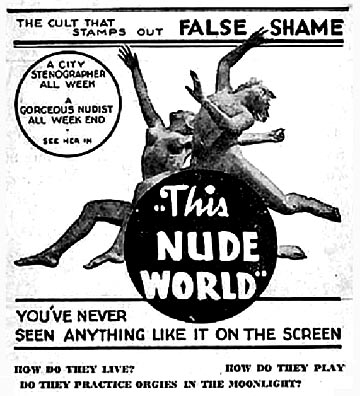
1933 documentary This Nude World
at RUBA Club
10:00 pm
Admission: $10.00 ($9.00 for Philadelphia Cinema Alliance members)
414 Green Street, Philadelphia
(behind Silk City Lounge)
215-627-9831
Cult film buffs may be familiar with the cycle of "nudie cutie" exploitation films released in the wake of Russ Meyer's hugely successful The Immoral Mr. Teas, at the very end of the 1950s. These films offered many moviegoers their first filmed view of naked flesh, with many featuring unexpurgated views of nudist colonies. What is less known is that the same type of films were made over 25 years earlier. This Nude World is a prime example of this genre, and like the later films, was made chiefly to exploit scenes of naked bodies by very independent (and very low budget) filmmakers. It was probably distributed by just a few people who rented theaters and transported prints from town to town, staying one step ahead of the censors.

Screened Out: Gay Images On Film
with film historian Richard Barrios in person
7:15 pm
Admission: $10.00 ($9.00 for Philadelphia Cinema Alliance members)
1315 Spruce Street, Philadelphia
(215) 732-2220

Secret films from the
J.X. Williams Archive at Moore
Underworld Cinema: The Life and Works of J.X. Williams
8:00 PM
Admission: $7.00
20th & Race Streets, Philadelphia
(215) 965-4099


Rare noir feature & NYC film historian Richard Koszarski
at Moore College of Art & Design
"Hollywood on the Hudson"
8:00 PM - illustrated talk with Richard Koszarski
8:45 PM - Guilty Bystander (feature film)
Admission: $7.00 for all
20th & Race Streets, Philadelphia
(215) 965-4099

Zachary Scott stars as Max Thursday, the alcoholic house detective at a seedy hotel, who is spurred to action when his son is kidnapped. His quest takes him through various tawdry Lower East Side and Brooklyn locales, leading to a gang of smugglers working near the Gowanus Canal. The film was based on the first of a series of pulp novels featuring the Max Thursday character, and boasts a score by Oscar-winning composer Dimitri Tiomkin. The cast of this low budget, independent production includes Philadelphia-born Mary Boland, sweet-persona-ed character actress of many 1930s screwball comedies, in a change-of-pace role as a nasty flophouse owner. Curvaceous Faye Emerson, who plays the detective's ex-wife, had a minor career in movies but a bigger one in television -- perhaps related to a "wardrobe malfunction" that resulted in what are thought to have been the first exposed breasts on a live telecast. "Heightened by the use of locale, Guilty Bystander is able to portray a world populated by losers." - Bob Porfirio, Film Noir: An Encyclopedic Reference to the American Style.


The Secret Cinema presents short films
about community for "Love It" fundraiser
Doors at 7 PM, Films at 8 PM
Admission: by donation*
800 North 23rd Street, Philadelphia
(215) 684-3548

Curator's Choice 2010: Unseen Corners
of the Secret Cinema Archives

8:00 pm
Admission: $7.00
20th & Race Streets, Philadelphia
(215) 965-4099


The Secret Cinema and A/V Geeks present
A Medical Film Cabinet of Curiosities
8:00 pm
Admission: $7.00
20th & Race Streets, Philadelphia
(215) 965-4099


Creepy Puppet Films at Moore
8:00 pm
Admission: $7.00
20th & Race Streets, Philadelphia
(215) 965-4099


The Secret Cinema to provide films at
Dead Milkmen Halloween gala at Trocadero
8:00 pm
$18.50 advance, $21 day of show
1003 Arch Street, Philadelphia
215-922-6888
The Secret Cinema
8:15 pm - Secret Cinema films
9:00 pm - Tough Shits
9:30 pm - Secret Cinema films
9:50 pm - Live Not On Evil
10:20 pm - Secret Cinema films
10:40 pm - Dead Milkmen
The Secret Cinema comes to Ursinus College with
"History of the Film Jukebox" talk, film screening
7:00 pm
Admission: FREE
Ursinus College
601 E. Main Street, Collegeville, PA
(610) 409-3000
Before MTV, before rock promo clips, indeed before rock and before video, there were rock videos. Well, not exactly, but beginning in 1941 people could see short visualizations of top performers singing hit pop songs, on small screens across the land.
The Secret Cinema presents
Bookworms' Revenge at 215 Festival

9:00 pm (door/bar opens at 8:00 pm)
Admission: FREE
531 N. 7th Street, Philadelphia


Jazz & Swing Rarities at Moore
8:00 pm
Admission: $7.00
20th & Race Streets, Philadelphia
(215) 965-4099


Laurel & Hardy prison classic
at Eastern State Penitentiary
8:00 pm (doors open 7:00 pm)
Admission: $8.00
22nd & Fairmount Sts., Philadelphia
(215) 236-3300

When Stan & Ollie get caught selling bootleg beer during the prohibition era this film was made in, they get sentenced to the big house, sharing a cell with the toughest convict in the joint. The comic misadventures find them mixed up in a jailbreak, a prison riot, and at one point they even resort to using blackface to hide from the law! This fast-paced film, starring the most famous comedy duo in movie history, still amuses after nearly 80 years.
The Secret Cinema and the Galleries at Moore
celebrate bike culture with Bicycle Shorts
8:00 pm
(Gallery reception 6:00-8:00 pm)
Admission: $7.00
20th & Race Streets, Philadelphia
(215) 965-4099

Pop culture critic Thomas Hine in person at
'70s screening/talk The Great Funk
8:00 pm
Admission: $7.00
20th & Race Streets, Philadelphia
(215) 965-4099


Secret Cinema co-presents Films from the Urban Archives:
Secrets from Philadelphia's Past
4:00 pm & 6:00 pm (different programs)
Admission: FREE
Samuel L. Paley Library
1210 W. Berks Street, Philadelphia
215-204-2828
The Secret Cinema presents early science films
in historic setting for Media, Pa.'s Second Saturday

7:30 pm
Admission: FREE
11 Veterans Square, Media, Pa.
(610) 566-5126

Scopitone Party screening
and talk at Moore
8:00 pm
Admission: $7.00
20th & Race Streets, Philadelphia
(215) 965-4099
EARLY EDUCATIONAL: Classroom Films of the Silent Era
(new 2009 edition) & live music at Moore

8:00 pm
Admission: $7.00
20th & Race Streets, Philadelphia
(215) 965-4099

The Literary World of Frank and Eleanor Perry
at International House
Co-presented by Secret Cinema
Co-presented by Secret Cinema
3701 Chestnut Street
Philadelphia, PA 19104
(215) 387-5125
The Secret Cinema

David and Lisa
dir. Frank Perry, US, 1962, 16mm, 95 mins, b/w
Both Frank and Eleanor Perry were nominated for Academy Awards in 1962, (he for Best Director and she for Best Writing, Screenplay Based on Material from Another Medium) for this screen adaptation of the Theodore Isaac Rubin novel. David suffers from a severe obsessive compulsive condition. At a treatment center he meets Lisa, who is dealing with a split personality disorder. The two forge a unique romance despite the disapproval from the adults around them. This low-budget feature is an excellent example of filmmaking which paved the way for independents in the decades to follow.

dir. Frank Perry, US, 1967, 16mm, 51 mins, b/w
This made for television film is based on a short story by Truman Capote, who also narrates. It's the tale of Buddy, who seeks to humiliate his tormenter Odd at the family Thanksgiving dinner. Starring Geraldine Page as Buddy's cousin Sook, who teaches him that kindness is better than revenge. Page won the Best Actress Emmy for the role.
Ladybug Ladybug
dir. Frank Perry, US, 1963, 16mm, 82 mins, b/w
Frank Perry's second feature, this odd and disturbing film goes far beyond the genre of cold-war drama. At a small rural school, the siren signifying a nuclear attack goes off. Unable to determine if it's a false alarm, the children are sent home accompanied by their teachers. Tension mounts as the feeling of impending doom weighs heavy on the young, impressionable minds. This overlooked early work by the Perry's is a truly haunting emotional roller-coaster ride.
The Swimmer
dir. Frank Perry, US, 1968, 35mm, 95 mins, color
Shifting from the fragile emotional world of children and young adults, The Swimmer focuses on the seemingly banal yet deeply dysfunctional lives of middle-aged suburbanites. Burt Lancaster brilliantly plays Ned Merrill, who after a mysterious long absence returns to his affluent Connecticut town where he proceeds to slowly unravel in a psychological nightmare. John Cheever's short story is brought to life as a fascinating juxtaposition of the materially wealthy and the emotionally bereft.
The Secret Cinema at Moore welcomes
A/V Geeks with S is for Sissy
8:00 pm
Admission: $7.00
20th & Race Streets, Philadelphia
(215) 965-4099


Billy Martin is concerned that being clean is tantamount to being a sissy. Perhaps a giant cake of soap in pantaloons can convince him otherwise.
William is an athletic kid but his fascination with baby dolls has his father concerned and his friends picking on him. Can Grandpa fix things with William's birthday gift?
Paul's being a little stinker by challenging his father and moping about the house. Is his mother babying him too much and his Dad being too strict?
College-aged Peter has problems talking to girls. Could stern toilet training be making him a sissy?
Look at early South Street, talk featured at
From Philadelphia With Love 2008: More Industrial,
Educational and other Lost Local Films

8:00 pm
Admission: $7.00
20th & Race Streets, Philadelphia
(215) 965-4099


The Bela Lugosi Halloween
Grab Bag
at Moore College of Art & Design

8:00 pm
Admission: $7.00
20th & Race Streets, Philadelphia
(215) 965-4099
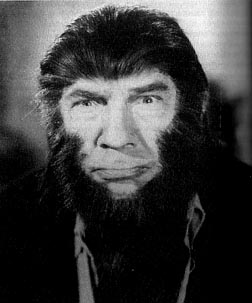

This obscure wonder was the only horror film made in 1947, and Bela Lugosi's sole color feature. Told in a series of flashbacks narrated by a female corpse lying on a mortuary slab, the strained story brings together George Zucco as the victim's sinister physician father-in-law, Lugosi as a mysterious stranger with a murky past as a vaudeville hypnotist, prolific movie dwarf Angelo Rossitto (Freaks) as Bela's wordless and completely-unexplained sidekick, star-in-decline Joyce Compton, and comic character players Nat Pendleton and Douglas Fowley (father of weirdo record producer Kim Fowley). Scared To Death is a bewilderingly surreal, comic opera of overwrought dialogue and ripe performances, with a script that recalls the "best" of Ed Wood (though perhaps not quite as floridly written as the master's works). "Watch it closely and decide: Had the actors ever seen the script? Were some of them under the influence of a very disorienting drug? Fascinating." - The Psychotronic Encylopedia of Film.

Bela Lugosi was forced to accept some embarrassing roles during his B-movie exile of the 1940s; perhaps none were more ludicrous than in The Ape Man. Bela plays a mad scientist who's experiment of injecting himself with the spinal fluid of apes goes awry. Thus, he appears throughout most of this film covered in hair, walking with a silly sway in poor imitation of a half-simian. Hidden away in his basement lab, he sleeps in a cage with a real ape ("I locked myself in there with him...fearing I might do something terrible!"), which he periodically takes out to kill unsuspecting victims whose spinal fluid may bring him back to normal. Wallace Ford (Freaks) and Louise Currie play a pair of reporters investigating the weird goings-on, and Minerva Urecal plays Bela's protective, spooky sister.
Assorted spooky cartoons, TV bits, and more, to Not be announced…it's a surprise!

Earl J. Deems, a former accountant, started the Mansfield, Ohio based Highway Safety Films, Inc. in 1959 to release Signal 30. This notorious Drivers' Ed short, shocking even today, gave viewers a front-row seat to gore-filled, still-smoking car wreck scenes, in an effort to instill respect for careful driving practices. His company became the most successful purveyor of this nightmarish film genre, and sold many copies of titles like Mechanized Death, Wheels of Tragedy, and Highways of Agony. In 1978 Deems completed Options To Live, his swan song and a "greatest hits" (in every way) compilation of the bloodiest scenes from his footage library. "This is what pain looks like!"
This short film made for the medical community -- in still-stunning Kodachrome color -- details a variety of exotic venereal diseases, in close-up after horrifying close-up. This repulsive reel of film (like Options To Live) is guaranteed to have audiences screaming in terror.

at Moore College of Art & Design
8:00 pm
Admission: $7.00
20th & Race Streets, Philadelphia
(215) 965-4099


Bon Voyage II: More Vintage Travel Films
at Moore

8:00 pm
Admission: $7.00
20th & Race Streets, Philadelphia
(215) 965-4099


The Secret Cinema celebrates Women's History Month
with Girl Films

8:00 pm
Admission: $7.00
20th & Race Streets, Philadelphia
(215) 965-4099


Famous Films II at Moore
8:00 pm
Admission: $7.00
20th & Race Streets, Philadelphia
(215) 965-4099


Bon Voyage: Vintage Travel Films
at Hiway Theatre film series
10:00 pm
Admission:
Adults, $8.50; Seniors/Students: $6.50;
Children: $5.50; Hiway members: $5.00
212 Old York Road, Jenkintown, Pa.
(215) 886-9800


Remember Pearl Harbor!
Films of Vengeance and Fear
20th & Race Streets, Philadelphia
(215) 965-4099
Friday, December 7
8:00 pm - Behind the Rising Sun + short subjects
10:00 pm - Samurai + short subjects


"SEE captive women treated with unspeakable barbarity! SEE girls forced into gilded Geisha palaces! SEE cruel acts of war committed against even babes in arms!" The ad campaign for this look at the face of America's new enemy pulled no punches, nor did the film itself, created by the same writer/director team that one year before made the similarly themed Hitler's Children. When a Japanese minister of propaganda forces his American-educated son (played in heavy makeup by Tom Neal, of Detour fame) to join the Nipponese army, the son becomes more of a nationalistic warmonger than he wished for. Though filmed as a sensationalistic call to arms, the atrocities depicted -- including Japanese soldiers tossing Chinese babies onto bayonets -- were based on fact. Scenes like American boxer Robert Ryan's fight with a Japanese jiu-jitsu expert (played, like many of the Japanese villains, by a white American), however, were more likely the concoction of the script department.

American evangelists adopt a boy orphaned by a Japanese earthquake, and raise him in their home in San Francisco. He becomes Americanized and a talented artist, but is visited by a Japanese priest, who recruits him into the doctrine of Bushido. When the boy travels to Europe for his education, he comes back a changed man, believing the Japanese are destined to conquer the world. He hides code messages in his paintings, murders a reporter and his parents, and in preparation for the military invasion of California, becomes governor of that state with the help of fellow double agents.

A Birthday Salute to Larry Fine

20th & Race Streets, Philadelphia
(215) 965-4099
8:00 pm
Admission: $7.00


Friday, October 5 - 8:00 pm
Admission: $7.00


Saturday, October 6, 10:00 am through 5:00 pm
Admission: Included free with voucher from Friday night Moore screening

The Secret Cinema at Moore College of Art & Design
celebrates 10-Year Anniversary!
20th & Race Streets, Philadelphia
(215) 965-4099
8:00 pm
Admission: $7.00


Click here to read it!

Riot on Sunset Strip: super screening and author event,
rare photos and films, plus after-party! Exciting new venue!
531 N. 7th Street, Philadelphia
(215) 965-4099
8:00 pm
Admission: $8.00 (for talk, film, & after-party)


9:00 pm - Film screening: Riot on Sunset Strip
10:30 pm until ? - After party with Domenic Priore and D.J. Silvia, book signing, etc.
One of the best loved of American International's late-60s drive-in fodder movies, "the most shocking film of our generation" purported to blow the lid off the wild goings on in the Hollywood discotheques of the day. Producer Sam Katzman, ever watchful of trends, based the film on the real-life violent riots that erupted on the Sunset Strip after police harassment of the mobs of teenagers there.


The Secret Cinema brings '50s shockumentary Karamoja!
to International House
3701 Chestnut Street, Philadelphia
(215) 965-4099
7:00 pm
General admission is $7.00 ($5.00 students & seniors)

"This is the story of a man with six months to live...and of the strangest honeymoon a bride ever had." California dentist William B. Treutle had never made a film when doctors gave him his fatal prognosis. It gave him the courage to fulfill his lifelong ambition to travel to Africa, and while doing so, he filmed this unforgettable documentary, in a closed territory of Uganda.
The Secret Cinema at Moore presents
Counter-Culture Obscurities double-feature

The Monitors - 8:00 pm
A Session With the Committee - 10:00 pm
20th & Race Streets, Philadelphia
(215) 965-4099
In an Orwellian dystopia of unknown date, an omnipotent army of suited, turtle-necked, bowler-hat clad overseers monitor citizens for illegal acts -- including sex, violence, politics and display of emotions -- in an effort to force peace on the world. Loudspeakers instruct that "The Monitors are your friends." Underground, a right-leaning resistance movement plots the overthrow. That's the minimal storyline, and it frequently makes little sense.

In the "head-y" atmosphere of the late-'60s/early-'70s, pot-friendly comedians could be like rock stars, and some popular hipster comedy teams were even named like bands: The Firesign Theater, The Conception Corporation, Ace Trucking Company...and The Committee. Though forgotten today, The Committee were among the most visible during their brief prime, even providing some "relevant" improv scenes to popular films like Petulia, Billy Jack, and Steelyard Blues. Before those, they made this lost concert film, shot minimally and cheaply, capturing the troupe's propless, setless skits in a nightclub, live in front of a real audience.

The Secret Cinema at Moore presents
Totally Wired: The Films of Bell Telephone
8:00 pm
Admission: $6.00
20th & Race Streets, Philadelphia
(215) 965-4099

D.J.'s Silvia & Jay spin international vinyl rarities at
third Made in Spain night at Tritone
9:00 pm until late
Admission: FREE
1508 South Street, Philadelphia
(215) 545-0475
The Secret Cinema returns to Philadelphia Film Festival, dirty movies
...plus a selective guide to PFF highlights
Stag Movie Night: Vintage Porno from the 1920s, 30s And 40s
9:30 pm
Admission: $10.00 (see here for ticketing info)
3701 Chestnut Street, Philadelphia
(215) 387-5125
The Secret Cinema celebrates 15-Year Anniversary
with screening of The Touchables, more
8:00 pm
Admission: $6.00
20th & Race Streets, Philadelphia
(215) 965-4099


A group of four beautiful, inexplicably wealthy and exceptionally whimsical girls live together. When not attending their American friend's ballet-like pro-wrestling bouts, they commit outlandish pranks, such as stealing a wax dummy of Michael Caine. They take their impulsive behavior a step further when they kidnap a young pop star and take him to their bizarre country retreat, a large inflatable dome filled with pinball machines and mod furnishings. There they tie him down and take turns having their way with him. Things start to get out of hand -- especially when their friend's wrestling rival, a wealthy black gangster, decides he must also possess the pretty boy.
Lenny Kaye and Nazz singer Stewkey join Secret Cinema
for Nuggets: Celluloid Artyfacts of Sixties Rock
8:00 pm
Admission: $6.00
20th & Race Streets, Philadelphia
(215) 965-4099


D.J.'s Silvia & Jay spin international vinyl rarities
at Tritone's Made in Spain night
9:00 pm
Admission: FREE
1508 South Street, Philadelphia
(215) 545-0475
Indie beatnik rarity The Greenwich Village Story
to headline The Secret Cinema Holiday Spectacular at Moore

8:00 pm
Admission: $6.00
20th & Race Streets, Philadelphia
(215) 965-4099
This independently produced movie -- which has seemingly vanished from all channels of film, video and television distribution -- offers an invaluable, inside look at New York bohemia in the early-1960s. Its heartfelt (if slight) plot involves a young writer struggling to complete his first novel, his live-in ballet dancer girlfriend who wants to marry, and their circle of eccentric friends. The camera follows them to parties that get raided by the cops, poetry readings, and smoky cafes. Shot in 1961, and with a strong (and early) pro-choice message, this arty exploitation film's real strength is its documentary-like photography of real locales and faces, shot in the heart of the world capital of beat-era bohemia, Greenwich Village. We go on location to Washington Square Park singalongs, or to legendary folk club the Gaslight Café (including a brief glimpse of Noel Paul Stookey's pre-Peter & Mary comedy act), or to Elaine Starkman's real-life clothing boutique (where a young Mary Travers once worked).

Hot Wheels! Short Films About Hot Rods, Slot Cars,
Skateboards and More at Moore
8:00 pm
Admission: $6.00
20th & Race Streets, Philadelphia
(215) 965-4099


From Philadelphia With Love Again:
More Industrial, Educational and other Lost Local Films
at Sedgwick Cultural Center
8:30 pm
Admission: $7.00
7135 Germantown Avenue, Philadelphia
(215) 248-9229

Curator's Choice 2: Unseen Corners and
Forgotten Favorites from the Secret Cinema Archives
at Moore
8:00 pm
Admission: $6.00
20th & Race Streets, Philadelphia
(215) 965-4099

Convicted
at historic Eastern State Penitentiary

8:30 pm (doors open 7:30 pm)
Admission: $8.00
22nd & Fairmount Sts., Philadelphia
(215) 236-3300
Glenn Ford plays an innocent man framed for the murder of a prominent citizen, and when denied parole after years in prison he joins in with hardened violent prisoners in an escape plot. Broderick Crawford is the honest warden trying to set things straight, in this noir era remake of the 1931 film (and earlier Broadway play) The Criminal Code. "Some good twists and turns in this well-scripted and tautly directed wrong man story wherein Ford excels as the victim." - Motion Picture Guide.
Exploration/Exploitation double-feature
closes season at Moore
Congorilla - 8:00 pm
Beyond the Caribbean - 10:00 pm
20th & Race Streets, Philadelphia
(215) 965-4099

Congorilla - 8:00 pm
Beyond the Caribbean - 10:00 pm
Congorilla was the first sound film from Martin & Osa Johnson, a husband and wife explorer team who achieved huge popularity in the early 20th century by blending daring adventure with Hollywood entertainment values. Martin Johnson had traveled the South Pacific with Jack London. While home in Kansas he met 16-year-old Osa and promptly married her. Thus began a lifelong partnership summed up in the title of Osa's later autobiography, I Married Adventure. They journeyed to Africa, the South Seas and Borneo, becoming celebrities as pioneering pilots, filmmakers, authors, photographers and lecturers, sharing their studies of the people and nature of previously unseen lands. Their eight feature films were released by major Hollywood studios and were box office hits. Their successful marketing concepts included their own clothing line, and even early product placement in their films.

Not even listed in most film reference books, we guarantee that you will never see this movie projected again in your lifetime. Produced and directed by Andre Roosevelt (a nephew of President Theodore Roosevelt), it mixed actual travel footage with awkwardly staged dramatic scenes, cheaply shot with post-dubbed dialogue. The simple yet contrived plot concerns a pair of fortune hunters who get stranded on an island. They are rescued by Andre Roosevelt (playing himself), and find their way to a dangerous tribe of natives who are engaged in weird voodoo ceremonies.
The best of From Philadelphia With Love:
Industrial, Educational and other Lost Local Films
at Sedgwick Cultural Center
8:00 pm
Admission: $7.00
7135 Germantown Avenue, Philadelphia
(215) 248-9229
From Philadelphia With Love 3: Still More
Industrial, Educational and other Lost Local Films
8:00 pm
Admission: $6.00
20th & Race Streets, Philadelphia
(215) 965-4099
The Secret Cinema presents long-promised
A Loving Tribute to Shemp Howard

Friday, March 24
8:00 pm
Admission: $6.00
at
Moore College of Art & Design
20th & Race Streets, Philadelphia
(215) 568-4515, ext. 4099
Saturday, March 25
11:00 am through 5:00 pm
Admission: FREE with voucher from Friday night Moore show
at
The Stoogeum (see below)

Friday, March 24 - 8:00 pm
Admission: $6.00
Admission: Included free with voucher from Friday night Moore screening

This early talkie, written by popular cartoonist Rube Goldberg, is quirky and undeniably dated, but not always in a bad way. A madcap mix of music, stagy vaudeville humor and grand-scaled cinematic slapstick, it shows some early approaches to using the new medium of sound movies to showcase the previously uncapturable American arts of musical theater and variety. The thin plotline concerns a troubled costume shop owner who invents wacky devices (like a hat-tipping machine) as a hobby. Soup To Nuts' greatest value is the vivid snapshot it provides of the earliest lineup of the Three Stooges, as they were still honing their unique comedic style (The Three Stooges films would not again include Shemp Howard for another 16 years). It also shows how they worked with their straight man mentor Ted Healy, the top-billed star of the picture and one of the biggest names in vaudeville. His physical comedy and cynical manner were a great influence on the Stooges and others -- no less than Milton Berle called him "my idol" -- but Healy was doomed to be forgotten after his early, tragic death, following a vicious beating by three men outside a Hollywood nightclub.

The Secret Cinema presents evening with legendary
'60s Apple Records recording artist Brute Force
(plus Mr. Unloved and D.J.'s Silvia & Jay)
1508 South Street, Philadelphia
(215) 545-0475
9:30 pm to 2:00 am
Admission: $7.00


A Child's Introduction to Social Guidance Films
at Moore
20th & Race Streets, Philadelphia
(215) 568-4515, ext. 4099
8:00 pm
Admission: $6.00


Secret Cinema presents

20th & Race Streets, Philadelphia
(215) 568-4515, ext. 4099

Colorful program The Rainbow Is Yours
at Moore
20th & Race Streets, Philadelphia
(215) 568-4515, ext. 4099


All-35mm program The Secret Secret Cinema
at International House
8:00 PM
Admission: $7.00; $5.00 for International House members, students and seniors
3701 Chestnut Street, Philadelphia
215-387-5125

Free screening of The Choppers
on roof of Whole Foods Markets
8:00 pm
Admission: FREE
929 South Street, Philadelphia
(215) 733-9788
This drive-in classic was the screen debut of platinum-pompadoured cult actor Arch Hall, Jr. (Wild Guitar, Eegah!). In this film he's part of a car-stripping gang of juvenile delinquents who have names like "Torch," "Flip" and "Snooper." He still finds time to sing two songs, "Konga Joe," and "Monkeys in My Hatband," the latter performed in a junkyard with bongo accompaniment. The Choppers was written and produced by Arch Hall, Sr., a former actor in B-Western films whose own life was portrayed by no less than Robert Mitchum in The Last Time I Saw Archie. The senior Hall produced six films starring his son, in an unsuccessful attempt to make a teen idol out of him.
Secret Cinema at Moore presents

20th & Race Streets, Philadelphia
(215) 568-4515, ext. 4099

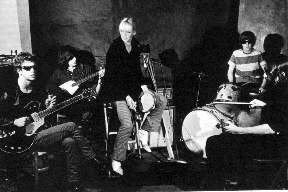
While Andy Warhol introduced the Velvets to the world though his multi-media extravaganza "The Exploding Plastic Inevitable," he was also immersed in making a groundbreaking series of experimental films. He would use VU music in a number of his films as well as occasional band member cameos in works such as The Chelsea Girls. This, however, is the only title from Warhol's prolific 60s output to star the group. It features a live performance at the Factory, captured in the only sync-sound footage of the VU known to exist. Symphony Of Sound is shot in Warhol's minimal, laissez-faire style, which generally let events unfold before the camera without intrusion. In this case, the events included an otherwise unreleased, freewheeling "Sister Ray"-esque jam, Nico's (and Alain Delon's) young son Ari wandering around in the mayhem, and New York Police officers coming in to stop the racket.
Between 1964 and 1966, visitors to the Factory with "star" potential would be seated in front of a stationary camera and asked to hold still while 3 minutes of 16mm film were shot. Proving the adage that less is more, these clips contain some of Warhol's most striking and enduring film images. Real celebrities would join the Warhol "Superstars" and forgotten passers-by in these time capsule miniatures. This reel includes tests of Nico, Lou Reed, and John Cale, along with Susan Sontag, Helmut Newton and others.
Intended for projection behind the Velvet Underground during live performances of The Exploding Plastic Inevitable, this reel contains Factory-shot Screen Tests of the one and only Salvador Dali, plus Nico, Sterling Morrison and Lou Reed, followed by two rolls of EPI dancers Gerard Malanga and Mary Woronov performing their S&M "whip dance" for the camera.
These intriguing reels were also filmed for use as background projections during the Velvets' live shows, but with Warhol's Auricon camera, which recorded a live soundtrack as it ran. Shot on a staged "set" at Warhol's Factory, the band enact an improvised psychodrama in which Reed, Cale and Morrison bind drummer Maureen Tucker to a chair with ropes and proceed to torment her with whips and food. There is no music in this minimal narrative, but much to analyze, in a fascinating discovery for dedicated Lou Reed/VU fans.

Bon Voyage: Vintage Travel Films
at Moore College of Art & Design
8:00 pm
Admission: $6.00
20th & Race Streets, Philadelphia
(215) 568-4515, ext. 4099
It's a Wonderful Lifestyle:
A Valentine to the 1970s
at Moore College of Art & Design
8:00 pm
Admission: $6.00
20th & Race Streets, Philadelphia
(215) 568-4515, ext. 4099

Sixties-themed music night
FRIDAY ON MY MIND with
The Up!, D.J. Silvia & friends
9:30 pm - 2:00 am
Admission: $5.00
1508 South Street, Philadelphia
(215) 545-0475

Creepy Christmas Films is back,
at Sedgwick Cultural Center
8:00 pm
Admission: $7.00
7135 Germantown Avenue, Philadelphia
(215) 248-9229
The Best of Secret Cinema Short Films 4
at Moore College of Art & Design
8:00 pm
Admission: $6.00
20th & Race Streets, Philadelphia
(215) 568-4515, ext. 4099

Free Halloween screening on roof of
Whole Foods Markets
8:00 pm
Admission: FREE
929 South Street, Philadelphia
(215) 733-9788
Rediscovered views of Philadelphia in
City of Brotherly Crime
at Moore College of Art and Design
8:00 pm
Admission: $6.00
20th & Race Streets, Philadelphia
(215) 568-4515, ext. 4099
The rise of violent crime was an inevitable topic of conversation throughout the 1960s, and at the decade's end, NBC News made it the topic of one of their irregular "White Paper" documentary specials. The Besieged Majority looked at the phenomenon by focusing on a single urban neighborhood that was rapidly changing from a peaceful residential area to an unstable crime zone where people no longer felt safe. They chose the Germantown/East Mt. Airy section of Philadelphia, interviewing its homeowners, shopkeepers and bartenders about their experiences as victims. Also seen talking for the camera are then-Police Commissioner Frank Rizzo and then-District Attorney Arlen Specter. In addition to the many neighborhood scenes, there are glimpses of Center City at the dawn of a new decade.
If The Jungle looks different from other filmed depictions of gang life, there is a reason: Every aspect of its creation, from the script to its photography, editing and acting was manned by the young members of a real Philadelphia street gang. Project director Harold Haskins was an eager young social worker when he approached the 12th & Oxford Street Gang and convinced them they should try to make a movie. The result is a completely inside view of this usually hidden world, with authentic depictions of their unique social codes, activities, fashion and music (the soundtrack includes an early street-corner rap about the joys of cheap wine). Soon the gang was transformed into the 12th & Oxford Film Makers Corporation, presenting their work around the world and committed to positive change in their community. Yet, their cameraman, specially trained for this project, was later slain by a rival gang jealous of their filmmaking success. Hear the incredible story of this one-of-a-kind film, when Harold Haskins recounts its making nearly four decades ago.
The William J. Burns Detective Mysteries series of one-reel shorts, filmed in the early 1930s by Educational Pictures, is beginning to acquire a cult reputation among savvy vintage film buffs. This is due more to the stiff yet non-stop narration style of nationally-famous detective Burns, and the campy, stagy recreations of prominent true crimes, than for any inherent quality. This locally themed entry in the series is typical, as Burns breathlessly recounts the fantastic (and perhaps difficult to follow) tale of a counterfeiting ring that operated within Philadelphia's Moyamensing Prison. The trade publication Motion Picture Herald rated this short as "gripping."

The Secret Cinema presents two new guitar bands
from New York, at Tritone
1508 South Street, Philadelphia
(215) 545-0475
9:00 pm - 2:00 am
Admission: $6.00


Victory Through Celluloid:
Rare WWII Short Films
at Moore College of Art and Design
20th & Race Streets, Philadelphia
(215) 568-4515, ext. 4099
8:00 pm
Admission: $6.00


Sitcom Rock: Rock 'N' Roll Episodes of
Classic TV Comedies at Silk City Lounge
Fifth & Spring Garden Streets, Philadelphia, PA
(215) 592-8838

at Moore College of Art & Design
20th & Race Streets, Philadelphia
(215) 568-4515, ext. 4099
8:00 pm
Admission: $6.00

The Secret Cinema produces another pop night
at Tritone with the A-Sides, the Swims
1508 South Street, Philadelphia
(215) 545-0475
9:00 pm - 2:00 am
Admission: $5.00


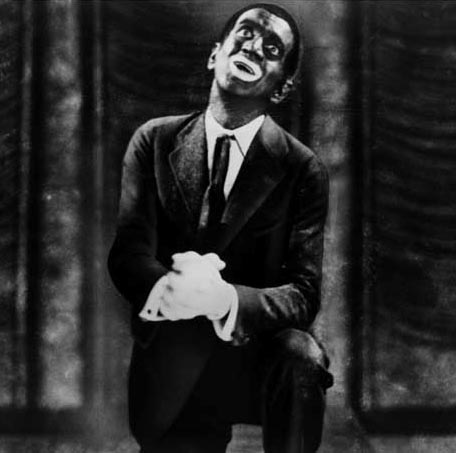
Vintage Hollywood, Live and Uncensored
at Moore College of Art & Design
20th & Race Streets, Philadelphia
(215) 568-4515, ext. 4099
8:00 pm
Admission: $6.00


Sixties-themed music night
IT'S A SUNSHINE DAY! at Tritone
1508 South Street, Philadelphia
(215) 545-0475
9:00 pm
Admission: FREE


Soundies: Rock Videos of the 1940s
at Moore College of Art & Design
20th & Race Streets, Philadelphia
(215) 568-4515, ext. 4099
8:00 pm
Admission: $6.00


Curator's Choice: Unseen Corners of the Secret Cinema
Archive at Moore College of Art & Design
20th & Race Streets, Philadelphia
(215) 568-4515, ext. 4099
8:00 pm
Admission: $6.00

Exotica Music Films 1
at Moore College of Art & Design
20th & Race Streets, Philadelphia
(215) 568-4515, ext. 4099
8:00 pm
Admission: $6.00

Creepy Christmas Films
at the Prince Music Theater
1412 Chestnut Street, Philadelphia
(215) 569-9700

The Secret Cinema Cavalcade of Commercials
at Moore College of Art & Design
20th & Race Streets, Philadelphia
(215) 568-4515, ext. 4099
8:00 pm
Admission: $6.00

Dinner and movies offered at
The Secret Cinema Mischief Night Double Feature
at historic Franklin Inn Club
205 S. Camac Street
(between 12th & 13th Streets, below Walnut), Philadelphia
(215) 732-0334
Dinner seatings from 6:00 to 7:00 pm
Film program starts at 8:00 pm
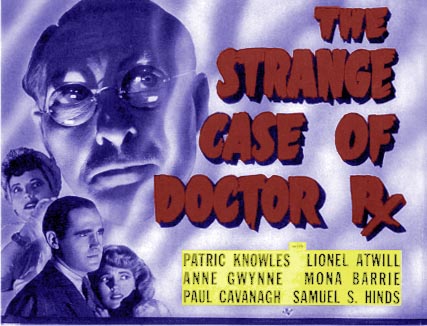


Two early features from the punk rock underground
with director Amos Poe
20th & Race Streets, Philadelphia
(215) 568-4515, ext. 4099

"The story of Rico, a guy who lives in New York in 1976 but whose private world is in Paris during the time of the 'New Wave'...Unmade Beds is a 'French' film made in New York" (from the film's prologue). Making clever use of Washington Square Park's own "Arc de Triomphe" and seemingly every French restaurant in New York, Poe made this homage to Godard's Breathless with a $5000 budget. It's a charming series of vignettes filled with Ray-Bans, absurdist poetry, Minolta SLRs, film name checks galore, and the most striking faces of the late-'70s New York underground, in an innocent flurry of amateur acting. The cast includes artist Duncan Hannah, Eric Mitchell, Patti Astor, Debbie Harry (giving a glimpse of her torch song future), rockabilly singer Robert Gordon, and many more.

Poe's second narrative feature progresses from Unmade Beds by simultaneously utilizing more plot and less plot. It details the unpleasant visit of a foreign agent (Eric Mitchell), who arrives late one night in JFK Airport on an unnamed mission. He travels through a largely unpopulated Manhattan, chased by thugs and continually failing to find an ally. His moods range from dread to boredom, as he lays awake in shabby rooms and watches The Damned on television. The Foreigner is an effective blend of Kafka, Alphaville, and the negativity that would fully blossom in the "No Wave" music scene. Music scene cameos include The Cramps (original Bryan Gregory/Miriam Linna lineup), CBGB regulars The Erasers, Deborah Harry (this time in full-on Marlene Dietrich mode), Anya Phillips, and more. The Eno-esque score was created by Patti Smith guitarist Ivan Kral.


We Who Are About To Die
at historic Eastern State Penitentiary
22nd & Fairmount Sts., Philadelphia
(215) 236-3300

This little seen drama stars John Beal as an innocent man who is convicted of murder and sentenced to death. He learns the grim reality of life on death row, where each condemned man waits his turn on the gallows. Nobody will believe his story, except for his faithful girlfriend (Ann Dvorak) and one hard-working police detective (rugged, Ocean City, NJ-born screen hero Preston Foster). The film was based on the true account of author John Lamson, who spent 13 months awaiting execution in San Quentin before the Supreme Court reversed his conviction.

Expanded version featuring
The Strange Death of Adolph Hitler
20th & Race Streets, Philadelphia
(215) 568-4515, ext. 4099
8:00 pm
Admission: $6.00

The Secret Cinema co-presents free screening of Blow-up
sixties supermodel Veruschka to appear

20th & Race Streets, Philadelphia
(215) 568-4515, ext. 4099
8:00 pm
Admission: FREE!
Blow-Up is perhaps the classic cult film of a whole decade. Italian director Antonioni set his first English language film in the epicenter of cool, Swinging London, and made a metaphoric study of imagery and perception disguised as a mystery, using the '60s iconography of photographers, models, parties and rock bands. David Hemmings stars as a supercool but retiring fashion photographer who thinks he sees something disturbing when he develops his film, while Vanessa Redgrave is his unwilling subject. This was the first "art film" that many Americans saw.
lost Philadelphia films at Moore

20th & Race Streets, Philadelphia
(215) 568-4515, ext. 4099
8:00 pm
Admission: $6.00

Anniversary edition of
The Sugar-Charged Saturday Morning Supershow:
A Celebration of Lost Kids' Shows from the Dawn of the Seventies

20th & Race Streets, Philadelphia
(215) 568-4515, ext. 4099
8:00 pm
Admission: $6.00

"While the Secret Cinema has been planning The Sugar-Charged Saturday Morning Supershow for over a year, interest in this baroque, bubblegum era is suddenly exploding: Movie versions of The Brady Bunch and Speed Racer are in the works, the fashion trends of both the rave crowd and the "love rock" indie scene signal a return to childhood innocence, and just this month we've seen two separate magazine articles on the world of Sid & Marty Krofft (who, by the way, created the costumes for The Banana Splits). The Secret Cinema and the Khyber Pass are excited to present a first-hand, big screen look at this mysterious, colorful moment in pop culture."
"This latest, greatest round-up of animated and live-action insanity follows hot on the heels of MCA's Saturday Morning CD, a tribute album containing 19 kid show theme songs by a bevy of alt-rock superstars such as Liz Phair, Matthew Sweet and the Ramones. In fact, the event is being co-sponsored by MCA, who are also spreading the pre-sweetened mania with a 'Toonapalooza' cable special (hosted by Drew Barrymore!) and a special Marvel comic book...
"Kid show nostalgia has come a long way since the Secret Cinema (first) presented T.S.C.S.M.S....we knew we were on to something, but didn't guess that many of these previously hard-to-see programs would become staples of The Cartoon Network and Nick-at-Nite, that every episode of Schoolhouse Rock and its spin-offs would see release on home video, that Hollywood would want to create feature films based on not just The Brady Bunch but even Fat Albert, and that Josie & the Pussycats t-shirts would be hawked on the Wildwood boardwalk. And we sure didn't foresee the Butthole Surfers recording their own version of the Underdog theme."

The Secret Cinema Halloween Scream-O-Thon
at the Print Center, with Emergo and free beer

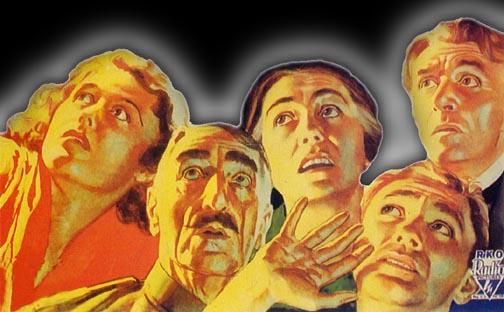
1614 Latimer Street, Philadelphia
(215) 735-6090

A group of people must spend the night in a haunted house to gain a fortune. Sound familiar? Of course, but director/producer William Castle threw in some clever surprises for House on Haunted Hill. The house used is not a creaking Victorian mansion, but an Egyptian-influenced, low-profiled structure that could have been designed by Frank Lloyd Wright. The plot centers not on a will, but a perverse party thrown by Vincent Price and his wife (Carol Ohmart), in which the guests will win $10,000 for staying the night. The guests are given guns in miniature coffins, and the house includes a cellar dungeon complete with acid vat. Price is deliciously hammy as the suave but twisted host, while legendary character actor Elisha Cook, Jr. gives his most unrestrained take ever on his haunted soul persona. The film was originally presented in the Emergo process ("More startling than 3-D!"), which will be used again for this special screening.

Assorted spooky cartoons, TV bits, and more, to Not be announced...it's a surprise!
Earl J. Deems, a former accountant, started the Mansfield, Ohio based Highway Safety Films, Inc. in 1959 to release Signal 30. This notorious Drivers' Ed short, shocking even today, gave viewers a front-row seat to gore-filled, still-smoking car wreck scenes, in an effort to instill respect for careful driving practices. His company became the most successful purveyor of this nightmarish film genre, and sold many copies of titles like Mechanized Death, Wheels of Tragedy, and Highways of Agony. In 1978 Deems completed Options To Live, his swan song and a "greatest hits" (in every way) compilation of the bloodiest scenes from his footage library. "This is what pain looks like!"
This short film made for the medical community -- in still-stunning Kodachrome color -- details a variety of exotic venereal diseases, in close-up after horrifying close-up. This repulsive reel of film (like Options To Live) is guaranteed to have audiences screaming in terror.
The Secret Cinema presents sixties-themed music night
FRIDAY ON MY MIND with The Minks, cool records

1508 South Street, Philadelphia (across from Bob and Barbara's)
(215) 545-0475

Son of Trailer Trash at Prince Music Theater
1412 Chestnut Street, Philadelphia
(215) 569-9700
10:00 pm - Trailer Trash
The Secret Cinema and International House co-present
French Pop Mini-Fest of music and film
Masculine-Feminine/All the Boys are Called Patrick screening
Admission: $5.00
Scopitone Party screening and slide talk
Admission: $5.00
Ye Ye Ye! after-party with D.J. Silvia
Admission: Free
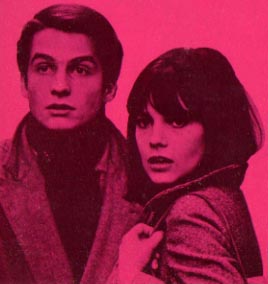
(dir. Jean-Luc Godard, France, 1966, in French w/ English subtitles)
A film about "the children of Marx and Coca Cola" directed by the child of Brecht, Levi-Strauss and Hollywood, Masculine-Feminine is a touchstone in the career of Jean-Luc Godard and a window into the kinetic world of Paris in the 1960s. Inspired by two Guy de Maupassant stories, Masculine-Feminine seems the most casual of Jean-Luc Godard's 60s films: it consists of a series of short, discontinuous scenes -- labeled "precise facts" -- loosely centered on a romance between Paul (played by Jean-Pierre Leaud of Truffaut's Antoine Doinel cycle) and pop singer Madeleine (Chantal Goya), but with room for digressions on the Vietnam war and a quick recap of LeRoi Jones's play The Dutchman and Edward Albee's Zoo Story. While Madeleine pursues her career, Paul, a confused romantic in search of perfect love, tries to coexist with her and her two roommates. Leaud's character -- practically an extension of the Antoine Doinel character he played for Truffaut (he even adopts the name Doinel at one point in the film) -- wants to live for love, but the ideal becomes problematic in a detached and increasingly consumer-oriented society.
Scopitone Party is a unique collection of music films from the early and mid 1960s. They were originally made for a French film jukebox called Scopitone, which entertained patrons in bars, cafes and bus stations in both Europe and America. The film clips, which feature performers both famous and obscure -- and are considered to be among the more important of the many predecessors to the modern rock video -- are today quite scarce, and usually difficult to see. Shown will be a large assortment of the precious prints (most of which were discovered by a film collector, in pristine, never-used condition, in the long-warehoused inventory of a retired Virginia jukebox dealer). Adding extra interest to the Scopitone Party program will be a special talk by Secret Cinema programmer Jay Schwartz about the history of film jukeboxes (which date back to the 1940s), illustrated with color slides of rare photos and original advertising materials.

After the Scopitone screening at I-House, swing over to L'Hexagone, Center City's newest night spot, for a night of non-stop pop and dancing frenzy, featuring music by Sylvie Vartan, Francoise Hardy, Serge Gainsbourg, Michel Polnareff, Jacques Dutronc, and assorted Ultra Chicks and Swingin' Mademoiselles. The music will be spun by D.J. Silvia, "la chica Ye Ye," visiting us direct from Gijón, Spain, and she's packed her bags full of rare original French vinyl! L'Hexagone is a brand new French bar that features stylish decor, an intimate dance floor, two stories of lounging space, and a menu of authentic light bistro fare. The party starts at 10 pm and lasts until 2 am. Admission is free to all.
Round two of sixties-themed music night
IT'S A SUNSHINE DAY!

1508 South Street, Philadelphia (across from Bob and Barbara's)
(215) 545-0475
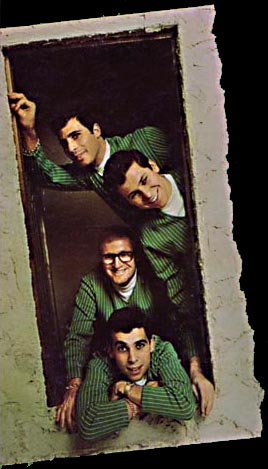
The Best of Secret Cinema Short Films
Yet Again at Moore College of Art & Design
20th & Race Streets, Philadelphia
(215) 568-4515, ext. 4099
Sleazy '70s Porn Night
at Silk City Lounge

5th & Spring Garden Streets, Philadelphia
215-592-8838

THE SECRET CINEMA AFTERSCHOOL SPECIAL:
School Life and Moral Guidance in the '70s & '80s
(and free beer)
1614 Latimer Street, Philadelphia
(215) 735-6090
RESCHEDULED!
The Secret Cinema produces multi-media
Power Pop music event Popism!

1508 South Street, Philadelphia (across from Bob and Barbara's)
(215) 545-0475

Rare Scorsese films, including
American Boy at Moore
20th & Race Streets, Philadelphia
(215) 568-4515, ext. 4099

This collection of early and short films shows another side to the work of Scorsese -- arguably the most important contemporary American director -- yet their themes and obsessions fit comfortably with his better-known features. Italianamerican (1974) is a loving documentary look inside the home of Scorsese's own parents, Catherine and Charles. They open up and discuss their immigrant heritage, their camera presence (they had cameo roles in Goodfellas, Mean Streets and Raging Bull), and even their family's secret spaghetti sauce recipe. The Big Shave (1968) is a very short (six minute) surreal black comedy in which a morning ritual becomes a violent bloodletting.


Halloween Horror Double Feature
at the Prince Music Theater
1412 Chestnut Street, Philadelphia
(215) 569-9700
Saturday, October 27
9:30 pm - Two Thousand Maniacs
This fun "Poverty Row" b-epic from PRC Studios was the first entry in the horror subgenre of films dealing with acromegaly, a rare but real disease that grossly distorts the sufferer's features to monster-like extremes. Twice Oscar-nominated actor J. Carrol Naish stars as Dr. Markoff, a mad doctor who becomes obsessed with a woman who resembles his dead wife. When her father (Ralph Morgan) attempts to keep him away, he enacts his revenge by injecting the man with a super-strong strain of acromegaly that he has been developing. Normally this would be enough drama for any film, but The Monster Maker throws in a murderous gorilla for good measure. (Other acromegaly movies include Tarantula and any of a series of films Universal made exploiting the actual deformities of actor Rondo "Monster Without Makeup" Hatton).

This is considered the masterpiece by director Lewis (Blood Feast, She Devils On Wheels), who created a sensation in the drive-in circuit by filling his low-budget shock films with realistic effects of unprecedented cinematic gore. A small Southern town gets revenge for past Civil War indignities by luring unsuspecting Northern visitors to a variety of creative ends -- utilizing dismemberments, cannibalism, and rolling a man in a spike-filled barrel. Lewis said it was "the one picture we really took pains on." Two Thousand Maniacs was produced by prolific exploitation king David Friedman, subject of the recent documentary Mau Mau Sex Sex.
Megaton Yé Yé: Spanish 60s music
with D.J. Jay Schwartz

1508 South Street, Philadelphia (across from Bob and Barbara's)
(215) 545-0475


Secret Cinema produces sixties-themed music night
IT'S A SUNSHINE DAY!
1508 South Street (across from Bob & Barbara's)
(215) 545-0475
Coming soon....
Trailer Trash at Prince Music Theater
1412 Chestnut Street, Philadelphia
(215) 569-9700
8:00 pm & 10:00 pm
Stag Movie Night: Vintage Porno
From The 1920s, 30s and 40s
at the Silk City Lounge
Fifth & Spring Garden Streets, Philadelphia, PA
(215) 592-8838

Exotica Films 3: Music and More!
at Silk City
5th & Spring Garden Streets, Philadelphia
(215) 592-8838


The Secret Cinema produces sixties-themed
music night FRIDAY ON MY MIND
1508 South Street (across from Bob & Barbara's)
Philadelphia · (215) 545-4511
Admission: $5.00
EARLY EDUCATIONAL: Classroom Films of
the Silent Era & live music at
The Secret Cinema at Moore

20th & Race Streets, Philadelphia
(215) 568-4515, ext. 4099
more lost Philadelphia films
at Moore College of Art and Design
20th & Race Streets, Philadelphia
(215) 568-4515, ext. 4099
Lost TV Drama at Borders Book Shop
1727 Walnut Street, Philadelphia
(215) 568-7400

Forgotten Philly film noir rarity
The Burglar at Moore
20th & Race Streets, Philadelphia
(215) 568-4515, ext. 4099

This unusual thriller, one of the last films in the noir cycle, was shot entirely in Philadelphia and Atlantic City. Legendary local crime writer David Goodis adapted this, his only screenplay, from one of his gloomy Lion Paperbacks. The film stars Bryn Mawr native Jayne Mansfield in one of her earliest roles, and veteran tough guy Dan Duryea, as the doomed leader of a burglary gone wrong. For his first feature, director Wendkos packed in (early-)Kubrickesque pacing, inventive photography, and tons of local flavor, including generous location scenes and a pivotal plot point hinging on the voice of John Facenda(!). The Burglar was remade in France in 1972.

Davey and Goliath Marathon
and free beer at The Print Center
1614 Latimer Street, Philadelphia
(215) 735-6090

Nuggets: Celluloid Artyfacts of Sixties Rock
20th & Race Streets, Philadelphia
(215) 568-4515, ext. 4099

The Secret Cinema at Moore presents The Love Machine,
funny, provocative look at internet sex
Saturday, November 18 - 8:00 & 10:00 pm
20th & Race Streets, Philadelphia
(215) 568-4515, ext. 4099


Secret Cinema teams with Film at the Prince for premiere
of Craig Baldwin's Spectres Of The Spectrum
1412 Chestnut Street, Philadelphia
(215) 569-9700

The year is 2007. Yogi and Boo Boo, a telepathic father and daughter team, lead a group of media outlaws in resistance against a corporate/governmental "New Electronic Order" that threatens to use the earth's magnetosphere to "bulk erase" the brains of every human on the planet. The only way to save humanity is to travel out into space, tracing the history of television broadcasts back in time to uncover a secret lodged in an old episode of the 1950s series Science in Action. A wildly energetic blend of science fiction and science fact, Craig Baldwin's epic collage film rifles through the trash bins of our image-obsessed culture and pieces together a dossier on our love affair with technology, projecting it into a dystopian future. The film skims across genres as blithely as it appropriates images from the detritus of high school instructional films, low-budget sci-fi and old television broadcasts. A combination mad scientist and media archeologist, Baldwin rarely takes his finger off the fast-forward button, creating an obsessive, densely layered and intellectually challenging vision of technology gone awry.

A Secret Cinema Halloween: real life monster Rondo Hatton in
The Brute Man at the Griffin Cafe
230 Market Street, Philadelphia
(215) 829-1050
Rondo Hatton many have had the saddest of all movie careers. In his youth he was a handsome college athlete and popular with women, but while fighting in France in World War I, Hatton was injured by poison gas, and as a side effect contracted acromegaly. This rare disease makes the pituitary gland overly active, causing severe disfigurement of the hand, hands and feet. While working as a journalist on a Florida movie set, Rondo's unusual looks were noticed by director Henry King, who cast him as rugged saloon owner in the 1930 film, Hell Harbor. Hatton eventually moved to Hollywood and was signed to Universal, usually playing heavies in small, non-speaking parts.

1919 silent film rarity The Tong Man,
live music at Moore
20th & Race Streets, Philadelphia
(215) 568-4515, ext. 4099
The Tong Man is set in the dark, seemingly impenetrable underworld of San Francisco's Chinatown, a place whose "placid exterior sleepily cloaks its wiles and intrigues": Tongs (gangs), opium dens, and its own peculiar system of power and justice. Sessue Hayakawa stars as Luk Chan, the most feared "hatchet man" (assassin) of the Tongs. Chan falls in love with the daughter (Helen Jerome Eddy) of a wealthy merchant whom he has been ordered to kill, and when he refuses, he becomes a hunted man with nowhere to turn. The Tong Man includes some stereotypically "inscrutable" Chinese characters (many played by white actors), but the easily-fooled white policemen probably come off worse.

Wild Guitar and free beer
at The Print Center
1614 Latimer Street, Philadelphia
(215) 735-6090
The irrepressible Arch Hall, Jr. stars as Bud Eagle, an earnest young rockabilly singer who rides his motorcycle from Spearfish, South Dakota to the bright lights of Hollywood in search of fame -- only to find corruption disappointment at the hands of a crooked manager. The film is filled with fabulous period flavor, from vintage guitars to location shots of the Capitol Tower and Dino's Lodge, not to mention music, strippers, a kidnapping, Olympic ice skater Nancy Czar (as Bud's girlfriend, who gets in some gratuitous skating), and a rockin' beach party finale.
The Best of Secret Cinema Short Films Again
opens Moore season
20th & Race Streets, Philadelphia
(215) 568-4515, ext. 4099

Legendary, explicit Warhol film Couch
20th & Race Streets, Philadelphia
(215) 568-4515, ext. 4099
The 1960s films of Andy Warhol documented a world of fringe characters that must have appeared shocking to mainstream audiences that might have happened upon them in a period when underground films (and Warhol's fame as both a painter and filmmaker) enjoyed unprecedented popularity. His films revealed an attention-hungry world of misfits and avant-gardists -- junkies, flamboyant homosexuals, transvestites, wayward debutantes and just plain weirdos -- all being themselves and living their everyday lives in front of Warhol's unblinking camera.

1921 silent film rarity The Blasphemer, live music
at Moore
20th & Race Streets, Philadelphia
(215) 568-4515, ext. 4099
An obscure oddity from the midway point of the silent feature era, The Blasphemer was produced by the mysterious Religious Films Organization, and was clearly intended as propaganda promoting spiritual purity and regular church attendance. This message is vividly illustrated in the form of seamy melodrama, depicting the downfall of John Harden, a wealthy business magnate who leaves his loving family to pursue his mistress and his greed. Proclaiming at a dinner party that man answers to no one but himself, he goes so far as to challenge God to strike him dead in the middle of a thunderstorm. Instead, Harden is felled by more earthly forces -- and ultimately finds his salvation and righteousness after hitting rock-bottom as a homeless bum.

Married Too Young at Bar Noir
118 S. 18th Street, Philadelphia
(215) 569-9333

From its very title, this teen exploiter has the look and feel of a much older picture, say one from the Reefer Madness era, but in fact was made in the (very early) 1960s. Harold Lloyd, Jr, son (and spitting image) of the great silent comedian, appeared in several low-budget drive-in films like Girl's Town and Platinum High School, but this was his only starring role. He plays a high school student who elopes with sweetheart Jana Lund, but then must forego his dreams of becoming a doctor, dropping out of school and getting mixed up with a car theft ring.


Premiere of documentary on underground film legend Stan Brakhage
20th & Race Streets, Philadelphia
(215) 568-4515, ext. 4099
Saturday, February 19 - 8:00 & 10:00 pm

Stan Brakhage is a living legend, possibly the most important filmmaker of the avant-garde. Since 1952, when he was 19, Brakhage has created over 300 films, ranging from lengths of several seconds to several hours, and has constantly and consistently redefined the shape of film art. Using excerpts from Brakhage's films like Dog Star Man and Window Water Baby Moving, films of other avant-garde filmmakers, interviews with Brakhage, his friends, family colleagues and critics, and archival footage of Brakhage spanning the past 35 years, Jim Shedden's portrait Brakhage explores the depth and breadth of the filmmaker's genius, the exquisite splendor of his films, his personal charm, his aesthetic fellow travelers, and the influence his work has had on generations of other creators.

Repeat performance of Other People's Movies in Concert, at Moore
20th & Race Streets, Philadelphia
(215) 568-4515, ext. 4099

Hot Wheels! Short Films About Hot Rods, Slot Cars,
Skateboards and More at Silk City
5th & Spring Garden Streets, Philadelphia
(215) 592-8838
Old Films About Old Films About...
at Moore
20th & Race Streets, Philadelphia
(215) 568-4515, ext. 4099
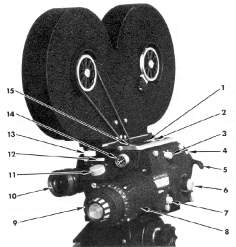
Other People's Movies in Concert at The Print Center
1614 Latimer Street, Philadelphia
215-735-6090
The Secret Cinema at Moore:
lost Philadelphia films, renovated auditorium
20th & Race Streets, Philadelphia
(215) 568-4515, ext. 4099
Free screening of
TV Relics at Borders
1727 Walnut Street, Philadelphia
(215) 568-7400
The Secret Cinema produces sixties-themed dance night
and multimedia happening A WHOLE SCENE GOING ON
10th & Arch Streets, Philadelphia
(215) 922-LIVE
"SITCOM ROCK: Rock N' Roll Episodes of Classic TV Comedies"
1999 Enhanced Version at the Trocadero
10th & Arch Streets, Philadelphia
(215) 922-LIVE

The Secret Cinema at Moore College of Art and Design presents
local independent feature Magdalen
20th & Race Streets, Philadelphia
(215) 568-4515, ext. 1235
Saturday, May 22 - 8:00 & 10:00 pm
Photographed by Abe Holtz. Produced by Andrew Repasky McElhinney and Erica Downie
Starring Alix D. Smith, Moira Rankin, David Semonin, Jace Gaffney, Terry Jones
Described by its young director as "a gossipy meditation on art, drinking, smoking and screwing," Magdalen stars Alix D. Smith as the title character, an attractive, intelligent, but cynical and jaded woman, who has the unusual occupation of sitting in a bar and telling stories to lonely people for money. For the right fee, Magdalen customizes her yarn-spinning to the patrons' varying wants, be they erotic, romantic or simply needing comfort. Yet, her own impatience and troubled persona causes the guarded woman to sometimes say less -- or more -- than her customers bargained for. Magdalen's stories becomes confessional, and she receives confession in turn.

Philadelphia silent film pioneer Siegmund Lubin
to be paid tribute at Secret Cinema screening, talk

20th & Race Streets, Philadelphia
(215) 568-4515, ext. 1235

Warhol expert Victor Bockris in person at
Moore screening of 1965 film Kitchen

20th & Race Streets, Philadelphia
(215) 568-4515, ext. 1235

starring Edie Sedgwick, Rene Ricard, Roger Trudeau, Donald Lyons, Elecktrah, David McCabe
One of many Andy Warhol films made in 1965 that starred alluring debutante-turned-Factory Superstar Edie Sedgwick, Kitchen (unlike other Edie vehicles like Poor Little Rich Girl and Beauty #2) was not a slice-of-life interview but a scripted comedy about life at a couple's breakfast table. Still, any Warhol film from that period, despite "scripts" and "acting," contains a large chunk of time-capsule reality, chronicling to an extent the real-life locations and unique personalities that orbited around the Factory scene. Norman Mailer commented about it's gritty fidelity that "100 years from now people will look at Kitchen and say, "Yes, that is the way it was in the late 50s, early 60s in America. That's why they had the war in Vietnam...That's why the horror came down. Kitchen shows that better than any other work of that time."

The Secret Cinema at Moore College of Art and Design
presents premiere of Nick Broomfield's Fetishes
20th & Race Streets, Philadelphia
(215) 568-4515, ext. 1235
Saturday, February 6 - 8:00 & 10:00 pm

Whether probing the mind of a female serial killer, or exploring the life of Hollywood Madame Heidi Fleiss, award winning documentary filmmaker Nick Broomfield has established himself as a master of sticking his nose into places that fascinate viewers. In Fetishes, Broomfield turns his cameras on the still largely underground world of sexual fetishism and sadomasochism. Spending over two months at Pandora's Box, the most infamous S&M parlor in New York, Broomfield encountered and studied all manners of fetishistic behavior during his tireless quest for understanding of this age old phenomenon.

The Secret Cinema presents
Exotica Films 2: Music and More! at Silk City
5th & Spring Garden Streets, Philadelphia
(215) 592-8838
The Secret Cinema presents Creepy Christmas Films
at the Griffin Cafe
230 Market Street, Philadelphia
(215) 829-1050

The 2nd Annual SECRET CINEMA HALLOWEEN
SCREAM-O-THON
at the Griffin Cafe
230 Market Street, Philadelphia
(215) 829-1050

The Secret Cinema continues Halloween horror month
with free screening of surreal classic Vampyr at Borders
1727 Walnut Street, Philadelphia
(215) 568-7400
After universal acclaim for his silent masterpiece The Passion of Joan of Arc, Dreyer, considered Denmark's greatest director, wished "to create a daydream on the screen and show that the horrific is not to be found around us but is in our own unconscious mind." That aim was achieved in Vampyr, ostensibly the story of a nervous-looking young man who arrives at a country inn and becomes increasingly fearful of the people and events awaiting within. Through the use of disorienting editing, atmospheric camerawork (including backwards motion and a heavy use of shadows), bizarre characters and incidents, and an eerie score by Wolfgang Zeller, Dreyer created a dreamlike panorama where menace lurks everywhere, even though little appears to actually "happen" in terms of traditional horror film action.

The Secret Cinema begins Halloween horror month
with rare color Bela Lugosi film Scared To Death
517 S. 5th Street, Philadelphia
(215) 925-3500

This obscure wonder was the only horror film made in 1947, and Bela Lugosi's sole color feature. Told in a series of flashbacks narrated by a female corpse lying on a mortuary slab, the strained story brings together George Zucco as the victim's sinister physician father-in-law, Lugosi as a mysterious stranger with a murky past as a vaudeville hypnotist, prolific movie dwarf Angelo Rossitto (Freaks) as Bela's wordless and completely-unexplained sidekick, star-in-decline Joyce Compton, and comic character players Nat Pendleton and Douglas Fowley (father of weirdo record producer Kim Fowley). Scared To Death is a bewilderingly surreal, comic opera of overwrought dialogue and ripe performances, with a script that recalls the "best" of Ed Wood (though perhaps not quite as floridly written as the master's works). "Watch it closely and decide: Had the actors ever seen the script? Were some of them under the influence of a very disorienting drug? Fascinating." - The Psychotronic Encylopedia of Film.
The Secret Cinema returns to Moore College of Art and Design
with Andy Warhol's The Chelsea Girls
20th & the Parkway, Philadelphia
(215) 568-4515, ext. 1135
The Secret Cinema joins '60s-esque bands at The Balcony
with Rare Surf Films from the '60s and Beyond
The Secret Cinema presents Philadelphia premiere of
Screwed: Al Goldstein's Kingdom Of Porn


The Secret Cinema at Moore College of Art and Design
to screen original Velvet Underground films
The Secret Cinema Cavalcade of Commercials
at Borders Book Shop

The Secret Cinema at Moore College of Art and Design
presents SCOPITONE PARTY screening and talk

The Secret Cinema at Moore College of Art and Design presents
THE SECRET CINEMA AFTERSCHOOL SPECIAL:
School Life and Moral Guidance in the '70s & '80s


The Secret Cinema presents Philadelphia premiere of
8-track epic So Wrong They're Right

SOME INTERESTING 8-TRACK LINKS:


SECRET CINEMA NEWS
OTHER SECRET CINEMA EVENTS

The Secret Cinema presents PHILADELPHIA PREMIERE of
Half Japanese: The Band That Would Be King
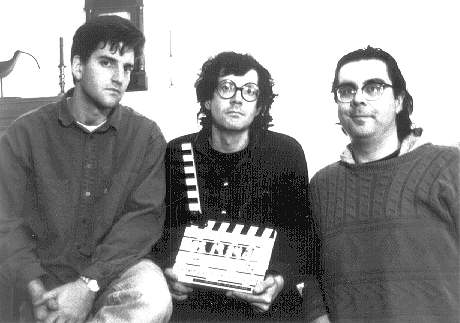
BACK